• Wyszukiwanie zaawansowane
  • Kategorie
  • Kategorie BISAC
  • Książki na zamówienie
  • Promocje
  • Granty
  • Książka na prezent
  • Opinie
  • Pomoc
  • Załóż konto
  • Zaloguj się

Introduction to Artificial Intelligence » książka


zaloguj się | załóż konto
Logo Krainaksiazek.pl

koszyk

konto

szukaj
topmenu
Księgarnia internetowa
Szukaj
Książki na zamówienie
Promocje
Granty
Książka na prezent
Moje konto
Pomoc
 
 
Wyszukiwanie zaawansowane
Pusty koszyk
Bezpłatna dostawa dla zamówień powyżej 20 złBezpłatna dostawa dla zamówień powyżej 20 zł

Kategorie główne

• Nauka
 [2949965]
• Literatura piękna
 [1857847]

  więcej...
• Turystyka
 [70818]
• Informatyka
 [151303]
• Komiksy
 [35733]
• Encyklopedie
 [23180]
• Dziecięca
 [617748]
• Hobby
 [139972]
• AudioBooki
 [1650]
• Literatura faktu
 [228361]
• Muzyka CD
 [398]
• Słowniki
 [2862]
• Inne
 [444732]
• Kalendarze
 [1620]
• Podręczniki
 [167233]
• Poradniki
 [482388]
• Religia
 [509867]
• Czasopisma
 [533]
• Sport
 [61361]
• Sztuka
 [243125]
• CD, DVD, Video
 [3451]
• Technologie
 [219309]
• Zdrowie
 [101347]
• Książkowe Klimaty
 [123]
• Zabawki
 [2362]
• Puzzle, gry
 [3791]
• Literatura w języku ukraińskim
 [253]
• Art. papiernicze i szkolne
 [7933]
Kategorie szczegółowe BISAC

Introduction to Artificial Intelligence

ISBN-13: 9783031259272 / Angielski / Miękka / 2023
Michail E. Klontzas; Salvatore Claudio Fanni; Emanuele Neri
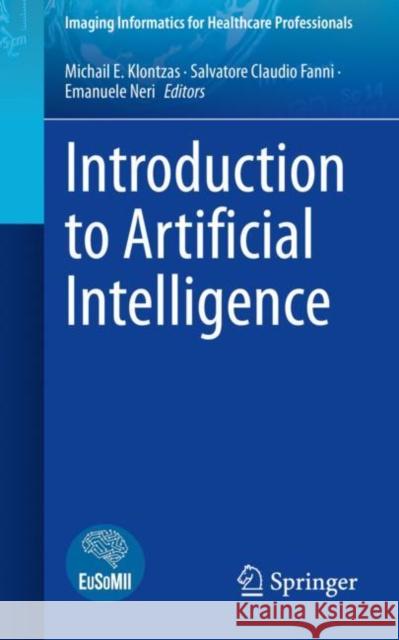
Introduction to Artificial Intelligence Michail E. Klontzas Salvatore Claudio Fanni Emanuele Neri 9783031259272 Springer International Publishing AG - książkaWidoczna okładka, to zdjęcie poglądowe, a rzeczywista szata graficzna może różnić się od prezentowanej.

Introduction to Artificial Intelligence

ISBN-13: 9783031259272 / Angielski / Miękka / 2023

Michail E. Klontzas; Salvatore Claudio Fanni; Emanuele Neri
cena 302,60
(netto: 288,19 VAT:  5%)

Najniższa cena z 30 dni: 289,13
Termin realizacji zamówienia:
ok. 22 dni roboczych
Bez gwarancji dostawy przed świętami

Darmowa dostawa!

This book aims to provide physicians and scientists with the basics of Artificial Intelligence (AI) with a special focus on medical imaging. The contents of the book provide an introduction to the main topics of artificial intelligence currently applied on medical image analysis. The book starts with a chapter explaining the basic terms used in artificial intelligence for novice readers and embarks on a series of chapters each one of which provides the basics on one AI-related topic. The second chapter presents the programming languages and available automated tools that enable the development of AI applications for medical imaging. The third chapter endeavours to analyse the main traditional machine learning techniques, explaining algorithms such as random forests, support vector machines as well as basic neural networks. The applications of those machines on the analysis of radiomics data is expanded in the fourth chapter to allow the understanding of algorithms used to build classifiers for the diagnosis of disease processes with the use of radiomics. Chapter five provides the basics of natural language processing which has revolutionized the analysis of complex radiological reports and chapter six affords a succinct introduction to convolutional neural networks which have revolutionized medical image analysis enabling automated image-based diagnosis, image enhancement (e.g. denoising), protocolling etc. The penultimate chapter provides an introduction to data preprocessing for use in the aforementioned artificial intelligence applications. The book concludes with a chapter demonstrating AI-based tools already in radiological practice while providing an insight about the foreseeable future.It will be a valuable resource for radiologists, computer scientists and postgraduate students working on medical image analysis.


This book aims to provide physicians and scientists with the basics of Artificial Intelligence (AI) with a special focus on medical imaging. The contents of the book provide an introduction to the main topics of artificial intelligence currently applied on medical image analysis. The book starts with a chapter explaining the basic terms used in artificial intelligence for novice readers and embarks on a series of chapters each one of which provides the basics on one AI-related topic. The second chapter presents the programming languages and available automated tools that enable the development of AI applications for medical imaging. The third chapter endeavours to analyse the main traditional machine learning techniques, explaining algorithms such as random forests, support vector machines as well as basic neural networks. The applications of those machines on the analysis of radiomics data is expanded in the fourth chapter to allow the understanding of algorithms used to build classifiers for the diagnosis of disease processes with the use of radiomics. Chapter five provides the basics of natural language processing which has revolutionized the analysis of complex radiological reports and chapter six affords a succinct introduction to convolutional neural networks which have revolutionized medical image analysis enabling automated image-based diagnosis, image enhancement (e.g. denoising), protocolling etc. The penultimate chapter provides an introduction to data preprocessing for use in the aforementioned artificial intelligence applications. The book concludes with a chapter demonstrating AI-based tools already in radiological practice while providing an insight about the foreseeable future.It will be a valuable resource for radiologists, computer scientists and postgraduate students working on medical image analysis.

Kategorie:
Nauka, Medycyna
Kategorie BISAC:
Medical > Biochemistry
Medical > Radiologia
Medical > Informatics
Wydawca:
Springer International Publishing AG
Seria wydawnicza:
Imaging Informatics for Healthcare Professionals
Język:
Angielski
ISBN-13:
9783031259272
Rok wydania:
2023
Wydanie:
2023
Numer serii:
001197997
Oprawa:
Miękka
Wolumenów:
01

  1. What is artificial intelligence: history and basic definitions (Manolis Koltsakis, Apostolos Karantanas)
  2. Programming languages and tools used for AI applications (George Manikis, Kostas Marias)
  3. Introduction to traditional machine learning (Sara Colantonio)
  4. Machine learning methods for radiomics analysis (Michail Klontzas)
  5. Natural Language Processing (NLP) (Claudio Fanni)
  6. Deep learning (Lefteris Trivizakis, Kostas Marias)
  7. Data preparation for AI purposes (Andrea Barucci)
  8. Current applications of AI in medical imaging (Gianfranco di Salle)

Michail E. Klontzas is the chief resident of the Radiology residency program at the University Hospital of Heraklion and collaborating researcher of the Institute of Computer Science of the Foundation for Research and Technology (ICS-FORTH, Greece). He holds a PhD from Imperial College London, an MD from the University of Crete and has worked as a postdoctoral researcher at Emory University School of Medicine. His research interests lie within musculoskeletal radiology with emphasis on radiomics and artificial intelligence. He is a member of the trainee Editorial Board of Radiology: Artificial Intelligence (RSNA), elected board member of EuSoMII and member of the board of the Radiology Trainee Forum of the ESR. He has published > 55 PubMed-indexed articles,  six book chapters for international publishers and his work has been presented in conferences in Europe and the USA.

Salvatore Claudio Fanni is a young third-year radiology resident of the Academic of Radiology at the University of Pisa. He has published Pub-med indexed articles, and chapters for international publishers, and actively participated in national and international conferences. His major research interests are thoracic radiology, in particular quantitative CT, and Natural Language Processing applications in Radiology. He is a member of the young club committee of EuSoMII and collaborates with the Imaging Lab in Pisa on many EU projects.

Emanuele Neri is full Professor of Radiology, Chairman of the Radiology Department at Pisa University Hospital, and Chair of the Post-Graduate School of Radiology and Faculty of Diagnostic Imaging of the University of Pisa. Published more than 170 papers, and 6 books, in the fields of Imaging Informatics, Gi Tract, Head and neck and oncologic imaging.

He is a member of national and international societies in the field of radiology, and President-elect of the European Society of Oncologic Imaging. Lead the Imaging Laboratory of the University of Pisa, involved in several EU projects.

This book aims to provide physicians and scientists with the basics of Artificial Intelligence (AI) with a special focus on medical imaging. The contents of the book provide an introduction to the main topics of artificial intelligence currently applied on medical image analysis. The book starts with a chapter explaining the basic terms used in artificial intelligence for novice readers and embarks on a series of chapters each one of which provides the basics on one AI-related topic. The second chapter presents the programming languages and available automated tools that enable the development of AI applications for medical imaging. The third chapter endeavours to analyse the main traditional machine learning techniques, explaining algorithms such as random forests, support vector machines as well as basic neural networks. The applications of those machines on the analysis of radiomics data is expanded in the fourth chapter to allow the understanding of algorithms used to build classifiers for the diagnosis of disease processes with the use of radiomics. Chapter five provides the basics of natural language processing which has revolutionized the analysis of complex radiological reports and chapter six affords a succinct introduction to convolutional neural networks which have revolutionized medical image analysis enabling automated image-based diagnosis, image enhancement (e.g. denoising), protocolling etc. The penultimate chapter provides an introduction to data preprocessing for use in the aforementioned artificial intelligence applications. The book concludes with a chapter demonstrating AI-based tools already in radiological practice while providing an insight about the foreseeable future.

It will be a valuable resource for radiologists, computer scientists and postgraduate students working on medical image analysis.




Udostępnij

Facebook - konto krainaksiazek.pl


Opinie o Krainaksiazek.pl na Opineo.pl

Partner Mybenefit

Krainaksiazek.pl w programie rzetelna firma Krainaksiaze.pl - płatności przez paypal

Czytaj nas na:

Facebook - krainaksiazek.pl
  • książki na zamówienie
  • granty
  • książka na prezent
  • kontakt
  • pomoc
  • opinie
  • regulamin
  • polityka prywatności

Zobacz:

  • Księgarnia czeska

  • Wydawnictwo Książkowe Klimaty

1997-2025 DolnySlask.com Agencja Internetowa

© 1997-2022 krainaksiazek.pl
     
KONTAKT | REGULAMIN | POLITYKA PRYWATNOŚCI | USTAWIENIA PRYWATNOŚCI
Zobacz: Księgarnia Czeska | Wydawnictwo Książkowe Klimaty | Mapa strony | Lista autorów
KrainaKsiazek.PL - Księgarnia Internetowa

Polityka prywatnosci - link
Krainaksiazek.pl - płatnośc Przelewy24
Przechowalnia Przechowalnia




