• Wyszukiwanie zaawansowane
  • Kategorie
  • Kategorie BISAC
  • Książki na zamówienie
  • Promocje
  • Granty
  • Książka na prezent
  • Opinie
  • Pomoc
  • Załóż konto
  • Zaloguj się

Intracranial Germ Cell Tumors » książka


zaloguj się | załóż konto
Logo Krainaksiazek.pl

koszyk

konto

szukaj
topmenu
Księgarnia internetowa
Szukaj
Książki na zamówienie
Promocje
Granty
Książka na prezent
Moje konto
Pomoc
 
 
Wyszukiwanie zaawansowane
Pusty koszyk
Bezpłatna dostawa dla zamówień powyżej 20 złBezpłatna dostawa dla zamówień powyżej 20 zł

Kategorie główne

• Nauka
 [2952079]
• Literatura piękna
 [1850969]

  więcej...
• Turystyka
 [71058]
• Informatyka
 [151066]
• Komiksy
 [35579]
• Encyklopedie
 [23181]
• Dziecięca
 [620496]
• Hobby
 [139036]
• AudioBooki
 [1646]
• Literatura faktu
 [228729]
• Muzyka CD
 [379]
• Słowniki
 [2932]
• Inne
 [445708]
• Kalendarze
 [1409]
• Podręczniki
 [164793]
• Poradniki
 [480107]
• Religia
 [510956]
• Czasopisma
 [511]
• Sport
 [61267]
• Sztuka
 [243299]
• CD, DVD, Video
 [3411]
• Technologie
 [219640]
• Zdrowie
 [100984]
• Książkowe Klimaty
 [124]
• Zabawki
 [2281]
• Puzzle, gry
 [3363]
• Literatura w języku ukraińskim
 [258]
• Art. papiernicze i szkolne
 [8020]
Kategorie szczegółowe BISAC

Intracranial Germ Cell Tumors

ISBN-13: 9783709174142 / Angielski / Miękka / 2011 / 369 str.
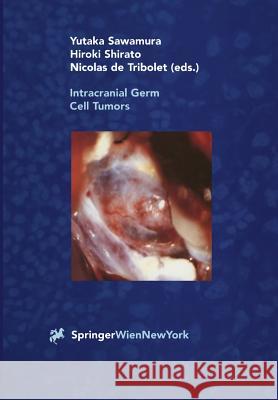
Yutaka Sawamura; Hiroki Shirato; Nicolas De Tribolet
Intracranial Germ Cell Tumors Yutaka Sawamura Hiroki Shirato Nicolas De Tribolet 9783709174142 Springer - książkaWidoczna okładka, to zdjęcie poglądowe, a rzeczywista szata graficzna może różnić się od prezentowanej.

Intracranial Germ Cell Tumors

ISBN-13: 9783709174142 / Angielski / Miękka / 2011 / 369 str.

Yutaka Sawamura; Hiroki Shirato; Nicolas De Tribolet
cena 201,72
(netto: 192,11 VAT:  5%)

Najniższa cena z 30 dni: 192,74
Termin realizacji zamówienia:
ok. 22 dni roboczych
Dostawa w 2026 r.

Darmowa dostawa!

Intracranial germ cell tumors are a group of uncommon neoplasms of the central nervous system. The clinical features and natural history of these lesions are quite unique and variable. While intracranial germ cell tumors have been a fascination to neurooncologists for decades, the relatively small number of patients seen in any single institution has hampered the important clinical investigation that is so needed. This text is complete with detailed information concerning the epidemiology, pathology, oncological biology, clinical findings, radiology, and treatment options including surgical strategy, radiotherapy, and chemotherapy for this heterogeneous group of neoplasms. The ongoing clinical trials concerning the optimization of therapy are efficiently summarized. An important final segment addresses the late sequelae of therapy which is of great significance since the majority suffering from these tumors are young patients. This first and only book on intracranial germ cell tumors includes excellent and comprehensive data sheets, illustrations, and radiograms. It provides a detailed and outstanding reference source for physicians taking care of patients with intracranial germ cell tumors, and will be a very welcome edition to their reference libraries.


Kategorie:
Nauka, Medycyna
Kategorie BISAC:
Medical > Surgery - Neurosurgery
Psychology > Psychotherapy - General
Medical > Oncology - General
Wydawca:
Springer
Język:
Angielski
ISBN-13:
9783709174142
Rok wydania:
2011
Wydanie:
Softcover Repri
Ilość stron:
369
Waga:
0.68 kg
Wymiary:
24.4 x 17.0
Oprawa:
Miękka
Wolumenów:
01
Dodatkowe informacje:
Wydanie ilustrowane

"... a comprehensive, well-organized book dealing with the epidemiology, pathology, diagnosis and treatment of intracranial germ cell tumors. The contributing authors generally succeed in communicating both the broad outlines and the detail of the various aspects covered." Child's Nervous System 2000, vol.16/nr.9 "...an indispensable textbook for all those who care for patients with CNS germ cell tumors." Acta Neurologica Belgica 12/1999

I. Introduction.- II. WHO histological classification of tumors of the central nervous system (CNS): germ cell tumors (GCTs).- III. Epidemiology of CNS GCTs.- 1. Histological variation and incidence.- 2. Racial and geographical factors.- 3. Age factor.- 4. Gender factor.- 5. Anatomical factor.- 6. Genetic factor.- 7. Other factors.- IV. Pathology.- 1. General features of GCTs.- 2. Germinoma.- 3. Embryonal carcinoma.- 4. Yolk sac tumor (Endodermal sinus tumor).- 5. Choriocarcinoma.- 6. Teratomas.- 6.1 Mature teratoma.- 6.2 Immature teratoma.- 6.3 Teratoma with malignant elements.- V. Immunobiology of tumor infiltrating lymphocytes (TIL) in germinomas.- 1. Cell types of germinoma TIL.- 2. The cause and role of immune cell infiltration in germinomas.- 3. Cytotoxicity of TIL to tumor cells.- 4. Conclusive remarks.- VI. Genesis and genetics of intracranial germ cell tumors.- 1. Clonal evolution model for tumorigenesis.- 2. Oncogenes and tumor suppressor genes.- 3. Problematic of ontogenesis of CNS and extracranial GCTs.- 3.1 All cells originate from primordial germ cells.- 3.2 All cells originate from different precursors during early embryonic development.- 3.3 Primordial germ cells have a physiological role outside the gonads.- 3.4 All cells originate from early toti- or pluri-potent precursor cells.- 4. Oncogenesis of GCTs.- 4.1 Oncogenesis of extracranial GCTs.- 4.2 Oncogenesis of CNS GCTs.- 4.2.1 Cytogenetic findings.- 4.2.2 Genomic studies.- VII. Clinical findings and diagnosis.- 1. Neurological manifestations.- 1.1 Neurological signs and symptoms.- 1.2 Disturbances of vertical eye movements.- 1.2.1 Posterior commissure.- 1.2.2 Rostral interstitial nucleus of the medial longitudinal fasciculus (riMLF).- 1.2.3 Interstitial nucleus of Cajal and periaqueductal gray matter.- 1.3 Signs and symptoms of the tumors in unusual sites.- Radiological diagnosis.- 2.1 Overview of the imaging of brain tumors.- 2.2 Imaging of CNS GCTs.- 2.2.1 Germinomas.- 2.2.2 Teratomas.- 2.2.3 Choriocarcinoma.- 2.2.4 Yolk sac tumor (Endodermal sinus tumor).- 2.2.5 Embryonal carcinoma.- 2.2.6 Mixed GCTs.- 2.3 Differential diagnosis.- 2.3.1 Pineal region.- 2.3.2 Sellar and suprasellar region.- 2.3.3 Basal ganglia and thalamus.- 3. Endocrinological manifestations.- 3.1 Diabetes insipidus.- 3.2 Anterior pituitary hormone deficits.- 3.3 Endocrine evaluation.- 3.4 Precocious puberty.- 4. Ophthalmological manifestations.- 4.1 Visual symptoms caused by suprasellar GCTs.- 4.2 Visual field defects caused by germinoma.- 4.3 Prognosis of visual disturbance.- 5. Tumor markers.- 5.1 Alpha-fetoprotein.- 5.2 Human chorionic gonadotropin.- 5.3 Human placental alkaline phosphatase.- 5.4 Carcinoembryonic antigen.- 5.5 Use of the tumor marker as a predictor of treatment efficacy.- 5.6 Detection of tumor relapse by tumor markers.- VIII. Prognosis of CNS GCTs.- 1. Survival and recurrence after therapy.- 1.1 Germinomas.- 1.2 Teratomas.- 1.3 Other malignant subtypes.- 2. Outcome of patients.- 2.1 Performance status in survivors.- 2.2 Requirement of hormone replacement therapy.- 2.3 Radiation-induced brain injury, vessel occlusion, and neoplasm.- IX. Overview of management.- 1. Classification of CNS GCTs for management.- 2. Diagnosis to select an appropriate treatment mode.- 3. Overview of treatment.- 3.1 Good prognosis group.- 3.2 Technique of small field irradiation after preradiation chemotherapy.- 3.3 Intermediate prognosis group.- 3.4 Poor prognosis group.- 4. Preliminary results of Japanese Cooperative Study.- X. Surgical management.- 1. Surgical strategy for germinomas.- 2. Surgical approaches to tumours of the pineal region.- Surgical anatomy.- Dural sinuses and veins.- Brain structures.- Arteries.- Cisterns.- Choice of approach.- Surgical techniques.- Occipital transtentorial approach.- Infratentorial supracerebellar approach.- Complications.- 3. Stereotactic biopsy.- 3.1 Indications.- 3.2 Technical choices.- 3.3 Results.- 3.4 Stereotactic biopsy and the role of radiosurgery.- XI. Chemotherapy for CNS GCTs.- 1. Overall view of chemotherapy for CNS GCTs.- 1.1 Rationale.- 1.2 Use of empirical chemotherapy for presumed CNS GCTs.- 1.3 Chemotherapy for CNS metastases from systemic GCTs.- 1.4 Chemotherapy for extraneural metastases of central nervous system GCTs.- 2. Chemotherapy for recurrent CNS GCTs.- 2.1 Treatment for GCTs recurrent after irradiation.- 2.2 Treatment for GCTs recurrent after chemotherapy.- 3. Chemotherapy for newly-diagnosed CNS GCTs: neoadjuvant chemotherapy.- 3.1 General.- 3.2 Neoadjuvant chemotherapy for CNS germinomas.- 3.3 Neoadjuvant chemotherapy for non-germinomatous GCTs.- 3.4 Prospective multicenter trials of neoadjuvant chemotherapy for CNS GCTs.- 3.4.1 Germinomas.- 3.4.2 Non-germinomatous GCTs.- 3.5 Sandwich therapy for non-germinomatous GCTs: delayed surgical resection.- 3.6 The significance of residual masses after chemotherapy treatment.- 4. Chemotherapy - only trials.- 4.1 Germinomas.- 4.2 Non-germinomatous GCTs.- 5. Predictors of outcome to treatment.- 6. Myeloablative chemotherapy followed by autologous stem cell rescue for CNS GCTs.- 7. A view of the future.- XII. Radiotherapy for CNS GCTs.- 1. “Diagnostic radiotherapy” or radiation test.- 2. Radiotherapy for CNS germinoma.- 2.1 History of the radiotherapy for CNS germinoma.- 2.2 Dose required to control primary tumor.- 2.2.1 Critical review of clinical studies.- 2.2.2 Dose reduction trials.- 3. Irradiation volume and technique.- 3.1 Craniospinal irradiation.- 3.1.1 Indication for CNS germinoma.- 3.1.2 Technical consideration for craniospinal irradiation.- 3.2 Smaller field irradiation.- 3.3 Low dose small field irradiation following to chemotherapy.- 3.4 HCG-producing CNS germinoma.- 4. Radiotherapy for CNS non-germinomatous GCTs.- 4.1 Mature teratoma.- 4.2 Immature teratoma.- 4.3 Teratoma with malignant transformation.- 4.4 Highly malignant non-germinomatous GCTs.- 4.5 Mixed GCTs.- 5. Stereotactic irradiation (STI).- 6. Future remarks.- XIII. Adverse effect of therapy and late sequelae in survivors.- 1. Effect of external radiotherapy.- 1.1 Physical development.- 1.2 Neuropsychological sequelae.- 1.2.1 Histopathological findings.- 1.2.2 General observation after radiotherapy for children.- 1.2.3 Findings after radiotherapy for CNS GCTs.- 1.2.4 Prevention and follow-up.- 2. Induction of secondary tumors after irradiation.- 2.1 The molecular basis.- 2.2 General features.- 2.3 Relative risks.- 2.4 Radiation-induced meningiomas, astrocytic tumors, and sarcomas.- 3. Hypothalamic-pituitary dysfunction and their management.- 3.1 Growth hormone deficiency.- 3.2 Pubertal development.- 3.3 Other hypothalamic-pituitary disorders.- 3.4 Mechanism and site of the lesion.- 3.5 Growth.- 3.6 Treatment.- 4. Ototoxicity of chemotherapy.- 4.1 Cisplatin-induced ototoxicity.- 4.2 Audiological monitoring.- 4.3 Prevention and follow-up.- 5. Clinical significance of pineal gland dysfunction.- 5.1 Revisit to the pineal gland.- 5.2 Abnormal melatonin secretion.- 5.3 Disorders of sleep and sexual development.- 5.4 Aging and cancer.


Udostępnij

Facebook - konto krainaksiazek.pl


Opinie o Krainaksiazek.pl na Opineo.pl

Partner Mybenefit

Krainaksiazek.pl w programie rzetelna firma Krainaksiaze.pl - płatności przez paypal

Czytaj nas na:

Facebook - krainaksiazek.pl
  • książki na zamówienie
  • granty
  • książka na prezent
  • kontakt
  • pomoc
  • opinie
  • regulamin
  • polityka prywatności

Zobacz:

  • Księgarnia czeska

  • Wydawnictwo Książkowe Klimaty

1997-2025 DolnySlask.com Agencja Internetowa

© 1997-2022 krainaksiazek.pl
     
KONTAKT | REGULAMIN | POLITYKA PRYWATNOŚCI | USTAWIENIA PRYWATNOŚCI
Zobacz: Księgarnia Czeska | Wydawnictwo Książkowe Klimaty | Mapa strony | Lista autorów
KrainaKsiazek.PL - Księgarnia Internetowa

Polityka prywatnosci - link
Krainaksiazek.pl - płatnośc Przelewy24
Przechowalnia Przechowalnia





