Interpreting Crime Statistics » książka





Interpreting Crime Statistics
ISBN-13: 9780198523062 / Angielski / Twarda / 1995 / 250 str.
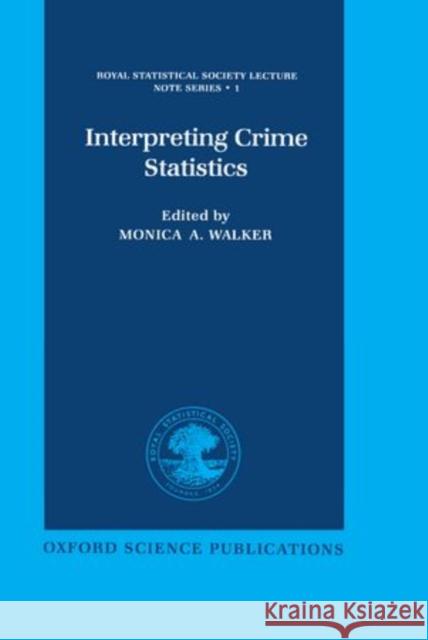
Leading contributors here demonstrate the importance of understanding the processes behind statistical tabulations, clarifying the meaning of the statistics available in several areas of criminal statistics by asking experts in numerous fields to contribute their knowledge. The emphasis throughout is on clarity of the construction and meaning of data, rather than on the details of the meaning of individual findings. * Should the public be concerned that the police detection rate for crimes in the UK has dropped from 44% in 1962 to just 26% in 1992? That depends on how one views the figures; the former represents less than a third of the number of crimes detected in 1992, and hides a large increase in the detention rate per officer. * If conviction rates for non-serious offencers for men is six times that of women prior to the age of 21, but only twice that of women over 21, does that mean that women typically take to crime at a later age? Not exactly - three quarters of those female offences consisted of failing to possess a TV licence - and the licence inspectors prosecute whoever answers the door when they visit a household without a licence. * Is it possible to compare homicide statistics for different countries and draw realistic conclusions? Not unless one knows that some countries include attempted murder in their homicide statistics, or death by traffic accident, or if they include deaths that occur as a result of another serious crime such as robbery or rape.Although the examples used all relate to crime in the United Kingdom, the principles demonstrated would apply to statistics used anywhere and in any country.
This book casts a critical eye over the way crime statistics are used and abused by the media, and by those with political axes to grind. With great clarity and style, the contributors demonstrate the importance of understanding the processes behind the statistical tabulations, showing that it need not be a case of `lies, damnes lies and statistics'. This book will be welcomed widely by statisticians, criminologists, and all who are concerned with how statistics are used to reflect reality in this important area.




Czytaj nas na:
KrainaKsiazek.PL - Księgarnia Internetowa


