• Wyszukiwanie zaawansowane
  • Kategorie
  • Kategorie BISAC
  • Książki na zamówienie
  • Promocje
  • Granty
  • Książka na prezent
  • Opinie
  • Pomoc
  • Załóż konto
  • Zaloguj się

International Project Finance: The Public-Private Partnership » książka


zaloguj się | załóż konto
Logo Krainaksiazek.pl

koszyk

konto

szukaj
topmenu
Księgarnia internetowa
Szukaj
Książki na zamówienie
Promocje
Granty
Książka na prezent
Moje konto
Pomoc
 
 
Wyszukiwanie zaawansowane
Pusty koszyk
Bezpłatna dostawa dla zamówień powyżej 20 złBezpłatna dostawa dla zamówień powyżej 20 zł

Kategorie główne

• Nauka
 [2949965]
• Literatura piękna
 [1857847]

  więcej...
• Turystyka
 [70818]
• Informatyka
 [151303]
• Komiksy
 [35733]
• Encyklopedie
 [23180]
• Dziecięca
 [617748]
• Hobby
 [139972]
• AudioBooki
 [1650]
• Literatura faktu
 [228361]
• Muzyka CD
 [398]
• Słowniki
 [2862]
• Inne
 [444732]
• Kalendarze
 [1620]
• Podręczniki
 [167233]
• Poradniki
 [482388]
• Religia
 [509867]
• Czasopisma
 [533]
• Sport
 [61361]
• Sztuka
 [243125]
• CD, DVD, Video
 [3451]
• Technologie
 [219309]
• Zdrowie
 [101347]
• Książkowe Klimaty
 [123]
• Zabawki
 [2362]
• Puzzle, gry
 [3791]
• Literatura w języku ukraińskim
 [253]
• Art. papiernicze i szkolne
 [7933]
Kategorie szczegółowe BISAC

International Project Finance: The Public-Private Partnership

ISBN-13: 9783030963927 / Angielski
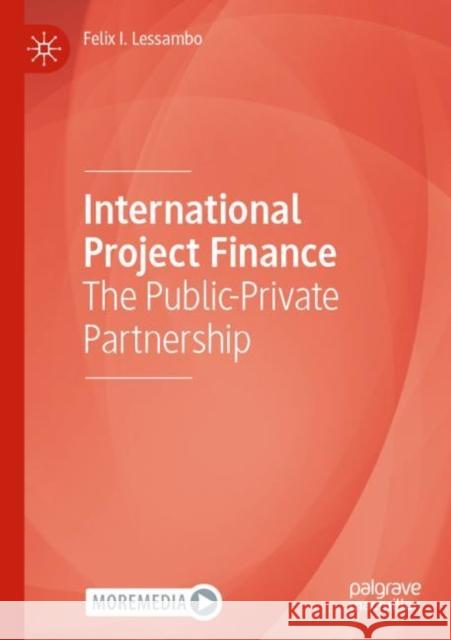
Felix I. Lessambo
International Project Finance: The Public-Private Partnership Felix I. Lessambo 9783030963927 Palgrave MacMillan - książkaWidoczna okładka, to zdjęcie poglądowe, a rzeczywista szata graficzna może różnić się od prezentowanej.

International Project Finance: The Public-Private Partnership

ISBN-13: 9783030963927 / Angielski

Felix I. Lessambo
cena 564,88 zł
(netto: 537,98 VAT:  5%)

Najniższa cena z 30 dni: 539,74 zł
Termin realizacji zamówienia:
ok. 22 dni roboczych
Bez gwarancji dostawy przed świętami

Darmowa dostawa!
inne wydania

Economic growth and development critically depends on the quality of infrastructure. Each aspect of the economy and its infrastructure are linked systemically. Public-Private Partnerships (PPPs) are increasingly being promoted as the solution to the shortfall in financing needed to achieve the Sustainable Development Goals (SDGs). Public-private partnerships enable the public entity to utilize the expertise and efficiencies of the private sector to deliver services and facilities that traditionally have been delivered by the public sector, either through public sector employees or by traditional procurement methods. To be beneficial to all stakeholders, a PPP project requires careful planning, implementation, and strong governance.  This book breaks down the steps involved and the traps to circumvent.Despite its globally growing importance, project finance has been somewhat underrepresented in research. This book analyzes project finance from an interdisciplinary perspective—finance, management, and international business—and includes international laws of arbitrage and perspectives of international financial institutions as never endeavored by any previous research projects. The book also includes case studies assessing the relevance of private-public partnerships by comparing the country expectations and the real outcomes. The gap between expectations and results does not necessarily mean that significant progress has not been made. To the contrary, the book suggests that some of the original targets set may have been unrealistic, and that the requisite financial resources—or the financial sector policies that could have generated those resources—may have been lacking.


Economic growth and development critically depends on the quality of infrastructure. Each aspect of the economy and its infrastructure are linked systemically. Public-Private Partnerships (PPPs) are increasingly being promoted as the solution to the shortfall in financing needed to achieve the Sustainable Development Goals (SDGs). Public-private partnerships enable the public entity to utilize the expertise and efficiencies of the private sector to deliver services and facilities that traditionally have been delivered by the public sector, either through public sector employees or by traditional procurement methods. To be beneficial to all stakeholders, a PPP project requires careful planning, implementation, and strong governance.  This book breaks down the steps involved and the traps to circumvent.Despite its globally growing importance, project finance has been somewhat underrepresented in research. This book analyzes project finance from an interdisciplinary perspective—finance, management, and international business—and includes international laws of arbitrage and perspectives of international financial institutions as never endeavored by any previous research projects. The book also includes case studies assessing the relevance of private-public partnerships by comparing the country expectations and the real outcomes. The gap between expectations and results does not necessarily mean that significant progress has not been made. To the contrary, the book suggests that some of the original targets set may have been unrealistic, and that the requisite financial resources—or the financial sector policies that could have generated those resources—may have been lacking.

Kategorie:
Nauka, Ekonomia i biznes
Kategorie BISAC:
Business & Economics > Finance - General
Business & Economics > Finanse publiczne
Wydawca:
Palgrave MacMillan
Język:
Angielski
ISBN-13:
9783030963927

Chapter 1: Introduction to Project Finance

1.1 General

1.2 Characteristics of project Financing

1.3 Public-Private Partnership Framework

            1.3.1 PPP Policy

·         PPP Rationale

·         PPP Scope

·         PPP Implementation Principles

·          PPP Governance Arrangements

Chapter 2: Project Financing and Direct Conventional Financing

2.1 General

2.2 Corporate Finance

2.3 Traditional Procurement

2.4 Project Finance

2.5 Advantages and disadvantages of project finance

            2.5.1 Advantages

            2.5.2 Disadvantages

2.6 Evolution of project finance

2.6.1 The Extractive and oil Industry

            2.6.2 The Natural Resource Industry

2.6.3 The Power Industry & Beyond


Chapter 3: Sources of project funds

3.1 General

3.2 Sources of Funds


·         Syndicated Commercial loans

·         Bridge finance

    Bonds and other debt instruments
  • Stapled Financing
  • Equity finance
    • Mezzanine Loan
    • Hybrid Instruments
      Pension funds
    • Government grants

    3.3 Project Financing Participants

    • Project sponsors or owners
    • Project company
      Contractor
    • Operator
  • Supplier
    • Customer
    • Multilateral agencies
      Export credit agency
    • Legal advisers
  • The trustee 
    • Insurance Companies

    3.3 Public-Private Partnerships

    3.4 Structuring Project finance


    Chapter 4: Bankability

    4.1 General

    4.2 Bankability Assessment

        4.2.1 Certainty of Revenue Stream

        4.2.2 Risk Factors

            4.2.2.1 Political Environment

            4.2.2.2 Economic Environment

            4.2.2.3 Legal System

            4.2.2.4 Regulatory Framework

            4.2.2.5 Environmental Risk

            4.2.2.6 Project Specificity

            4.2.2.7 Project Financial Structure

            4.2.2.8 Third Party Risk Allocation

            4.2.2.9 Contract Agreement

    4.3 Bankability Tradeoff

    Chapter 5: Public Procurement: Laws and Regulations

    5.1 General

    5.2 Public Procurement Legal Framework

    • The Constitution
  • National Procurement Laws
    • Procurement Regulations

    5.3 Principles of Public Procurement 

    5.3.1 Transparency

    5.3.2 Integrity

    5.3.3 Efficiency

    5.3.4 Fairness

    5.3.5 Openness

    5.3.6 Competition

    5.3.7 Accountability

    5.4 Public Procurement Cycle

    5.4.1     Competitive Tendering

    5.4.2     Pre-Qualification of Bidders

    5.4.3     Processing and evaluating bids

    5.4.4     Making award recommendations

    5.4.5     Negotiating contracts

    5.4.6     Contract award letter and signing the contract.

    5.5 Public Procurement laws in the US, EU, and China

                5.5.1 Public Procurement laws in the United States

                5.5.2 Public Procurement laws in the European Union

                5.5.3 Public Procurement laws in China


    Chapter 6: Assessment of project’s viability and analytical tools

    6.1 General

    6.2 The Procurement Process

    6.3 The Six Assessment Areas

                6.3.1 Project Identification and PPP Screening

                6.3.2 Appraisal and Preparation Phase

                6.3.3 Structuring and Drafting Phase

                6.3.4 Tender Phase

    6.3.5 Contract Operational Management 

    6.3.6 Contract Finalization Management 

    6.4 The Analytical Tools:  Infrastructure Prioritization Framework

    6.4.1 Infrastructure Prioritization Framework


    ·         Social Cost Benefit Analysis

    ·         Multi-Criteria Decision Analysis (MCDA)


    Chapter 7: The Identification and Management of Risks

    7.1 General

    7.2 Identification of Projects: Project cycle

    • Identification
    • Preparation
    • Appraisal
    • Negotiation/Approval
    • Implementation/Support
    • Completion/Evaluation

    7.3 Risk Assessment

                7.3.1 Risk Identification

    • Country risk
    • Political risk
    • Industry risk
    • Project risk
    • Customer risk
    • Supplier risk 
    • Sponsor risk
    • Contractor risk 
    • Operating risk
    • Product risk
    • Environmental risk
    • Competitor risk
    • Funding risk
    • Currency risk
    • Interest rate risk

    7.4 Risk Allocations

    7.4.1 The Project sponsor

    7.4.2 The Lenders

                7.4.3 The Contractor

                7.4.4 The Suppliers

                7.4.5 The Customers

    7.5.6 The Project Company

    7.5.7 The Governments


    Chapter 8: The Project Finance contractual arrangement

    8.1 General

    8.2 PPP Types

    8.2.1 Build – Operate – Transfer (BOT) 

    8.2.2 Build – Own – Operate – Transfer (BOOT) 

    8.2.3 Buy-Build Operate (BBO)

    8.2.4 Build – Own – Operate (BOO)

    8.2.5 Build – Own – Operate – Transfer (BOOT) 

    8.2.6 Design – Build

    8.2.7 Design – Build – Finance

    8.2.8 Design – Construct – Maintain – Finance (DCMF) 

    8.2.9 O & M (Operation & Maintenance)

    8.2.10 Lease-Purchase

    8.2.11 Turnkey contract

    8.3 Bidding and Award Procedure

    • Purposes
    • Procedures
    • Evaluation

    8.4 PPP Contract clauses

                8.4.1 PPP Contracts under various Legal Systems

    • Common Law System 
    • Civil Law System 
    • Islamic law 

    8.4.2 PPP Key Contractual terms

                            8.4.2.1 Force Majeure

        The Concept of Force majeure
      • Force Majeure and hardship clause
      • Consequences of Force Majeure

                8.4.2.2 Material Adverse Government Action

                8.4.2.3 Change of Law

        Concept of Change in Law
      • Relief and Compensation

                8.4.2.4 Termination of Contract

        The concept of contractual termination
      • Early Termination by the Public Authority

                8.4.2.5 Governing Law and Dispute Resolution 

        The PPP Governing Law
      • The PPP Dispute Resolution


    Chapter 9: Alternative Dispute Resolution

    9.1 General

    9.2 Advantages and disadvantages of ADR

    9.2.1 Benefits of ADR

    9.2.2 Disadvantages of ADR

    9.3 Forms and Types of ADR

    9.3.1 Adjudicative ADR

    ·         Arbitration

    ·         Neutral Fact-Finding

    9.3.2 Evaluative ADR

    ·         Peer Evaluation 

    ·         Specialist or Expert Evaluation

    9.3.3 Facilitative ADR

    ·         Mediation

    ·         Conciliation 

    ·         Consensus Building

    9.4 International Platforms 

                9.4.1 The ICSID

    9.4.2 The International Chamber of Commerce

                9.4.3 The Arbitration Institute of the Stockholm Chamber of Commerce (SCC)

    9.4.4 The Hong Kong International Arbitration Centre (HKIAC)

    9.4.5 The Singapore International Arbitration Centre

    9.4.6 The Cairo Regional Centre for International Commercial Arbitration

    Chapter 10: Project Finance Governance

    10.1 General

    10.2 OECD Principles for public governance of PPP

    10.3 Quality Infrastructure investment principles

    10.4 PPP Governance Paradigm


    10.4.1 Traditional Public Administration


    10.4.2 New Public Management


    10.4.3 Collaborative Governance


    10.4.4 Private Governance Approach

    Chapter11: International Project Finance and Corruption

    11.1 General

    11.2 Forms of Corruption

    ·         Bribery

    ·         Lubrication

    ·         Subornation

    ·         Lobbying

    ·         Extortion

    ·         Cronyism

    ·         Patronage

    ·         Influence peddling

    ·         Graft

    11.3 Fighting corruption within World Bank Group-financed projects

                11.3.1 Effects of Corruption on Projects Finance

                11.3.2 Corruption in the extractive industries

                11.3.3 Example: Extractive Industries Transparency Initiative


    Chapter 12: Infrastructure Projects Finance

    12.1 General

    12.2 Substantial Project Financing

    12.2.1 Water and Sanitation Project

    12.2.1.1 Human Right to Water and Sanitation

    12.2.1.2 Water and Sanitation PPP

    ·         Concessions

    ·         BOT Project

    ·         DBO Project

    12.2.2 Transportation and Telecommunications Projects

                            12.2.2.1 Transportation

    ·         Airports

    ·         Ports 

    ·         Roads

    ·         Railways

    ·         Urban Passenger Transport

                            12.2.2.2 Telecommunications

    12.2.3 Climate and Energy

                            12.2.3.1 Climate Change

                            12.2.3.2 Energy Power


    Chapter 13: Public Fiscal Risk Assessment Model

    13.1 General

    13.2Understanding the Fiscal Metrics

     13.3 PPP Accounting and Reporting

    13.3.1 Budgeting

    13.3.2  Accounting

    13.3.3  Reporting PPPs in Public Deficit and Debt

    13.4 Assessment of Fiscal Risk

     (i) Identification and Assessment of Risks

     (ii) Mitigating factors

    13.5. Performing the Sensitivity analysis

    • GDP shock.
    • Exchange rate shock

    ·         Inflation shock.


    Chapter 14: Cases study

    14.1 General

    14.2 Successful stories

    14.2.1 Breaking New Ground: Lesotho Hospital Public-Private Partnership—A Model for Integrated Health Services Delivery

    14.2.2 Ukraine: Providing Safe Harbors for Ukraine’s Economic Growth

    14.2.3 Senegal- A Road leads to Economic Opportunities


    14.2.4 China (1997): The Greenfield project to install modern medium-density fiberboard plants


    14.3 Unsuccessful PPP

    14.3.1  Liberia Education Advancement Programme (LEAP)

    14.3.2 The New Paris Courthouse

    14.3.3 International Airport of Chinchero – Cuzco

    Felix I. Lessambo is Adjunct Associate Professor at Fordham University, USA, where he teaches Corporate Tax and Audit & Assurance Services. He was an Associate Professor at Central Connecticut State University School of Business where he taught Financial Statements Analysis, Global Financial Reporting, and Law & Finance. He has practiced international tax, transfer pricing, and alternative investment management where he structured and advised on hedge funds and private equity cross-border transactions. He is the author of several books in finance including The International Banking System, The International Corporate Governance System, International Financial Institutions and Their Challenges, International Aspects of US Taxation System, Audit-Assurance Services & Forensics, Financial Statements: Analysis & Reporting, The US Banking System, Mergers in the Global Markets, International Finance, and The US Mergers & Acquisitions: Legal & Financial Aspects.

    Economic growth and development critically depends on the quality of infrastructure. Each aspect of the economy and its infrastructure are linked systemically. Public-Private Partnerships (PPPs) are increasingly being promoted as the solution to the shortfall in financing needed to achieve the Sustainable Development Goals (SDGs). Public-private partnerships enable the public entity to utilize the expertise and efficiencies of the private sector to deliver services and facilities that traditionally have been delivered by the public sector, either through public sector employees or by traditional procurement methods. To be beneficial to all stakeholders, a PPP project requires careful planning, implementation, and strong governance.  This book breaks down the steps involved and the traps to circumvent.

    Despite its globally growing importance, project finance has been somewhat underrepresented in research. This book analyzes project finance from an interdisciplinary perspective—finance, management, and international business—and includes international laws of arbitrage and perspectives of international financial institutions as never endeavored by any previous research projects. The book also includes case studies assessing the relevance of private-public partnerships by comparing the country expectations and the real outcomes. The gap between expectations and results does not necessarily mean that significant progress has not been made. To the contrary, the book suggests that some of the original targets set may have been unrealistic, and that the requisite financial resources—or the financial sector policies that could have generated those resources—may have been lacking.

    Felix I. Lessambo is Adjunct Associate Professor at Fordham University, USA, where he teaches Corporate Tax and Audit & Assurance Services. He was an Associate Professor at Central Connecticut State University School of Business where he taught Financial Statements Analysis, Global Financial Reporting, and Law & Finance. He has practiced international tax, transfer pricing, and alternative investment management where he structured and advised on hedge funds and private equity cross-border transactions. He is the author of several books in finance including The International Banking System, The International Corporate Governance System, International Financial Institutions and Their Challenges, International Aspects of US Taxation System, Audit-Assurance Services & Forensics, Financial Statements: Analysis & Reporting, The US Banking System, Mergers in the Global Markets, International Finance, and The US Mergers & Acquisitions: Legal & Financial Aspects.


    Udostępnij

    Facebook - konto krainaksiazek.pl


    Opinie o Krainaksiazek.pl na Opineo.pl

    Partner Mybenefit

    Krainaksiazek.pl w programie rzetelna firma Krainaksiaze.pl - płatności przez paypal

    Czytaj nas na:

    Facebook - krainaksiazek.pl
    • książki na zamówienie
    • granty
    • książka na prezent
    • kontakt
    • pomoc
    • opinie
    • regulamin
    • polityka prywatności

    Zobacz:

    • Księgarnia czeska

    • Wydawnictwo Książkowe Klimaty

    1997-2025 DolnySlask.com Agencja Internetowa

    © 1997-2022 krainaksiazek.pl
         
    KONTAKT | REGULAMIN | POLITYKA PRYWATNOŚCI | USTAWIENIA PRYWATNOŚCI
    Zobacz: Księgarnia Czeska | Wydawnictwo Książkowe Klimaty | Mapa strony | Lista autorów
    KrainaKsiazek.PL - Księgarnia Internetowa

    Polityka prywatnosci - link
    Krainaksiazek.pl - płatnośc Przelewy24
    Przechowalnia Przechowalnia



