International Institutions and Asian Development » książka





International Institutions and Asian Development
ISBN-13: 9780415497541 / Angielski / Twarda / 2010 / 240 str.
International Institutions and Asian Development
ISBN-13: 9780415497541 / Angielski / Twarda / 2010 / 240 str.
(netto: 699,68 VAT: 5%)
Najniższa cena z 30 dni: 705,23
ok. 22 dni roboczych.
Darmowa dostawa!
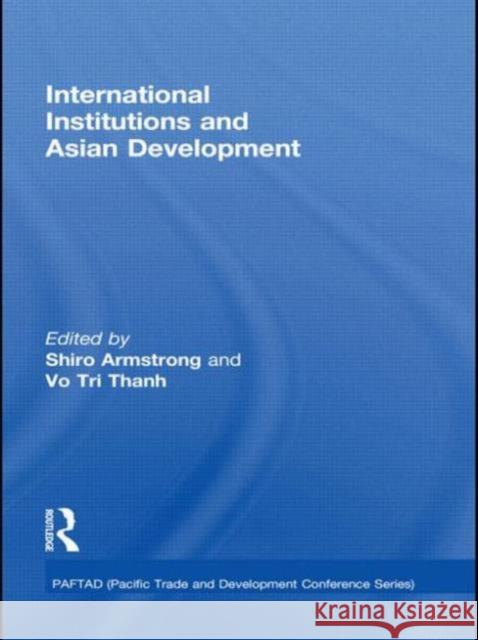
Are international and Asian regional institutions serving the development goals of Asian and Pacific Economies as well they should? The global economy, led by the Asia Pacific region, has undergone immense change and growth. Have the existing institutions and arrangements been able to keep pace with those changes in the global economy? International Institutions and Asian Development tackles these questions and is an essential book for the assessment of regional and international institutions, as well as policy prescriptions for reforming them to ensure they deliver on sustainable, peaceful growth and development in the region. Drawing from papers presented to the 32nd Pacific Trade and Development conference in Hanoi in 2007, the contributions by distinguished authors add to the understanding of the purpose, evolution, relevance and gaps in regional and global institutions and their arrangements. Shiro Armstrong is a Research Fellow at the Crawford School of Economics and Government at the Australian National University. Vo Tri Thanh is Director of the Department for International Economic Integration Studies of the Central Institute of Economic Management in Vietnam
This latest volume in the PAFTAD conference series looks at international institutions and arrangements as they affect economic development and prosperity for Asian and Pacific economies. It covers the influence of international public goods and landmark developments and assesses how they have affected Asia’s development through the ‘Golden’ and ‘Silver Ages’ of economic development. It also considers the challenges for the continuation of a new ‘Platinum Age’ of development driven by China and India.
It investigates the influence of a number of institutions and agreements, such as the General Agreement on Tariffs and Trade, the World Trade Organization, the International Monetary Fund, the World Bank, the Asian development bank and the Asia-Pacific Economic Cooperation. It also contains country studies of China and Vietnam and their relationship with the World Trade Organization.




Czytaj nas na:
KrainaKsiazek.PL - Księgarnia Internetowa


