International Human Resource Development: Learning, Education and Training for Individuals and Organizations » książka





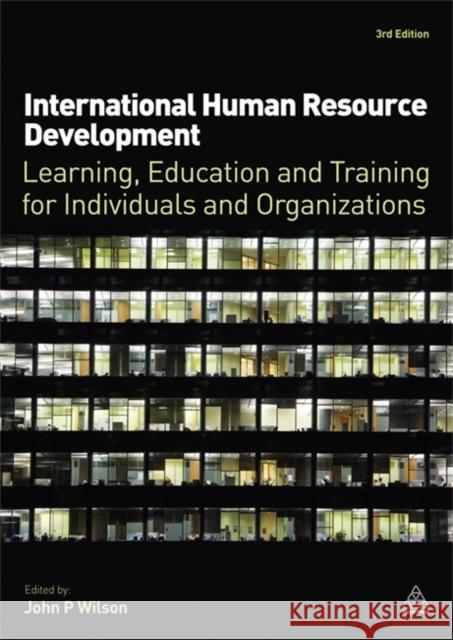
International Human Resource Development: Learning, Education and Training for Individuals and Organizations
ISBN-13: 9780749476014 / Angielski / Twarda / 2015 / 536 str.
International Human Resource Development: Learning, Education and Training for Individuals and Organizations
ISBN-13: 9780749476014 / Angielski / Twarda / 2015 / 536 str.
(netto: 770,87 VAT: 5%)
Najniższa cena z 30 dni: 779,47
ok. 30 dni roboczych.
Darmowa dostawa!
Growing and influential, the discipline of Human Resource Development (HRD) is the framework for helping employees develop their personal and organizational skills, knowledge, and abilities. HRD is increasingly viewed as the only source of sustainable competitive advantage for an organization.
This book offers an international perspective on the significant developments in the field and covers HRD and learning, organizational learning including a discussion of change management, a comparative view of learning education, training and human resource development in both developed and emerging countries, a section covering the training cycle from identification of training needs to design, delivery and evaluation and a final discussion of HRD management including functions and services, leadership development, learning spaces and business ethics.
A distinguished group of international contributors present current views from Europe Ireland, France, Sweden, the Netherlands, Portugal, Russia UK, USA, India, Iraq, Brazil, Romania, South Africa and Australia. American contributors include Maria Cseh from George Washington University, Douglas Jondle from University of St Thomas Minnesota and K. Peter Kuchinke from the University of Illinois at Urbana Champaign.
International Human Resource Development provides thought-provoking questions and stimulating answers to key issues in human resource development today, putting HRD in its strategic organizational context and examining in depth the process of learning from different perspectives. This third edition provides a thorough exploration of international human resource development, and has been completely updated and revised with a variety of case studies and contributions from a range of HR development experts, making it the most topical book in this field. It also addresses the increasingly important area of knowledge management, incorporating learning and development. Clearly structured and mapped against the current Chartered Institute of Personnel and Development (CIPD) standards, this comprehensive handbook covers each aspect of the training cycle, including the role and identification of learning, training and development needs in organizations, working in multicultural and multilingual settings, learning and competitive strategy, planning and design, delivering effective training programmes, assessment and evaluation, international development and managing the human resource function.




Czytaj nas na:
KrainaKsiazek.PL - Księgarnia Internetowa


