• Wyszukiwanie zaawansowane
  • Kategorie
  • Kategorie BISAC
  • Książki na zamówienie
  • Promocje
  • Granty
  • Książka na prezent
  • Opinie
  • Pomoc
  • Załóż konto
  • Zaloguj się

International Finance Regulati » książka


zaloguj się | załóż konto
Logo Krainaksiazek.pl

koszyk

konto

szukaj
topmenu
Księgarnia internetowa
Szukaj
Książki na zamówienie
Promocje
Granty
Książka na prezent
Moje konto
Pomoc
 
 
Wyszukiwanie zaawansowane
Pusty koszyk
Bezpłatna dostawa dla zamówień powyżej 20 złBezpłatna dostawa dla zamówień powyżej 20 zł

Kategorie główne

• Nauka
 [2948695]
• Literatura piękna
 [1824038]

  więcej...
• Turystyka
 [70868]
• Informatyka
 [151073]
• Komiksy
 [35227]
• Encyklopedie
 [23181]
• Dziecięca
 [621575]
• Hobby
 [138961]
• AudioBooki
 [1642]
• Literatura faktu
 [228651]
• Muzyka CD
 [371]
• Słowniki
 [2933]
• Inne
 [445341]
• Kalendarze
 [1243]
• Podręczniki
 [164416]
• Poradniki
 [479493]
• Religia
 [510449]
• Czasopisma
 [502]
• Sport
 [61384]
• Sztuka
 [243086]
• CD, DVD, Video
 [3417]
• Technologie
 [219673]
• Zdrowie
 [100865]
• Książkowe Klimaty
 [124]
• Zabawki
 [2168]
• Puzzle, gry
 [3372]
• Literatura w języku ukraińskim
 [260]
• Art. papiernicze i szkolne
 [7838]
Kategorie szczegółowe BISAC

International Finance Regulati

ISBN-13: 9781118829592 / Angielski / Twarda / 2014 / 240 str.
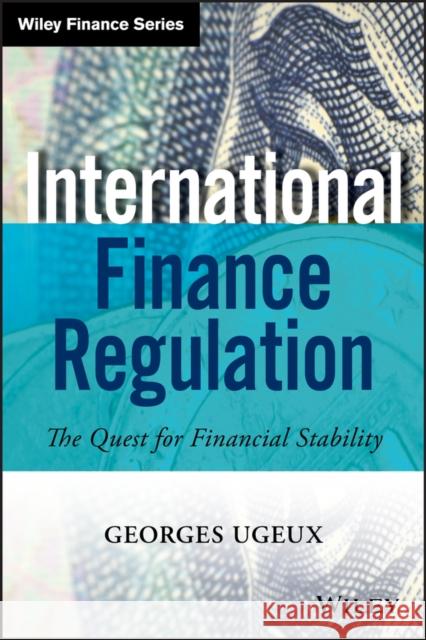
Georges Ugeux
International Finance Regulati Ugeux, Georges 9781118829592 John Wiley & Sons - książkaWidoczna okładka, to zdjęcie poglądowe, a rzeczywista szata graficzna może różnić się od prezentowanej.

International Finance Regulati

ISBN-13: 9781118829592 / Angielski / Twarda / 2014 / 240 str.

Georges Ugeux
cena 294,63
(netto: 280,60 VAT:  5%)

Najniższa cena z 30 dni: 292,22
Termin realizacji zamówienia:
ok. 30 dni roboczych.

Darmowa dostawa!

As the global market expands, the need for international regulation becomes urgent Since World War II, financial crises have been the result of macroeconomic instability until the fatidic week end of September 15 2008, when Lehman Brothers filed for bankruptcy. The financial system had become the source of its own instability through a combination of greed, lousy underwriting, fake ratings and regulatory negligence. From that date, governments tried to put together a new regulatory framework that would avoid using taxpayer money for bailout of banks. In an uncoordinated effort, they produced a series of vertical regulations that are disconnected from one another. That will not be sufficient to stop finance from being instable and the need for international and horizontal regulation is urgent. This challenge is the focus of Georges Ugeux's book. International Finance Regulation: The Quest for Financial Stability focuses on the inspirations behind regulation, and examines the risks and consequences of fragmentation on a global scale. Author Georges Ugeux has four decades of experience in the legal and economic aspects of international business operations. He created and run the New York Stock Exchange'sinternational group in charge of developing the NYSE's reach to non-US companies, including relationships with regulators and governments. Ugeux teaches European Banking and Finance of the Columbia University School of Law. Ugeux is uniquely positioned to provide recommendations and suggestions from the perspective of a top global authority. In the book, he explores international regulation with topics such as: - Laws, regulations, and risks of overregulation
- Transformation of the U.S. market and creation of the Eurozone
- Development of a global framework and stability of the banking system
- In-depth examination of Basel III, the Dodd-Frank Act, the European Banking Union, and the Volcker Rule The book also contains case studies from real-world scenarios like Lehman, CDS, Greece, the London Whale, and Libor to illustrate the concepts presented. Finance consistently operates within an increasingly global paradigm, and an overarching regulation scheme is becoming more and more necessary for sustainable growth. International Finance Regulation: The Quest for Financial Stability presents an argument for collaboration toward a comprehensive global regulation strategy.


Kategorie:
Nauka, Ekonomia i biznes
Kategorie BISAC:
Technology & Engineering > General
Business & Economics > Finance - General
Wydawca:
John Wiley & Sons
Seria wydawnicza:
Wiley Finance (Hardcover)
Język:
Angielski
ISBN-13:
9781118829592
Rok wydania:
2014
Numer serii:
000206780
Ilość stron:
240
Waga:
0.44 kg
Wymiary:
22.86 x 14.99 x 2.54
Oprawa:
Twarda
Wolumenów:
01
Dodatkowe informacje:
Bibliografia
Obwoluta

Georges Ugeux draws on his experience as well as his training as an economist and lawyer to tackle a daunting topic: International Finance regulation: The Quest for Financial Stability (Wiley, 2014). ( ) Backward–looking rules are only one problem with current financial regulation. Another is its fragmentation, especially across national borders. ( ) Ugeux is not especially hopeful that we can resolve the problems that stand in the way of global financial stability. In fact, if the volcano model is apt, stability itself is a chimera. Brenda Jubin, Reading the markets, Investing.com

Preface xiii

Is Finance in a Stage of Permanent Crisis? xiv

Global Markets Are Interconnected xvi

Regulating Finance in a World in Crisis xviii

A Web of Institutional Complexity xix

Will Global Financial Regulation Become Lex America? xx

Applying Global Regulatory Convergence xxii

Regulator and Regulated: The Infernal Couple xxiii

Finance Cannot Be Left Unregulated xxiii

Five Years after Lehman, Regulation

Could Not Change the Culture xxiv

A Culture of Outlaws xxv

I Will Never Give Up xxvi

Notes xxvii

CHAPTER 1 The Multiple Objectives of Financial Regulation 1

Stop (Ab)using Taxpayer Money 2

Protect Retail and Small Investors and Depositors 3

Ensure Transparency of Markets and Institutions 5

Implement a Truly Risk–Adjusted Remuneration System 6

Protect Deposits from Trading 7

Notes 8

CHAPTER 2 A Quarter Century of Banking Crises and the Evolution of Financial Institutions 11

Banking Crises Are Not Exactly a Recent Phenomenon 12

The Two Main Emerging–Market Crises 13

Subprime Crisis 14

Lehman Crisis 16

European Sovereign Debt Crisis 17

European Banking Crisis 17

LIBOR Manipulation 19

Will the Foreign Exchange Market Be Next? 21

Notes 23

CHAPTER 3 The Lessons of the Recent Financial Crises: The Explosion of Balance Sheets 27

Structural Overbanking of Europe 28

Lack of Transparency of the Derivative Markets 33

Emergence of the Credit Default Swap (CDS) Market 34

The Regulatory Landscape Is Not Global but Largely National 35

Notes 35

CHAPTER 4 Global Financial Regulation: The Institutional Complexities 37

Group of 20 (G20) 39

Financial Stability Board (FSB) 41

Bank for International Settlements (BIS) and the Basel Committee (BCBS) 42

International Monetary Fund (IMF) 43

International Organization of Securities Commissions (IOSCO) 45

International Accounting Standard Board (IASB) 46

International Association of Insurance Supervisors (IAIS) 47

Notes 50

CHAPTER 5 Capital Adequacy, Liquidity, and Leverage Ratios: Sailing toward the Basel III Rules 53

Part I: Capital Adequacy 55

Part II: Liquidity 59

Part III: Leverage 62

Notes 66

CHAPTER 6 Assessing Likely Impacts of Regulation on the Real Economy 69

Notes 73

CHAPTER 7 Regulating the Derivatives Market 75

Origin of the Derivatives Market 77

Size of the Derivatives Markets 78

U.S. Regulation: Dodd–Frank Act 78

European Market Infrastructure

Regulation (EMIR) 79

Transatlantic Divergences 80

Short Selling Is a Form of Derivative 81

JPMorgan Chase London Trading Losses 82

Notes 83

CHAPTER 8 The Structure of Banking: How Many Degrees of Separation? 87

Systemically Important Financial Institutions (SIFIs) 87

Universal Banking Model 89

Separation Models 90

United Kingdom 90

United States 90

European Union 91

Sw+itzerland 92

Volcker Rule and Proprietary Trading 92

Too Big to Fail (TBTF): Is Size the Problem? 95

Prohibit the Trading of Commodities by Banks 97

Notes 98

CHAPTER 9 Banking Resolution and Recovery 101

Moral Hazard 102

Can the Bail–In Concept Avoid Taxpayers Bailout? 103

Lessons from the Financial Crisis 104

Living Will, or How Banks Want to Be Treated if They Are Close to Collapsing 104

United States 105

The Citi Recovery Plan 106

Role of the Federal Deposit Insurance Corporation in the United States 107

United Kingdom 110

European Banking Resolution and Recovery Directive 111

Regulatory Technical Standards 112

Can Resolution Rules Be Effective? 112

An Impossible European Institutional Challenge 113

Who Will Decide to Put Companies

Under Resolution Surveillance? 114

Notes 120

CHAPTER 10 Banking and Shadow Banking 125

Hedge Funds 125

United States 127

Europe 127

Other Types of Shadow Banking 127

Capital Markets and Securitization 128

Notes 129

CHAPTER 11 Rating Agencies and Auditors 131

Part I: The Rating Agencies 131

Part II: External Auditors 134

Part III: The Limits of Accountability 136

Notes 136

CHAPTER 12 Central Banks as Lenders of Last Resort Have a Conflict of Interest with Their Regulatory Role 139

Financial Stability 140

United States: Quantitative Easing 141

European Central Bank: The Long–Term

Refinancing Operations (LTROs) 143

United Kingdom 144

Japan and Abenomics 145

Are Central Banks Balance Sheets Eternally Expandable? Have They Become Hedge Funds? 145

Is This Novation of Central Banks Legitimate or Legal? 147

Notes 147

CHAPTER 13 Financial Institution Governance (or Lack Thereof) 149

Risk Management 150

Dysfunctional Boards of Directors 151

Should the Chairperson Also Be the CEO? 152

Remuneration and Risks 153

Personal or Institutional Accountability 153

Notes 154

CHAPTER 14 Was It a Global Crisis? The Asian Perspective 157

Japan 158

China 160

India 161

Assessing the Asian Risk 162

Notes 163

CHAPTER 15 The Challenges of Global Regulation 165

Regulation, Policies, and Politics 167

Regulators and Sovereign Financing 169

European Central Bank Supervision:

The E.U. Governance Challenges 169

The Risks of Regulatory Fragmentation 171

Bank Resolution: The Legal Nightmare 171

Basel III 172

Reemergence of Capital Markets 173

Restructuring Finance 173

Should Financial Communication Be Regulated? 174

Should Financial Media Respect a Code of Conduct? 175

Financial Education Is Key 176

Notes 178

CHAPTER 16 Regulation and Ethics 181

Management Integrity 182

Accountability 182

Transparency Is Key 183

A Principled Regulatory System Is Needed 183

Doing the Right Thing 184

Notes 186

CONCLUSION

What Can We Expect? 189

A Few Books I Read and Found Helpful . . . 195

About the Author 197

Index 199

GEORGES UGEUX, a lawyer and economist by training, is the Chairman and CEO of Galileo Global Advisors. Prior to founding Galileo, Ugeux joined the New York Stock Exchange as Group Executive Vice President, International and Research. He created and ran the New York Stock Exchange s international group in charge of developing the NYSE s reach to non–US companies, including relationships with regulators and governments. Ugeux teaches European Banking and Finance at the Columbia University School of Law and has been publishing, speaking, and blogging on these issues, namely for Le Monde (France) and the Huffington Post.

Praise for International Finance Regulation

Building on his extensive experience as a market regulator, law professor, and internationalist, Georges Ugeux has produced an eminently readable exposition of the disparate threads that caused the recent breakdown of global financial systems, and the serious deficiencies permeating existing regulatory mechanisms that should but are unable to prevent future breakdowns. His analysis culminates in his carefully conceived outline of the necessary components of effective global financial regulatory reform. This is a must–read for regulators, market professionals, and anyone concerned about the future of financial regulation as well as those looking for creative approaches to restore global financial stability.
Harvey L. Pitt, CEO, Kalorama Partners, LLC; Former SEC Chairman (2001 2003)

The great interest of Georges Ugeux s book is that it puts together issues which are too often dealt with separately. Therefore, this well–documented book provides a more comprehensive view of what is needed to get a more stable financial world.
Philippe Maystadt, special advisor to Commissioner Barnier, former president of the European Investment Bank

In a short book, Georges Ugeux has covered the waterfront, with fresh and incisive observations on a host of topics. You may not agree with every judgment that he reaches, but he will make you think and respond. As usual, he is stimulating, hard–nosed, and delightfully judgmental.
John Coffee, Adolf A. Berle Professor of Law at Columbia University Law School; Director of the Columbia University Law School s Center on Corporate Governance


Udostępnij

Facebook - konto krainaksiazek.pl


Opinie o Krainaksiazek.pl na Opineo.pl

Partner Mybenefit

Krainaksiazek.pl w programie rzetelna firma Krainaksiaze.pl - płatności przez paypal

Czytaj nas na:

Facebook - krainaksiazek.pl
  • książki na zamówienie
  • granty
  • książka na prezent
  • kontakt
  • pomoc
  • opinie
  • regulamin
  • polityka prywatności

Zobacz:

  • Księgarnia czeska

  • Wydawnictwo Książkowe Klimaty

1997-2026 DolnySlask.com Agencja Internetowa

© 1997-2022 krainaksiazek.pl
     
KONTAKT | REGULAMIN | POLITYKA PRYWATNOŚCI | USTAWIENIA PRYWATNOŚCI
Zobacz: Księgarnia Czeska | Wydawnictwo Książkowe Klimaty | Mapa strony | Lista autorów
KrainaKsiazek.PL - Księgarnia Internetowa

Polityka prywatnosci - link
Krainaksiazek.pl - płatnośc Przelewy24
Przechowalnia Przechowalnia






