• Wyszukiwanie zaawansowane
  • Kategorie
  • Kategorie BISAC
  • Książki na zamówienie
  • Promocje
  • Granty
  • Książka na prezent
  • Opinie
  • Pomoc
  • Załóż konto
  • Zaloguj się

Intercultural Spaces of Law: Translating Invisibilities » książka


zaloguj się | załóż konto
Logo Krainaksiazek.pl

koszyk

konto

szukaj
topmenu
Księgarnia internetowa
Szukaj
Książki na zamówienie
Promocje
Granty
Książka na prezent
Moje konto
Pomoc
 
 
Wyszukiwanie zaawansowane
Pusty koszyk
Bezpłatna dostawa dla zamówień powyżej 20 złBezpłatna dostawa dla zamówień powyżej 20 zł

Kategorie główne

• Nauka
 [2948695]
• Literatura piękna
 [1824038]

  więcej...
• Turystyka
 [70868]
• Informatyka
 [151073]
• Komiksy
 [35227]
• Encyklopedie
 [23181]
• Dziecięca
 [621575]
• Hobby
 [138961]
• AudioBooki
 [1642]
• Literatura faktu
 [228651]
• Muzyka CD
 [371]
• Słowniki
 [2933]
• Inne
 [445341]
• Kalendarze
 [1243]
• Podręczniki
 [164416]
• Poradniki
 [479493]
• Religia
 [510449]
• Czasopisma
 [502]
• Sport
 [61384]
• Sztuka
 [243086]
• CD, DVD, Video
 [3417]
• Technologie
 [219673]
• Zdrowie
 [100865]
• Książkowe Klimaty
 [124]
• Zabawki
 [2168]
• Puzzle, gry
 [3372]
• Literatura w języku ukraińskim
 [260]
• Art. papiernicze i szkolne
 [7838]
Kategorie szczegółowe BISAC

Intercultural Spaces of Law: Translating Invisibilities

ISBN-13: 9783031274350 / Angielski / Twarda / 2023
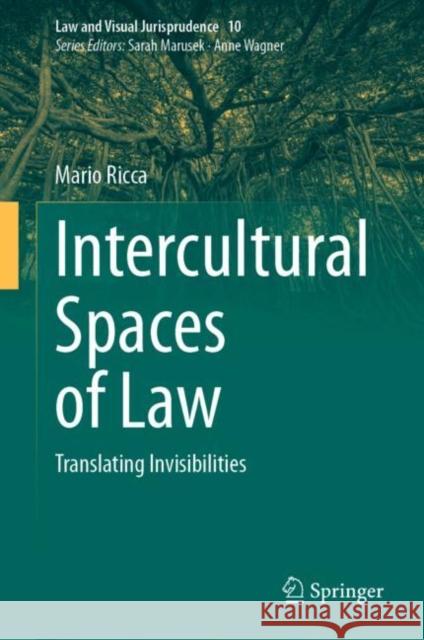
Mario Ricca
Intercultural Spaces of Law: Translating Invisibilities Mario Ricca 9783031274350 Springer - książkaWidoczna okładka, to zdjęcie poglądowe, a rzeczywista szata graficzna może różnić się od prezentowanej.

Intercultural Spaces of Law: Translating Invisibilities

ISBN-13: 9783031274350 / Angielski / Twarda / 2023

Mario Ricca
cena 642,56
(netto: 611,96 VAT:  5%)

Najniższa cena z 30 dni: 616,85
Termin realizacji zamówienia:
ok. 22 dni roboczych.

Darmowa dostawa!
inne wydania

This book proposes an interdisciplinary methodology for developing an intercultural use of law so as to include cultural differences and their protection within legal discourse; this is based on an analysis of the sensory grammar tacitly included in categorizations. This is achieved by combining the theoretical insights provided by legal theory, anthropology and semiotics with a reading of human rights as translational interfaces among the different cultural spaces in which people live. To support this use of human rights’ semantic and normative potential, a specific cultural-geographic view dubbed ‘legal chorology’ is employed. Its primary purpose is to show the extant continuity between categories and spaces of experience, and more specifically between legal meanings and the spatial dimensions of people’s lives.Through the lens of legal chorology and the intercultural, translational use of human rights, the book provides a methodology that shows how to make space and law reciprocally transformative so as to create an inclusive legal grammar that is equidistant from social cultural differences. The analysis includes: a critical view on opportunities for intercultural secularization; the possibility of construing a legal grammar of quotidian life that leads to an inclusive equidistance from differences rather than an unachievable neutrality or an all-encompassing universal legal ontology; an interdisciplinary methodology for legal intercultural translation; a chorological reading of the relationships between human rights protection and lived spaces; and an intercultural and geo-semiotic examination of a series of legal cases and current issues such as indigenous peoples’ rights and the international protection of sacred places.


This book proposes an interdisciplinary methodology for developing an intercultural use of law so as to include cultural differences and their protection within legal discourse; this is based on an analysis of the sensory grammar tacitly included in categorizations. This is achieved by combining the theoretical insights provided by legal theory, anthropology and semiotics with a reading of human rights as translational interfaces among the different cultural spaces in which people live. To support this use of human rights’ semantic and normative potential, a specific cultural-geographic view dubbed ‘legal chorology’ is employed. Its primary purpose is to show the extant continuity between categories and spaces of experience, and more specifically between legal meanings and the spatial dimensions of people’s lives.Through the lens of legal chorology and the intercultural, translational use of human rights, the book provides a methodology that shows how to make space and law reciprocally transformative so as to create an inclusive legal grammar that is equidistant from social cultural differences. The analysis includes: a critical view on opportunities for intercultural secularization; the possibility of construing a legal grammar of quotidian life that leads to an inclusive equidistance from differences rather than an unachievable neutrality or an all-encompassing universal legal ontology; an interdisciplinary methodology for legal intercultural translation; a chorological reading of the relationships between human rights protection and lived spaces; and an intercultural and geo-semiotic examination of a series of legal cases and current issues such as indigenous peoples’ rights and the international protection of sacred places.

Kategorie:
Nauka, Prawo i administracja
Kategorie BISAC:
Law > Reference
Social Science > Socjologia
Law > International
Wydawca:
Springer
Seria wydawnicza:
Law and Visual Jurisprudence
Język:
Angielski
ISBN-13:
9783031274350
Rok wydania:
2023
Wydanie:
2023
Numer serii:
000953288
Oprawa:
Twarda
Wolumenów:
01
Dodatkowe informacje:
Wydanie ilustrowane

Introduction: The invisible pillars of law, cultural mobility and planetary socio-semiosis.- Impossible neutrality: cultural differences and the anthropological incompleteness of western secularization.- Translating cultural invisibilities and legal experience: a timely intercultural law.- Law, space and categories: an introduction to legal chorology.- Human rights, legal chorology and modern art: the dis-compositional approach to the ‘visual’ and the worldwide dynamics of cultural spaces.- Errant law: legal interculturality and human rights as spatial interfaces.- The indigenization of the world: translating spaces, indigenizing human rights.- The invisible ubiquity of sacred places: intercultural secularization and planetary legal protection.- Conclusion: interculturality and the reinvention of the space for democracy’s survival.


Mario Ricca is a Full Professor of Law at the Faculty of Law, University of Parma (Italy). He has worked for many years in legal, educational, scientific, human rights, political, medical, geographical, religious, and anthropological contexts towards the establishment and dissemination of his original and unique methodology of Intercultural Law. His prolific scientific publications in both Italian and English and spanning more than a dozen books and countless essays go beyond mere interdisciplinarity, putting legal practice, theory of law, philosophy, history, cognitive science and above all semiotics in fruitful dialogue.

This book proposes an interdisciplinary methodology for developing an intercultural use of law so as to include cultural differences and their protection within legal discourse; this is based on an analysis of the sensory grammar tacitly included in categorizations. This is achieved by combining the theoretical insights provided by legal theory, anthropology and semiotics with a reading of human rights as translational interfaces among the different cultural spaces in which people live. To support this use of human rights’ semantic and normative potential, a specific cultural-geographic view dubbed ‘legal chorology’ is employed. Its primary purpose is to show the extant continuity between categories and spaces of experience, and more specifically between legal meanings and the spatial dimensions of people’s lives.

Through the lens of legal chorology and the intercultural, translational use of human rights, the book provides a methodology that shows how to make space and law reciprocally transformative so as to create an inclusive legal grammar that is equidistant from social cultural differences. The analysis includes: a critical view on opportunities for intercultural secularization; the possibility of construing a legal grammar of quotidian life that leads to an inclusive equidistance from differences rather than an unachievable neutrality or an all-encompassing universal legal ontology; an interdisciplinary methodology for legal intercultural translation; a chorological reading of the relationships between human rights protection and lived spaces; and an intercultural and geo-semiotic examination of a series of legal cases and current issues such as indigenous peoples’ rights and the international protection of sacred places.




Udostępnij

Facebook - konto krainaksiazek.pl


Opinie o Krainaksiazek.pl na Opineo.pl

Partner Mybenefit

Krainaksiazek.pl w programie rzetelna firma Krainaksiaze.pl - płatności przez paypal

Czytaj nas na:

Facebook - krainaksiazek.pl
  • książki na zamówienie
  • granty
  • książka na prezent
  • kontakt
  • pomoc
  • opinie
  • regulamin
  • polityka prywatności

Zobacz:

  • Księgarnia czeska

  • Wydawnictwo Książkowe Klimaty

1997-2026 DolnySlask.com Agencja Internetowa

© 1997-2022 krainaksiazek.pl
     
KONTAKT | REGULAMIN | POLITYKA PRYWATNOŚCI | USTAWIENIA PRYWATNOŚCI
Zobacz: Księgarnia Czeska | Wydawnictwo Książkowe Klimaty | Mapa strony | Lista autorów
KrainaKsiazek.PL - Księgarnia Internetowa

Polityka prywatnosci - link
Krainaksiazek.pl - płatnośc Przelewy24
Przechowalnia Przechowalnia



