• Wyszukiwanie zaawansowane
  • Kategorie
  • Kategorie BISAC
  • Książki na zamówienie
  • Promocje
  • Granty
  • Książka na prezent
  • Opinie
  • Pomoc
  • Załóż konto
  • Zaloguj się

Intelligent Spatial Decision Support Systems » książka


zaloguj się | załóż konto
Logo Krainaksiazek.pl

koszyk

konto

szukaj
topmenu
Księgarnia internetowa
Szukaj
Książki na zamówienie
Promocje
Granty
Książka na prezent
Moje konto
Pomoc
 
 
Wyszukiwanie zaawansowane
Pusty koszyk
Bezpłatna dostawa dla zamówień powyżej 20 złBezpłatna dostawa dla zamówień powyżej 20 zł

Kategorie główne

• Nauka
 [2946600]
• Literatura piękna
 [1856966]

  więcej...
• Turystyka
 [72221]
• Informatyka
 [151456]
• Komiksy
 [35826]
• Encyklopedie
 [23190]
• Dziecięca
 [619653]
• Hobby
 [140543]
• AudioBooki
 [1577]
• Literatura faktu
 [228355]
• Muzyka CD
 [410]
• Słowniki
 [2874]
• Inne
 [445822]
• Kalendarze
 [1744]
• Podręczniki
 [167141]
• Poradniki
 [482898]
• Religia
 [510455]
• Czasopisma
 [526]
• Sport
 [61590]
• Sztuka
 [243598]
• CD, DVD, Video
 [3423]
• Technologie
 [219201]
• Zdrowie
 [101638]
• Książkowe Klimaty
 [124]
• Zabawki
 [2473]
• Puzzle, gry
 [3898]
• Literatura w języku ukraińskim
 [254]
• Art. papiernicze i szkolne
 [8170]
Kategorie szczegółowe BISAC

Intelligent Spatial Decision Support Systems

ISBN-13: 9783642645211 / Angielski / Miękka / 2011 / 470 str.
Yee Leung
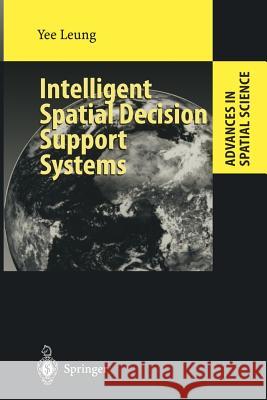
Intelligent Spatial Decision Support Systems Yee Leung 9783642645211 Springer-Verlag Berlin and Heidelberg GmbH &  - książkaWidoczna okładka, to zdjęcie poglądowe, a rzeczywista szata graficzna może różnić się od prezentowanej.

Intelligent Spatial Decision Support Systems

ISBN-13: 9783642645211 / Angielski / Miękka / 2011 / 470 str.

Yee Leung
cena 403,47 zł
(netto: 384,26 VAT:  5%)

Najniższa cena z 30 dni: 385,52 zł
Termin realizacji zamówienia:
ok. 22 dni roboczych
Bez gwarancji dostawy przed świętami

Darmowa dostawa!

This book lays a foundation on the conceptual, theoretical, system-development, and application perspectives of intelligent spatial decision support systems. Departing from conventional approaches that only concentrate on model-data integration, the author places emphasis on the artificial intelligence approach to spatial decision support. In addition to the employment of models, it is argued that systems that can perform commonsense reasoning are of paramount importance in spatial decision support. Fundamental concepts of knowledge representation and inference in spatial decision support systems are investigated. Both the symbolic and distributed approaches are examined. Automatic knowledge acquisition by genetic algorithms is discussed.


Kategorie:
Nauka, Ekonomia i biznes
Kategorie BISAC:
Business & Economics > Urban & Regional
Science > Earth Sciences - Geography
Wydawca:
Springer-Verlag Berlin and Heidelberg GmbH &
Seria wydawnicza:
Advances in Spatial Science
Język:
Angielski
ISBN-13:
9783642645211
Rok wydania:
2011
Dostępne języki:
Angielski
Wydanie:
Softcover Repri
Numer serii:
000354648
Ilość stron:
470
Waga:
0.74 kg
Wymiary:
23.523.5 x 15.5
Oprawa:
Miękka
Wolumenów:
01

1 Introduction.- 1.1 On Complexity of Spatial Decision Making.- 1.2 Basic Notions of Spatial Decision Support Systems.- 1.3 A General Architecture for Intelligent Spatial Decision Support Systems.- 1.4 Purpose and Structure of the Monograph.- 2 Symbolic Approaches to Spatial Knowledge Representation and Inference.- 2.1 A Note on Knowledge Representation and Inference.- 2.2 Propositional and Predicate Logic.- 2.2.1 Propositional Logic.- 2.2.2 Predicate Logic.- 2.3 Production Systems.- 2.3.1 Rules and Decision Trees.- 2.3.2 Inference in Production Systems.- 2.4 Semantic Networks.- 2.4.1 Basic Features of a Semantic Network.- 2.4.2 Semantic-Network Representations of Spatial Relations.- 2.4.3 Multiple-Predicate Representations by Partitioned Semantic Networks.- 2.4.4 Inference in Semantic Networks.- 2.5 Frames.- 2.5.1 Frame-Based Representation of Knowledge.- 2.5.2 Frame-Based Spatial Inference.- 2.6 Object-Oriented Approach.- 2.6.1 Hierarchical Representation of Spatial Knowledge.- 2.6.2 Inheritance in an Object Hierarchy.- 2.7 A Note on Hybrid Representations.- 3 Fuzzy Logic Approaches to Spatial Knowledge Representation and Inference.- 3.1 A Note on Fuzzy Logic.- 3.2 Fuzzy Propositions.- 3.2.1 Fuzzy Propositions and their Translations.- 3.2.2 Composition of Fuzzy Propositions.- 3.3 Fuzzy IF-THEN Propositions and their Translations.- 3.4 Fuzzy Inference.- 3.4.1 On Fuzzy Spatial Inference.- 3.4.2 Rules of Inference Based on the Entailment Principle.- 3.4.3 Rules of Inference Based on the Extension Principle.- 3.4.4 Fuzzy Inference Based on Truth-value.- 3.4.5 Inferences with Quantified Propositions.- 3.5 Linguistic Approximation in Fuzzy Inference.- 3.6 Fuzzy Rule-Based Inference Requiring Precise Output.- 3.6.1 Inference Involving Precise Output and Fuzzy Input.- 3.6.2 Inference Involving Precise Output and Precise Input.- 4 Management of Uncertainty in Knowledge Representation and Inference.- 4.1 On Measures of Confidence.- 4.2 Probabilistic Approaches.- 4.2.1 Measure of Confidence.- 4.2.2 Probabilistic Inference.- 4.2.3 Inference by Subjective Bayesian Methods.- 4.3 Certainty Factor.- 4.3.1 Measure of Confidence.- 4.3.2 Combination of Evidence and Propagation of Uncertainty.- 4.4 Shafer-Dempster’s Belief Functions.- 4.4.1 Measure of Confidence.- 4.4.2 Combination of Evidence.- 4.5 Possibility-Necessity Approach.- 4.5.1 Measure of Confidence.- 4.5.2 Macro-level Fuzzy Inference.- 4.5.3 A Synthesis of Truth Values and the Possibility-Necessity Measure.- 4.6 A Note on the Theory of Inclusion.- 5 Neural Network Approaches to Spatial Knowledge Representation and Inference.- 5.1 A Remark on Symbolic and Neural Network Approaches to Knowledge Representation and Inference.- 5.2 A Brief Review of Neural Networks Research.- 5.3 Spatial Knowledge Representation and Inference by Feedforward Neural Networks.- 5.3.1 logical Processing with Simple Feedforward Neural Networks.- 5.3.2 Fuzzy Logical Processing with Simple Feedforward Neural Networks.- 5.3.3 Knowledge-based Feedforward Neural Networks.- 5.3.4 Applications of Feedforward Neural Networks in Spatial Information Processing.- 5.4 Spatial Knowledge Representation and Inference by Recurrent Neural Networks.- 5.4.1 Autoassociative Memories — Hopfield Networks as an Example.- 5.4.2 Heteroassociative Memories — Bidirectional Associative Memories as an Example.- 5.5 A Note on Hybrid Spatial Decision Support Systems.- 6 Knowledge Acquisition for Spatial Inference — The Case of Genetic Algorithms.- 6.1 The Necessity of Automatic Knowledge Acquisition.- 6.2 A Brief Note on Genetic Algorithms.- 6.3 A Formalism of Canonical Genetic Algorithms.- 6.4 Rule Learning Using Genetic Algorithms.- 6.4.1 Learning Precise Rules in Expert Systems Using Genetic Algorithms.- 6.4.2 Some Empirical Studies.- 6.4.3 Learning Fuzzy Rules in Expert Systems Using Genetic Algorithms.- 6.5 Evolving Neural Networks Using Genetic Algorithms.- 6.5.1 Learning of Connection Weights with Fixed Topology Using Genetic Algorithms.- 6.5.2 Evolving Neural Network Topologies by Genetic Algorithms.- 6.6 A Remark on Genetic Algorithms.- 7 Spatial Data Models and Data Structures.- 7.1 A Note on Data Models and Data Structures.- 7.2 Spatial Data Models and Data Structures within the Layer-Viewed Framework.- 7.2.1 Vector Data Models and Data Structures.- 7.2.2 Raster Data Models and Data Structures.- 7.3 Relational Database for Precise Data.- 7.3.1 Basic Concepts of Relational Model and Relational Database.- 7.3.2 Relational Languages.- 7.3.3 Relation Query Language.- 7.4 Fuzzy Relational Model and Database.- 7.4.1 Fuzzy Relational Database.- 7.4.2 Fuzzy Queries and Fuzzy Relational Algebra.- 7.5 Issues of Spatial Database Accuracy.- 7.5.1 Error Models for Spatial Features.- 7.5.2 Spatial Queries under Certainty and Uncertainty — Point-in-Polygon Query as an Example.- 7.6 Spatial Data Models and Data Structures within the Object-Viewed Framework.- 8 Management of Models in Spatial Decision Support Systems.- 8.1 The Necessity of a Systematic Management of Models in Spatial Decision Support Systems.- 8.2 Model Classification and Organization.- 8.2.1 Model Classification Based on Decision Problems.- 8.2.2 Model Classification Based on Technical Conditions.- 8.2.3 Formulation of Specific Spatial Optimization Models.- 8.3 Model-Data Linkage — Spatial Network Analysis as a Case Study.- 8.3.1 On Model-data Linkage.- 8.3.2 Spatial Network Analysis in the Context of Geographical Information Systems.- 9 An Expert System Shell for Building Spatial-Decision- Support-System Development Tool.- 9.1 On the Architecture of a Spatial-Decision-Support-System Development Tool.- 9.2 The Fuzzy-Logic-Based Expert System Shell (FLESS) — The Nerve Center of the Spatial-Decision-Support-System Development Tool.- 9.2.1 Knowledge Base Development.- 9.2.2 Fuzzy Knowledge Base.- 9.2.3 Tracing.- 9.2.4 Data Exchange.- 9.2.5 Operations.- 9.3 Equipping FLESS with Automatic Knowledge-Acquisition Capabilities.- 9.4 Application of FLESS in Building Expert Systems for Spatial Classification Problems.- 9.4.1 A Note on Spatial Classification.- 9.4.2 An Expert System for Land-type Classification.- 10 A Spatial Decision Support System for Flood Simulation and Damage Assessment Using FLESS.- 10.1 History of Flooding in Sun Hugou Watershed.- 10.2 Overall Design of the Flood Simulation and Damage Assessment Process.- 10.2.1 Database Construction.- 10.2.2 Data Manipulation.- 10.2.3 Preliminary Flood Assessment.- 10.2.4 Flood Assessment Based on Remote Sensing Techniques.- 10.2.5 Flood Simulation and Damage Assessment Based on Process Models.- 10.3 The Flood Simulation and Damage Assessment Decision Support System.- 10.3.1 Rules for Preliminary Analysis and Initial Assessment.- 10.3.2 Interactive Utilization of Rules and Models.- 11 An Object-Oriented Expert System Shell for Building Spatial Decision Support Systems.- 11.1 A Note on Object-Oriented Approach to Integrative Spatial Decision Support Systems.- 11.2 The Architecture of an Object-Oriented Expert System Shell for Spatial Inference.- 11.3 An Expert System for Solving Hierarchical Programming Problems.- 11.3.1 An Hierarchical Programming Problem and its Solution.- 11.3.2 An Object-oriented Expert System Implementation.- 11.4 A Pedagogic Example.- 12 Conclusion.- 12.1 Summary.- 12.2 Outlook and Research Directions.- References.- List of Figures.- List of Tables.


Udostępnij

Facebook - konto krainaksiazek.pl


Opinie o Krainaksiazek.pl na Opineo.pl

Partner Mybenefit

Krainaksiazek.pl w programie rzetelna firma Krainaksiaze.pl - płatności przez paypal

Czytaj nas na:

Facebook - krainaksiazek.pl
  • książki na zamówienie
  • granty
  • książka na prezent
  • kontakt
  • pomoc
  • opinie
  • regulamin
  • polityka prywatności

Zobacz:

  • Księgarnia czeska

  • Wydawnictwo Książkowe Klimaty

1997-2025 DolnySlask.com Agencja Internetowa

© 1997-2022 krainaksiazek.pl
     
KONTAKT | REGULAMIN | POLITYKA PRYWATNOŚCI | USTAWIENIA PRYWATNOŚCI
Zobacz: Księgarnia Czeska | Wydawnictwo Książkowe Klimaty | Mapa strony | Lista autorów
KrainaKsiazek.PL - Księgarnia Internetowa

Polityka prywatnosci - link
Krainaksiazek.pl - płatnośc Przelewy24
Przechowalnia Przechowalnia






