• Wyszukiwanie zaawansowane
  • Kategorie
  • Kategorie BISAC
  • Książki na zamówienie
  • Promocje
  • Granty
  • Książka na prezent
  • Opinie
  • Pomoc
  • Załóż konto
  • Zaloguj się

Intelligent Infrastructures » książka


zaloguj się | załóż konto
Logo Krainaksiazek.pl

koszyk

konto

szukaj
topmenu
Księgarnia internetowa
Szukaj
Książki na zamówienie
Promocje
Granty
Książka na prezent
Moje konto
Pomoc
 
 
Wyszukiwanie zaawansowane
Pusty koszyk
Bezpłatna dostawa dla zamówień powyżej 20 złBezpłatna dostawa dla zamówień powyżej 20 zł

Kategorie główne

• Nauka
 [2946600]
• Literatura piękna
 [1856966]

  więcej...
• Turystyka
 [72221]
• Informatyka
 [151456]
• Komiksy
 [35826]
• Encyklopedie
 [23190]
• Dziecięca
 [619653]
• Hobby
 [140543]
• AudioBooki
 [1577]
• Literatura faktu
 [228355]
• Muzyka CD
 [410]
• Słowniki
 [2874]
• Inne
 [445822]
• Kalendarze
 [1744]
• Podręczniki
 [167141]
• Poradniki
 [482898]
• Religia
 [510455]
• Czasopisma
 [526]
• Sport
 [61590]
• Sztuka
 [243598]
• CD, DVD, Video
 [3423]
• Technologie
 [219201]
• Zdrowie
 [101638]
• Książkowe Klimaty
 [124]
• Zabawki
 [2473]
• Puzzle, gry
 [3898]
• Literatura w języku ukraińskim
 [254]
• Art. papiernicze i szkolne
 [8170]
Kategorie szczegółowe BISAC

Intelligent Infrastructures

ISBN-13: 9789048135974 / Angielski / Twarda / 2009 / 529 str.
Rudy R. Negenborn; Hans Hellendoorn; Zofia Lukszo
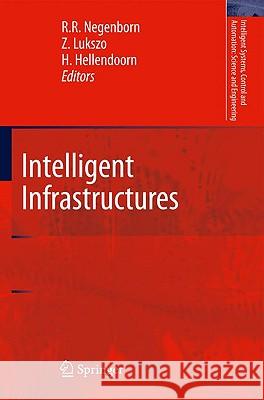
Intelligent Infrastructures Rudy R. Negenborn Hans Hellendoorn Zofia Lukszo 9789048135974 Springer - książkaWidoczna okładka, to zdjęcie poglądowe, a rzeczywista szata graficzna może różnić się od prezentowanej.

Intelligent Infrastructures

ISBN-13: 9789048135974 / Angielski / Twarda / 2009 / 529 str.

Rudy R. Negenborn; Hans Hellendoorn; Zofia Lukszo
cena 564,88 zł
(netto: 537,98 VAT:  5%)

Najniższa cena z 30 dni: 539,74 zł
Termin realizacji zamówienia:
ok. 22 dni roboczych
Bez gwarancji dostawy przed świętami

Darmowa dostawa!
inne wydania

Society heavily depends on infrastructure systems, such as road-traffic networks, water networks, electricity networks, etc. Infrastructure systems are hereby considered to be large-scale, networked systems, that almost everybody uses on a daily basis, and that are so vital that their incapacity or destruction would have a debilitating impact on the defense or economic security and functioning of society. The operation and control of existing infrastructures such as road-traffic networks, water networks, electricity networks, etc. are failing: too often we are confronted with capacity problems, unsafety, unreliability and inefficiency. This book concentrates on a wide range of problems concerning the way infrastructures are functioning today and discuss novel advanced, intelligent, methods and tools for the operation and control of existing and future infrastructures.


Kategorie:
Nauka, Ekonomia i biznes
Kategorie BISAC:
Business & Economics > Operations Research
Computers > Information Technology
Computers > Computer Simulation
Wydawca:
Springer
Seria wydawnicza:
Intelligent Systems, Control and Automation: Science and Eng
Język:
Angielski
ISBN-13:
9789048135974
Rok wydania:
2009
Wydanie:
2010
Numer serii:
000357517
Ilość stron:
529
Waga:
0.95 kg
Wymiary:
23.39 x 15.6 x 3.17
Oprawa:
Twarda
Wolumenów:
01
Dodatkowe informacje:
Wydanie ilustrowane

Preface; List of Contributors; Introduction; Part I Generic Infrastructures: 1 Intelligence in Transportation Infrastructures via Model-Based Predictive Control, by R.R. Negenborn and H. Hellendoorn: 1.1 Transportation infrastructures; 1.2 Towards intelligent transportation infrastructures; 1.3 Model predictive control; 1.4 MPC for intelligent infrastructures ; 1.5 Conclusions and future research; References; 2 Model Factory for Socio-Technical Infrastructure Systems, by K.H. van Dam and Z. Lukszo: 2.1 Introduction; 2.2 Model factory for socio-technical systems; 2.3 Illustrative case studies; 2.4 Decision support using the model factory; 2.5 Conclusions and future research; References; Part II Electricity Infrastructures; 3 Prevention of Emergency Voltage Collapses in Electric Power Networks using Hybrid Predictive Control, by S. Leirens and R.R. Negenborn: 3.1 Introduction; 3.2 Power network operation; 3.3 Hybrid dynamical models of power networks; 3.4 Model predictive control; 3.5 Simulation studies; 3.6 Conclusions and future research; References; 4 Module-Based Modeling and Stabilization of Electricity Infrastructure, by L. Xie and M.D. Ilic: 4.1 Introduction; 4.2 Literature review; 4.3 Our approach; 4.4 Numerical examples; 4.5 Conclusions and future research; References; 5 Price-based Control of Electrical Power Systems, by A. Jokic, M. Lazar, and P.P.J. van den Bosch: 5.1 Introduction; 5.2 Optimization decomposition: Price-based contro; 5.3 Preserving the structure: Distributed price-based contro; 5.4 Conclusions and future research; References; 6 Survivability and Reciprocal Altruism: Two Strategies for Intelligent Infrastructure with Applications to Power Grids, by P. Hines: 6.1 Introductio; 6.2 Stress, blackouts, and complexit; 6.3 Survivability; 6.4 Adaptive reciprocal altruism; 6.5 Conclusions and future research; References; 7 Multi-agent Coordination for Market Environments, by R. Duan and G. Deconin: 7.1 Introductio; 7.2 Emerging model of the next generation electricity infrastructure; 7.3 Electricity market structure and mechanis; 7.4 A promising multi-agent system framework for coordination 7.5 Preliminary result; 7.6 Related work; 7.7 Conclusions and future research; References; 8 Intelligence in Electricity Networks for Embedding Renewables and Distributed Generation, by J.K. Kok, M.J.J. Scheepers, and I.G. Kamphuis: 8.1 Introduction; 8.2 On the special nature of electricity and its infrastructur; 8.3 Electricity networks and electricity market; 8.4 Changing nature of electricity generatio; 8.5 Intelligent distributed coordination in electricit; 8.6 Field test results; 8.7 Conclusions and future research; References; 9 Social and Cyber Factors Interacting over the Infrastructures: A MAS Framework for Security Analysis, by E. Bompard, R. Napoli, and F. Xue: 9.1 Introduction; 9.2 A general framework for security analysis; 9.3 Multi-agent model for the analysis of coordination and control; 9.4 Analysis of information impact; 9.5 Conclusions and future research; References; 10 Distributed Predictive Control for Energy Hub Coordination in Coupled Electricity and Gas Networks, by M. Arnold, R.R. Negenborn, G. Andersson, and B. De Schutter: 10.1 Introduction; 10.2 Energy hub concept; 10.3 Modeling multi-carrier systems; 10.4 Centralized model predictive control; 10.5 Distributed model predictive control; 10.6 Simulation results; 10.7 Conclusions and future research; References; Part III Road Traffic Infrastructures; 11 Model-based Control of Intelligent Traffic Networks, by B. De Schutter, H. Hellendoorn, A. Hegyi, M. van den Berg, and S.K. Zegey: 11.1 Introduction; 11.2 Traffic model; 11.3 Model-based predictive traffic control; 11.4 Case studies; 11.5 Conclusions and future research; References; 12 Intelligent Road Network Control, by J.L.M. Vrancken and M. dos Santos Soares: 12.1 Introduction; 12.2 Research questions; 12.3 Approach; 12.4 Related work; 12.5 TCA: The architecture for road traffic control; 12.6 T

Modern societies heavily depend on infrastructure systems such as road-traffic networks, water networks, and electricity networks. Nowadays infrastructure systems are large-scale, complex networked, socio-technical systems, that almost everybody uses on a daily basis, and that have enabled us to live closely together in large cities. Infrastructure systems are so vital that their incapacity or destruction would have a fatal effect on the functioning of our society. The complexity of these systems is defined by their multi-agent and multi-actor character, their multi-level structure, their multi-objective optimization challenges, and by the adaptivity of their agents and actors to changes in their environment. The operation and control of existing infrastructures is fallible: too often people are confronted with capacity problems, dangerous situations, unreliability, and inefficiency.

More intelligent infrastructures gain an advantage in terms of more efficient capacity management, improved reliability of service, increased sustainability, and enhanced infrastructure security. Infrastructure operation should be able to more autonomously determine how to operate the infrastructure, taking into account the most up-to-date state of the infrastructure, and taking into account the existence of several decision makers, such that ultimately the infrastructure is operated in a pro-active way and issues are resolved quickly.

This book concentrates on a wide range of problems in the way infrastructures are functioning today and discusses novel advanced, and intelligent methods and tools for the operation and control of existing and future infrastructures.



Udostępnij

Facebook - konto krainaksiazek.pl


Opinie o Krainaksiazek.pl na Opineo.pl

Partner Mybenefit

Krainaksiazek.pl w programie rzetelna firma Krainaksiaze.pl - płatności przez paypal

Czytaj nas na:

Facebook - krainaksiazek.pl
  • książki na zamówienie
  • granty
  • książka na prezent
  • kontakt
  • pomoc
  • opinie
  • regulamin
  • polityka prywatności

Zobacz:

  • Księgarnia czeska

  • Wydawnictwo Książkowe Klimaty

1997-2025 DolnySlask.com Agencja Internetowa

© 1997-2022 krainaksiazek.pl
     
KONTAKT | REGULAMIN | POLITYKA PRYWATNOŚCI | USTAWIENIA PRYWATNOŚCI
Zobacz: Księgarnia Czeska | Wydawnictwo Książkowe Klimaty | Mapa strony | Lista autorów
KrainaKsiazek.PL - Księgarnia Internetowa

Polityka prywatnosci - link
Krainaksiazek.pl - płatnośc Przelewy24
Przechowalnia Przechowalnia




