• Wyszukiwanie zaawansowane
  • Kategorie
  • Kategorie BISAC
  • Książki na zamówienie
  • Promocje
  • Granty
  • Książka na prezent
  • Opinie
  • Pomoc
  • Załóż konto
  • Zaloguj się

Integrative Wildlife Nutrition » książka


zaloguj się | załóż konto
Logo Krainaksiazek.pl

koszyk

konto

szukaj
topmenu
Księgarnia internetowa
Szukaj
Książki na zamówienie
Promocje
Granty
Książka na prezent
Moje konto
Pomoc
 
 
Wyszukiwanie zaawansowane
Pusty koszyk
Bezpłatna dostawa dla zamówień powyżej 20 złBezpłatna dostawa dla zamówień powyżej 20 zł

Kategorie główne

• Nauka
 [2949965]
• Literatura piękna
 [1857847]

  więcej...
• Turystyka
 [70818]
• Informatyka
 [151303]
• Komiksy
 [35733]
• Encyklopedie
 [23180]
• Dziecięca
 [617748]
• Hobby
 [139972]
• AudioBooki
 [1650]
• Literatura faktu
 [228361]
• Muzyka CD
 [398]
• Słowniki
 [2862]
• Inne
 [444732]
• Kalendarze
 [1620]
• Podręczniki
 [167233]
• Poradniki
 [482388]
• Religia
 [509867]
• Czasopisma
 [533]
• Sport
 [61361]
• Sztuka
 [243125]
• CD, DVD, Video
 [3451]
• Technologie
 [219309]
• Zdrowie
 [101347]
• Książkowe Klimaty
 [123]
• Zabawki
 [2362]
• Puzzle, gry
 [3791]
• Literatura w języku ukraińskim
 [253]
• Art. papiernicze i szkolne
 [7933]
Kategorie szczegółowe BISAC

Integrative Wildlife Nutrition

ISBN-13: 9783642036958 / Angielski / Miękka / 2009 / 364 str.
Perry S. Barboza; Katherine L. Parker; Ian D. Hume
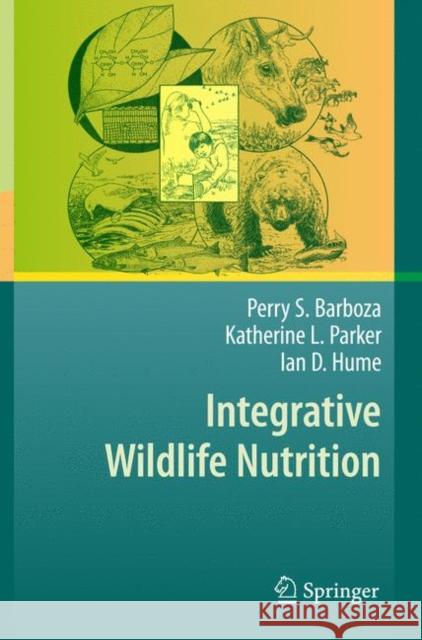
Integrative Wildlife Nutrition Perry S. Barboza Katherine L. Parker Ian D. Hume 9783642036958 Springer - książkaWidoczna okładka, to zdjęcie poglądowe, a rzeczywista szata graficzna może różnić się od prezentowanej.

Integrative Wildlife Nutrition

ISBN-13: 9783642036958 / Angielski / Miękka / 2009 / 364 str.

Perry S. Barboza; Katherine L. Parker; Ian D. Hume
cena 645,58
(netto: 614,84 VAT:  5%)

Najniższa cena z 30 dni: 616,85
Termin realizacji zamówienia:
ok. 22 dni roboczych
Bez gwarancji dostawy przed świętami

Darmowa dostawa!

This book applies the basic principles of nutrition to the study of fish, reptiles, birds, and mammals in their natural environments. The acquisition of food, its digestion and absorption, and the retention and utilization of energy substrates, water and other nutrients are treated in detail. This integrated approach connects behavioral, morphological, and biochemical traits of animals to their life histories and their responses to variable and changing environments. The authors also provide a practical framework for understanding the interactions between food resources and wildlife populations, and for managing the harvest of abundant species and the conservation of threatened populations. "Integrative Wildlife Nutrition" provides a general reference work for students and professionals in animal physiology and ecology, conservation biology, and wildlife management. Lecturers can use this text for wildlife and conservation biology programs and as a reference source for related courses in animal ecology.


Kategorie:
Nauka, Biologia i przyroda
Kategorie BISAC:
Science > Life Sciences - Zoology - Ichthyology & Herpetology
Medical > Nutrition
Science > Life Sciences - Ecology
Wydawca:
Springer
Język:
Angielski
ISBN-13:
9783642036958
Rok wydania:
2009
Wydanie:
2009. 2nd Print
Ilość stron:
364
Waga:
0.52 kg
Wymiary:
22.86 x 15.24 x 2.29
Oprawa:
Miękka
Wolumenów:
01
Dodatkowe informacje:
Bibliografia
Wydanie ilustrowane

From the reviews: "The combined insights and disciplinary specialties of Barboza (Univ. of Alaska), Parker ... and Hume (Univ. of Sydney, Australia) successfully meld to provide this unique resource for the wildlife scientist. ... The use of simple, standard-format tables for calculation examples throughout the text provides the reader a welcome tool as well as familiar continuity. ... References throughout are comprehensive, the writing style is seamless, and figures, photos, and tables are appropriate in number. Summing Up: Recommended. Upper-division undergraduate through professional collections." (E. S. Dierenfeld, Choice, Vol. 47 (3), November, 2009)

Contents 1 Introduction: common themes across diverse taxa 1.1 Resource supply and organismal demand 1.2 Principal components of animals and plants 1.3 Scaling body size and demands for energy and nutrients 1.4 Dietary requirements and nutritional niche 1.5 Summary: introduction Part I Functional Relationships 2 Food and populations 2.1 Population growth and animal density 2.2 Individual demands and food limits 2.3 Trophic relationships 2.4 Environmental variation 2.5 Summary: populations 3 Feeding dynamics: functional and behavioral responses 3.1 Functional response and diet breadth 3.2 Predicting foraging behavior with models 3.2.1 Optimal foraging time 3.2.2 Risk-sensitive foraging 3.3 Mechanics of foragingU 3.4 Form and function of the mouth 3.5 Mechanisms of foods 3.5.1 Physical characteristics of foods 3.5.2 Chemical characteristics of foods 3.6 Summary: feeding dynamics 4 Measuring food consumption 4.1 UAdjustment and steady state 4.2 Direct measures of intake 4.2.1 Behavioral observations of food intake 4.2.2 Food intake by mass balance 4.2.3 Digestible and metabolizable food intake 4.3 Indirect measures of intake 4.3.1 Measuring intake with indigestible markers 4.3.2 Measuring intake with digestible markers 4.4 Summary: food consumption 5 Digestive function 5.1 Food intake, digestive efficiency and digestive tract capacity 5..2 Reaction rates and retention time 5.3 Common functions of digestive systems 5.4 Digesta flow 5.4.1 Digesta flow in the foregut of ruminants and kangaroos 5.4.2 Digesta flow in the hindgut of herbivores 5.5 Optimizing digestive systems 5.6 Summary: digestive function Part II Substrates and Tissue Constituents 6 Carbohydrates: sugars, fiber and fermentationU 6.1 Complementary substrates for metabolism 6.2 Functions of carbohydrates 6.3 Functional chemistry of carbohydrates 6.4 Digestion and absorption of non-structural carbohydrates 6.5 Glucose metabolism and homeostasis 6.6 Digestion of structural carbohydrates 6.7 Microbial fermentation 6.7.1 Host-microbe relationshipsU 6.8 Summary: carbohydrates 7 Lipids: fatty acids and adipose tissue 7.1 Functional chemistry of fatty acids 7.2 Classes of lipids 7.3 Digestion and transport of lipids 7.4 Fat synthesis and mobilization 7.5 Summary: lipids 8 Nitrogenous substrates: nucleic acids to amino excretion 8.1 Amino acids and essentiality 8.2 Proteins and digestion 8.3 Intermediary metabolism of amino acids 8.4 Nucleic acids and digestion 8.5 Nitrogen metabolism 8.5.1 Ammonia 8.5.2 Urea 8.5.3 Uric acid 8.5.4 Creatinine 8.6 Nitrogen balance and the requirement for N 8.6.1 Endogenous urinary N 8.6.2 Fecal N losses 8.6.3 Protein quality 8.7 Summary: nitrogen 9 Metabolic constituents: water, minerals and vitamins 9.1 Water and electrolytes 9.1.1 Transport mechanisms 9.1.2 Aquatic exchanges of water 9.1.3 Terrestrial exchanges of water 9.1.4 Water turnover and balance 9.2 Minerals 9.2.1 Sodium, chlorine, and potassium 9.2.2 Calcium and phosphorus 9.2.3 Magnesium and sulfurU 9.2.4 Trace metals 9.2.5 Iodine and selenium 9.3 Vitamins 9.3.1 Water-soluble vitamins 9.3.1.1 B vitamins 9.3.1.2 Vitamin C 9.3.2 Fat-soluble vitamins 9.3.2.1 Vitamin A 9.3.2.2 Vitamin D 9.3.2.3 Vitamin E 9.3.2.4 Vitamin K 9.4


Udostępnij

Facebook - konto krainaksiazek.pl


Opinie o Krainaksiazek.pl na Opineo.pl

Partner Mybenefit

Krainaksiazek.pl w programie rzetelna firma Krainaksiaze.pl - płatności przez paypal

Czytaj nas na:

Facebook - krainaksiazek.pl
  • książki na zamówienie
  • granty
  • książka na prezent
  • kontakt
  • pomoc
  • opinie
  • regulamin
  • polityka prywatności

Zobacz:

  • Księgarnia czeska

  • Wydawnictwo Książkowe Klimaty

1997-2025 DolnySlask.com Agencja Internetowa

© 1997-2022 krainaksiazek.pl
     
KONTAKT | REGULAMIN | POLITYKA PRYWATNOŚCI | USTAWIENIA PRYWATNOŚCI
Zobacz: Księgarnia Czeska | Wydawnictwo Książkowe Klimaty | Mapa strony | Lista autorów
KrainaKsiazek.PL - Księgarnia Internetowa

Polityka prywatnosci - link
Krainaksiazek.pl - płatnośc Przelewy24
Przechowalnia Przechowalnia






