• Wyszukiwanie zaawansowane
  • Kategorie
  • Kategorie BISAC
  • Książki na zamówienie
  • Promocje
  • Granty
  • Książka na prezent
  • Opinie
  • Pomoc
  • Załóż konto
  • Zaloguj się

Integration of Distributed Resources in Smart Grids for Demand Response and Transactive Energy: A Case Study of TCLs » książka


zaloguj się | załóż konto
Logo Krainaksiazek.pl

koszyk

konto

szukaj
topmenu
Księgarnia internetowa
Szukaj
Książki na zamówienie
Promocje
Granty
Książka na prezent
Moje konto
Pomoc
 
 
Wyszukiwanie zaawansowane
Pusty koszyk
Bezpłatna dostawa dla zamówień powyżej 20 złBezpłatna dostawa dla zamówień powyżej 20 zł

Kategorie główne

• Nauka
 [2946350]
• Literatura piękna
 [1816154]

  więcej...
• Turystyka
 [70666]
• Informatyka
 [151172]
• Komiksy
 [35576]
• Encyklopedie
 [23172]
• Dziecięca
 [611458]
• Hobby
 [135995]
• AudioBooki
 [1726]
• Literatura faktu
 [225763]
• Muzyka CD
 [378]
• Słowniki
 [2917]
• Inne
 [444280]
• Kalendarze
 [1179]
• Podręczniki
 [166508]
• Poradniki
 [469467]
• Religia
 [507199]
• Czasopisma
 [496]
• Sport
 [61352]
• Sztuka
 [242330]
• CD, DVD, Video
 [3348]
• Technologie
 [219391]
• Zdrowie
 [98638]
• Książkowe Klimaty
 [124]
• Zabawki
 [2382]
• Puzzle, gry
 [3525]
• Literatura w języku ukraińskim
 [259]
• Art. papiernicze i szkolne
 [7107]
Kategorie szczegółowe BISAC

Integration of Distributed Resources in Smart Grids for Demand Response and Transactive Energy: A Case Study of TCLs

ISBN-13: 9789811671722 / Angielski / Miękka / 2022 / 260 str.
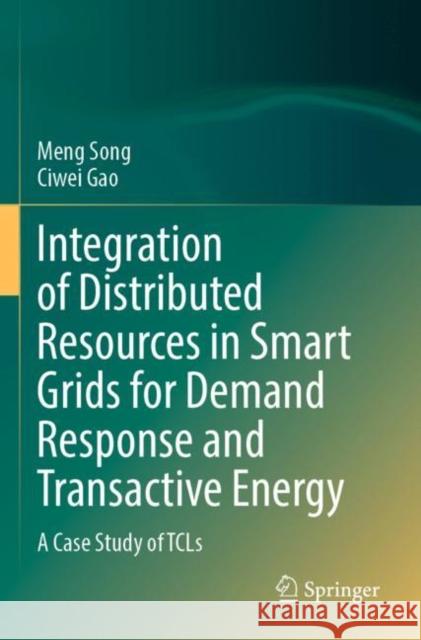
Meng Song; Ciwei Gao
Integration of Distributed Resources in Smart Grids for Demand Response and Transactive Energy: A Case Study of TCLs Meng Song Ciwei Gao 9789811671722 Springer - książkaWidoczna okładka, to zdjęcie poglądowe, a rzeczywista szata graficzna może różnić się od prezentowanej.

Integration of Distributed Resources in Smart Grids for Demand Response and Transactive Energy: A Case Study of TCLs

ISBN-13: 9789811671722 / Angielski / Miękka / 2022 / 260 str.

Meng Song; Ciwei Gao
cena 523,30
(netto: 498,38 VAT:  5%)

Najniższa cena z 30 dni: 501,19
Termin realizacji zamówienia:
ok. 16-18 dni roboczych.

Darmowa dostawa!
inne wydania

The proliferation of renewable energy enhances the sustainability of power systems, but the inherent variability also poses great challenges to the planning and operation of large power grids. The corresponding electric power deficiencies can be compensated by fast ramping generators and energy storage devices. However, frequent ramp up/down power adjustments can increase the operation and the maintenance cost of generators. Moreover, storage devices are regarded as costly alternatives. Demand response (DR) and transactive energy can address this problem owing to its attractive and versatile capability for balancing the supply-demand, improving energy efficiency, and enhancing system resilience. Distributed resources are the typical participants of DR and transactive energy programs, which greatly contribute to keep the supply and demand in a balance.Thermostatically controlled loads (TCLs) (i.e., air conditioners, water heaters, and refrigerators) represent an example of distributed resources, the ratio of which to the total power consumption in developed countries is up to 30%–40%. Providing tremendous potentials in adjustable power consumption, TCLs have attracted major interests in DR and transactive energy opportunities. It has highlighted the advantages of TCLs in responding to uncertainties in power systems.This book provides an insight of TCLs as typical distributed resources in smart grids for demand response and transactive energy to address the imbalance between supply and demand problems in power systems. The key points on analysis of uncertainty parameters, aggregated control models, battery modelling, multi-time scale control, transactive control and robust restoration of TCLs are all included. These are the research points of smart grids and deserve much attention. We believe this book will offer the related researcher a better understanding on the integration of distributed resources into smart grid for demand response and transactive energy. And it will be helpful to address the problems in practical projects.


The proliferation of renewable energy enhances the sustainability of power systems, but the inherent variability also poses great challenges to the planning and operation of large power grids. The corresponding electric power deficiencies can be compensated by fast ramping generators and energy storage devices. However, frequent ramp up/down power adjustments can increase the operation and the maintenance cost of generators. Moreover, storage devices are regarded as costly alternatives. Demand response (DR) and transactive energy can address this problem owing to its attractive and versatile capability for balancing the supply-demand, improving energy efficiency, and enhancing system resilience. Distributed resources are the typical participants of DR and transactive energy programs, which greatly contribute to keep the supply and demand in a balance. Thermostatically controlled loads (TCLs) (i.e., air conditioners, water heaters, and refrigerators) represent an example of distributed resources, the ratio of which to the total power consumption in developed countries is up to 30%–40%. Providing tremendous potentials in adjustable power consumption, TCLs have attracted major interests in DR and transactive energy opportunities. It has highlighted the advantages of TCLs in responding to uncertainties in power systems. This book provides an insight of TCLs as typical distributed resources in smart grids for demand response and transactive energy to address the imbalance between supply and demand problems in power systems. The key points on analysis of uncertainty parameters, aggregated control models, battery modelling, multi-time scale control, transactive control and robust restoration of TCLs are all included. These are the research points of smart grids and deserve much attention. We believe this book will offer the related researcher a better understanding on the integration of distributed resources into smart grid for demand response and transactive energy. And it will be helpful to address the problems in practical projects.

Kategorie:
Technologie
Kategorie BISAC:
Technology & Engineering > Machinery
Business & Economics > Industries - Energy
Wydawca:
Springer
Język:
Angielski
ISBN-13:
9789811671722
Rok wydania:
2022
Dostępne języki:
Ilość stron:
260
Waga:
0.41 kg
Wymiary:
23.39 x 15.6 x 1.55
Oprawa:
Miękka
Dodatkowe informacje:
Wydanie ilustrowane

Chapter 1. Overview of TCLs in smart grids.- Chapter 2. Impact of Uncertain Parameters on TCL Power Capacity Calculation.- Chapter 3. Aggregated Control Models of TCLs for regulation services I.- Chapter 4. Aggregated Control Models of TCLs for regulation services II.- Chapter 5. Thermal battery modeling of TCLs and its comparisons to conventional batteries.- Chapter 6.  Energy storage Models of TCLs under different control methods.- Chapter 7. Parameter identification of multi-time scale TCL aggregated models.- Chapter 8. Hierarchical scheduling of TCL flexibility for transactive energy.- Chapter 9. Multi-time scale transactive control and scheduling of TCLs for smoothing microgrid tie flow fluctuations.- Chapter 10. Robust Distribution System Load Restoration with Time-Dependent Cold Load Pickup

Prof. Meng Song received the B.S. degree from Southeast University, Nanjing, China in 2012, the M.S. degree from the Harbin Institute of Technology, Harbin, China in 2014, and Ph.D. degree from Southeast University in 2018. From 2018 to 2020, she was a Post-Doctoral fellow in University of Central Florida. She is currently working in the department of electrical engineering, Southeast University. Her research interests include demand response, smart grid modeling and control, transactive energy and power system resilience. She has focused on  demand response and transactive energy for 6 years which covers her doctoral and postdoc duration and thus has a deep insight into this field. This book collects and summarizes most highlights of all her research.

Prof. Ciwei Gao is the full professor of school of electrical engineering, Southeast University, P.R.China. He is the IEEE senior member, received the B.S. degree from North China Electric Power University, Baoding, China in 1999, the M.S. degree from Wuhan University, Wuhan, China in 2003, and Ph.D. degree from Politecnico di Torino in 2006 and Shanghai Jiaotong University in 2007.  He has More than 20 years research experience in the field of electrical engineering, focusing on electricity market, demand side management and demand response, power planning and integrated energy systems. Provide course “Power system analysis”, “Fundamentals of Power Economics” and “Power Planning” in the university for the graduate and undergraduate students. Authored nearly 200 publications of journals or conferences. PI of more than 100 research projects cooperating with State Grid Corporation of China, Southern Grid Corporation of China, China EPRI (Electrical Power Research Institute), Electricity/Energy Regulation Agencies, Energy Foundation of America and Prosperity Fundation of UK etc.


The proliferation of renewable energy enhances the sustainability of power systems, but the inherent variability also poses great challenges to the planning and operation of large power grids. The corresponding electric power deficiencies can be compensated by fast ramping generators and energy storage devices. However, frequent ramp up/down power adjustments can increase the operation and the maintenance cost of generators. Moreover, storage devices are regarded as costly alternatives. Demand response (DR) and transactive energy can address this problem owing to its attractive and versatile capability for balancing the supply-demand, improving energy efficiency, and enhancing system resilience. Distributed resources are the typical participants of DR and transactive energy programs, which greatly contribute to keep the supply and demand in a balance.

 Thermostatically controlled loads (TCLs) (i.e., air conditioners, water heaters, and refrigerators) represent an example of distributed resources, the ratio of which to the total power consumption in developed countries is up to 30%–40%. Providing tremendous potentials in adjustable power consumption, TCLs have attracted major interests in DR and transactive energy opportunities. It has highlighted the advantages of TCLs in responding to uncertainties in power systems.

 This book provides an insight of TCLs as typical distributed resources in smart grids for demand response and transactive energy to address the imbalance between supply and demand problems in power systems. The key points on analysis of uncertainty parameters, aggregated control models, battery modelling, multi-time scale control, transactive control and robust restoration of TCLs are all included. These are the research points of smart grids and deserve much attention. We believe this book will offer the related researcher a better understanding on the integration of distributed resources into smart grid for demand response and transactive energy. And it will be helpful to address the problems in practical projects.




Udostępnij

Facebook - konto krainaksiazek.pl


Opinie o Krainaksiazek.pl na Opineo.pl

Partner Mybenefit

Krainaksiazek.pl w programie rzetelna firma Krainaksiaze.pl - płatności przez paypal

Czytaj nas na:

Facebook - krainaksiazek.pl
  • książki na zamówienie
  • granty
  • książka na prezent
  • kontakt
  • pomoc
  • opinie
  • regulamin
  • polityka prywatności

Zobacz:

  • Księgarnia czeska

  • Wydawnictwo Książkowe Klimaty

1997-2026 DolnySlask.com Agencja Internetowa

© 1997-2022 krainaksiazek.pl
     
KONTAKT | REGULAMIN | POLITYKA PRYWATNOŚCI | USTAWIENIA PRYWATNOŚCI
Zobacz: Księgarnia Czeska | Wydawnictwo Książkowe Klimaty | Mapa strony | Lista autorów
KrainaKsiazek.PL - Księgarnia Internetowa

Polityka prywatnosci - link
Krainaksiazek.pl - płatnośc Przelewy24
Przechowalnia Przechowalnia




