• Wyszukiwanie zaawansowane
  • Kategorie
  • Kategorie BISAC
  • Książki na zamówienie
  • Promocje
  • Granty
  • Książka na prezent
  • Opinie
  • Pomoc
  • Załóż konto
  • Zaloguj się

Integrated Product Development with Fiber-Reinforced Polymers » książka


zaloguj się | załóż konto
Logo Krainaksiazek.pl

koszyk

konto

szukaj
topmenu
Księgarnia internetowa
Szukaj
Książki na zamówienie
Promocje
Granty
Książka na prezent
Moje konto
Pomoc
 
 
Wyszukiwanie zaawansowane
Pusty koszyk
Bezpłatna dostawa dla zamówień powyżej 20 złBezpłatna dostawa dla zamówień powyżej 20 zł

Kategorie główne

• Nauka
 [2946350]
• Literatura piękna
 [1816154]

  więcej...
• Turystyka
 [70666]
• Informatyka
 [151172]
• Komiksy
 [35576]
• Encyklopedie
 [23172]
• Dziecięca
 [611458]
• Hobby
 [135995]
• AudioBooki
 [1726]
• Literatura faktu
 [225763]
• Muzyka CD
 [378]
• Słowniki
 [2917]
• Inne
 [444280]
• Kalendarze
 [1179]
• Podręczniki
 [166508]
• Poradniki
 [469467]
• Religia
 [507199]
• Czasopisma
 [496]
• Sport
 [61352]
• Sztuka
 [242330]
• CD, DVD, Video
 [3348]
• Technologie
 [219391]
• Zdrowie
 [98638]
• Książkowe Klimaty
 [124]
• Zabawki
 [2382]
• Puzzle, gry
 [3525]
• Literatura w języku ukraińskim
 [259]
• Art. papiernicze i szkolne
 [7107]
Kategorie szczegółowe BISAC

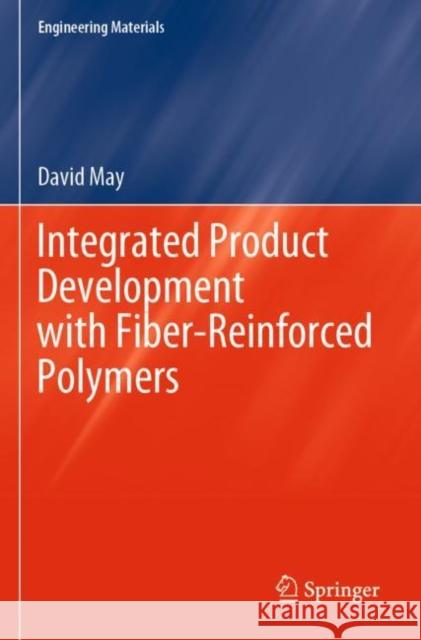
Integrated Product Development with Fiber-Reinforced Polymers

ISBN-13: 9783030734091 / Angielski / Miękka / 2022
David May
Integrated Product Development with Fiber-Reinforced Polymers David May 9783030734091 Springer International Publishing - książkaWidoczna okładka, to zdjęcie poglądowe, a rzeczywista szata graficzna może różnić się od prezentowanej.

Integrated Product Development with Fiber-Reinforced Polymers

ISBN-13: 9783030734091 / Angielski / Miękka / 2022

David May
cena 221,37
(netto: 210,83 VAT:  5%)

Najniższa cena z 30 dni: 212,02
Termin realizacji zamówienia:
ok. 16-18 dni roboczych.

Darmowa dostawa!

This book presents the basics of fiber reinforced polymers (FRP). The author presents the material-specific advantages of FRP and the typical areas of their application. The problems created by conventional, non-integrating product development are listed and the author states how these problems are potentially overcome by integrated product development (IPD). In addition, it is explained why IPD is of particular importance for FRP. An approach to IPD for FRP-parts is presented. It is explained step by step how a catalogue of requirements is defined as well as how this basis is used to develop a concept, a design, and a final construction. Simple but effective methods for the selection of fiber materials, semi-finished products and manufacturing processes are highlighted in this book. A concluding chapter describes an approach to techno-economic evaluation. Throughout the book, practical application examples show the reader how to put the gained knowledge into practice.


Kategorie:
Technologie
Kategorie BISAC:
Technology & Engineering > Materials Science - General
Science > Chemistry - Industrial & Technical
Technology & Engineering > Chemical & Biochemical
Wydawca:
Springer International Publishing
Seria wydawnicza:
Engineering Materials
Język:
Angielski
ISBN-13:
9783030734091
Rok wydania:
2022
Waga:
0.42 kg
Wymiary:
23.5 x 15.5
Oprawa:
Miękka
Dodatkowe informacje:
Wydanie ilustrowane

Content I

List of used akronyms. V

List of used formula symbols (latin) IX

List of used formula symbols (greek) XIV

Preface. 1

1...... Introduction.. 3

1.1    Abstract 3

1.2    Basic mechanicle principle of Fiber-reinforced Polymers (FRP) 3

1.3    Applications of FRP.. 7

1.4    Product Development vs. Integrated Product Development (IPD) 15

1.5    Methods of IPD.. 19

1.6    Relevance of IPD for FRP.. 22

1.7    Questions. 25

1.8    References. 26

2...... Realization of an Integrated Product Development 30

2.1    Abstract 30

2.2    The development team.. 30

2.3    Procedure and division of tasks for the IPD with FRP.. 35

3...... Phase 1: Definition of the Catalogue of Requirements. 44

3.1    Abstract 44

3.2    Overview.. 44

3.3    Types and sources for requirements. 45

3.4    Risks when defining requiremtens. 47

3.5    Tools the identification and specification of requriements. 49

3.5.1       Guideline with main list of characteristics. 50

3.5.2       Szenario technique. 52

3.5.3       Identification of functions and functional structures. 53

3.6    Guidelines and requriement catalogues for FRP-components. 55

3.6.1       Guidline „Design“ 55

3.6.2       Guideline „Manufacturing“ 57

3.6.3       Guideline “Materials” 59

3.6.4       Full catalogue of requirements. 60

3.7    Questions. 64

3.8    References. 64

4...... Phase 2: Concept & Draft 66

4.1    Abstract 66

4.2    Overview.. 66

4.3    Basics of product development with FRP.. 67

4.3.1       Relevance of Fiber volume content 67

4.3.2       Relevance of fiber length and orientation.. 69

4.3.3       Laminate built-up. 73

4.3.4       Laminate coding. 80

4.3.5       FRP-design principles. 82

4.3.6       Advantages and disadvantages of FRP.. 86

4.4    Definition of critical load cases and derivation of requriement for geometry and material 87

4.5    Selection of fiber material and structure of fiber reinforcement 92

4.5.1       Fiber materials. 92

4.5.2       Structure of fiber reinforcement 97

4.5.3       Material properties for initial design.. 99

4.5.4       Selcetion procedure. 107

4.6    Initial design.. 115

4.7    Development of a manufacturing concept 116

4.7.1       Basics of FRP manufacturing. 117

4.7.2       Manufacturing processes. 119

4.7.3       Process selection.. 152

4.8    Decision concerning polymer class: thermoplastic or thermoset?. 157

4.9    Definition of the full draft 162

4.10 Decision about drafts to be further considered. 163

4.11 Questions. 165

4.12 References. 167

5...... Phase 3: Technical Elaboration.. 174

5.1    Abstract 174

5.2    Overview.. 174

5.3    Materials. 174

5.3.1       Selection of semi-finished products. 175

5.3.2       Selection of matrix polymer 205

5.3.3       Characterization of material properties. 212

5.4    Detailed Design.. 217

5.4.1       Design to manufacture. 218

5.4.2       Design to join.. 229

5.4.3       Design to repair 234

5.4.4       Sustainable design.. 237

5.5    Elaboration of manufacturing concept 247

5.5.1       Selection of facilities. 247

5.5.2       Process design.. 251

5.5.3       QA and damage detection.. 264

5.6    Question.. 275

5.7    Reference. 276

6...... Phase 4: Evaluation and decision.. 284

6.1    Abstract 284

6.2    Overview.. 284

6.3    Economic Evaluation.. 285

6.4    Prototyping and compontent testing. 295

6.5    Optional: Design optimization.. 296

6.6    Final comparison to catalogue of requirements. 297

6.7    Holistic techno-economic und strategic evaluation.. 298

6.8    Questions. 306

6.9    References. 306

7...... Conclusions. 308

8...... Answers to questions. 309

8.1          References  314

David May received his doctorate degree in 2015 from the Technical University Kaiserslautern, where he since then lectures “integrated product development with composites”. In 2021 he completed his habilitation on process engineering for composites. He currently manages an interdisciplinary research group at the Leibniz-Institut für Verbundwerkstoffe in Kaiserslautern. Manufacturing technologies for polymer composites are his main research focus.

This book presents the basics of fiber reinforced polymers (FRP). The author presents the material-specific advantages of FRP and the typical areas of their application. The problems created by conventional, non-integrating product development are listed and the author states how these problems are potentially overcome by integrated product development (IPD). In addition, it is explained why IPD is of particular importance for FRP. An approach to IPD for FRP-parts is presented. It is explained step by step how a catalogue of requirements is defined as well as how this basis is used to develop a concept, a design, and a final construction. Simple but effective methods for the selection of fiber materials, semi-finished products and manufacturing processes are highlighted in this book. A concluding chapter describes an approach to techno-economic evaluation. Throughout the book, practical application examples show the reader how to put the gained knowledge into practice.




Udostępnij

Facebook - konto krainaksiazek.pl


Opinie o Krainaksiazek.pl na Opineo.pl

Partner Mybenefit

Krainaksiazek.pl w programie rzetelna firma Krainaksiaze.pl - płatności przez paypal

Czytaj nas na:

Facebook - krainaksiazek.pl
  • książki na zamówienie
  • granty
  • książka na prezent
  • kontakt
  • pomoc
  • opinie
  • regulamin
  • polityka prywatności

Zobacz:

  • Księgarnia czeska

  • Wydawnictwo Książkowe Klimaty

1997-2026 DolnySlask.com Agencja Internetowa

© 1997-2022 krainaksiazek.pl
     
KONTAKT | REGULAMIN | POLITYKA PRYWATNOŚCI | USTAWIENIA PRYWATNOŚCI
Zobacz: Księgarnia Czeska | Wydawnictwo Książkowe Klimaty | Mapa strony | Lista autorów
KrainaKsiazek.PL - Księgarnia Internetowa

Polityka prywatnosci - link
Krainaksiazek.pl - płatnośc Przelewy24
Przechowalnia Przechowalnia




