• Wyszukiwanie zaawansowane
  • Kategorie
  • Kategorie BISAC
  • Książki na zamówienie
  • Promocje
  • Granty
  • Książka na prezent
  • Opinie
  • Pomoc
  • Załóż konto
  • Zaloguj się

Insolvency and Bankruptcy Reforms in India » książka


zaloguj się | załóż konto
Logo Krainaksiazek.pl

koszyk

konto

szukaj
topmenu
Księgarnia internetowa
Szukaj
Książki na zamówienie
Promocje
Granty
Książka na prezent
Moje konto
Pomoc
 
 
Wyszukiwanie zaawansowane
Pusty koszyk
Bezpłatna dostawa dla zamówień powyżej 20 złBezpłatna dostawa dla zamówień powyżej 20 zł

Kategorie główne

• Nauka
 [2949965]
• Literatura piękna
 [1857847]

  więcej...
• Turystyka
 [70818]
• Informatyka
 [151303]
• Komiksy
 [35733]
• Encyklopedie
 [23180]
• Dziecięca
 [617748]
• Hobby
 [139972]
• AudioBooki
 [1650]
• Literatura faktu
 [228361]
• Muzyka CD
 [398]
• Słowniki
 [2862]
• Inne
 [444732]
• Kalendarze
 [1620]
• Podręczniki
 [167233]
• Poradniki
 [482388]
• Religia
 [509867]
• Czasopisma
 [533]
• Sport
 [61361]
• Sztuka
 [243125]
• CD, DVD, Video
 [3451]
• Technologie
 [219309]
• Zdrowie
 [101347]
• Książkowe Klimaty
 [123]
• Zabawki
 [2362]
• Puzzle, gry
 [3791]
• Literatura w języku ukraińskim
 [253]
• Art. papiernicze i szkolne
 [7933]
Kategorie szczegółowe BISAC

Insolvency and Bankruptcy Reforms in India

ISBN-13: 9789811608537 / Angielski / Twarda / 2022 / 270 str.
M. S. Sahoo; Susan Thomas
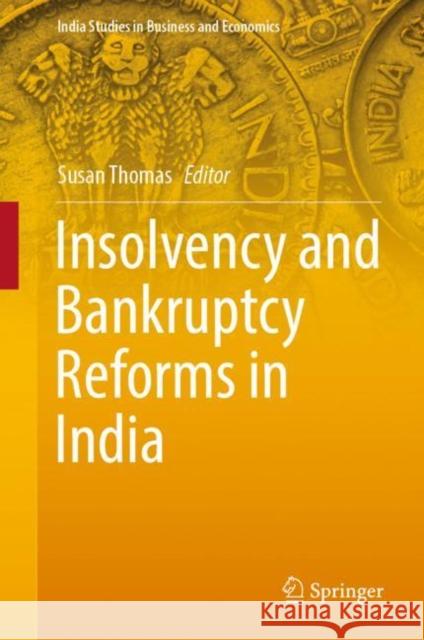
Insolvency and Bankruptcy Reforms in India M. S. Sahoo Susan Thomas 9789811608537 Springer - książkaWidoczna okładka, to zdjęcie poglądowe, a rzeczywista szata graficzna może różnić się od prezentowanej.

Insolvency and Bankruptcy Reforms in India

ISBN-13: 9789811608537 / Angielski / Twarda / 2022 / 270 str.

M. S. Sahoo; Susan Thomas
cena 484,18
(netto: 461,12 VAT:  5%)

Najniższa cena z 30 dni: 424,07
Termin realizacji zamówienia:
ok. 22 dni roboczych
Bez gwarancji dostawy przed świętami

Darmowa dostawa!
inne wydania
Kategorie:
Nauka, Ekonomia i biznes
Kategorie BISAC:
Business & Economics > Banks & Banking
Business & Economics > Insurance - Risk Assessment & Management
Business & Economics > Industries - Financial Services
Wydawca:
Springer
Seria wydawnicza:
India Studies in Business and Economics
Język:
Angielski
ISBN-13:
9789811608537
Rok wydania:
2022
Wydanie:
2022
Numer serii:
000459580
Ilość stron:
270
Oprawa:
Twarda
Wolumenów:
01
Dodatkowe informacje:
Wydanie ilustrowane

Preface by Injeti Srinivas, Secretary, Ministry of Corporate Affairs


This will contain a brief overview of the inception and importance of the insolvency reform. It will also highlight the role of the government, the regulator, other financial sector regulators and market participants in ensuring the success of the insolvency reform. 

1. An integrative book overview chapter 
Author: M. S. Sahoo, Chairman, Insolvency and Bankruptcy Board of India

This chapter will provide a gist of how the book maps the insolvency reform through each of its chapters. 

2. The Indian bankruptcy reform: The state of the art 

Authors: Ajay Shah and Susan Thomas

Since 2016, the authors have been analysing the insolvency and bankruptcy reform each year. In this chapter, their findings from each year will be consolidated and presented. It will not only contain a comment on the timeline of events but will also provide suggestions for ensuring the success of the insolvency reform in the future.

3. Reforms and regulators

Author: M. S. Sahoo, Chairman, Insolvency and Bankruptcy Board of India

This chapter will provide an insight into the Indian reforms framework and Dr. Sahoo's experience with the same, with specific focus on the insolvency reform. Being the chairman of the regulator which was tasked with ensuring implementation of the insolvency reform, this chapter will bring out real world experiences in what goes into implementing a reform in a short span of time. 

5. Distortions in Land Markets and Their Implications for Credit Generation in India 

Authors: K. P. Krishnan, Venkatesh Panchapagesan and Madalasa Venkataraman

This chapter will examine the structural, regulatory and information driven distortions that afflict Indian land markets and force lenders to adopt conservative policies ex-ante, impacting both the availability of credit and the collateralisation of land. These distortions are then placed against the backdrop of the insolvency reforms.

6. Value destruction and wealth transfer under the Insolvency and Bankruptcy Code 

Auhtor: Pratik Datta

This chapter will highlight the problems of value destruction and wealth transfer in the resolution of cases under the IBC. It will focus on the effect of specific factors such as the super-majority of financial creditors, abusive cramdown practices, lack of clarity on judicial supervision and the differentiation between break-up versus going concern liquidation value of a firm. The author questions how the IBC process affects the incentives to various players, and makes the claim that certain features of the process lead to liquidation rather than resolution.

7. The Reserve Bank of India (RBI) - 12 cases under the Insolvency and Bankruptcy Code 

Authors: Joshua Felman, Varun Marwah and Anjali Sharma

This chapter will analyse how the first 12 cases sent into insolvency by the RBI have been faring under the IBC process. It will further analyse IBC as a legal strategy for resolving the Non Performing Assets (NPA) problem at the banks. As the RBI introduces more of the dead-weight NPA problems into the IBC, there will be a need to focus on solving the old problems that had stymied the success of the earlier legal solutions.

8. An empirical eye on the reforms

Authors: to be finalised

The Finance Research Group at IGIDR has created a first of its kind dataset of cases filed under the IBC. Understanding the overall impact of the IBC requires us to depart from an individual case based approach and move towards an empirical analysis of the cases being tried under the IBC. Such analysis will help in objectively seeing how the IBC is panning out for an average creditor and an average debtor. It will also help in seeing how the institutions are performing on average. Finally, it will help in reducing the scope for relying on anecdotal evidence. At the least, it will help ground intuitive propositions in data.

9. Consumers as creditors in corporate bankruptcy 

Authors: Gausia Shaikh and Anjali Sharma

This chapter will focus on the first problem that became a public highlight for the IBC - the treatment of consumers under the law. It will map the journey of the treatment of consumers, with specific reference to the case of home buyers. It will also provide a cross country analysis to observe such treatment of consumers in the UK, USA and Australia. 
 
10. A chapter on insolvency professionals and insolvency professional agencies 

Authors: Anirudh Burman, Shubho Roy and Rajeswari Sengupta

The IBC created a new profession of insolvency professionals. These individuals are not only responsible for conducting and facilitating the resolution and liquidation processes but also for maintaining the corporate debtor as a going concern during the resolution process. In this chapter, regulation and development of this profession will be studied.

11. Catch and release: data in the IBC ecosystem 

Authors: Renuka Sane and Adam Feibelman

Deriving from the US experience, this chapter will  focus on the availability of data under the IBC and the need for developing a system for generating accurate, comprehensive and useful data as part of the bankruptcy reform.

12. Pre-packs: negotiating deals out of the courtroom 

Author: Aparna Ravi

This chapter will focus on the legal aspects of permitting pre-packs under the IBC. While it is a widely used procedure in other jurisdictions, there is a lack of clarity regarding the status of pre-packs in the present bankruptcy regime. This chapter will highlight this lack of clarity and propose suggestions for adopting this procedure as a means of resolution of an insolvent firm.

13. A chapter on individual insolvency

Authors: Siva Ramann, Renuka Sane and Susan Thomas

This chapter will be an update on the "Reforming personal insolvency law in India" paper which was prepared for the Bankruptcy Law Reforms Committee. At the time, the law had not yet been finalised and the paper sought to study the elements of a well drafted personal insolvency regime, which would repeal the century old (personal) insolvency laws of India. Now that the law has been drafted, the paper will look at the personal insolvency regime from a different perspective.

Dr. Susan Thomas is a Research Professor of Business at the Jindal Global Business School. She has worked on problems such as designing the stock market index, real-time risk management system for the clearing corporation, and the use of call auctions. She has had various policy engagements with the Ministry of Finance, including being a member of the Standing Council of the competitiveness of the Indian Financial Sector (2013 onwards), and the Bankruptcy Legislative Reforms Committee (2014-2015). She led the research secretariat for the Bankruptcy Law Reforms Committee which conceptualised the Insolvency and Bankruptcy Code.

This book is about the establishment of the Insolvency and Bankruptcy Code, in 2016, one of the most important new developments in Indian commercial law. The law has major implications for firms, their creditors, and a variety of the professional services that feed into the decisions of borrowers and lenders including lawyers, accountants and valuers. A new profession of insolvency professionals has come to exist owing to the law. There are several questions about bankruptcy reform in the mind of researchers, policy makers and practitioners. How has the reform progressed? How has it reshaped the incentives of firms? What are the difficulties faced? What are the optimal paths for borrowers and lenders and their advisors under the rubric of the law? How should laws and institutions be modified? The book has a unique set of chapters, by key people who have shaped the field which offer novel insights into these questions.


The book has been edited by key people who have worked on bankruptcy reform since 2010. Dr. Sahoo has been the chairperson of the Insolvency and Bankruptcy Board of India since the establishment of this regulatory agency. Dr. Thomas was a member of the Bankruptcy Law Reforms Committee which drafted the IBC, and led the internal team of the BLRC which drafted the law. The book is an authentic and credible analysis of the happenings in the Indian insolvency and bankruptcy ecosystem from the start, with interest areas for international and domestic, economics/finance and law, researcher and practitioner communities.


Thomas, Susan Thomas-University of Wales... więcej >


Udostępnij

Facebook - konto krainaksiazek.pl


Opinie o Krainaksiazek.pl na Opineo.pl

Partner Mybenefit

Krainaksiazek.pl w programie rzetelna firma Krainaksiaze.pl - płatności przez paypal

Czytaj nas na:

Facebook - krainaksiazek.pl
  • książki na zamówienie
  • granty
  • książka na prezent
  • kontakt
  • pomoc
  • opinie
  • regulamin
  • polityka prywatności

Zobacz:

  • Księgarnia czeska

  • Wydawnictwo Książkowe Klimaty

1997-2025 DolnySlask.com Agencja Internetowa

© 1997-2022 krainaksiazek.pl
     
KONTAKT | REGULAMIN | POLITYKA PRYWATNOŚCI | USTAWIENIA PRYWATNOŚCI
Zobacz: Księgarnia Czeska | Wydawnictwo Książkowe Klimaty | Mapa strony | Lista autorów
KrainaKsiazek.PL - Księgarnia Internetowa

Polityka prywatnosci - link
Krainaksiazek.pl - płatnośc Przelewy24
Przechowalnia Przechowalnia





