Innovative Staff Development in Healthcare » książka

topmenu




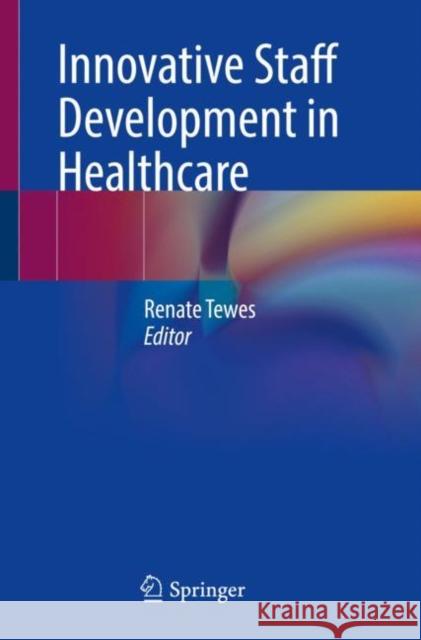
Innovative Staff Development in Healthcare
ISBN-13: 9783030819859 / Angielski / Miękka / 2021
Innovative Staff Development in Healthcare
ISBN-13: 9783030819859 / Angielski / Miękka / 2021
cena 313,57
(netto: 298,64 VAT: 5%)
Najniższa cena z 30 dni: 296,85
(netto: 298,64 VAT: 5%)
Najniższa cena z 30 dni: 296,85
Termin realizacji zamówienia:
ok. 16-18 dni roboczych.
ok. 16-18 dni roboczych.
Darmowa dostawa!
Kategorie BISAC:
Wydawca:
Springer
Język:
Angielski
ISBN-13:
9783030819859
Rok wydania:
2021
Wydanie:
2022
Waga:
0.45 kg
Wymiary:
23.37 x 20.32 x 1.27
Oprawa:
Miękka
Wolumenów:
01
Introduction. Innovative and bold Staff Development in Healthcare
Christiane Matzke
The society and the healthcare system are part of a fundamental change. The issues are similar in the most industrial nations and nearly comparable despite the diversity in setup, structure and financing of the healthcare systems. The biggest driver for innovative and courageous staff development of the future are demography, globalization, community of knowledge, climate change, digitalization and more development of technology, and the impact of the Corona-pandemic. Most of these challenges can only be solved together in a cooperating world society.
This chapter focuses on the healthcare system, it’s innovations out of two perspectives: the technical developments and social organizational needs for innovation. The challenges of modern staff development are described as well as the radical change with it’s exiting future options.
PART 1. We love the challenge: culture change
Mary Koloroutis, Jayne Felgen
Two inspirational workshops were developed to engage the hearts and minds of health care organization leaders and staff members as a part of implementing Relationship-Based Care™. The workshops were designed to employ innovative teaching methods reflecting the adult learning principle that learning should be grounded in respect for the wisdom of the learner. Learners engaged in diverse exercises and reflective practices to apply and internalize the content. Curricula focused on relational competence rather than clinical or technical skills. Caring practices for self, for co-workers, and for patients and families were translated into behaviors. Participants learned practices to develop therapeutic and compassionate relationships with others. Organizational and departmental metrics demonstrated positive outcomes from the workshops including decreased staff turnover as measured by human resources and higher patient satisfaction scores on patient surveys. Susan Wessel,
Chapter 2. Establishing Innovation Culture in Nursing: the butterfly effect
Yeliz DOGAN MERiH
Aim: Nurses should keep up with constant change and integrate innovation into their services in order to obtain effective and desirable results in their service provision activation of the process of innovation in nursing services reduces the cost of care and increases the quality of care.
Material and Method: In order to activate the process of innovation in nursing services provided at Zeynep Kamil Hospital, a number of steps were completed. In the first step, nurses’ level of knowledge was improved through regular training, individual counseling was initiated using the coaching system, competitions were organized for making the process more interesting, and participation rate was increased with rewards. These implementations produced an inovation culture.
Results: During the process of activating innovation at Zeynep Kamil Hospital, which was initiated in 2012, competitions and symposiums were held. In the 7 year period, nurses working at Zeynep Kamil Hospital completed 376 innovative projects. Each of these projects had an inventive quality and through these projects, the nurses were able to support novel and creative activities which increased the quality of care. The patenting process of 50 innovative projects was completed and studies were activated for producing new inventions.
Conclusion: Regular training, role modeling, and scientific activities that introduce the process, make the process more interesting, and guide nurses are crucial for activating the innovation process in nursing.
Keywords: Nursing, İnnovation, Process Yeliz DOGAN MERiH
Chapter 3. Veränderungsprozesse initiieren über die Entwicklung und Einführung von Führungsleitlinien – ein systemischer Ansatz
Ute Grießhaber-Paule; Bernhard Heuvelmann
The development of leadership guidelines was supported by the innovative approach of a system based project. With circular communication methods all levels of organization has been involved and irritated at the same time.
This article describes, how a project a system of leaders – and all the other– consciously confronts with “interferences”. The unusual format of communication is described. The goal to change was not just supported, but from the beginning of the process present, visible and tangible. Organizational change means change of people, so instead of talking about change, we used interactions to challenge the attitude, behavior and communication of the participants. Personal reflection was needed to experience the way how we speak, listen, interact and function in a new way.
Chapter 4. Pearls of Wisdom: The Evolution of a Healing Healthcare Model
Emily Witrak Nowak, Val Lincoln
Healthcare in the United States (US) continues to evolve at paces unprecedented historically. Increased use of integrative services (IS) for personal wellbeing has been a primary driver in the expansion to healthcare organizations in the US. The development, implementation and evaluation of IS programs within the acute care setting requires thoughtful leaders and teams. In this chapter the authors provide a step-wise description of the evolution of a healing healthcare model within a small community hospital in Minnesota. In this chapter, the authors describe one small community hospital’s development, implementation and evaluation of a holistic model of care in the acute care setting, and the evolution of the holistic model across the larger system. Opportunities for increased integration of concepts of holistic care into academic programs to assure adequate preparation of new healthcare professionals with the foundational skills and knowledge to meet the growing demand for these services are suggested.
Chapter 5. A strategically engaged programme of person-centred culture development in health services: The courage of the Irish!
Brendan McCormack, Lorna Peelo-Kilroe, Margaret Codd, Debbie Baldie
Purpose of the project
In 2017, a national programme was introduced by the Irish health service to enable cultures of person-centredness in all aspects of its health and social care. The aim was twofold: 1) develop multi-professional facilitators to lead person-centred culture change within their own services, and 2) provide a means for services to embed person-centred ways of working as the norm for how they do their business.
Design and methods
Cognitive and creative, transformational facilitation and practice development methods using co-design is used to enable participants to uncover the realities and possibilities of their workplace cultures. By using active learning and working with person-centred principles participants learn the skills of critical reflection and unpick their practices.
Results
The results from this programme from year one demonstrated impacts in: consciousness raising; transformation of self; development of facilitation knowledge, skills and expertise; sharing responsibility for person-centredness; learning and doing. Progress is shown in terms of strategic commitment and support for this systematic approach to enabling cultures of personcentredness.
Implications
The programme offers learning in terms of focus, methodology, impact and the considerable support required to enable culture change at a programmatic, national level.
Index Person-centred, person-centredness, workplace culture, facilitation, courage, support.
Chapter 6. Practice Development: University Based Education
Renate Tewes, Lydia Ulrich, Irén Horvarth
Due to the non-stop change processes in healthcare we are in need of professional change competencies. This gap is closed by a newly started course of practice development at the Protestant University of Applied Science in Dresden. This on-the-job training offers experienced nurses to study all the requirements for practice development and bring the knowledge directly back into the practice. The curriculum focuses on three aspects: 1. Evidence based knowledge (e.g. theories and concepts of nursing science, person-centredness approach, research methods, socially and institutional requirements for change), 2. Development of skills for analyzing, planning, putting into practice and evaluating the change processes, 3. Professional attitude (e.g. accountability for professional action, ethical standards, role clarity, social justice). The focus is on establishing creative learning cultures in hospitals, nursing homes and outpatient care. Beside a blended learning approach we train the soft skills in a newly build Simulation Center, which offers the students to foster their abilities to interact and argue with actors. These actors help the students to reflect their actions in a multifaceted feedback process.
PART 2. We are bold – Emotional Intelligence pays off
Chapter 7. empCARE- ein empathiebasiertes Entlastungstraining für Pflegende
Ludwig Thiry, Vera Lux
Nursing is interaction work and beside cooperation work and subjective labor action it is very much emotional work. Patients experience existential threatening situations and react irrational in inconsistent. Nurses have to adjust to this changing situations to react in the best way. This can be emotionally exhausting. This phenomenon is described as “emotional dissonance” and one of the main burden in this profession.
The economic pressure in healthcare and to ensure quality demands for standards. This also reduces the room of maneuver for subjective action. Emotional work is important, so nurses help patients to regulate their feelings. Therefor it is important, that nurses are able to regulate their own emotions. The empCare training helps nurses to deeply connect with themselves. EmpCare is an empathy based program to relief the strain. Studies showed the positive impact of the nurses health. We can conclude, that the empCare program is a good preventive method for a healthy nursing work life.
Chapter 8. Wellbeing in the workplace pays off
Mary Jo Kreitzer
Stress and burnout of healthcare providers has become a major healthcare issue that has implications for not only workforce projections, but the cost and quality of patient care and the lives of healthcare providers and their families. Increasingly, organizations are understanding the importance of creating cultures of wellbeing that both mitigate burnout and create conditions that support wellbeing and human flourishing. Factors contributing to wellbeing include health, purpose, relationships, community, safety and security and the environment. The Wellbeing Leadership Program is a creative blend of programming offered through the Bakken Center that includes 3 day-long retreats, independent study and online learning. The program emphasizes personal and leadership practices that are simple, concrete, powerful and inspiring. The series is based on the premise that leaders are needed at every level of the organization that have the knowledge, skills and capacity to advance wellbeing.
Chapter 9. Stress was yesterday! Revitalising Care is today by the adoption of HeartMath® Interventions
Sue Smith, Gawin Andrews
This chapter describes a project to train trainers to deliver a one day workshop called Revitalising Care™. This workshop and the related support of one to one coaching aims to reduce stress, build resilience, help staff feel valued and revitalised, enhance teamwork and empowerment to create a more uplifting and harmonising environment. Nursing in the UK is facing numerous challenges, one of which is staff retention. The workshop including coaching, integrates breathing techniques, positive psychology and adopts emWave® technology to support staff to cope with stressful events proactively. The project was commissioned by the Scottish Government’s Directorate for the Chief Nursing Officer, Patients, Public and Health Professions (CNOPPP), in 2013 - 2015. An evaluation assessment instrument from the Institute of HeartMath (IHM ) USA called the ‘Personal and Organisational Quality Assessment’ (POQA) questionnaire was administered to 127 participants pre and post the workshop. Evidence of effectiveness of the programme is presented. A summary of lessons learnt and guidance for staff development professionals embarking on similar projects in the future is suggested. Advances in new technology accessed by the mobile phone for synchronising human autonomic nervous systems is suggested as a way forward for increasing collaboration, co-creation, conflict resolution and decision-making
PART 3. We are a dream team – interprofessional collaboration
Chapter 10. Personalisierte Medizin im MOILT
Sylvia Bochum, Christian Fegeler, Uwe Martens
Digital transformation is moving forward and leads to new disciplines in healthcare, like precision oncology. This often needs the collaboration of persons with different knowledge, who see complex problems out of interprofessional perspectives to find solutions. At the MOLIT Institute for personalized medicine, physicians, biologists and computer scientists develop together innovative software solutions for precision oncology while working in an agile environment. Implementing agility into the teams not just need new ways to think and to work, but a general change in organizational structure and leadership. In such expert teams it might be a challenge to develop an alternative career model and also practice a coaching and facilitating leadership style not using top down decisions.
Chapter 11. TeamProzessPerformance (TPP) im OP mit Gung Ho
Thomas Röhrßen, Klaus Wohlmeiner
The most projects in operation theatre focus on structural and process-related organization. This does not zoom on the real factor of productivity in the operation theatre, namely the professional competent, agile and communicative operation theatre team. There is an increase to emphasize on regulations outside the operation room, like operation plan, coordination and operation management including process supporting IT. Our approach of TeamProcessPerfomance (TPP) shows, how this interventions must be linked to the power of self-directed operation room team, to ensure a sustainable operation productivity. In our approach we combine “soft culture factors”, like sense-making, leading and agile team organization with the “hard process factors”. The optimization of the “hard” process factors could be reached by a central trigger-process and the measurement of so called short-cut process goals, which had been evaluated. Due to the generational value change, the skilled labor shortage und the decreasing job-satisfaction in many operation theatres, new integrated approaches are needed. That is why in future the soft-skills in operation projects must also be measured.
Chapter 12. Interprofessionelle Ausbildungsstation: Grenzen überwinden – Zusammen lernen und arbeiten
Christine Straub, Sebastian Bode, Lukas Nock, Irina Cichon
This article reflects the relevance of interprofessional collaboration for staff development in healthare. There is still potential for the development of interprofessional collaboration in the healthcare system. The dominating segmentation of care leads to care deficits as well as it increases the skilled labor shortage in healthcare. This project describes an interprofessional education department in Freiburg, Germany, where the medical students and nursing students work together. This successful pediatric education department offers us an amount of perspectives to develop and experiences to share.
Chapter 13. Project: Operation on the Team
Irina Cichon
In 2013 the Robert Bosch Trust started it’s support program „Operation on the Team” and invested 2,9 Mio Euros. The first 4 years 7 healthcare institutions did a research about the requirements and options of interprofessional learning in healthcare. The results were summarized and led to 17 new projects on different issues about interprofessional learning in healthcare, which had been financially supported for another 3 years. In the last third phase of this unique research funding the results from the 17 projects were used to develop guidelines, curricula, and teaching material for interprofessional education in healthcare. Another result is, that the medical education is expanded, and the interprofessional learning will be now part of the curriculum.
PART 4. Future perfect – innovative staff development
Chapter 14. Future of Staff development: a time travel
Renate Tewes
Courageous and innovative staff development is the order of the day. Healthcare is one of the biggest growth sector. Meanwhile every 8th person German works in healthcare.
The explosive spreading of digitization will produce enormous amounts of data in healthcare, which will lead to an end of some activities, while new ones will be needed. Beside technical competences soft skills will be on great demand. The biggest part of treatment mistakes arise from inaccurate communication and collaboration. That is why communicative, relational and interpersonal competences are needed. In order that the two professions nursing and medicine become real team players communication gaps must be closed. Both are missing a specific competence for collaboration, which can be trained.
Emotional intelligence will become a bigger focus in future, not just in leadership. Everything, what computers can do, they will do. Emotional work as a human factor is still not replaceable. Globalization is not just a key driver for change, but enlarges crisis. Transition management, change management and crisis management will become an important piece in leadership, which includes the management of challenges as well as leading employees with emotional intelligence.
Renate Tewes, Professor for Nursing Science and Management, is the founder and CEO of Crown Coaching International and Professor at the Protestant University of Applied Science in Dresden, Germany.
As business consult she has more than 20 years experience in counselling, educating and training of leaders, especially in healthcare. She is instructor for Case Management (DGCC) and the international LEO Leadership Program (CHCM).
Renate Tewes has an education in leadership coaching (CoreDynamik), in group dynamics (AGM) and is HeartMath trainer (groups) and HeartMath coach (individuals). She offers her support to organizations in German and English language and works international in presence and online. Producing innovation and leading change in healthcare in a professional manner is central to her work. She believes that the best strategy of a company remains worthless, when leaders just manage, but miss to lead. Beside cognitive intelligence there is social competence needed in leaders as well as in team members.
Renate Tewes empowers leaders to develop their potential and helps healthcare facilities moving safely through challenging change processes. As a well experienced counsellor she offers her clients very different programs and methods, like negotiation management, agile leadership for physicians, interprofessional teambuilding or conflict management. She supports leaders, so they can inspire their employees for innovation, decision-making and taking charge of their work.
Her research areas are innovation in future healthcare, healthy leadership, interprofessional collaboration (IPC), interprofessional education (IPE) and change management.
This book explains how staff development is an important element for a sustainable staff structure health care facilities.
At the end each chapter the reader finds a to-do-list, to replicate the project. The book is devided into 4 parts: 1. Practicing culture change, 2. Learning emotional intelligence, 3. Establishing interprofessional collaboration and 4. How to create the future of healthcare. Anticipating these options and experiences will help leaders to inspire their teams with practical ideas.
To find the right trainings for staff development can be time consuming. With this overview about international successful projects the reader has an update about innovations in healthcare and uses the knowledge for the reader's own team or healthcare institution.
This book helps readers experiencing their own culture change in their organisation, and create the future of their team or facility with knowledge about how to develop a person-centred culture, how to implement the TeamProcessPerformance in their operation theatre, how to reduce stress by using simple HeartMath-methods. This book also informs on how to establish wellbeing at the workplace, and how to practice interprofessional collaboration to reduce mistakes and costs.
Written by authors from UK, Turkey, USA, Scotland, Ireland and Germany, this book offers human resource managers a look beyond their national horizon and presents innovative international concepts.
This book is a translation of an original German edition. The translation was done with the help of artificial intelligence (machine translation by the service DeepL.com). A subsequent human revision was done primarily in terms of content, so that the book will read stylistically differently from a conventional translation.




Czytaj nas na:
1997-2026 DolnySlask.com Agencja Internetowa
Zobacz: Księgarnia Czeska | Wydawnictwo Książkowe Klimaty | Mapa strony | Lista autorów
KrainaKsiazek.PL - Księgarnia Internetowa

KrainaKsiazek.PL - Księgarnia Internetowa

