• Wyszukiwanie zaawansowane
  • Kategorie
  • Kategorie BISAC
  • Książki na zamówienie
  • Promocje
  • Granty
  • Książka na prezent
  • Opinie
  • Pomoc
  • Załóż konto
  • Zaloguj się

Infodemic Disorder: Covid-19 Coping Strategies in Europe, Canada and Mexico » książka


zaloguj się | załóż konto
Logo Krainaksiazek.pl

koszyk

konto

szukaj
topmenu
Księgarnia internetowa
Szukaj
Książki na zamówienie
Promocje
Granty
Książka na prezent
Moje konto
Pomoc
 
 
Wyszukiwanie zaawansowane
Pusty koszyk
Bezpłatna dostawa dla zamówień powyżej 20 złBezpłatna dostawa dla zamówień powyżej 20 zł

Kategorie główne

• Nauka
 [2952079]
• Literatura piękna
 [1850969]

  więcej...
• Turystyka
 [71058]
• Informatyka
 [151066]
• Komiksy
 [35579]
• Encyklopedie
 [23181]
• Dziecięca
 [620496]
• Hobby
 [139036]
• AudioBooki
 [1646]
• Literatura faktu
 [228729]
• Muzyka CD
 [379]
• Słowniki
 [2932]
• Inne
 [445708]
• Kalendarze
 [1409]
• Podręczniki
 [164793]
• Poradniki
 [480107]
• Religia
 [510956]
• Czasopisma
 [511]
• Sport
 [61267]
• Sztuka
 [243299]
• CD, DVD, Video
 [3411]
• Technologie
 [219640]
• Zdrowie
 [100984]
• Książkowe Klimaty
 [124]
• Zabawki
 [2281]
• Puzzle, gry
 [3363]
• Literatura w języku ukraińskim
 [258]
• Art. papiernicze i szkolne
 [8020]
Kategorie szczegółowe BISAC

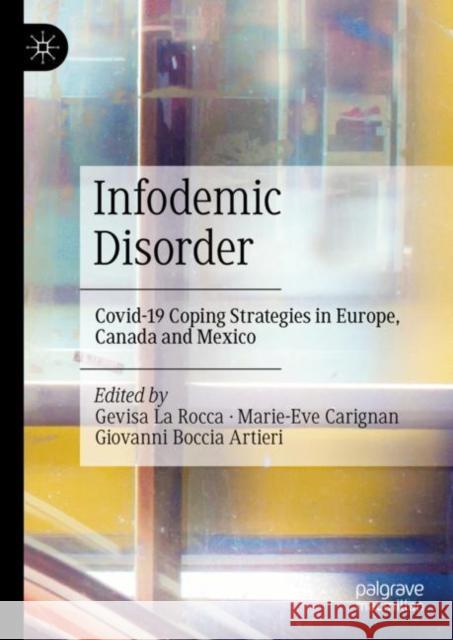
Infodemic Disorder: Covid-19 Coping Strategies in Europe, Canada and Mexico

ISBN-13: 9783031136979 / Angielski / Twarda / 2023 / 271 str.
Gevisa La Rocca; Marie-Eve Carignan; Giovanni Boccia Artieri
Infodemic Disorder: Covid-19 Coping Strategies in Europe, Canada and Mexico Gevisa L Marie-Eve Carignan Giovanni Bocci 9783031136979 Palgrave MacMillan - książkaWidoczna okładka, to zdjęcie poglądowe, a rzeczywista szata graficzna może różnić się od prezentowanej.

Infodemic Disorder: Covid-19 Coping Strategies in Europe, Canada and Mexico

ISBN-13: 9783031136979 / Angielski / Twarda / 2023 / 271 str.

Gevisa La Rocca; Marie-Eve Carignan; Giovanni Boccia Artieri
cena 564,88
(netto: 537,98 VAT:  5%)

Najniższa cena z 30 dni: 501,19
Termin realizacji zamówienia:
ok. 22 dni roboczych.

Darmowa dostawa!
inne wydania

This contributed volume identifies how the information processes of public institutions and citizens have changed throughout the COVID-19 pandemic, within a new context that emerged: the infodemic disorder. Public debate is largely characterized today by a crisis of the legitimacy of institutions, accompanied by a crisis of authority in public communication, leading to the emergency of a state of information disorder due specifically to the need to find information related to the coping of the pandemic. This condition is characterized by growing attention to issues related to ‘fake news’, ‘misinformation’, and ‘media manipulation’, that are intertwined in digital platform ecosystems, and the effects of which on democracy, public communication and research, and the sharing of information in the civic sphere are broad and far-reaching. This volume analyzes the links between communication strategies of public institutions, and the resulting citizen communication, in an attempt to tease out how communication processes have changed during the pandemic. It was decided to investigate this infodemic disorder as it appeared in three different geographical contexts: Europe, Canada and Mexico and, at the same time, to bring out the formal and informal coping strategies implemented by public institutions and citizens. Beginning with an introduction to the crisis of information created by the pandemic, the contributors build a theoretical framework, provide contagion data, and subsequently, for each of the geographical contexts analyzed, explore the public communication strategies and those activated by citizens seeking to share information.


This contributed volume identifies how the information processes of public institutions and citizens have changed throughout the COVID-19 pandemic, within a new context that emerged: the infodemic disorder. Public debate is largely characterized today by a crisis of the legitimacy of institutions, accompanied by a crisis of authority in public communication, leading to the emergency of a state of information disorder due specifically to the need to find information related to the coping of the pandemic. This condition is characterized by growing attention to issues related to ‘fake news’, ‘misinformation’, and ‘media manipulation’, that are intertwined in digital platform ecosystems, and the effects of which on democracy, public communication and research, and the sharing of information in the civic sphere are broad and far-reaching. This volume analyzes the links between communication strategies of public institutions, and the resulting citizen communication, in an attempt to tease out how communication processes have changed during the pandemic. It was decided to investigate this infodemic disorder as it appeared in three different geographical contexts: Europe, Canada and Mexico and, at the same time, to bring out the formal and informal coping strategies implemented by public institutions and citizens. Beginning with an introduction to the crisis of information created by the pandemic, the contributors build a theoretical framework, provide contagion data, and subsequently, for each of the geographical contexts analyzed, explore the public communication strategies and those activated by citizens seeking to share information.

Kategorie:
Nauka
Kategorie BISAC:
Social Science > Media Studies
Social Science > Socjologia
Political Science > General
Wydawca:
Palgrave MacMillan
Język:
Angielski
ISBN-13:
9783031136979
Rok wydania:
2023
Dostępne języki:
Ilość stron:
271
Oprawa:
Twarda
Dodatkowe informacje:
Wydanie ilustrowane


Chapter 1. Covid-19 and the Global Crisis of Information: an Introduction.- Chapter 2. Infodemic Disorder: Covid-19 and Post-truth.- Chapter 3. A Review of Some Covid-19 Pandemic Numbers in European Union, Canada, and Mexico.- Chapter 4. We Are All Europeans. EU Institutions Facing the Covid-19 Pandemic and Information Crisis.- Chapter 5. The Practice of Emergency Gatewatching During the First Phase of the Pandemic. An Analysis Through the Tweets 
in Italian, Spanish, French and German.- Chapter 6. The Covid-19 Pandemic in Canadian Newspapers: An Analysis of the Journalistic Articles as Risk and Crisis Messages.- Chapter 7. Disinformation in the Age of the Covid-19 Pandemic: How Does Belief in Fake News and Conspiracy Theories Affect Canadians’ Reactions to the Crisis?.- Chapter 8. Analysis of the Mexican Communication Plan to Control the Covid-19 Epidemic.Chapter 9. Social Media Interactions in Mexico About the SARS-CoV-2 Vaccination Plan.- Chapter 10. Rethinking Our Interpretation Processes: Some Evidence./

Gevisa La Rocca is Associate Professor in Sociology of Communication and Cultural Process at the Faculty of Human and Social Sciences, Kore University of Enna, Italy.

Marie‐Eve Carignan is Associate Professor at the Department of Communication of the Université de Sherbrooke in Canada.

Giovanni Boccia Artieri is Full Professor in Sociology of Communication and Digital Media and Dean at the Dept. of Communication Sciences, Humanities and International Studies, University of Urbino Carlo Bo, Italy.

This contributed volume identifies how the information processes of public institutions and citizens have changed throughout the COVID-19 pandemic, within a new context that emerged: the infodemic disorder. Public debate is largely characterized today by a crisis of the legitimacy of institutions, accompanied by a crisis of authority in public communication, leading to the emergency of a state of information disorder due specifically to the need to find information related to the coping of the pandemic. This condition is characterized by growing attention to issues related to ‘fake news’, ‘misinformation’, and ‘media manipulation’, that are intertwined in digital platform ecosystems, and the effects of which on democracy, public communication and research, and the sharing of information in the civic sphere are broad and far-reaching. This volume analyzes the links between communication strategies of public institutions, and the resulting citizen communication, in an attempt to tease out how communication processes have changed during the pandemic. It was decided to investigate this infodemic disorder as it appeared in three different geographical contexts: Europe, Canada and Mexico and, at the same time, to bring out the formal and informal coping strategies implemented by public institutions and citizens. Beginning with an introduction to the crisis of information created by the pandemic, the contributors build a theoretical framework, provide contagion data, and subsequently, for each of the geographical contexts analyzed, explore the public communication strategies and those activated by citizens seeking to share information.

Gevisa La Rocca is Associate Professor in Sociology of Communication and Cultural Process at the Faculty of Human and Social Sciences, Kore University of Enna, Italy.

Marie‐Eve Carignan is Associate Professor at the Department of Communication of the Université de Sherbrooke in Canada.

Giovanni Boccia Artieri is Full Professor in Sociology of Communication and Digital Media and Dean at the Dept. of Communication Sciences, Humanities and International Studies, University of Urbino Carlo Bo, Italy.


Udostępnij

Facebook - konto krainaksiazek.pl


Opinie o Krainaksiazek.pl na Opineo.pl

Partner Mybenefit

Krainaksiazek.pl w programie rzetelna firma Krainaksiaze.pl - płatności przez paypal

Czytaj nas na:

Facebook - krainaksiazek.pl
  • książki na zamówienie
  • granty
  • książka na prezent
  • kontakt
  • pomoc
  • opinie
  • regulamin
  • polityka prywatności

Zobacz:

  • Księgarnia czeska

  • Wydawnictwo Książkowe Klimaty

1997-2026 DolnySlask.com Agencja Internetowa

© 1997-2022 krainaksiazek.pl
     
KONTAKT | REGULAMIN | POLITYKA PRYWATNOŚCI | USTAWIENIA PRYWATNOŚCI
Zobacz: Księgarnia Czeska | Wydawnictwo Książkowe Klimaty | Mapa strony | Lista autorów
KrainaKsiazek.PL - Księgarnia Internetowa

Polityka prywatnosci - link
Krainaksiazek.pl - płatnośc Przelewy24
Przechowalnia Przechowalnia




