• Wyszukiwanie zaawansowane
  • Kategorie
  • Kategorie BISAC
  • Książki na zamówienie
  • Promocje
  • Granty
  • Książka na prezent
  • Opinie
  • Pomoc
  • Załóż konto
  • Zaloguj się

Infectious Diseases Drug Delivery Systems » książka


zaloguj się | załóż konto
Logo Krainaksiazek.pl

koszyk

konto

szukaj
topmenu
Księgarnia internetowa
Szukaj
Książki na zamówienie
Promocje
Granty
Książka na prezent
Moje konto
Pomoc
 
 
Wyszukiwanie zaawansowane
Pusty koszyk
Bezpłatna dostawa dla zamówień powyżej 20 złBezpłatna dostawa dla zamówień powyżej 20 zł

Kategorie główne

• Nauka
 [2949965]
• Literatura piękna
 [1857847]

  więcej...
• Turystyka
 [70818]
• Informatyka
 [151303]
• Komiksy
 [35733]
• Encyklopedie
 [23180]
• Dziecięca
 [617748]
• Hobby
 [139972]
• AudioBooki
 [1650]
• Literatura faktu
 [228361]
• Muzyka CD
 [398]
• Słowniki
 [2862]
• Inne
 [444732]
• Kalendarze
 [1620]
• Podręczniki
 [167233]
• Poradniki
 [482388]
• Religia
 [509867]
• Czasopisma
 [533]
• Sport
 [61361]
• Sztuka
 [243125]
• CD, DVD, Video
 [3451]
• Technologie
 [219309]
• Zdrowie
 [101347]
• Książkowe Klimaty
 [123]
• Zabawki
 [2362]
• Puzzle, gry
 [3791]
• Literatura w języku ukraińskim
 [253]
• Art. papiernicze i szkolne
 [7933]
Kategorie szczegółowe BISAC

Infectious Diseases Drug Delivery Systems

ISBN-13: 9783031205200 / Angielski / Twarda / 2023 / 340 str.
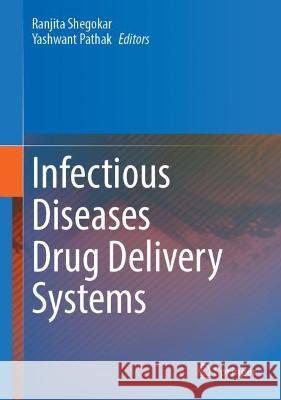
Ranjita Shegokar; Yashwant Pathak
Infectious Diseases Drug Delivery Systems Ranjita Shegokar Yashwant Pathak 9783031205200 Springer - książkaWidoczna okładka, to zdjęcie poglądowe, a rzeczywista szata graficzna może różnić się od prezentowanej.

Infectious Diseases Drug Delivery Systems

ISBN-13: 9783031205200 / Angielski / Twarda / 2023 / 340 str.

Ranjita Shegokar; Yashwant Pathak
cena 564,88
(netto: 537,98 VAT:  5%)

Najniższa cena z 30 dni: 539,74
Termin realizacji zamówienia:
ok. 22 dni roboczych
Bez gwarancji dostawy przed świętami

Darmowa dostawa!
inne wydania

The disability-adjusted life year (DALY) is a generic measure of health effect that can be used in cost-effectiveness analysis as an alternative to the quality-adjusted life year (QALY). Infectious diseases are one of the major to cause significant losses of DALY and QALY. Human infectious diseases are disorders that are triggered by the micro-organisms such as bacteria, fungi, viruses, or parasites. The majority of such diseases are contagious and create a public health menace. There are several reasons why infectious diseases are deadly diseases, and one of the primary reasons is the drug resistance developed over time. Drug resistance-associated mutations are linked to increasing drug efflux, modifications of the drugs, or their targets. Every year, new drugs are being approved by FDA to treat infectious diseases. Nonetheless, the infectious diseases will undoubtedly persist as permanent and main threats to humanity for now and in the future.A total of four books are covered under the series of Infectious drug diseases.- Malarial drug delivery systems- Tubercular drug delivery systems- Viral drug delivery systems- Infectious disease drug delivery systemsInfectious diseases are the world’s greatest killers that present one of the most significant health and security challenges. Humans have lived with emerging and re-emerging pathogens since before the documented history of civilization. The only determining fact today is - If the situation is “worse” or “better” than in past. The answer is probably “worse”, may be due significant increase in human population, increased cross-continent mobility, imbalanced (stressed) life style, irregular food habits leading to compromised innate immunity and over or under practiced hygiene routine. When the incidence of such a disease in people increases over 20 years or threatens to increase, it is called an “emerging” disease, and a growing number have made watch lists and headlines in nearly every country -like highly pathogenic H5N1 avian influenza, severe acute respiratory syndrome (SARS), Ebola virus, food- and waterborne illnesses, and a range of antimicrobial-resistant bacterial diseases TB. This book addresses current and new therapy developments in treating such infectious diseases, updates on finding new drugs, identification of innovative diagnostic methods, understanding of disease research models and clinical trials performances of new treatment modalities.Audiences from a broad range of groups, from researchers, academicians, and public health bodies to regulatory experts, can benefit from the compiled information to learn more about patient needs and current research advances in the field of infectious diseases and related research.


The disability-adjusted life year (DALY) is a generic measure of health effect that can be used in cost-effectiveness analysis as an alternative to the quality-adjusted life year (QALY). Infectious diseases are one of the major to cause significant losses of DALY and QALY. Human infectious diseases are disorders that are triggered by the micro-organisms such as bacteria, fungi, viruses, or parasites. The majority of such diseases are contagious and create a public health menace. There are several reasons why infectious diseases are deadly diseases, and one of the primary reasons is the drug resistance developed over time. Drug resistance-associated mutations are linked to increasing drug efflux, modifications of the drugs, or their targets. Every year, new drugs are being approved by FDA to treat infectious diseases. Nonetheless, the infectious diseases will undoubtedly persist as permanent and main threats to humanity for now and in the future.A total of four books are covered under the series of Infectious drug diseases.- Malarial drug delivery systems- Tubercular drug delivery systems- Viral drug delivery systems- Infectious disease drug delivery systemsInfectious diseases are the world’s greatest killers that present one of the most significant health and security challenges. Humans have lived with emerging and re-emerging pathogens since before the documented history of civilization. The only determining fact today is - If the situation is “worse” or “better” than in past. The answer is probably “worse”, may be due significant increase in human population, increased cross-continent mobility, imbalanced (stressed) life style, irregular food habits leading to compromised innate immunity and over or under practiced hygiene routine. When the incidence of such a disease in people increases over 20 years or threatens to increase, it is called an “emerging” disease, and a growing number have made watch lists and headlines in nearly every country -like highly pathogenic H5N1 avian influenza, severe acute respiratory syndrome (SARS), Ebola virus, food- and waterborne illnesses, and a range of antimicrobial-resistant bacterial diseases TB. This book addresses current and new therapy developments in treating such infectious diseases, updates on finding new drugs, identification of innovative diagnostic methods, understanding of disease research models and clinical trials performances of new treatment modalities.Audiences from a broad range of groups, from researchers, academicians, and public health bodies to regulatory experts, can benefit from the compiled information to learn more about patient needs and current research advances in the field of infectious diseases and related research.

Kategorie:
Nauka, Biologia i przyroda
Kategorie BISAC:
Science > Biotechnology
Medical > Farmakologia
Medical > Epidemiologia
Wydawca:
Springer
Język:
Angielski
ISBN-13:
9783031205200
Rok wydania:
2023
Dostępne języki:
Ilość stron:
340
Oprawa:
Twarda
Dodatkowe informacje:
Wydanie ilustrowane

New drugs in synthesis research for Malaria

New drugs in synthesis research for TB
New drugs in synthesis viral
Nanotechnology in Malaria diagnosis
Nanotechnology in TB diagnosis
Nanotechnology based vaccination Malaria
Nanotechnology based vaccination TB
Disease models in Malaria research
Disease models in TB research
Disease models in Viral research
Viral diseases- cellular understanding of disease : Vaccine development
Pneumonia- infection
bacterial pnuemonia
Lipid based DDS in pneumonia
hepatitis
Recent Developments in the Treatment of Bacterial Meningitis
Bacterial Urinary Tract Infections
E.coli

Ranjita Shegokar holds a Ph.D. degree in Pharmaceutical Technology from the SNDT University, India, and has been a postdoctoral researcher in the Department of Pharmaceutics, Biopharmaceutics and NutriCosmetics at the Free University of Berlin, Germany. For the last many years she has been working with various multinational pharmaceutical companies in technical/R&D leadership roles. Currently, she serves as a Chief Scientific Officer (CSO) at Capnopharm GmbH, Germany. She has authored several research articles, book chapters, and presented her research in many national/international conferences. She has filed multiple patent applications in the area of drug delivery and targeting. Besides that, she has edited multiple trending books in the area of pharmaceutical nanotechnology and drug delivery aspects. For her research, she has received numerous prestigious national and international awards among them include recently received prestigious German Innovation Award 2022. Her areas of interest include polymeric nanoparticles, nanocrystals, lipid nanoparticles (SLNs/NLCs), nanoemulsions, cancer drug targeting and the role of excipients in delivery systems (www.ranjitas.com).


Yashwant Pathak completed his Ph.D. in Pharmaceutical Technology from India and EMBA and MS Conflict Management from Sullivan University, USA. He is Associate Dean for Faculty Affairs College of Pharmacy, University of South Florida. Tampa, Florida. With extensive experience in academia and industry, he has over 150 research publications, abstracts, chapters and reviews, 7 books in Nanotechnology and drug delivery systems, 6 in Nutraceuticals and several books in cultural studies. His areas of research include drug delivery systems, nanotechnology applications for pharmaceutical and Nutraceuticals. He has traveled extensively over 80 countries to network scientific experts and is actively involved with many Pharmacy colleges in different countries.

The disability-adjusted life year (DALY) is a generic measure of health effect that can be used in cost-effectiveness analysis as an alternative to the quality-adjusted life year (QALY). Infectious diseases are one of the major to cause significant losses of DALY and QALY. Human infectious diseases are disorders that are triggered by the micro-organisms such as bacteria, fungi, viruses, or parasites. The majority of such diseases are contagious and create a public health menace. There are several reasons why infectious diseases are deadly diseases, and one of the primary reasons is the drug resistance developed over time. Drug resistance-associated mutations are linked to increasing drug efflux, modifications of the drugs, or their targets. Every year, new drugs are being approved by FDA to treat infectious diseases. Nonetheless, the infectious diseases will undoubtedly persist as permanent and main threats to humanity for now and in the future.

A total of four books are covered under the series of Infectious drug diseases.

- Malarial drug delivery systems

- Tubercular drug delivery systems

- Viral drug delivery systems

- Infectious disease drug delivery systems

Infectious diseases are the world’s greatest killers that present one of the most significant health and security challenges. Humans have lived with emerging and re-emerging pathogens since before the documented history of civilization. The only determining fact today is - If the situation is “worse” or “better” than in past. The answer is probably “worse”, may be due significant increase in human population, increased cross-continent mobility, imbalanced (stressed) life style, irregular food habits leading to compromised innate immunity and over or under practiced hygiene routine. When the incidence of such a disease in people increases over 20 years or threatens to increase, it is called an “emerging” disease, and a growing number have made watch lists and headlines in nearly every country -like highly pathogenic H5N1 avian influenza, severe acute respiratory syndrome (SARS), Ebola virus, food- and waterborne illnesses, and a range of antimicrobial-resistant bacterial diseases TB. This book addresses current and new therapy developments in treating such infectious diseases, updates on finding new drugs, identification of innovative diagnostic methods, understanding of disease research models and clinical trials performances of new treatment modalities.

Audiences from a broad range of groups, from researchers, academicians, and public health bodies to regulatory experts, can benefit from the compiled information to learn more about patient needs and current research advances in the field of infectious diseases and related research.




Udostępnij

Facebook - konto krainaksiazek.pl


Opinie o Krainaksiazek.pl na Opineo.pl

Partner Mybenefit

Krainaksiazek.pl w programie rzetelna firma Krainaksiaze.pl - płatności przez paypal

Czytaj nas na:

Facebook - krainaksiazek.pl
  • książki na zamówienie
  • granty
  • książka na prezent
  • kontakt
  • pomoc
  • opinie
  • regulamin
  • polityka prywatności

Zobacz:

  • Księgarnia czeska

  • Wydawnictwo Książkowe Klimaty

1997-2025 DolnySlask.com Agencja Internetowa

© 1997-2022 krainaksiazek.pl
     
KONTAKT | REGULAMIN | POLITYKA PRYWATNOŚCI | USTAWIENIA PRYWATNOŚCI
Zobacz: Księgarnia Czeska | Wydawnictwo Książkowe Klimaty | Mapa strony | Lista autorów
KrainaKsiazek.PL - Księgarnia Internetowa

Polityka prywatnosci - link
Krainaksiazek.pl - płatnośc Przelewy24
Przechowalnia Przechowalnia




