Infections Causing Human Cancer: Softcover Edition » książka





Infections Causing Human Cancer: Softcover Edition
ISBN-13: 9783527329779 / Angielski / Miękka / 2010 / 531 str.
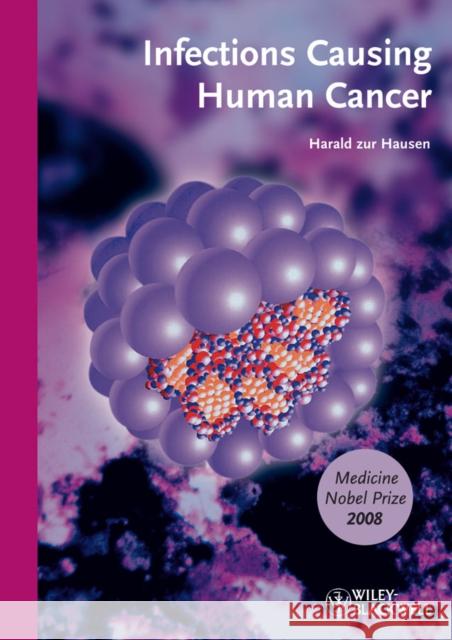
Infections must be thought as one of the most important, if not the most important, risk factors for cancer development in humans. Approximately 15-20% of all cases of cancer around the world are caused by viruses. The
establishment of a causal relationship between the presence of specific infective agents and certain types of human cancer represents a key step in the development of novel therapeutic and preventive strategies.
play a role in the development of this type of cancer.
During the past 35 years, the author of this work and his co–workers initially found Epstein–Barr virus DNA in Burkitt′s lymphomas and nasopharyngeal cancer and made the connection between HPV infection and cervical cancer. It was also during this period and subsequently that scientists all over the world discovered tumor–inducing bacteria, viruses, parasites, and protozoa, opening up entirely new prospects for the prevention and treatment of infection–induced cancer by vaccination.
Adopting a unifying concept and a consistent structure for the individual chapters, Professor zur Hausen provides a thorough and comprehensive overview on cancer–inducing infective agents – viruses, bacteria and parasites – and their corresponding transforming capacities and mechanisms. He does not cover the structure and molecular biology of the agents presented in great detail, but rather concentrates on those aspects that link the respective agents to human oncogenesis. As such, an extensive bibliography after each chapter permits further studies on the subject.
With a chapter on Helicobacter written by James Fox and his colleagues at Harvard University, this is an invaluable and instructive reference for all oncologists, microbiologists and molecular biologists working in the area of infections and cancer.
Harald zur Hausen studied medicine at the Universities of Bonn, Hamburg and Dusseldorf, gaining his MD in 1960. He was a research fellow at the University of Dusseldorf and the Children′s Hospital of Philadelphia, before being appointed assistant professor at the University of Pennsylvania in 1968. He joined the University of Wurzburg one year later, initially as a senior scientist and then as a private lecturer. From 1972 to 1977 he was Professor of Virology at the University of Erlangen–Nurnberg, and then at the University of Freiburg until 1983. Thereafter, he was appointed Scientific Director of the German Cancer Research Center in Heidelberg until his retirement in 2003.
Professor zur Hausen has been a member of various research organizations, academies of science, and scientific boards. He was President of OECI, Vice–Chairman of the German American Academic Council and Vice–President of the Helmholtz Society of German National Research Centers. Among others, he received the Robert Koch Award, the Charles S. Mott Prize of the General Motors Cancer Research Foundation, the Paul Ehrlich and Ludwig Darmstaedter Award, the German Cancer Award, the Prince Mahidol Award of Thailand and the Federal Order of Merit, as well as six honorary degrees in six different countries. He is Editor–in–Chief of the International Journal of Cancer and on the editorial board of several scientific journals and has organized or co–organized a number of international meetings.




Czytaj nas na:
KrainaKsiazek.PL - Księgarnia Internetowa


