• Wyszukiwanie zaawansowane
  • Kategorie
  • Kategorie BISAC
  • Książki na zamówienie
  • Promocje
  • Granty
  • Książka na prezent
  • Opinie
  • Pomoc
  • Załóż konto
  • Zaloguj się

Industrial Aromatic Chemistry: Raw Materials - Processes - Products » książka


zaloguj się | załóż konto
Logo Krainaksiazek.pl

koszyk

konto

szukaj
topmenu
Księgarnia internetowa
Szukaj
Książki na zamówienie
Promocje
Granty
Książka na prezent
Moje konto
Pomoc
 
 
Wyszukiwanie zaawansowane
Pusty koszyk
Bezpłatna dostawa dla zamówień powyżej 20 złBezpłatna dostawa dla zamówień powyżej 20 zł

Kategorie główne

• Nauka
 [2949965]
• Literatura piękna
 [1857847]

  więcej...
• Turystyka
 [70818]
• Informatyka
 [151303]
• Komiksy
 [35733]
• Encyklopedie
 [23180]
• Dziecięca
 [617748]
• Hobby
 [139972]
• AudioBooki
 [1650]
• Literatura faktu
 [228361]
• Muzyka CD
 [398]
• Słowniki
 [2862]
• Inne
 [444732]
• Kalendarze
 [1620]
• Podręczniki
 [167233]
• Poradniki
 [482388]
• Religia
 [509867]
• Czasopisma
 [533]
• Sport
 [61361]
• Sztuka
 [243125]
• CD, DVD, Video
 [3451]
• Technologie
 [219309]
• Zdrowie
 [101347]
• Książkowe Klimaty
 [123]
• Zabawki
 [2362]
• Puzzle, gry
 [3791]
• Literatura w języku ukraińskim
 [253]
• Art. papiernicze i szkolne
 [7933]
Kategorie szczegółowe BISAC

Industrial Aromatic Chemistry: Raw Materials - Processes - Products

ISBN-13: 9783642734342 / Angielski / Miękka / 2011 / 486 str.
Heinz-Gerhard Franck; J. Rgen W. Stadelhofer
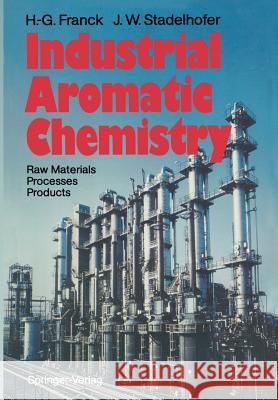
Industrial Aromatic Chemistry: Raw Materials - Processes - Products Franck, Heinz-Gerhard 9783642734342 Springer - książkaWidoczna okładka, to zdjęcie poglądowe, a rzeczywista szata graficzna może różnić się od prezentowanej.

Industrial Aromatic Chemistry: Raw Materials - Processes - Products

ISBN-13: 9783642734342 / Angielski / Miękka / 2011 / 486 str.

Heinz-Gerhard Franck; J. Rgen W. Stadelhofer
cena 201,72 zł
(netto: 192,11 VAT:  5%)

Najniższa cena z 30 dni: 192,74 zł
Termin realizacji zamówienia:
ok. 22 dni roboczych
Bez gwarancji dostawy przed świętami

Darmowa dostawa!

Aromatic organic hydrocarbons and heterocycles represent a bulk of about one third of all industrially produced organic basic materials. Aromatic compounds such as benzene, phenol, naphthalene, anthracene, and their homologues, are derived from raw materials, coal, crude oil and biogenic resources by thermal and catalytic refining processes. This book introduces the chemistry of aromatics with a brief discussion of the aromatic character and a survey of historical aspects, particularly the development of the organic dye industry during the 19th century. The main emphasis of the book is to give a clear prospect of industrial processes for the production and the derivatisation of aromatics with consistent flow diagrams. Economical aspects of by- and side-products are especially regarded. For the most important aromatics an analysis of the international market included their derivatives: polymers, pesticides, dyes, pigments and drugs. Professional scientists, managers and students in chemistry and chemical engineering will find a wealth of information for their career and daily work.


Kategorie:
Technologie
Kategorie BISAC:
Science > Chemia - Organiczna
Science > Chemistry - Industrial & Technical
Technology & Engineering > Chemical & Biochemical
Wydawca:
Springer
Język:
Angielski
ISBN-13:
9783642734342
Rok wydania:
2011
Wydanie:
Softcover Repri
Ilość stron:
486
Waga:
0.79 kg
Wymiary:
24.41 x 16.99 x 2.59
Oprawa:
Miękka
Wolumenów:
01

1 History.- 2 The nature of the aromatic character.- 2.1 Molecular considerations.- 2.2 Mechanistic considerations.- 2.2.1 Electrophilic aromatic substitution.- 2.2.1.1 Orientation rules.- 2.2.2 Nucleophilic aromatic substitution.- 2.2.3 Radical reactions.- 2.2.3.1 Pyrolysis processes.- 2.2.3.2 Oxidation reactions.- 2.2.4 Rearrangement reactions.- 2.3 Nomenclature.- 3 Base materials for aromatic chemicals.- 3.1 Origin of fossil raw materials and their composition.- 3.2 Coal.- 3.2.1 Deposits, composition and uses of coal.- 3.2.2 Thermal coal conversion — tar and benzole recovery.- 3.2.3 Tar refining.- 3.2.4 Aromatics stemming from coal gasification.- 3.2.5 Production of aromatics by coal liquefaction.- 3.2.5.1 Historic development.- 3.2.5.2 Mechanisms of coal liquefaction.- 3.2.5.3 Further developments in coal hydrogenation since 1970.- 3.2.5.4 Hydropyrolysis.- 3.3 Crude oil.- 3.3.1 Reserves and characteristics of crude oil.- 3.3.2 Crude oil refining.- 3.3.2.1 Distillation.- 3.3.2.2 Catalytic cracking.- 3.3.2.3 Catalytic reforming.- 3.3.2.4 Hydrocracking.- 3.3.2.5 Thermal cracking of hydrocarbons.- 3.3.2.5.1 Steam cracking to produce olefins.- 3.3.2.5.2 Production of olefins from crude oil.- 3.3.2.5.3 Other thermal-cracking processes.- 3.4 Production of aromatic hydrocarbons with zeolites.- 3.4.1 Aromatics from alcohols.- 3.4.2 Aromatics from short-chain alkanes.- 3.5 Renewable raw materials.- 3.5.1 Furfural.- 3.5.2 Lignin.- 3.5.3 Vanillin.- 3.6 Summary review of processes for the production of aromatics.- 4 Production of benzene, toluene and xylenes.- 4.1 History.- 4.2 Pre-treatment of mixtures containing crude aromatics.- 4.2.1 Recovery of aromatics.- 4.2.1.1 Liquid-liquid extraction.- 4.2.1.2 Extractive and azeotropic distillation.- 4.3 Separation of mixed aromatics into individual constituents.- 4.4 Dealkylation, isomerization and disproportionation reactions of BTX aromatics.- 4.4.1 Dealkylation of toluene and xylenes to benzene.- 4.4.2 Isomerization of xylenes.- 4.4.3 Disproportionation.- 4.5 Quality standards.- 4.6 Economic data.- 4.7 Process review.- 5 Production and uses of benzene derivatives.- 5.1 Ethylbenzene.- 5.1.1 Recovery of ethylbenzene from aromatic mixtures.- 5.1.2 Synthesis of ethylbenzene.- 5.1.3 Production of styrene.- 5.1.4 Substituted styrenes.- 5.2 Cumene.- 5.3 Phenol.- 5.3.1 Phenol from cumene.- 5.3.2 Alternative methods for the synthesis of phenol.- 5.3.3 Recovery of phenol from the products of coal pyrolysis.- 5.3.4 Phenol derivatives.- 5.3.4.1 Bisphenol A.- 5.3.4.2 Cyclohexanol and cyclohexanone.- 5.3.4.3 Alkylphenols.- 5.3.4.3.1 Cresols.- 5.3.4.3.2 Xylenols.- 5.3.4.3.3 Higher alkyl phenols.- 5.3.4.4 Salicylic acid.- 5.3.4.5 Chlorinated phenols.- 5.3.4.6 Nitrophenols.- 5.3.4.7 Other phenol derivatives.- 5.3.4.8 Polyhydric phenols.- 5.4 Benzene hydrogenation — cyclohexane.- 5.5 Nitrobenzene and aniline.- 5.5.1 Nitrobenzene.- 5.5.2 Aniline.- 5.5.3 Aniline derivatives.- 5.5.3.1 4,4’,-Diphenylmethane diisocyanate (MDI).- 5.5.3.2 Cyclohexylamine and benzothiazole derivatives.- 5.5.3.3 Secondary and tertiary aniline bases.- 5.5.3.4 Other aniline derivatives.- 5.6 Alkylbenzenes and alkylbenzene sulfonates.- 5.7 Maleic anhydride.- 5.8 Chlorobenzenes.- 5.8.1 Chlorobenzene.- 5.8.1.1 Nitrochlorobenzenes.- 5.8.2 Dichlorobenzenes.- 5.8.3 Hexachlorocyclohexane.- 5.9 Process review.- 6 Production and uses of toluene derivatives.- 6.1 Nitro-derivatives of toluene.- 6.1.1 Mononitrotoluene and its products.- 6.1.2 Dinitrotoluenes and their derivatives.- 6.1.3 Trinitrotoluene compounds.- 6.2 Benzoic acid.- 6.3 Chlorine derivatives of toluene.- 6.3.1 Side-chain chlorination of toluene.- 6.3.1.1 Benzyl chloride.- 6.3.1.2 Benzal chloride.- 6.3.1.3 Benzotrichloride.- 6.3.2 Nuclear chlorination of toluene.- 6.4 Sulfonic acid derivatives of toluene.- 6.5 Toluenesulfonyl chloride.- 6.6 Other toluene derivatives.- 7 Production and uses of xylene derivatives.- 7.1 o-Xylene and its derivatives.- 7.1.1 Oxidation of o-xylene to phthalic anhydride.- 7.1.2 Production of phthalic esters.- 7.1.3 Other products from phthalic anhydride.- 7.1.4 Nitration of o-xylene.- 7.2 m-Xylene and its derivatives.- 7.2.1 Production of isophthalic acid.- 7.2.2 Other products from m-xylene.- 7.3 p-Xylene and its derivatives.- 7.3.1 Terephthalic acid.- 7.3.2 Other p-xylene derivatives.- 8 Polyalkylated benzenes — production and uses.- 8.1 Pseudocumene.- 8.2 Mesitylene.- 8.3 Durene.- 8.4 Other eumene derivatives.- 8.4.1 Nitrocumene and isoproturon.- 8.4.2 Cumenesulfonic acid.- 8.5 Indan and indene.- 9 Naphthalene — production and uses.- 9.1 History.- 9.2 Naphthalene recovery.- 9.2.1 Naphthalene from coal tar.- 9.2.2 Naphthalene from petroleum-derived raw materials.- 9.3 Naphthalene derivatives.- 9.3.1 Production of phthalic anhydride (PA) from naphthalene.- 9.3.2 Production and uses of naphthoquinone.- 9.3.3 Production and uses of naphthols.- 9.3.3.1 1-Naphthol and its derivatives.- 9.3.3.2 2-Naphthol and its derivatives.- 9.3.4 Sulfonic acid derivatives of naphthalene.- 9.3.5 Nitro- and aminonaphthalenes.- 9.3.6 Production of tetralin and tetralone.- 9.3.7 Production of isopropylnaphthalene derivatives.- 9.3.8 Other alkylnaphthalenes from naphthalene.- 9.4 Process review.- 10 Alkylnaphthalenes and other bicyclic aromatics-production and uses.- 10.1 Biphenyl.- 10.2 Methylnaphthalenes.- 10.3 Acenaphthene/acenaphthylene.- 11 Anthracene — production and uses.- 11.1 Production of anthracene.- 11.2 Production of anthraquinone.- 11.2.1 Oxidation of anthracene to anthraquinone.- 11.2.2 Synthetic production of anthraquinone.- 11.3 Anthraquinone derivatives.- 11.3.1 Production of anthraquinone derivatives from anthraquinone.- 11.3.2 Synthetic production of anthraquinone derivatives.- 11.4 Higher condensed dyes from anthraquinone.- 11.5 Anthraquinone as a catalyst in the production of hydrogen peroxide.- 11.6 Wood pulping with anthraquinone.- 12 Additional polynuclear aromatics — production and uses.- 12.1 Phenanthrene.- 12.2 Fluorene.- 12.3 Fluoranthene.- 12.4 Pyrene.- 13 Production and uses of carbon products from mixtures of condensed aromatics.- 13.1 Pyrolysis of aromatic hydrocarbon mixtures in the liquid phase.- 13.1.1 Formation of mesophase.- 13.1.2 Production and uses of coke from aromatic residues by the delayed coking process.- 13.1.3 Pitch coking in horizontal chamber ovens.- 13.1.4 Production of carbon fibers.- 13.2 Pyrolysis of mixtures of aromatics in the gas phase — Carbon black production.- 14 Aromatic heterocyclics — production and uses.- 14.1 Five-membered ring heterocyclics.- 14.1.1 Furan.- 14.1.2 Thiophene.- 14.1.3 Pyrrole.- 14.1.4 Five-membered ring heterocyclics with two or more hetero-atoms.- 14.2 Six-membered ring heterocyclics.- 14.2.1 Pyridine.- 14.2.2 Pyridine derivatives.- 14.2.3 Alkylated pyridines.- 14.3 Pyrimidine.- 14.4 Triazines.- 14.5 Condensed heterocyclics.- 14.5.1 Thianaphthene (2,3-Benzothiophene).- 14.5.2 Indole.- 14.5.3 Benzothiazole.- 14.5.4 Benzotriazole.- 14.5.5 Quinoline and isoquinoline.- 14.5.6 Carbazole.- 14.5.7 Dibenzofuran (Diphenylene oxide).- 15 Toxicology/Environmental aspects.- 15.1 Basic toxicological considerations.- 15.2 Aspects of occupational medicine and legislation.- 15.3 Environmental aspects and biological degradation of aromatics.- 16 The future of aromatic chemistry.


Udostępnij

Facebook - konto krainaksiazek.pl


Opinie o Krainaksiazek.pl na Opineo.pl

Partner Mybenefit

Krainaksiazek.pl w programie rzetelna firma Krainaksiaze.pl - płatności przez paypal

Czytaj nas na:

Facebook - krainaksiazek.pl
  • książki na zamówienie
  • granty
  • książka na prezent
  • kontakt
  • pomoc
  • opinie
  • regulamin
  • polityka prywatności

Zobacz:

  • Księgarnia czeska

  • Wydawnictwo Książkowe Klimaty

1997-2025 DolnySlask.com Agencja Internetowa

© 1997-2022 krainaksiazek.pl
     
KONTAKT | REGULAMIN | POLITYKA PRYWATNOŚCI | USTAWIENIA PRYWATNOŚCI
Zobacz: Księgarnia Czeska | Wydawnictwo Książkowe Klimaty | Mapa strony | Lista autorów
KrainaKsiazek.PL - Księgarnia Internetowa

Polityka prywatnosci - link
Krainaksiazek.pl - płatnośc Przelewy24
Przechowalnia Przechowalnia





