• Wyszukiwanie zaawansowane
  • Kategorie
  • Kategorie BISAC
  • Książki na zamówienie
  • Promocje
  • Granty
  • Książka na prezent
  • Opinie
  • Pomoc
  • Załóż konto
  • Zaloguj się

Induced Pluripotent Stem Cells and Human Disease: Methods and Protocols » książka


zaloguj się | załóż konto
Logo Krainaksiazek.pl

koszyk

konto

szukaj
topmenu
Księgarnia internetowa
Szukaj
Książki na zamówienie
Promocje
Granty
Książka na prezent
Moje konto
Pomoc
 
 
Wyszukiwanie zaawansowane
Pusty koszyk
Bezpłatna dostawa dla zamówień powyżej 20 złBezpłatna dostawa dla zamówień powyżej 20 zł

Kategorie główne

• Nauka
 [2949965]
• Literatura piękna
 [1857847]

  więcej...
• Turystyka
 [70818]
• Informatyka
 [151303]
• Komiksy
 [35733]
• Encyklopedie
 [23180]
• Dziecięca
 [617748]
• Hobby
 [139972]
• AudioBooki
 [1650]
• Literatura faktu
 [228361]
• Muzyka CD
 [398]
• Słowniki
 [2862]
• Inne
 [444732]
• Kalendarze
 [1620]
• Podręczniki
 [167233]
• Poradniki
 [482388]
• Religia
 [509867]
• Czasopisma
 [533]
• Sport
 [61361]
• Sztuka
 [243125]
• CD, DVD, Video
 [3451]
• Technologie
 [219309]
• Zdrowie
 [101347]
• Książkowe Klimaty
 [123]
• Zabawki
 [2362]
• Puzzle, gry
 [3791]
• Literatura w języku ukraińskim
 [253]
• Art. papiernicze i szkolne
 [7933]
Kategorie szczegółowe BISAC

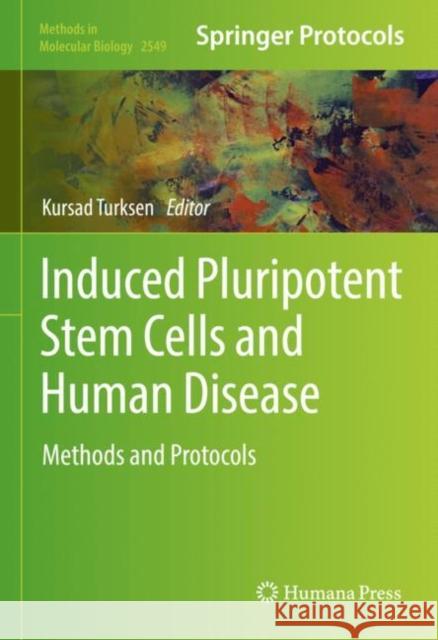
Induced Pluripotent Stem Cells and Human Disease: Methods and Protocols

ISBN-13: 9781071625842 / Angielski / Twarda / 2022
Turksen, Kursad
Induced Pluripotent Stem Cells and Human Disease: Methods and Protocols Turksen, Kursad 9781071625842 Springer US - książkaWidoczna okładka, to zdjęcie poglądowe, a rzeczywista szata graficzna może różnić się od prezentowanej.

Induced Pluripotent Stem Cells and Human Disease: Methods and Protocols

ISBN-13: 9781071625842 / Angielski / Twarda / 2022

Turksen, Kursad
cena 685,93
(netto: 653,27 VAT:  5%)

Najniższa cena z 30 dni: 655,41
Termin realizacji zamówienia:
ok. 22 dni roboczych
Bez gwarancji dostawy przed świętami

Darmowa dostawa!
inne wydania

This detailed volume presents a series of protocols that are representative of recent developments and improvements in induced pluripotent stem cells (iPS cells) and corresponding human disease models. Reflecting the latest technology for generating induced pluripotent stem cells (iPS cells) and their initial characterization, the book explores techniques invaluable both for studies of disease-specific cell types and for their potential applications in regenerative medicine. Written for the highly successful Methods in Molecular Biology series, chapters include introduction to their respective topics, lists of the necessary materials and reagents, step-by-step and readily reproducible laboratory protocols, as well as tips on troubleshooting and avoiding known pitfalls. 


Authoritative and practical, Induced Pluripotent Stem Cells and Human Disease: Methods and Protocols serves as a vital guide that is valuable for not only experts but also novices in the stem cell field.

Kategorie:
Nauka, Biologia i przyroda
Kategorie BISAC:
Science > Cytologia
Science > Biologia molekularna
Science > Biotechnology
Wydawca:
Springer US
Seria wydawnicza:
Methods in Molecular Biology
Język:
Angielski
ISBN-13:
9781071625842
Rok wydania:
2022
Waga:
1.02 kg
Wymiary:
25.4 x 17.8
Oprawa:
Twarda
Dodatkowe informacje:
Wydanie ilustrowane

1. Analysis of Mitochondrial Dysfunction by Microplate Reader in hiPSC-Derived Neuronal Cell Models of Neurodegenerative Disorders

            Tatiana R. Rosenstock, Congxin Sun, Georgina Wynne Hughes, Katherine Winter, and Sovan Sarkar


2. Generation and Hematopoietic Differentiation of Mesenchymal Stromal/Stem Cell-Derived Induced Pluripotent Stem Cell Lines for Disease Modeling of Hematopoietic and Immunological Diseases

            Gülen Güney-Esken and Fatima Aerts-Kaya


3. Establishment of Human Induced Pluripotent Stem Cells from Multiple Sclerosis Patients

            Onur Can Begentas, Dilara Koc, and Erkan Kiris


4. Monitoring Axonal Degeneration in Human Pluripotent Stem Cell Models of Hereditary Spastic Paraplegias

            Xue-Jun Li, Yongchao Mou, Conrad Milton, and Zhenyu Chen


5. Efficient Generation of Functional Hepatocytes from Human Induced Pluripotent Stem Cells for Disease Modeling and Disease Gene Discovery

            Satish Kumar, Joanne E. Curran, Sarah Williams-Blangero, and John Blangero


6. Autophagy Dysfunction as a Phenotypic Readout in hiPSC-Derived Neuronal Cell Models of Neurodegenerative Diseases

            Congxin Sun, Tatiana R. Rosenstock, Malkiel A. Cohen, and Sovan Sarkar


7. Derivation of Induced Pluripotent Stem Cell (iPSC) Lines from Patient-Specific Peripheral Blood Mononuclear Cells (PBMC) Using Episomal Vectors

            Vijay Bhaskar Reddy Konala, Swapna Nandakumar, Harshini Surendran, and Rajarshi Pal


8. Differentiating Induced Pluripotent Stem Cells toward Mesenchymal Stem/Stromal Cells

            Shennea S. McGarvey, Michael Ferreyros, Igor Kogut, and Ganna Bilousova


9. A High-Efficiency Method for the Production of Endothelial Cells from Human Induced Pluripotent Stem Cells

            Maryna Pavlova, Shennea S. McGarvey, Ganna Bilousova, and Igor Kogut


10. Image-Based Quantitation of Kainic Acid-Induced Excitotoxicity as a Model of Neurodegeneration in Human iPSC-Derived Neurons

            Jana Talbot, Sueanne Chear, Andrew Phipps, Alice Pébay, Alex W. Hewitt, James C. Vickers, Anna E. King, and Anthony L. Cook


11. Amyloid β (Aβ) ELISA of Human iPSC-Derived Neuronal Cultures

            Hirotaka Watanabe, Rei Murakami, and Hideyuki Okano


12. Creating Cell Model 2.0 for Pathogenic Mitochondrial DNA Mutation: iPSC Approach for LHON Mutation

            Pragya Singh, Tyler Bahr, Xiaoxu Zhao, Peiqing Hu, Marcel Daadi, TaoSheng Huang, and Yidong Bai


13. CRISPR Guide RNA Library Screens in Human Induced Pluripotent Stem Cells

            Yan Zhou, Qiang Fu, Huijun Shi, and Guangqian Zhou


14. Generation and Encapsulation of Human iPSC-Derived Vascular Smooth Muscle Cells for Proangiogenic Therapy

            Biraja C. Dash and Henry C. Hsia


15. Methods to Induce Small-Scale Differentiation of iPS Cells into Dopaminergic Neurons and to Detect Disease Phenotypes

            Akihiro Yamaguchi, Kei-ichi Ishikawa, and Wado Akamatsu


16. Modeling Early Neural Crest Development via Induction from hiPSC-Derived Neural Plate Border-Like Cells

            Diogo Andrade Nani, Gabriella Shih Ping Hsia, Maria Rita Passos-Bueno, and Gerson Shigeru Kobayashi


17. Generation of Human Induced Pluripotent Stem Cells from Renal Epithelial Cells

            Miao Yu, Xinglong Han, Lingqun Ye, Wei Lei, and Shijun Hu


18. A Protocol for Stepwise Differentiation of Induced Pluripotent Stem Cells into Retinal Pigment Epithelium

            Miho Tagawa, Hanako Ohashi Ikeda, Masayuki Hata, Yumi Inoue, Sachiko Iwai, and Akitaka Tsujikawa


19. Genome Editing of Induced Pluripotent Stem Cells Using CRISPR/Cas9 Ribonucleoprotein Complexes to Model Genetic Ocular Diseases

            Heran Getachew, Blanca Chinchilla, and Rosario Fernandez-Godino


20. Generation of Cardiomyocytes and Endothelial Cells from Human iPSCs by Chemical Modulation of Wnt Signaling

            Arline Joachim, Shiqiao Ye, and Ming-Tao Zhao


21. Immunoassay for Quantitative Detection of Antibody Transcytosis across the Blood-Brain Barrier In Vitro

            Caroline Sodja, Deborah Callaghan, Arsalan S. Haqqani, Danica B. Stanimirovic, Willard J. Costain, and Anna Jezierski


22. Generation of Cortical, Dopaminergic, Motor, and Sensory Neurons from Human Pluripotent Stem Cells

            Shermaine Huiping Tay, Winanto, Zi Jian Khong, Yong Hui Koh, and Shi Yan Ng


23. CRISPR/Cas-Mediated Knock-In of Genetically Encoded Fluorescent Biosensors into the AAVS1 Locus of Human Induced Pluripotent Stem Cells

            David Stellon, Minh Thuan Nguyen Tran, Jana Talbot, Sueanne Chear, Mohd Khairul Nizam Mohd Khalid, Alice Pébay, James C. Vickers, Anna E. King, Alex W. Hewitt, and Anthony L. Cook


24. Cancer Stem Cell Initiation by Tumor-Derived Extracellular Vesicles

            Said M. Afify, Ghmkin Hassan, Ting Yan, Akimasa Seno, and Masaharu Seno


25. Genome Editing Using Cas9-gRNA Ribonucleoprotein in Human Pluripotent Stem Cells for Disease Modeling

            Noelia Benetó, Daniel Grinberg, Lluïsa Vilageliu, and Isaac Canals

This detailed volume presents a series of protocols that are representative of recent developments and improvements in induced pluripotent stem cells (iPS cells) and corresponding human disease models. Reflecting the latest technology for generating induced pluripotent stem cells (iPS cells) and their initial characterization, the book explores techniques invaluable both for studies of disease-specific cell types and for their potential applications in regenerative medicine. Written for the highly successful Methods in Molecular Biology series, chapters include introduction to their respective topics, lists of the necessary materials and reagents, step-by-step and readily reproducible laboratory protocols, as well as tips on troubleshooting and avoiding known pitfalls. 


Authoritative and practical, Induced Pluripotent Stem Cells and Human Disease: Methods and Protocols serves as a vital guide that is valuable for not only experts but also novices in the stem cell field.


Udostępnij

Facebook - konto krainaksiazek.pl


Opinie o Krainaksiazek.pl na Opineo.pl

Partner Mybenefit

Krainaksiazek.pl w programie rzetelna firma Krainaksiaze.pl - płatności przez paypal

Czytaj nas na:

Facebook - krainaksiazek.pl
  • książki na zamówienie
  • granty
  • książka na prezent
  • kontakt
  • pomoc
  • opinie
  • regulamin
  • polityka prywatności

Zobacz:

  • Księgarnia czeska

  • Wydawnictwo Książkowe Klimaty

1997-2025 DolnySlask.com Agencja Internetowa

© 1997-2022 krainaksiazek.pl
     
KONTAKT | REGULAMIN | POLITYKA PRYWATNOŚCI | USTAWIENIA PRYWATNOŚCI
Zobacz: Księgarnia Czeska | Wydawnictwo Książkowe Klimaty | Mapa strony | Lista autorów
KrainaKsiazek.PL - Księgarnia Internetowa

Polityka prywatnosci - link
Krainaksiazek.pl - płatnośc Przelewy24
Przechowalnia Przechowalnia





