• Wyszukiwanie zaawansowane
  • Kategorie
  • Kategorie BISAC
  • Książki na zamówienie
  • Promocje
  • Granty
  • Książka na prezent
  • Opinie
  • Pomoc
  • Załóż konto
  • Zaloguj się

Indigenous Knowledge and Ethnomathematics » książka


zaloguj się | załóż konto
Logo Krainaksiazek.pl

koszyk

konto

szukaj
topmenu
Księgarnia internetowa
Szukaj
Książki na zamówienie
Promocje
Granty
Książka na prezent
Moje konto
Pomoc
 
 
Wyszukiwanie zaawansowane
Pusty koszyk
Bezpłatna dostawa dla zamówień powyżej 20 złBezpłatna dostawa dla zamówień powyżej 20 zł

Kategorie główne

• Nauka
 [2949965]
• Literatura piękna
 [1857847]

  więcej...
• Turystyka
 [70818]
• Informatyka
 [151303]
• Komiksy
 [35733]
• Encyklopedie
 [23180]
• Dziecięca
 [617748]
• Hobby
 [139972]
• AudioBooki
 [1650]
• Literatura faktu
 [228361]
• Muzyka CD
 [398]
• Słowniki
 [2862]
• Inne
 [444732]
• Kalendarze
 [1620]
• Podręczniki
 [167233]
• Poradniki
 [482388]
• Religia
 [509867]
• Czasopisma
 [533]
• Sport
 [61361]
• Sztuka
 [243125]
• CD, DVD, Video
 [3451]
• Technologie
 [219309]
• Zdrowie
 [101347]
• Książkowe Klimaty
 [123]
• Zabawki
 [2362]
• Puzzle, gry
 [3791]
• Literatura w języku ukraińskim
 [253]
• Art. papiernicze i szkolne
 [7933]
Kategorie szczegółowe BISAC

Indigenous Knowledge and Ethnomathematics

ISBN-13: 9783030974817 / Angielski / Twarda / 2023 / 286 str.
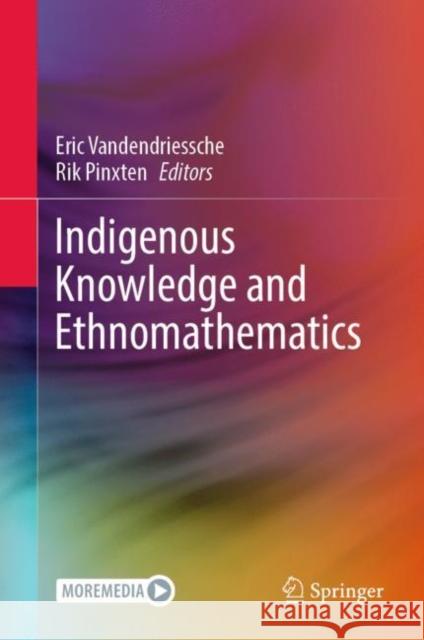
Eric Vandendriessche; Rik Pinxten
Indigenous Knowledge and Ethnomathematics Eric Vandendriessche Rik Pinxten 9783030974817 Springer - książkaWidoczna okładka, to zdjęcie poglądowe, a rzeczywista szata graficzna może różnić się od prezentowanej.

Indigenous Knowledge and Ethnomathematics

ISBN-13: 9783030974817 / Angielski / Twarda / 2023 / 286 str.

Eric Vandendriessche; Rik Pinxten
cena 564,88
(netto: 537,98 VAT:  5%)

Najniższa cena z 30 dni: 501,19
Termin realizacji zamówienia:
ok. 22 dni roboczych
Bez gwarancji dostawy przed świętami

Darmowa dostawa!
inne wydania

The book presents a series of ethnographic studies, which illustrate issues of wider importance, such as the role of cultural traditions, concepts and learning procedures in the development of formal (or mathematical) thinking outside of the western tradition. It focuses on research at the crossroads of anthropology and ethnomathematics to document indigenous mathematical knowledge and its inclusion in specific cultural patterns. More generally, the book demonstrates the heuristic value of crossing ethnographical, anthropological and ethnomathematical approaches to highlight and analyze—or "formalize" with a pedagogical outlook—indigenous mathematical knowledge.The book is divided into three parts. The first part extensively analyzes theoretical claims using particular ethnographic data, while revealing the structural mathematical features of different ludic, graphic, or technical/procedural practices in their links to other cultural phenomena. In the second part, new empirical studies that add data and perspectives from the body of studies on indigenous knowledge systems to the ongoing discussions in mathematics education in and for diverse cultural traditions are presented. This part considers, on the one hand, the Brazilian work in this field; on the other hand, it brings ethnographic innovation from other parts of the world. The third part comprises a broad philosophical discussion of the impact of intuitive or "ontological" premises on mathematical thinking and education in the light of recent developments within so-called indigenously inspired thinking. Finally, the editors’ conclusions aim to invite the broad and diversified field of scholars in this domain of research to seek alternative approaches for understanding mathematical reasoning and the adjacent adequate educational goals and means.This book is of interest to scholars and students in anthropology, ethnomathematics, history and philosophy of science, mathematics, and mathematics education, as well as other individuals interested in these topics.


The book presents a series of ethnographic studies, which illustrate issues of wider importance, such as the role of cultural traditions, concepts and learning procedures in the development of formal (or mathematical) thinking outside of the western tradition. It focuses on research at the crossroads of anthropology and ethnomathematics to document indigenous mathematical knowledge and its inclusion in specific cultural patterns. More generally, the book demonstrates the heuristic value of crossing ethnographical, anthropological and ethnomathematical approaches to highlight and analyze—or "formalize" with a pedagogical outlook—indigenous mathematical knowledge.

The book is divided into three parts. The first part extensively analyzes theoretical claims using particular ethnographic data, while revealing the structural mathematical features of different ludic, graphic, or technical/procedural practices in their links to other cultural phenomena. In the second part, new empirical studies that add data and perspectives from the body of studies on indigenous knowledge systems to the ongoing discussions in mathematics education in and for diverse cultural traditions are presented. This part considers, on the one hand, the Brazilian work in this field; on the other hand, it brings ethnographic innovation from other parts of the world. The third part comprises a broad philosophical discussion of the impact of intuitive or "ontological" premises on mathematical thinking and education in the light of recent developments within so-called indigenously inspired thinking. Finally, the editors’ conclusions aim to invite the broad and diversified field of scholars in this domain of research to seek alternative approaches for understanding mathematical reasoning and the adjacent adequate educational goals and means.

This book is of interest to scholars and students in anthropology, ethnomathematics, history and philosophy of science, mathematics, and mathematics education, as well as other individuals interested in these topics.

Kategorie:
Podręczniki
Kategorie BISAC:
Education > Teaching - Subjects - Mathematics
Social Science > Antropologia
Education > Philosophy, Theory & Social Aspects
Wydawca:
Springer
Język:
Angielski
ISBN-13:
9783030974817
Rok wydania:
2023
Dostępne języki:
Ilość stron:
286
Oprawa:
Twarda

Eric VANDENDRIESSCHE and Rik PINXTEN: Introduction to 
“Indigenous Knowledge and Ethnomathematics” 


Part. I. Ethnography and mathematics 


Chapter 1 
Céline PETIT: Creating ‘Evocative Images’ sunannguanik iqqaigutinik: 
Procedural Knowledge and the Art of Memory in the Inuit Practice of String 
Figure Making 


Chapter 2 
Luc TIENNOT: Modeling of implied strategies of Solo expert players 


Chapter 3 
Eric VANDENDRIESSCHE: Sand Drawing versus String Figure Making: 
Geometric and Algorithmic Practices in Northern Ambrym, Vanuatu 


Part. II. Impact of indigenous culture on education in general, and 
on  mathematics classes in particular 


Chapter 4 
Sérgia OLIVEIRA, Liliane CARVALHO, Carlos MONTEIRO, and Karen 
FRANCOIS:  Indigenous School Education. Brazilian Policies and the 
Implementation in Teacher Education 


Chapter 5 
Maria Cecilia FANTINATO and Kécio Gonçalves LEITE: Indigenous 
Mathematical Knowledge and Practices. State of the Art of the 
Ethnomathematics Brazilian Congresses (2000-2016) 


Chapter 6 
Anna CHRONAKI and Eirini LAZARIDOU: Subverting epistemicide 
through ‘the commons’: Mathematics as re/making space and time for learning  


Part. III. Meta-studies 


Chapter 7 
Kay OWENS: The Tapestry of Mathematics - Connecting Threads: A Case 
Study Incorporating Ecologies, Languages and Mathematical Systems of 
Papua New Guinea 


Chapter 8 
Mauro W. B. ALMEIDA: Indigenous mathematics in the Amazon: kinship as 
algebra and geometry among the Cashinahua 


Chapter 9 
Michael BAKER: The Western Mathematic and the Ontological Turn: 
Ethnomathematics and Cosmotechnics for the Pluriverse 


Rik PINXTEN and Eric VANDENDRIESSCHE: Conclusions to “Indigenous 
Knowledge and Ethnomathematics”. Some lines of possible further research in 
ethnomathematics

Eric Vandendriessche is an ethnomathematician, researcher at the French National Centre for Scientific Research (CNRS), member of the Science, Philosophy, History laboratory (CNRS & University of Paris). He has published ethnomathematical research aiming at studying the mathematical character of different technical/procedural activities (string figure-making, sand drawing, mat making) as they are practiced in Melanesian societies. He has also published historiographical research. Recently, he coordinated the “Encoding and Transmitting Knowledge with a String: a comparative study of the cultural uses of mathematical practices in string figure-making (Oceania, North & South America)” (ETKnoS, 2016-2021) research project, supported by the French National Research Agency (ANR).

Rik Pinxten has worked as an anthropologist with the Navajo Indians of Arizona/New Mexico in the USA, on spatial knowledge in the language and in cultural practices. He developed a Navajo curriculum book for geometry teaching in primary school. With thoroughly comparative work on knowledge and studies in ethnomathematics, he has produced a synthesis on the use of anthropological studies in mathematics education. He has also published on epistemology and anthropology of knowledge. He is an activist and an academic.

The book presents a series of ethnographic studies, which illustrate issues of wider importance, such as the role of cultural traditions, concepts and learning procedures in the development of formal (or mathematical) thinking outside of the western tradition. It focuses on research at the crossroads of anthropology and ethnomathematics to document indigenous mathematical knowledge and its inclusion in specific cultural patterns. More generally, the book demonstrates the heuristic value of crossing ethnographical, anthropological and ethnomathematical approaches to highlight and analyze—or "formalize" with a pedagogical outlook—indigenous mathematical knowledge.


The book is divided into three parts. The first part extensively analyzes theoretical claims using particular ethnographic data, while revealing the structural mathematical features of different ludic, graphic, or technical/procedural practices in their links to other cultural phenomena. In the second part, new empirical studies that add data and perspectives from the body of studies on indigenous knowledge systems to the ongoing discussions in mathematics education in and for diverse cultural traditions are presented. This part considers, on the one hand, the Brazilian work in this field; on the other hand, it brings ethnographic innovation from other parts of the world. The third part comprises a broad philosophical discussion of the impact of intuitive or "ontological" premises on mathematical thinking and education in the light of recent developments within so-called indigenously inspired thinking. Finally, the editors’ conclusions aim to invite the broad and diversified field of scholars in this domain of research to seek alternative approaches for understanding mathematical reasoning and the adjacent adequate educational goals and means.

This book is of interest to scholars and students in anthropology, ethnomathematics, history and philosophy of science, mathematics, and mathematics education, as well as other individuals interested in these topics.




Udostępnij

Facebook - konto krainaksiazek.pl


Opinie o Krainaksiazek.pl na Opineo.pl

Partner Mybenefit

Krainaksiazek.pl w programie rzetelna firma Krainaksiaze.pl - płatności przez paypal

Czytaj nas na:

Facebook - krainaksiazek.pl
  • książki na zamówienie
  • granty
  • książka na prezent
  • kontakt
  • pomoc
  • opinie
  • regulamin
  • polityka prywatności

Zobacz:

  • Księgarnia czeska

  • Wydawnictwo Książkowe Klimaty

1997-2025 DolnySlask.com Agencja Internetowa

© 1997-2022 krainaksiazek.pl
     
KONTAKT | REGULAMIN | POLITYKA PRYWATNOŚCI | USTAWIENIA PRYWATNOŚCI
Zobacz: Księgarnia Czeska | Wydawnictwo Książkowe Klimaty | Mapa strony | Lista autorów
KrainaKsiazek.PL - Księgarnia Internetowa

Polityka prywatnosci - link
Krainaksiazek.pl - płatnośc Przelewy24
Przechowalnia Przechowalnia



