• Wyszukiwanie zaawansowane
  • Kategorie
  • Kategorie BISAC
  • Książki na zamówienie
  • Promocje
  • Granty
  • Książka na prezent
  • Opinie
  • Pomoc
  • Załóż konto
  • Zaloguj się

India Bangladesh Domestic Politics: The River Ganges Water Issues » książka


zaloguj się | załóż konto
Logo Krainaksiazek.pl

koszyk

konto

szukaj
topmenu
Księgarnia internetowa
Szukaj
Książki na zamówienie
Promocje
Granty
Książka na prezent
Moje konto
Pomoc
 
 
Wyszukiwanie zaawansowane
Pusty koszyk
Bezpłatna dostawa dla zamówień powyżej 20 złBezpłatna dostawa dla zamówień powyżej 20 zł

Kategorie główne

• Nauka
 [2952079]
• Literatura piękna
 [1850969]

  więcej...
• Turystyka
 [71058]
• Informatyka
 [151066]
• Komiksy
 [35579]
• Encyklopedie
 [23181]
• Dziecięca
 [620496]
• Hobby
 [139036]
• AudioBooki
 [1646]
• Literatura faktu
 [228729]
• Muzyka CD
 [379]
• Słowniki
 [2932]
• Inne
 [445708]
• Kalendarze
 [1409]
• Podręczniki
 [164793]
• Poradniki
 [480107]
• Religia
 [510956]
• Czasopisma
 [511]
• Sport
 [61267]
• Sztuka
 [243299]
• CD, DVD, Video
 [3411]
• Technologie
 [219640]
• Zdrowie
 [100984]
• Książkowe Klimaty
 [124]
• Zabawki
 [2281]
• Puzzle, gry
 [3363]
• Literatura w języku ukraińskim
 [258]
• Art. papiernicze i szkolne
 [8020]
Kategorie szczegółowe BISAC

India Bangladesh Domestic Politics: The River Ganges Water Issues

ISBN-13: 9789811023705 / Angielski / Twarda / 2016 / 138 str.
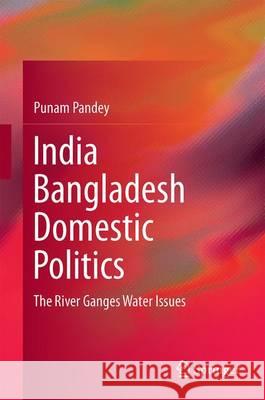
Punam Pandey
India Bangladesh Domestic Politics: The River Ganges Water Issues Pandey, Punam 9789811023705 Springer - książkaWidoczna okładka, to zdjęcie poglądowe, a rzeczywista szata graficzna może różnić się od prezentowanej.

India Bangladesh Domestic Politics: The River Ganges Water Issues

ISBN-13: 9789811023705 / Angielski / Twarda / 2016 / 138 str.

Punam Pandey
cena 402,53
(netto: 383,36 VAT:  5%)

Najniższa cena z 30 dni: 385,52
Termin realizacji zamówienia:
ok. 22 dni roboczych
Dostawa w 2026 r.

Darmowa dostawa!

This book deals with how the governments of India and Bangladesh manage the Ganges River. On the basis of the Ganges issue, it explains India s involvement in the domestic politics of Bangladesh and how this involvement, in turn, shapes Ganges river politics. The book further analyses the constant friction between Indian preferences for bilateral negotiation in comparison to Bangladesh s demand for multilateral cooperation on the Ganges. This also highlights the role of civil society, tracing how organisations have engaged in and explored potential compromises acceptable to both countries. As the term of the treaty comes to an end in 2026, the present work underlines its limitations, as the impacts of climate change will involve far more than distress on water. In closing, it discusses a range of other challenges, including the erosion of the Indian central government s monopoly in foreign policy, especially in relation to its neighbours. Through extensive fieldwork in India and Bangladesh, together with interviews with politicians, diplomats and all those closely associated with the Ganges deliberations, the book reveals subtle aspects of the negotiations. What emerges as a distinctive feature of Indo-Bangladesh interactions on the Ganges is the fact that successful outcomes depend on the extent to which the ruling political powers in both countries accommodate one other s domestic political dynamics. This insight enriches scholarship on the Ganges River, addressing an aspect largely overlooked in the literature. Offering an up-to-the-minute analysis, the book examines the implementation of the Ganges Treaty through 2015, making it of interest to researchers focusing on South Asia and international relations, scholars on and practitioners of Indian foreign policy, journalists, water experts, civil society groups, and university students.
"


Kategorie:
Nauka, Polityka
Kategorie BISAC:
Political Science > World - Asian
Science > Environmental Science (see also Chemistry - Environmental)
Law > Arbitration, Negotiation, Mediation
Wydawca:
Springer
Język:
Angielski
ISBN-13:
9789811023705
Rok wydania:
2016
Wydanie:
2016
Ilość stron:
138
Waga:
0.50 kg
Wymiary:
23.37 x 15.75 x 1.52
Oprawa:
Twarda
Wolumenów:
01

Chapter One

Cooperation to Confrontation to Cooperation over the Ganges between India and Bangladesh

Historical Background: The Ganges during Pakistan time

Indo-Bangladesh Negotiations on the Farakka Barrage

Farakka: The Political ‘Football’ in Bangladesh’s Politics

Signing of the Ganges Treaty

Limitations of the Treaty


Chapter Two

Evolution of the Ganges Issue in India and Bangladesh

Shared History and Divergent Aspirations

Demand of Indian Federalism

India as a factor in Bangladesh Politics

Fusion of Internal and External Relationship

Assertion of Religious Identity

Debates around Farakka in Bangladesh


Chapter Three

Negotiating Strategy on the Ganges: Bilateralism vs. Multilateralism

India and Bangladesh Negotiations on the Farakka Barrage

Bangladesh’s Attempt to Internationalise the Ganges River Water Issue

Interregnum of Multilateralism in Bilateral Negotiation

Role of Membership in Inter-governmental Organisations (IGOs)

Analysis of Bilateralism vs. Multilateralism


Chapter Four

Role of Multiple Tracks in The Ganges negotiations

Multiple Tracks

Multiple Tracks in Resolution of the Ganges River Water Dispute

Constraints and Limitations

Future Potential of Multiple tracks in river water negotiation


Chapter Five

Experience of The Ganges Treaty and Future Directions

A Critical Evaluation of Operation of the Treaty

Climate Change and Impact on Ganges River Water Treaty

Interlinking of River Projects and Bangladesh’s Concerns

Emerging Role of Provinces in Indian Federation


Analytical Observations and Conclusion


Punam Pandey is currently Postdoctoral Research Fellow at the Institute for Reconciliation and Social Justice (IRSJ), University of the Free State, South Africa. Before that she worked as Assistant Professor at the Department of Political Science, University of Delhi, India, from where she also obtained her PhD. As a postdoc researcher at the IRSJ, she has written extensively on water politics from the perspective of International Relations. She broadly works on non-traditional security issues in South Asia with a special focus on India and Bangladesh. Some of her publications can be accessed in the refereed journals like Asian Survey, India Quarterly: A Journal of International Affairs, and South Asian Survey among others. Her current research project at the IRSJ is on the issues of memory contestation where she researches the Liberation movement in the competitive politics of Bangladesh.

This book deals with how the governments of India and Bangladesh manage the Ganges River. On the basis of the Ganges issue, it explains India’s involvement in the domestic politics of Bangladesh and how this involvement, in turn, shapes Ganges river politics. The book further analyses the constant friction between Indian preferences for bilateral negotiation in comparison to Bangladesh’s demand for multilateral cooperation on the Ganges. This also highlights the role of civil society, tracing how organisations have engaged in and explored potential compromises acceptable to both countries. As the term of the treaty comes to an end in 2026, the present work underlines its limitations, as the impacts of climate change will involve far more than distress on water. In closing, it discusses a range of other challenges, including the erosion of the Indian central government’s monopoly in foreign policy, especially in relation to its neighbours. Through extensive fieldwork in India and Bangladesh, together with interviews with politicians, diplomats and all those closely associated with the Ganges deliberations, the book reveals subtle aspects of the negotiations. What emerges as a distinctive feature of Indo-Bangladesh interactions on the Ganges is the fact that successful outcomes depend on the extent to which the ruling political powers in both countries accommodate one other’s domestic political dynamics. This insight enriches scholarship on the Ganges River, addressing an aspect largely overlooked in the literature. Offering an up-to-the-minute analysis, the book examines the implementation of the Ganges Treaty through 2015, making it of interest to researchers focusing on South Asia and international relations, scholars on and practitioners of Indian foreign policy, journalists, water experts, civil society groups, and university students.


Udostępnij

Facebook - konto krainaksiazek.pl


Opinie o Krainaksiazek.pl na Opineo.pl

Partner Mybenefit

Krainaksiazek.pl w programie rzetelna firma Krainaksiaze.pl - płatności przez paypal

Czytaj nas na:

Facebook - krainaksiazek.pl
  • książki na zamówienie
  • granty
  • książka na prezent
  • kontakt
  • pomoc
  • opinie
  • regulamin
  • polityka prywatności

Zobacz:

  • Księgarnia czeska

  • Wydawnictwo Książkowe Klimaty

1997-2025 DolnySlask.com Agencja Internetowa

© 1997-2022 krainaksiazek.pl
     
KONTAKT | REGULAMIN | POLITYKA PRYWATNOŚCI | USTAWIENIA PRYWATNOŚCI
Zobacz: Księgarnia Czeska | Wydawnictwo Książkowe Klimaty | Mapa strony | Lista autorów
KrainaKsiazek.PL - Księgarnia Internetowa

Polityka prywatnosci - link
Krainaksiazek.pl - płatnośc Przelewy24
Przechowalnia Przechowalnia






