• Wyszukiwanie zaawansowane
  • Kategorie
  • Kategorie BISAC
  • Książki na zamówienie
  • Promocje
  • Granty
  • Książka na prezent
  • Opinie
  • Pomoc
  • Załóż konto
  • Zaloguj się

In-Patient Treatment for Alcoholism: A Multi-Centre Evaluation Study » książka


zaloguj się | załóż konto
Logo Krainaksiazek.pl

koszyk

konto

szukaj
topmenu
Księgarnia internetowa
Szukaj
Książki na zamówienie
Promocje
Granty
Książka na prezent
Moje konto
Pomoc
 
 
Wyszukiwanie zaawansowane
Pusty koszyk
Bezpłatna dostawa dla zamówień powyżej 20 złBezpłatna dostawa dla zamówień powyżej 20 zł

Kategorie główne

• Nauka
 [2948695]
• Literatura piękna
 [1824038]

  więcej...
• Turystyka
 [70868]
• Informatyka
 [151073]
• Komiksy
 [35227]
• Encyklopedie
 [23181]
• Dziecięca
 [621575]
• Hobby
 [138961]
• AudioBooki
 [1642]
• Literatura faktu
 [228651]
• Muzyka CD
 [371]
• Słowniki
 [2933]
• Inne
 [445341]
• Kalendarze
 [1243]
• Podręczniki
 [164416]
• Poradniki
 [479493]
• Religia
 [510449]
• Czasopisma
 [502]
• Sport
 [61384]
• Sztuka
 [243086]
• CD, DVD, Video
 [3417]
• Technologie
 [219673]
• Zdrowie
 [100865]
• Książkowe Klimaty
 [124]
• Zabawki
 [2168]
• Puzzle, gry
 [3372]
• Literatura w języku ukraińskim
 [260]
• Art. papiernicze i szkolne
 [7838]
Kategorie szczegółowe BISAC

In-Patient Treatment for Alcoholism: A Multi-Centre Evaluation Study

ISBN-13: 9783642743900 / Angielski / Miękka / 2011 / 381 str.
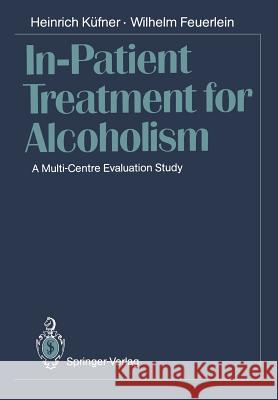
Heinrich K. Fner; Wilhelm Feuerlein; F. K. H. Wagstaff
In-Patient Treatment for Alcoholism: A Multi-Centre Evaluation Study Antons, Klaus 9783642743900 Springer - książkaWidoczna okładka, to zdjęcie poglądowe, a rzeczywista szata graficzna może różnić się od prezentowanej.

In-Patient Treatment for Alcoholism: A Multi-Centre Evaluation Study

ISBN-13: 9783642743900 / Angielski / Miękka / 2011 / 381 str.

Heinrich K. Fner; Wilhelm Feuerlein; F. K. H. Wagstaff
cena 401,58
(netto: 382,46 VAT:  5%)

Najniższa cena z 30 dni: 385,52
Termin realizacji zamówienia:
ok. 22 dni roboczych.

Darmowa dostawa!

In-patient treatment for alcoholism going beyond physical withdrawal from the drug has been available in Germany for more than 130 years. Particularly since the Second World War, treatment has broadened and changed in various ways. There are several reasons for this development. The recognition of alcoholism as a disease by the Supreme Court had widespread financial and administrative consequences. Since then in patient treatment has been funded mainly by the pension insurance institutions. Another reason is the strengthened influence of different psychotherapeutic schools on practice in treatment. At the present time in the Federal Republic of Germany there are about 250 treatment facilities (Suchtfachkliniken, or addiction centres), where around 25000 patients a year receive in-patient treatment. In addition to these, there are the addiction units in psychiatric and general hospitals, of which some offer withdrawal treatment, while others also offer rehabilit ation treatment. For out-patient treatment there are about 450 special addiction counselling and treatment centres, out-patient facilities available at local health authorities and university hospitals and, further to all this, there are thousands of self-help groups of various kinds. This system of interlocking treatment facilities of various kinds, from the first contact to the after-care stage, is called a treatment network or chain."


Kategorie:
Nauka, Medycyna
Kategorie BISAC:
Gardening > General
Business & Economics > Economics - General
Psychology > Psychotherapy - General
Wydawca:
Springer
Język:
Angielski
ISBN-13:
9783642743900
Rok wydania:
2011
Wydanie:
Softcover Repri
Ilość stron:
381
Waga:
0.68 kg
Wymiary:
24.2 x 17.0
Oprawa:
Miękka
Wolumenów:
01

1 Introduction.- 1.1 Aim of the Study.- 1.2 Review of the Literature.- 2 Method.- 2.1 Basic Model.- 2.2 Structure of the Study.- 2.2.1 Design.- 2.2.2 Selection of Treatment Centres.- 2.2.3 Description of Treatment Centres.- 2.3 Selection of Patients.- 2.4 Patient Variables.- 2.4.1 Sociodemographic Data.- 2.4.2 Social Behaviour.- 2.4.3 Life Events and Stress.- 2.4.4 Drinking Behaviour and Patients’ Attitudes to It.- 2.4.5 Complaints and Alcohol-Related Illnesses.- 2.4.6 Personality Traits.- 2.4.7 Attitudes to Treatment.- 2.4.8 Experiences of Therapy.- 2.5 Assessing the Outcome of Treatment.- 2.5.1 Drinking Behaviour and Use of Other Addictive Substances.- 2.5.2 Physical Health.- 2.5.3 Social Integration.- 2.5.4 Personality.- 2.6 Study Procedure.- 2.6.1 Data Recorded at Admission and Discharge.- 2.6.2 Data Recorded at 6- and 18-Month Follow-Up.- 2.7 Data Protection.- 2.8 Data Evaluation.- 3 Treatment Centres.- 3.1 Description.- 3.1.1 Size.- 3.1.2 Staffing.- 3.1.3 Admission Criteria.- 3.1.4 Goals of Treatment.- 3.1.5 General Description of Treatment.- 3.1.6 Particular Aspects of Therapy.- 3.2 Factors in the Therapeutic Atmosphere.- 3.2.1 Introduction.- 3.2.2 Method.- 3.2.3 Reliability of K-SEKT.- 3.2.4 Importance of Factors in the Therapeutic Atmosphere (K-SEKT-A).- 3.2.5 Implementation of Factors in the Therapeutic Atmosphere (K-SEKT-B).- 3.2.6 Comparison of K-SEKT-A and K-SEKT-B.- 3.3 Summary.- 4 Admission Data.- 4.1 Data Collection.- 4.2 Sociodemographic Data.- 4.3 Use of Addictive Substances.- 4.3.1 Drinking Behaviour.- 4.3.2 Medicaments and Drugs.- 4.4 Personality and Social Behaviour.- 4.4.1 Personality: Freiburg Personality Inventory.- 4.4.2 Social Behaviour: Self-Assertiveness Questionnaire.- 4.4.3 Psychosocial Problems.- 4.5 Physical Condition.- 4.6 Previous Treatment for Alcoholism.- 4.7 Attitudes to Treatment (EZB).- 4.8 Life Events (LEL).- 4.9 Summary.- 5 Discharge Data.- 5.1 Data Collection.- 5.2 Sociodemographic Data.- 5.3 Behaviour and Symptoms During Treatment.- 5.3.1 Drop-Outs.- 5.3.2 Relapses.- 5.3.3 Changes in Patients’ Attitudes to Their Drinking Behaviour.- 5.3.4 Secondary Psychiatric Diagnoses and Other Symptoms.- 5.3.5 Participation of Patients and Significant Persons in Treatment.- 5.3.6 Clinical Prognosis.- 5.4 Personality Changes.- 5.4.1 Freiburg Personality Inventory.- 5.4.2 Self-Assertiveness Questionnaire.- 5.4.3 Interpretation.- 5.5 Summary.- 6 Six-Month Follow-Up.- 6.1 Data Collection.- 6.2 Sociodemographic Data.- 6.3 Use of Addictive Substances.- 6.3.1 Alcohol.- 6.3.2 Medicaments.- 6.3.3 Smoking.- 6.3.4 Interpretation and Conclusions.- 6.4 Personality Changes.- 6.4.1 Freiburg Personality Inventory.- 6.4.2 Self-Assertiveness Questionnaire.- 6.5 Physical Condition.- 6.6 Life Events.- 6.7 Treatment During the First 6 Months After Discharge.- 6.7.1 Psychotherapy.- 6.7.2 In-Patient Treatment.- 6.7.3 Interpretation and Conclusions.- 6.8 Comparison of Some Outcome Criteria.- 6.9 Summary.- 7 Eighteen-Month Follow-Up.- 7.1 Data Collection.- 7.2 Sociodemographic Data.- 7.3 Use of Addictive Substances.- 7.3.1 Alcohol.- 7.3.2 Other Addictive Substances.- 7.3.3 Diagnoses of Secondary Abuse of or Dependence on Medicaments or Drugs.- 7.4 Personality and Social Behaviour.- 7.4.1 Freiburg Personality Inventory.- 7.4.2 Selected Complaints.- 7.4.3 Self-Assertiveness Questionnaire.- 7.5 Physical Condition and Complaints.- 7.6 Life Events.- 7.7 Treatment During the Follow-Up Period.- 7.7.1 Self-Help Groups and Out-Patient Treatment.- 7.7.2 In-Patient Treatment.- 7.8 Comparison of Different Outcome Criteria.- 7.9 Summary.- 8 Data from Health and Pension Insurance Institutions.- 8.1 Health Insurance Companies.- 8.1.1 Data Collection.- 8.1.2 Method.- 8.1.3 Results.- 8.2 Pension Insurance Institutions.- 8.2.1 Data Collection.- 8.2.2 Results.- 8.3 Summary.- 8.3.1 Health Insurance Companies.- 8.3.2 Pension Insurance Institutions.- 9 Reliability and Validity of Data.- 9.1 Heterogeneity of Data.- 9.2 Results.- 9.2.1 Comparison of Interviews with Written Follow-Up.- 9.2.2 Comparison of Data at 6-Month and 18-Month Follow-Up.- 9.2.3 Comparison with Data given by Significant Others.- 9.2.4 Comparison with Data from the Health Insurance Companies.- 9.2.5 Comparison of a Patient Sample with a High Refusal Rate and the Anonymous, Unselected Sample.- 9.2.6 Factors in the Patient Group Without 18-Month Follow-Up Data.- 9.3 Summary.- 10 Changes Over the Course of the Study.- 10.1 Alcohol Abstinence.- 10.2 Marital Status, Living Arrangements and Work.- 10.2.1 Marital Status and Living Arrangements.- 10.2.2 Work and Retirement.- 10.3 Changes In and Interactions Between Outcome Criteria.- 10.3.1 Introduction.- 10.3.2 Unemployment and Abstinence.- 10.3.3 Other Outcome Criteria and Abstinence.- 10.4 Changes in Personality and Social Behaviour.- 10.4.1 Freiburg Personality Inventory.- 10.4.2 Self-Assertiveness Questionnaire.- 10.5 Drop-Outs from Treatment, Length of Treatment and Outcome.- 10.6 Summary.- 11 Patients’ Attitudes to and Experiences of Treatment.- 11.1 Attitudes to Treatment (EZB).- 11.1.1 Theoretical Background.- 11.1.2 Results.- 11.2 Patients’ Experiences of Therapy (TEL).- 11.2.1 Theoretical Background.- 11.2.2 Comparison of Treatment Experiences at Discharge and 6-Month Follow-Up.- 11.2.3 Univariate Item Selection.- 11.2.4 Multivariate Item Selection.- 11.2.5 TEL Scales and Outcome Criteria.- 11.3 Correlation Between EZB and TEL.- 11.4 Summary.- 12 Patient Variables as Prognostic Factors.- 12.1 Introduction.- 12.1.1 Selection of Criteria for Prognosis.- 12.1.2 Time and Range of Prognosis.- 12.1.3 Selection of Variables on Which to Base a Prognosis.- 12.1.4 General and Special (Treatment-Related) Prognostic Factors.- 12.1.5 Reliability and Validity of Prognostic Factors.- 12.1.6 Single Variables vs. Combinations as Prognostic Factors.- 12.2 Method.- 12.2.1 Procedure.- 12.2.2 Selection Criterion.- 12.3 Prognostic Factors for Drinking Behaviour.- 12.3.1 Admission Data.- 12.3.2 Discharge Data.- 12.4 Prognostic Factors for Other Outcome Criteria.- 12.4.1 Prognosis Index and Other Outcome Criteria.- 12.4.2 Clinical Prognosis vs. Statistical Prognosis.- 12.4.3 Time When the Prognosis Is Made.- 12.5 Analysis of Variables and Constructs of Special Clinical Relevance.- 12.5.1 Age.- 12.5.2 Severity of Alcoholism.- 12.5.3 Previous Treatment in an Addiction Unit.- 12.6 Prognostic Significance of Dropping Out.- 12.6.1 Reasons for Dropping Out Related to Abstinence.- 12.6.2 Time in Treatment Before Dropping Out.- 12.6.3 Factors Predictive of Dropping Out.- 12.7 Summary.- 13 Treatment Variables.- 13.1 Introduction.- 13.2 Grouping of Treatment Variables and Treatment Centres.- 13.2.1 Factor Analysis.- 13.2.2 Cluster Analysis.- 13.3 Treatment Variables and Outcome.- 13.3.1 Method.- 13.3.2 Treatment Effects of Index Treatment.- 13.4 Effect of the Length of Treatment.- 13.4.1 Starting Point and Procedure.- 13.4.2 Approach 1: Matching.- 13.4.3 Approach 2: Logit Analysis.- 13.4.4 Approach 3: Analysis of the Centres.- 13.4.5 Other Outcome Criteria.- 13.4.6 Intercorrelation Between Length and Other Features of Treatment.- 13.4.7 Interpretation and Conclusions.- 13.5 Effects of After-Care in the Follow-Up Period.- 13.5.1 Influence of Self-Help Groups.- 13.5.2 Attendance at Self-Help Groups and Index Treatment Variables.- 13.6 Summary.- 14 Indication.- 14.1 Introduction.- 14.2 Indication for Length of Treatment.- 14.3 Method.- 14.3.1 Preliminary Assessments.- 14.3.2 Final Procedure.- 14.4 Results for Men.- 14.4.1 Poor Prognosis Group.- 14.4.2 Moderate Prognosis Group.- 14.4.3 Good Prognosis Group.- 14.5 Indication Model for Men.- 14.5.1 Poor Prognosis Group.- 14.5.2 Moderate Prognosis Group.- 14.5.3 Good Prognosis Group.- 14.5.4 Summary of Optimization of Abstinence in Men.- 14.6 Results for Women.- 14.6.1 Negative Prognosis Group.- 14.6.2 Positive Prognosis Group.- 14.7 Indication Model for Women.- 14.7.1 Negative Prognosis Group.- 14.7.2 Positive Prognosis Group.- 14.7.3 Summary of Optimization of Abstinence in Women.- 14.8 Prognosis and Indication.- 14.9 Summary.- 14.9.1 Results for Men.- 14.9.2 Results for Women.- 15 Other Factors Influencing Outcome.- 15.1 Influence Factors in After-Care and After-Treatment.- 15.1.1 Self-Help Groups and Treatment Outcome.- 15.1.2 Out-Patient Psychotherapy and Treatment Outcome.- 15.2 Influence Factors in the Social Environment.- 15.3 Network of Influence Factors and Treatment Outcome.- 15.4 Summary.- 16 Discussion.- 16.1 Methodology.- 16.1.1 Type of Study.- 16.1.2 Reliability and Validity of Data.- 16.1.3 Evaluation Procedure.- 16.2 Results of the Individual Data Collections.- 16.2.1 Description of Treatment.- 16.2.2 Description of the Patient Sample.- 16.2.3 Discharge.- 16.2.4 Follow-Up at 6 and 18 Months.- 16.3 Patients’ Attitudes to and Experiences of Treatment.- 16.3.1 Attitudes to Treatment (EZB).- 16.3.2 Experiences of Treatment (TEL).- 16.4 Prognosis.- 16.4.1 Methodological Problems.- 16.4.2 Individual Prognostic Factors.- 16.4.3 Prognosis of Particular Subgroups.- 16.5 Treatment Variables.- 16.5.1 Reduction of the Number of Treatment Variables.- 16.5.2 Discussion of Methods and General Comments.- 16.5.3 Individual Treatment Variables.- 16.5.4 Length of Treatment.- 16.6 Indication.- 16.7 Influence Factors After Index Treatment.- References.- Appendices.

Dr. Klaus Antons ist freiberuflich tätig in den Bereichen Training, Supervision und Organisationsentwicklung.


Udostępnij

Facebook - konto krainaksiazek.pl


Opinie o Krainaksiazek.pl na Opineo.pl

Partner Mybenefit

Krainaksiazek.pl w programie rzetelna firma Krainaksiaze.pl - płatności przez paypal

Czytaj nas na:

Facebook - krainaksiazek.pl
  • książki na zamówienie
  • granty
  • książka na prezent
  • kontakt
  • pomoc
  • opinie
  • regulamin
  • polityka prywatności

Zobacz:

  • Księgarnia czeska

  • Wydawnictwo Książkowe Klimaty

1997-2026 DolnySlask.com Agencja Internetowa

© 1997-2022 krainaksiazek.pl
     
KONTAKT | REGULAMIN | POLITYKA PRYWATNOŚCI | USTAWIENIA PRYWATNOŚCI
Zobacz: Księgarnia Czeska | Wydawnictwo Książkowe Klimaty | Mapa strony | Lista autorów
KrainaKsiazek.PL - Księgarnia Internetowa

Polityka prywatnosci - link
Krainaksiazek.pl - płatnośc Przelewy24
Przechowalnia Przechowalnia





