• Wyszukiwanie zaawansowane
  • Kategorie
  • Kategorie BISAC
  • Książki na zamówienie
  • Promocje
  • Granty
  • Książka na prezent
  • Opinie
  • Pomoc
  • Załóż konto
  • Zaloguj się

Improving the Earthquake Resilience of Buildings: The Worst Case Approach » książka


zaloguj się | załóż konto
Logo Krainaksiazek.pl

koszyk

konto

szukaj
topmenu
Księgarnia internetowa
Szukaj
Książki na zamówienie
Promocje
Granty
Książka na prezent
Moje konto
Pomoc
 
 
Wyszukiwanie zaawansowane
Pusty koszyk
Bezpłatna dostawa dla zamówień powyżej 20 złBezpłatna dostawa dla zamówień powyżej 20 zł

Kategorie główne

• Nauka
 [2949965]
• Literatura piękna
 [1857847]

  więcej...
• Turystyka
 [70818]
• Informatyka
 [151303]
• Komiksy
 [35733]
• Encyklopedie
 [23180]
• Dziecięca
 [617748]
• Hobby
 [139972]
• AudioBooki
 [1650]
• Literatura faktu
 [228361]
• Muzyka CD
 [398]
• Słowniki
 [2862]
• Inne
 [444732]
• Kalendarze
 [1620]
• Podręczniki
 [167233]
• Poradniki
 [482388]
• Religia
 [509867]
• Czasopisma
 [533]
• Sport
 [61361]
• Sztuka
 [243125]
• CD, DVD, Video
 [3451]
• Technologie
 [219309]
• Zdrowie
 [101347]
• Książkowe Klimaty
 [123]
• Zabawki
 [2362]
• Puzzle, gry
 [3791]
• Literatura w języku ukraińskim
 [253]
• Art. papiernicze i szkolne
 [7933]
Kategorie szczegółowe BISAC

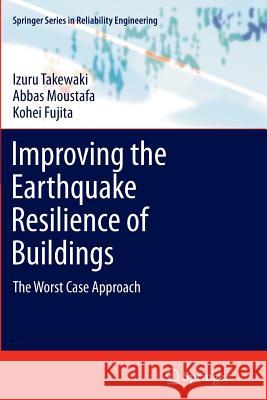
Improving the Earthquake Resilience of Buildings: The Worst Case Approach

ISBN-13: 9781447162353 / Angielski / Miękka / 2014 / 324 str.
Izuru Takewaki; Abbas Moustafa; Kohei Fujita
Improving the Earthquake Resilience of Buildings: The Worst Case Approach Takewaki, Izuru 9781447162353 Springer - książkaWidoczna okładka, to zdjęcie poglądowe, a rzeczywista szata graficzna może różnić się od prezentowanej.

Improving the Earthquake Resilience of Buildings: The Worst Case Approach

ISBN-13: 9781447162353 / Angielski / Miękka / 2014 / 324 str.

Izuru Takewaki; Abbas Moustafa; Kohei Fujita
cena 605,23
(netto: 576,41 VAT:  5%)

Najniższa cena z 30 dni: 578,30
Termin realizacji zamówienia:
ok. 22 dni roboczych
Bez gwarancji dostawy przed świętami

Darmowa dostawa!
inne wydania

Engineers are always interested in the worst-case scenario. One of the most important and challenging missions of structural engineers may be to narrow the range of unexpected incidents in building structural design. Redundancy, robustness and resilience play an important role in such circumstances. Improving the Earthquake Resilience of Buildings: The worst case approach discusses the importance of worst-scenario approach for improved earthquake resilience of buildings and nuclear reactor facilities.
Improving the Earthquake Resilience of Buildings: The worst case approach consists of two parts. The first part deals with the characterization and modeling of worst or critical ground motions on inelastic structures and the related worst-case scenario in the structural design of ordinary simple building structures. The second part of the book focuses on investigating the worst-case scenario for passively controlled and base-isolated buildings. This allows for detailed consideration of a range of topics including:
A consideration of damage of building structures in the critical excitation method for improved building-earthquake resilience,
A consideration of uncertainties of structural parameters in structural control and base-isolation for improved building-earthquake resilience, and
New insights in structural design of super high-rise buildings under long-period ground motions.
Improving the Earthquake Resilience of Buildings: The worst case approach is a valuable resource for researchers and engineers interested in learning and applying the worst-case scenario approach in the seismic-resistant design for more resilient structures.


Kategorie:
Nauka
Kategorie BISAC:
Technology & Engineering > Construction - Heating, Ventilation & Air Conditioning
Technology & Engineering > Civil - Soil & Rock
Science > Earth Sciences - Meteorology & Climatology
Wydawca:
Springer
Seria wydawnicza:
Springer Series in Reliability Engineering
Język:
Angielski
ISBN-13:
9781447162353
Rok wydania:
2014
Wydanie:
2013
Numer serii:
000308774
Ilość stron:
324
Waga:
5.15 kg
Wymiary:
23.5 x 15.5
Oprawa:
Miękka
Wolumenów:
01
Dodatkowe informacje:
Wydanie ilustrowane

1 Introduction.- 2. Earthquake resilience of high-rise buildings: Case study of the 2011 Tohoku (Japan) earthquake.- 3. Simulation of near-field pulse-like ground motion.- 4. Critical characterization and modeling of pulse-like near-field strong ground motion.- 5. Characteristics of earthquake ground motion of repeated sequences.- 6. Modeling critical ground-motion sequences for inelastic structures.- 7. Response of Nonlinear SDOF Structures to Random Acceleration Sequences.- 8. Use of deterministic and probabilistic measures to identify unfavorable earthquake records.- 9. Damage Assessment to Inelastic Structure Under Worst Earthquake Loads.- 10 Critical earthquake loads for SDOF inelastic structures considering evolution of seismic waves.- 11. Critical Correlation of Bi-Directional Horizontal Ground Motions.- 12. Optimal placement of viscoelastic dampers and supporting members under variable critical excitations.- 13 Earthquake response bound analysis of uncertain passively controlled buildings for robustness evaluation.- 14 Earthquake response bound analysis of uncertain base-isolated buildings for robustness evaluation.- 15. Future Directions.

Dr. Izuru Takewaki is a Professor in the Department of Architecture and Architectural Engineering, College of Engineering, Kyoto University, Japan.  Dr. Takewaki authored more than 100 international journal papers and authored 4 monographs in English on Structural Optimization, Critical Excitation Methods and Structural Health Monitoring.  He serves as an editorial board member in several international journals (e.g. Engineering Structures, Soil Dynamics and Earthquake Engineering, Structural Control and Health Monitoring).  He is one of the Editors-in-Chief of Int J of Earthquakes and Structures.

 Dr. Abbas Moustafa is an Associate Professor at the Department of Civil Engineering, Minia University, Egypt and the Chairman of the Department of Civil Engineering, High Institute of Engineering, Giza, Egypt. He is also a consultant engineer and head of structural group, Hamza Associates, Giza, Egypt. He has about 30 international journal papers and is the editor of two books on earthquake-resistant structures and geotechnical earthquake engineering. Dr. Moustafa was a JSPS fellow at Kyoto and Nagasaki Universities and was also a research associate at Vanderbilt University.

Dr. Kohei Fujita is a post doctoral fellow in Kyoto University, Japan.  Dr. Fujita received a PhD from Kyoto University in 2012.  He authored more than 10 international journal papers.

Engineers are always interested in the worst-case scenario. One of the most important and challenging missions of structural engineers may be to narrow the range of unexpected incidents in building structural design. Redundancy, robustness and resilience play an important role in such circumstances. Improving the Earthquake Resilience of Buildings: The worst case approach discusses the importance of worst-scenario approach for improved earthquake resilience of buildings and nuclear reactor facilities.


Improving the Earthquake Resilience of Buildings: The worst case approach consists of two parts. The first part deals with the characterization and modeling of worst or critical ground motions on inelastic structures and the related worst-case scenario in the structural design of ordinary simple building structures. The second part of the book focuses on investigating the worst-case scenario for passively controlled and base-isolated buildings. This allows for detailed consideration of a range of topics including:


•A consideration of damage of building structures in the critical excitation method for improved building-earthquake resilience,
•A consideration of uncertainties of structural parameters in structural control and base-isolation for improved building-earthquake resilience, and
•New insights in structural design of super high-rise buildings under long-period ground motions.


Improving the Earthquake Resilience of Buildings: The worst case approach is a valuable resource for researchers and engineers interested in learning and applying the worst-case scenario approach in the seismic-resistant design for more resilient structures.




Udostępnij

Facebook - konto krainaksiazek.pl


Opinie o Krainaksiazek.pl na Opineo.pl

Partner Mybenefit

Krainaksiazek.pl w programie rzetelna firma Krainaksiaze.pl - płatności przez paypal

Czytaj nas na:

Facebook - krainaksiazek.pl
  • książki na zamówienie
  • granty
  • książka na prezent
  • kontakt
  • pomoc
  • opinie
  • regulamin
  • polityka prywatności

Zobacz:

  • Księgarnia czeska

  • Wydawnictwo Książkowe Klimaty

1997-2025 DolnySlask.com Agencja Internetowa

© 1997-2022 krainaksiazek.pl
     
KONTAKT | REGULAMIN | POLITYKA PRYWATNOŚCI | USTAWIENIA PRYWATNOŚCI
Zobacz: Księgarnia Czeska | Wydawnictwo Książkowe Klimaty | Mapa strony | Lista autorów
KrainaKsiazek.PL - Księgarnia Internetowa

Polityka prywatnosci - link
Krainaksiazek.pl - płatnośc Przelewy24
Przechowalnia Przechowalnia



