• Wyszukiwanie zaawansowane
  • Kategorie
  • Kategorie BISAC
  • Książki na zamówienie
  • Promocje
  • Granty
  • Książka na prezent
  • Opinie
  • Pomoc
  • Załóż konto
  • Zaloguj się

Implantable Sensor Systems for Medical Applications » książka

zaloguj się | załóż konto
Logo Krainaksiazek.pl

koszyk

konto

szukaj
topmenu
Księgarnia internetowa
Szukaj
Książki na zamówienie
Promocje
Granty
Książka na prezent
Moje konto
Pomoc
 
 
Wyszukiwanie zaawansowane
Pusty koszyk
Bezpłatna dostawa dla zamówień powyżej 20 złBezpłatna dostawa dla zamówień powyżej 20 zł

Kategorie główne

• Nauka
 [2946600]
• Literatura piękna
 [1856966]

  więcej...
• Turystyka
 [72221]
• Informatyka
 [151456]
• Komiksy
 [35826]
• Encyklopedie
 [23190]
• Dziecięca
 [619653]
• Hobby
 [140543]
• AudioBooki
 [1577]
• Literatura faktu
 [228355]
• Muzyka CD
 [410]
• Słowniki
 [2874]
• Inne
 [445822]
• Kalendarze
 [1744]
• Podręczniki
 [167141]
• Poradniki
 [482898]
• Religia
 [510455]
• Czasopisma
 [526]
• Sport
 [61590]
• Sztuka
 [243598]
• CD, DVD, Video
 [3423]
• Technologie
 [219201]
• Zdrowie
 [101638]
• Książkowe Klimaty
 [124]
• Zabawki
 [2473]
• Puzzle, gry
 [3898]
• Literatura w języku ukraińskim
 [254]
• Art. papiernicze i szkolne
 [8170]
Kategorie szczegółowe BISAC

Implantable Sensor Systems for Medical Applications

ISBN-13: 9781845699871 / Angielski / Twarda / 2013 / 544 str.
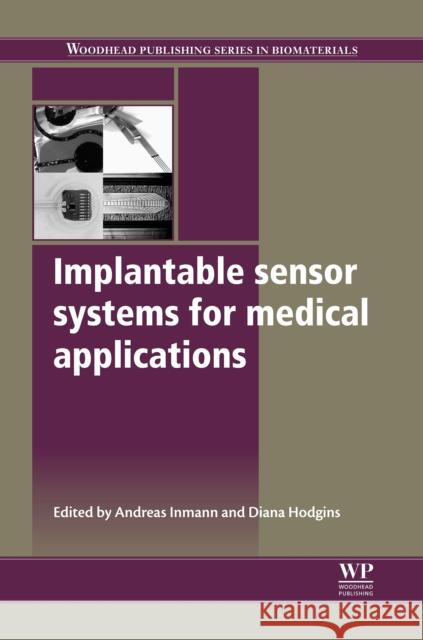
Andreas Imnann; Diana Hodgins
Implantable Sensor Systems for Medical Applications Andreas Imnann Diana Hodgins 9781845699871 Woodhead Publishing - książkaWidoczna okładka, to zdjęcie poglądowe, a rzeczywista szata graficzna może różnić się od prezentowanej.

Implantable Sensor Systems for Medical Applications

ISBN-13: 9781845699871 / Angielski / Twarda / 2013 / 544 str.

Andreas Imnann; Diana Hodgins
cena 910,28 zł
(netto: 866,93 VAT:  5%)

Najniższa cena z 30 dni: 902,82 zł
Termin realizacji zamówienia:
ok. 30 dni roboczych
Bez gwarancji dostawy przed świętami

Darmowa dostawa!

Implantable sensor systems offer great potential for enhanced medical care and improved quality of life, consequently leading to major investment in this exciting field. Implantable sensor systems for medical applications provides a wide-ranging overview of the core technologies, key challenges and main issues related to the development and use of these devices in a diverse range of medical applications.

Part one reviews the fundamentals of implantable systems, including materials and material-tissue interfaces, packaging and coatings, microassembly, electrode array design and fabrication, and the use of biofuel cells as sustainable power sources. Part two goes on to consider the challenges associated with implantable systems. Biocompatibility, sterilization considerations and the development of active implantable medical devices in a regulated environment are discussed, along with issues regarding data protection and patient privacy in medical sensor networks. Applications of implantable systems are then discussed in part three, beginning with Microelectromechanical systems (MEMS) for in-vivo applications before further exploration of tripolar interfaces for neural recording, sensors for motor neuroprostheses, implantable wireless body area networks and retina implants.

With its distinguished editors and international team of expert contributors, Implantable sensor systems for medical applications is a comprehensive guide for all those involved in the design, development and application of these life-changing technologies.

  • Provides a wide-ranging overview of the core technologies, key challenges and main issues related to the development and use of implantable sensor systems in a range of medical applications
  • Reviews the fundamentals of implantable systems, including materials and material-tissue interfaces, packaging and coatings, and microassembly
  • Considers the challenges associated with implantable systems, including biocompatibility and sterilization


Kategorie:
Inne
Kategorie BISAC:
Technology & Engineering > Sensors
Technology & Engineering > Nanotechnology & MEMS
Technology & Engineering > Biomedical
Wydawca:
Woodhead Publishing
Język:
Angielski
ISBN-13:
9781845699871
Rok wydania:
2013
Numer serii:
000450750
Ilość stron:
544
Waga:
0.91 kg
Wymiary:
23.39 x 15.6 x 3.02
Oprawa:
Twarda
Wolumenów:
01
Dodatkowe informacje:
Bibliografia
Wydanie ilustrowane

"The book really illustrates the complexity when it comes to biosensor development and implantation, which will encourage a lot of researchers to broaden their perspective beyond their own research area." --Drs. Elke Van De Walle, Ghent University, Belgium. Biomaterials Network

Contributor contact details

Woodhead Publishing Series in Biomaterials

Foreword

Introduction

Part I: Fundamentals of implantable systems

Chapter 1: Materials for implantable systems

Abstract:

1.1 Introduction

1.2 Interactions between materials and the biological medium

1.3 Electrodes

1.4 Preferred electrode metals, compounds and polymers

1.5 Leads and interconnects

1.6 Packaging

1.7 Surface preparation

1.8 Conclusions

1.9 Future trends

1.10 Sources of further information

1.11 Acknowledgements

Chapter 2: Materialâ?"tissue interfaces in implantable systems

Abstract:

2.1 Introduction

2.2 Fundamental requirements of material-tissue interfaces

2.3 Material selection for implantable systems

2.4 Design considerations and packaging concepts

2.5 Approaches to reduce reactions at the material-tissue interface

2.6 Conclusions

2.7 Future trends

2.8 Sources of further information

Chapter 3: Packaging and coating materials for implantable devices

Abstract:

3.1 Introduction

3.1.1 Background

76 Implantable sensor systems for medical applications 3.1.3 Current packaging and coating strategies

3.2 Packaging of the passive device surface

80 Implantable sensor systems for medical applications 3.2.2 Silicone

3.3 Coating of active device surfaces

3.4 Coatings and barriers for drug release

3.5 Enhancement of surface biocompatibility

3.6 Conclusions

3.7 Future trends

Chapter 4: Microassembly and micropackaging of implantable systems

Abstract:

4.1 Introduction

4.2 Components of an implanted sensor system

4.3 Microassembly

4.4 Micropackaging

4.5 Conclusions

4.6 Future trends

4.7 Sources of further information

Chapter 5: Electrode array design and fabrication for implantable systems

Abstract:

5.1 Introduction

5.2 General requirements for implantable electrode arrays

5.3 Materials for implantable electrodes

5.4 The processing of silicone as a substrate material

5.5 Coating layers for microelectrodes

5.6 Fabrication of electrodes using platinum

5.7 Microelectrode arrays - design and fabrication

5.8 Advantages and disadvantages of existing fabrication processes

5.9 Risks

5.10 Conclusions

5.11 Future trends

5.12 Sources of further information

Chapter 6: Biofuel cells as sustainable power sources for implantable systems

Abstract:

6.1 Introduction

6.2 Implantable biofuel cells

6.3 Design considerations

6.4 State-of-the-art and practical examples

6.5 Conclusions and future trends

6.6 Sources of further information

Part II: Challenges of implantable systems

Chapter 7: Biocompatibility of implantable systems

Abstract:

7.1 Introduction

7.2 The nature of the biological milieu

7.3 The course of events following insertion of an implantable system

7.4 Interfacial interactions

7.5 Biological and chemical processes which can affect implantable systems

7.6 Modelling protein adsorption

7.7 The immune response

7.8 Hydrodynamic aspects of biocompatibility

7.9 Tribological aspects of biocompatibility

7.10 Corrosion

7.11 Cell-implant interactions

7.12 The metrology and evaluation of biocompatibility

7.13 Conclusions

7.14 Future trends

7.15 Sources of further information

Chapter 8: Sterilisation considerations for implantable sensor systems

Abstract:

8.1 Introduction

8.2 Global markets and the regulatory context

8.3 Methods for sterilisation of medical devices

8.4 Sterilisation of implantable sensor systems

8.5 Conclusions

8.6 Future trends

8.7 Sources of further information

Chapter 9: Protection of data confidentiality and patient privacy in medical sensor networks

Abstract:

9.1 Introduction

9.2 Challenges

9.3 Review of existing methods and their limitations

9.4 Secure authentication of medical sensing information

9.5 Performance evaluation of the Securing User Access to Medical Sensing Information (SecMed) method

9.6 Discussion

9.7 Conclusions

9.8 Future trends

9.9 Sources of further information

Chapter 10: Developing active implantable medical devices in a regulated environment

Abstract:

10.1 Introduction

10.2 The route to market

10.3 The medical device

Part III: Applications of implantable systems

Chapter 11: Microelectromechanical systems (MEMS) for in vivo applications

Abstract:

11.1 Introduction to MEMS

11.2 Requirements for in vivo MEMS

11.3 In vivo physiological MEMS sensors

11.4 In vivo MEMS actuators

11.5 Biocompatibility

11.6 Conclusions

11.7 Future trends

11.8 Sources of further information

Chapter 12: Tripolar interfaces for neural recording

Abstract:

12.1 Introduction

12.2 The signal

12.3 Noise

12.4 Common-mode interference effects

12.5 Interference by external potential gradients

12.6 Models and illustrations

12.7 Future trends

12.8 Conclusions

12.9 Acknowledgements

12.11 Appendix: list of symbols

Chapter 13: Sensors for motor neuroprostheses

Abstract:

13.1 Introduction

13.2 Unique requirements of motor neuroprostheses

13.3 Clinical significance of motor neuroprostheses

13.4 Motor neuroprosthesis sensors

13.5 Motor neuroprosthesis control algorithms and sensor signal processing

13.6 Motor neuroprosthesis implantable sensor applications

13.7 Network topology design of sensor systems for use in motor neuroprostheses

13.8 Conclusions

13.9 Future trends

13.10 Sources of further information

Chapter 14: Implantable wireless body area networks

Abstract:

14.1 Introduction to Implanted Body Area Networks (IBANs)

14.2 Applications of IBANs

14.3 Wireless communication into and out of the body

14.4 Healthy Aims demonstration of IBANs

14.5 Conclusions

14.6 Future trends

14.7 Sources of further information

Chapter 15: Retina implants

Abstract:

15.1 Introduction

15.2 Background

15.3 The eye and the retina

15.4 Overview and approaches to retina implants

15.5 Technical implementation

15.6 Clinical trials

15.7 Conclusions

15.8 Future trends

15.9 Sources of further information

Index

Dr. Andreas Inmann is a consultant and entrepreneur specializing in the development and commercialization of medical devices. Dr. Diana Hodgins is Managing Director of European Technology for Business, Ltd., a UK-based company that specializes in the design of microsystems and sensors.

Hodgins, Diana Dr. Diana Hodgins is Managing Director of European... więcej >


Udostępnij

Facebook - konto krainaksiazek.pl


Opinie o Krainaksiazek.pl na Opineo.pl

Partner Mybenefit

Krainaksiazek.pl w programie rzetelna firma Krainaksiaze.pl - płatności przez paypal

Czytaj nas na:

Facebook - krainaksiazek.pl
  • książki na zamówienie
  • granty
  • książka na prezent
  • kontakt
  • pomoc
  • opinie
  • regulamin
  • polityka prywatności

Zobacz:

  • Księgarnia czeska

  • Wydawnictwo Książkowe Klimaty

1997-2025 DolnySlask.com Agencja Internetowa

© 1997-2022 krainaksiazek.pl
     
KONTAKT | REGULAMIN | POLITYKA PRYWATNOŚCI | USTAWIENIA PRYWATNOŚCI
Zobacz: Księgarnia Czeska | Wydawnictwo Książkowe Klimaty | Mapa strony | Lista autorów
KrainaKsiazek.PL - Księgarnia Internetowa

Polityka prywatnosci - link
Krainaksiazek.pl - płatnośc Przelewy24
Przechowalnia Przechowalnia






