Imperial Administration Sustained Ottoman Longevity » książka





Imperial Administration Sustained Ottoman Longevity
ISBN-13: 9783565207596 / Angielski / Miękka / 220 str.
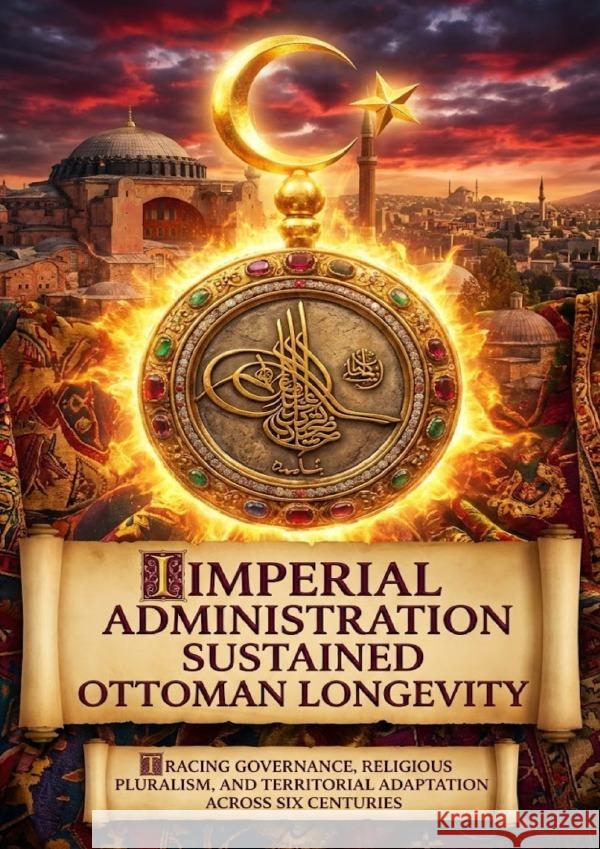
The Ottoman Empire is often reduced to military conquest and eventual decline. Yet this rise-and-fall narrative overlooks what sustained an empire across six centuries and three continents: sophisticated administrative systems that adapted to diverse populations, legal frameworks balancing Islamic law with local customs, and diplomatic networks managing relationships with European powers, Persian rivals, and internal religious communities.This book reexamines Ottoman governance through administrative records, court documents, tax registers, and diplomatic correspondence. It traces how the empire integrated Christian and Jewish subjects through the millet system, how provincial governors negotiated between central authority and local realities, and how economic pressures-shifting trade routes, military costs, debt to European creditors-gradually undermined institutional capacity.By focusing on administrative practice rather than dramatic events, this work reveals the empire's actual mechanisms of survival and transformation. It explores how Ottoman institutions managed religious diversity, territorial expansion, and eventual contraction-offering insight into the gap between imperial ambition and governmental reality. The question becomes: not why the empire fell, but how it endured as long as it did.
The empire functioned through negotiation, not conquest alone. Administration determined survival.




Czytaj nas na:
KrainaKsiazek.PL - Księgarnia Internetowa


