Illusion of Education: How School Designs the Ability of the Citizen: Book one » książka





Illusion of Education: How School Designs the Ability of the Citizen: Book one
ISBN-13: 9780992856069 / Angielski / Miękka / 2015 / 234 str.
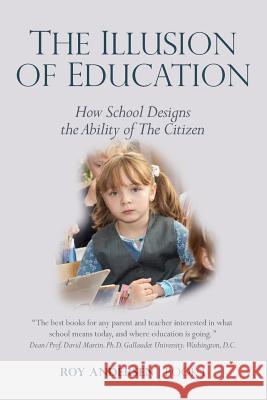
In a book that was written in the everyday language of parents but acclaimed by academics, 'The Illusion of Education' goes deep into the education psyche to discover what is really wrong with school systems throughout the world. It examines the difficulties faced by teachers trying to bring order into the minds of children who do not know how to concentrate or why they should. This book discusses the social problems children face today, and explains how the chemistry of a victim's brain is changed by bullying and how this disturbs their ability to reason. When we think of bullying we think only of the incidental child living in fear, but the reality is that education is experiencing such a degree of escalating violence that the ability of all students to reason and so perform better is affected by this in different degrees. To improve the reasoning ability of its students, education introduces aspects of critical thinking into a few of their subjects. However, because of our general ignorance of what intelligence is, the child from nursery to final examination is not taught how to think, so that this casual introduction of critical thinking into their lives comes too late and too little alters the mental processing systems each have already developed. Pressurized to produce students of higher ability, the general school forces students to think only of grades to get into university, but in being unable to raise their ability for this it adjusts the ways it teaches and assesses to enable them to do so. Meanwhile the university, which has grown so large it needs more students to support it, has to accept lower capabilities to survive. While all this is kept out of the public's knowledge, it basically means that the school child of today is less educated than they were four decades ago, but more able to obtain a degree that also is of less general worth than it was at that time. Unaware of this, the public only see that more children go to university, but little realise what this really means or the effect it is creating in our societies. Despite changes in the way it operates, education today is still basically the same machine it was when it came into being in the 19th Century, and this is why it fails today. The education of that time came about to create two models of citizen. One to manage or administer the society, and the other to comply in work and social matters to their instruction. Education created this difference by not teaching children how to think, and worked on the basis that they were born how to do so. The ability to reason, and so the selection of the higher model of citizen, was left to the university, which selected students through discrete strategies inlaid into the general school system. Our error today is that we believe, through the social changes forced into education, that it no longer follows this design. It does 'The Illusion of Education' explains not only how it does this, but more importantly why it does so. The danger in not knowing or realizing this, is the cause of education being unable to produce the type of citizen that is urgently being required in this 21st Century. 'The Illusion of Education' examines the deep history behind this to explain how education can change today, and so why it must if our children are to safely negotiate their lives through a world largely managed by artificial intelligence. Our error, and in this lies the greatest danger to our children, is that we fail to see how their world will be very different to the one we live in, and how little we are preparing them for the legacy they will inherit from us.
In a book that was written in the everyday language of parents but acclaimed by academics, ‘The Illusion of Education’ goes deep into the education psyche to discover what is really wrong with school systems throughout the world. It examines the difficulties faced by teachers trying to bring order into the minds of children who do not know how to concentrate or why they should. This book discusses the social problems children face today, and explains how the chemistry of a victim’s brain is changed by bullying and how this disturbs their ability to reason. When we think of bullying we think only of the incidental child living in fear, but the reality is that education is experiencing such a degree of escalating violence that the ability of all students to reason and so perform better is affected by this in different degrees. To improve the reasoning ability of its students, education introduces aspects of critical thinking into a few of their subjects. However, because of our general ignorance of what intelligence is, the child from nursery to final examination is not taught how to think, so that this casual introduction of critical thinking into their lives comes too late and too little alters the mental processing systems each have already developed.Pressurized to produce students of higher ability, the general school forces students to think only of grades to get into university, but in being unable to raise their ability for this it adjusts the ways it teaches and assesses to enable them to do so. Meanwhile the university, which has grown so large it needs more students to support it, has to accept lower capabilities to survive. While all this is kept out of the public’s knowledge, it basically means that the school child of today is less educated than they were four decades ago, but more able to obtain a degree that also is of less general worth than it was at that time. Unaware of this, the public only see that more children go to university, but little realise what this really means or the effect it is creating in our societies.Despite changes in the way it operates, education today is still basically the same machine it was when it came into being in the 19th Century, and this is why it fails today. The education of that time came about to create two models of citizen. One to manage or administer the society, and the other to comply in work and social matters to their instruction. Education created this difference by not teaching children how to think, and worked on the basis that they were born how to do so. The ability to reason, and so the selection of the higher model of citizen, was left to the university, which selected students through discrete strategies inlaid into the general school system. Our error today is that we believe, through the social changes forced into education, that it no longer follows this design. It does! ‘The Illusion of Education’ explains not only how it does this, but more importantly why it does so. The danger in not knowing or realizing this, is the cause of education being unable to produce the type of citizen that is urgently being required in this 21st Century.‘The Illusion of Education’ examines the deep history behind this to explain how education can change today, and so why it must if our children are to safely negotiate their lives through a world largely managed by artificial intelligence. Our error, and in this lies the greatest danger to our children, is that we fail to see how their world will be very different to the one we live in, and how little we are preparing them for the legacy they will inherit from us.




Czytaj nas na:
KrainaKsiazek.PL - Księgarnia Internetowa


