• Wyszukiwanie zaawansowane
  • Kategorie
  • Kategorie BISAC
  • Książki na zamówienie
  • Promocje
  • Granty
  • Książka na prezent
  • Opinie
  • Pomoc
  • Załóż konto
  • Zaloguj się

Identity, Reasonableness and Being One Among Others: Dialogue, Community, Education » książka


zaloguj się | załóż konto
Logo Krainaksiazek.pl

koszyk

konto

szukaj
topmenu
Księgarnia internetowa
Szukaj
Książki na zamówienie
Promocje
Granty
Książka na prezent
Moje konto
Pomoc
 
 
Wyszukiwanie zaawansowane
Pusty koszyk
Bezpłatna dostawa dla zamówień powyżej 20 złBezpłatna dostawa dla zamówień powyżej 20 zł

Kategorie główne

• Nauka
 [2946350]
• Literatura piękna
 [1816154]

  więcej...
• Turystyka
 [70666]
• Informatyka
 [151172]
• Komiksy
 [35576]
• Encyklopedie
 [23172]
• Dziecięca
 [611458]
• Hobby
 [135995]
• AudioBooki
 [1726]
• Literatura faktu
 [225763]
• Muzyka CD
 [378]
• Słowniki
 [2917]
• Inne
 [444280]
• Kalendarze
 [1179]
• Podręczniki
 [166508]
• Poradniki
 [469467]
• Religia
 [507199]
• Czasopisma
 [496]
• Sport
 [61352]
• Sztuka
 [242330]
• CD, DVD, Video
 [3348]
• Technologie
 [219391]
• Zdrowie
 [98638]
• Książkowe Klimaty
 [124]
• Zabawki
 [2382]
• Puzzle, gry
 [3525]
• Literatura w języku ukraińskim
 [259]
• Art. papiernicze i szkolne
 [7107]
Kategorie szczegółowe BISAC

Identity, Reasonableness and Being One Among Others: Dialogue, Community, Education

ISBN-13: 9789811966835 / Angielski / Twarda / 2023 / 311 str.
Laurance Joseph Splitter
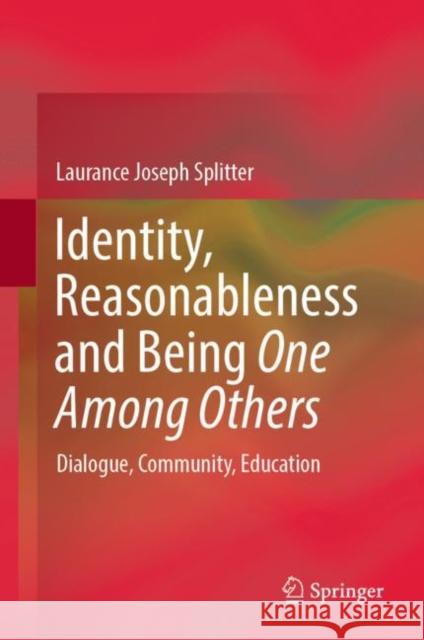
Identity, Reasonableness and Being One Among Others: Dialogue, Community, Education Laurance Joseph Splitter 9789811966835 Springer - książkaWidoczna okładka, to zdjęcie poglądowe, a rzeczywista szata graficzna może różnić się od prezentowanej.

Identity, Reasonableness and Being One Among Others: Dialogue, Community, Education

ISBN-13: 9789811966835 / Angielski / Twarda / 2023 / 311 str.

Laurance Joseph Splitter
cena 644,07
(netto: 613,40 VAT:  5%)

Najniższa cena z 30 dni: 578,30
Termin realizacji zamówienia:
ok. 16-18 dni roboczych.

Darmowa dostawa!
inne wydania

This book brings the tools and ideas of Anglo-American analytic philosophy to bear on how we think about issues of contemporary significance, in a way that is accessible to a broad audience. While acknowledging empirical findings within the social sciences, it takes on the prescriptive task of imagining a better world, in which being citizens in a democracy means actively engaging with others.We cling to tribal affiliations which incline us to look inward and spurn those whom we deem to be “other.” And we observe the mind-numbing, herd-like impact of social (and other) media on our capacity – and that of our children – to distinguish truth and good sense from falsehood and nonsense. Such problems demand our attention asreasonablepersons who boththink for themselves,anddeliberate in good faith with otherswith whom they may well disagree. The good news is that while reasonableness cannot be taken for granted, it can – indeed, it must – be nurtured and itmustbe taught. This book both articulates a conception of reasonableness and exemplifies a clear standard of reasonableness, with respect to the questions it raises and the author's responses to them.


This book brings the tools and ideas of Anglo-American analytic philosophy to bear on how we think about issues of contemporary significance, in a way that is accessible to a broad audience. While acknowledging empirical findings within the social sciences, it takes on the prescriptive task of imagining a better world, in which being citizens in a democracy means actively engaging with others. We cling to tribal affiliations which incline us to look inward and spurn those whom we deem to be “other.” And we observe the mind-numbing, herd-like impact of social (and other) media on our capacity – and that of our children – to distinguish truth and good sense from falsehood and nonsense. Such problems demand our attention as reasonable persons who both think for themselves, and deliberate in good faith with others with whom they may well disagree. The good news is that while reasonableness cannot be taken for granted, it can – indeed, it must – be nurtured and it must be taught. This book both articulates a conception of reasonableness and exemplifies a clear standard of reasonableness, with respect to the questions it raises and the author's responses to them. 

Kategorie:
Podręczniki
Kategorie BISAC:
Education > Philosophy, Theory & Social Aspects
Philosophy > Social
Wydawca:
Springer
Język:
Angielski
ISBN-13:
9789811966835
Rok wydania:
2023
Dostępne języki:
Ilość stron:
311
Oprawa:
Twarda

"This is an important and timely book, refuting the confusion of attempting to find identity in qualities or collectives and in view of its reference to classroom contexts, one which should be of special interest to readers of Educational Philosophy and Theory." (Jim Mackenzie, Educational Philosophy and Theory, April 11, 2023)

Introduction.- What identity really is and why it matters.- On being a person as one among others.- The moral implications of being one among others (I): Descriptive and prescriptive perspectives on personhood, and the normative ideal of reasonableness.- The moral implications of being one among others (II): Persons, groups, and the Principle of Personal Worth.- Narrative and personhood: A fraught relationship.- Democracy and education: Cultivating reasonableness.


Professor Laurance Splitter has an academic background in mathematics and philosophy and was elected as a fellow of the Australian College of Educators. He taught philosophy and education at universities in Australia, the USA, and Hong Kong, and has been a visiting professor at several universities, most recently the University of Hiroshima, Japan, in 2017-18. For almost 40 years, Laurance has been a pioneer in the development of Philosophy for Children around the world, where he was able to combine the intellectual rigor of analytic philosophy with the more person-centered approach of communal inquiry and dialogue. 

He was an inaugural director of the Australasian Center for Philosophy with Children and Adolescents, within the Australian Council for Educational Research (1988-2001). In that context, he sought to bring the wonders of philosophy, with its rigorous but open-ended approach to thinking and dialogue, to students and teachers. Many of his publications and conference/seminar presentations have been similarly directed. In recent years, Laurance broadened his core interest in connecting philosophy and formal education to examine how analytic philosophy can contribute to clarifying and, perhaps, resolving, some contemporary issues in the social sciences, involving identity, individualism and collectivism, personhood and citizenship, the role of community, dialogue, narrative, and political/moral tribalism. While retired from full-time work, Laurance continues to write and publish academic literature and give conference and seminar presentations. He teaches philosophy at several campuses of the University of the 3rd Age and facilitates philosophical discussions among students at several schools.

This book brings the tools and ideas of Anglo-American analytic philosophy to bear on how we think about issues of contemporary significance, in a way that is accessible to a broad audience. While acknowledging empirical findings within the social sciences, it takes on the prescriptive task of imagining a better world, in which being citizens in a democracy means actively engaging with others. 

We cling to tribal affiliations which incline us to look inward and spurn those whom we deem to be “other.” And we observe the mind-numbing, herd-like impact of social (and other) media on our capacity – and that of our children – to distinguish truth and good sense from falsehood and nonsense. Such problems demand our attention as reasonable persons who both think for themselves, and deliberate in good faith with others with whom they may well disagree. The good news is that while reasonableness cannot be taken for granted, it can – indeed, it must – be nurtured and it must be taught. This book both articulates a conception of reasonableness and exemplifies a clear standard of reasonableness, with respect to the questions it raises and the author's responses to them. 



Udostępnij

Facebook - konto krainaksiazek.pl


Opinie o Krainaksiazek.pl na Opineo.pl

Partner Mybenefit

Krainaksiazek.pl w programie rzetelna firma Krainaksiaze.pl - płatności przez paypal

Czytaj nas na:

Facebook - krainaksiazek.pl
  • książki na zamówienie
  • granty
  • książka na prezent
  • kontakt
  • pomoc
  • opinie
  • regulamin
  • polityka prywatności

Zobacz:

  • Księgarnia czeska

  • Wydawnictwo Książkowe Klimaty

1997-2026 DolnySlask.com Agencja Internetowa

© 1997-2022 krainaksiazek.pl
     
KONTAKT | REGULAMIN | POLITYKA PRYWATNOŚCI | USTAWIENIA PRYWATNOŚCI
Zobacz: Księgarnia Czeska | Wydawnictwo Książkowe Klimaty | Mapa strony | Lista autorów
KrainaKsiazek.PL - Księgarnia Internetowa

Polityka prywatnosci - link
Krainaksiazek.pl - płatnośc Przelewy24
Przechowalnia Przechowalnia




