• Wyszukiwanie zaawansowane
  • Kategorie
  • Kategorie BISAC
  • Książki na zamówienie
  • Promocje
  • Granty
  • Książka na prezent
  • Opinie
  • Pomoc
  • Załóż konto
  • Zaloguj się

ISDN the Integrated Services Digital Network: Concept, Methods, Systems » książka


zaloguj się | załóż konto
Logo Krainaksiazek.pl

koszyk

konto

szukaj
topmenu
Księgarnia internetowa
Szukaj
Książki na zamówienie
Promocje
Granty
Książka na prezent
Moje konto
Pomoc
 
 
Wyszukiwanie zaawansowane
Pusty koszyk
Bezpłatna dostawa dla zamówień powyżej 20 złBezpłatna dostawa dla zamówień powyżej 20 zł

Kategorie główne

• Nauka
 [2950560]
• Literatura piękna
 [1849509]

  więcej...
• Turystyka
 [71097]
• Informatyka
 [151150]
• Komiksy
 [35848]
• Encyklopedie
 [23178]
• Dziecięca
 [617388]
• Hobby
 [139064]
• AudioBooki
 [1657]
• Literatura faktu
 [228597]
• Muzyka CD
 [383]
• Słowniki
 [2855]
• Inne
 [445295]
• Kalendarze
 [1464]
• Podręczniki
 [167547]
• Poradniki
 [480102]
• Religia
 [510749]
• Czasopisma
 [516]
• Sport
 [61293]
• Sztuka
 [243352]
• CD, DVD, Video
 [3414]
• Technologie
 [219456]
• Zdrowie
 [101002]
• Książkowe Klimaty
 [124]
• Zabawki
 [2311]
• Puzzle, gry
 [3459]
• Literatura w języku ukraińskim
 [254]
• Art. papiernicze i szkolne
 [8079]
Kategorie szczegółowe BISAC

ISDN the Integrated Services Digital Network: Concept, Methods, Systems

ISBN-13: 9783642846656 / Angielski / Miękka / 2011 / 258 str.
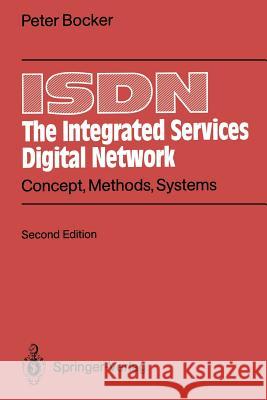
Peter Bocker
ISDN the Integrated Services Digital Network: Concept, Methods, Systems Bocker, Peter 9783642846656 Springer - książkaWidoczna okładka, to zdjęcie poglądowe, a rzeczywista szata graficzna może różnić się od prezentowanej.

ISDN the Integrated Services Digital Network: Concept, Methods, Systems

ISBN-13: 9783642846656 / Angielski / Miękka / 2011 / 258 str.

Peter Bocker
cena 401,58
(netto: 382,46 VAT:  5%)

Najniższa cena z 30 dni: 385,52
Termin realizacji zamówienia:
ok. 22 dni roboczych
Dostawa w 2026 r.

Darmowa dostawa!

From the reviews: Computer Communications "Although the concept of ISDN has been with us now for over a decade, and much development work has been carried out du- ring this period, there are very few comprehensive books available on the subject. This is perhaps one of the best of them.The book aims to provide engineers and potential engi- neers with an overview of the requirements and features of ISDN that will be useful in thedesign, construction and operation of such systems. The author and his six collabora- tors have succeeded in this respect, producing a readable, yet thorough, technical book that can be recommended to a wider audience... Throughout the book the explanations are enhanced byclear, well-presented, relevant diagrams, and there is a very use- ful annex on the full set of standards relating to ISDN. This is a good book that will definitely be used as a refe- rence over the next few years by many engineers working in the area..." IEEE Computer "ISDN is a slimbut very effective book dealing with almost every aspect of the evolution ofpublic communications net- works...I highly recommend this book to engineerswho are new either to the field of ISDN or to specific ISDN topics. It is clear, concise, and is excellent padding for those tackling the CCITT recommendations."


Kategorie:
Technologie
Kategorie BISAC:
Technology & Engineering > Electronics - Microelectronics
Technology & Engineering > Telecommunications
Wydawca:
Springer
Język:
Angielski
ISBN-13:
9783642846656
Rok wydania:
2011
Wydanie:
1992. Softcover
Ilość stron:
258
Waga:
0.42 kg
Wymiary:
23.5 x 15.5
Oprawa:
Miękka
Wolumenów:
01

From the reviews: Computer Communications "Although the concept of ISDN has been with us now for over a decade, and much development work has been carried out during this period, there are very few comprehensive books available on the subject. This is perhaps one of the best of them. The book aims to provide engineers and potential engineers with an overview of the requirements and features of ISDN that will be useful in the design, construction and operation of such systems. The author and his six collaborators have succeeded in this respect, producing a readable, yet thorough, technical book that can be recommended to a wider audience... Throughout the book the explanations are enhanced by clear, well-presented, relevant diagrams, and there is a very useful annex on the full set of standards relating to ISDN. This is a good book that will definitely be used as a reference over the next few years by many engineers working in the area..." IEEE Computer "ISDN is a slim but very effective book dealing with almost every aspect of the evolution of public communications networks...I highly recommend this book to engineers who are new either to the field of ISDN or to specific ISDN topics. It is clear, concise, and is excellent padding for those tackling the CCITT recommendations."

1 The Function of Telecommunications.- 1.1 Types of Communication.- 1.2 Information Types and Signals.- 1.3 Systems for Interactive Communication.- 1.4 Development of the Communication Networks.- 1.4.1 Existing Communication Networks.- 1.4.2 Integration of Services.- 1.4.3 Flexibility and Network Intelligence.- 1.5 The ISDN Concept.- 1.6 The Integration of Services with Higher Bit Rates.- 1.7 The Importance of Standardization.- 2 Telecommunication Services.- 2.1 Definition of Services.- 2.2 Definition of Service Attributes and Supplementary Services.- 2.3 Services in the ISDN with Bit Rates up to 64 kbit/s.- 2.3.1 ISDN Services up to 64 kbit/s via B-Channels.- 2.3.1.1 Conversational Bearer Services.- 2.3.1.2 Conversational Teleservices.- 2.3.1.3 Messaging Services.- 2.3.1.4 Retrieval Services (Teleservices).- 2.3.1.5 Distribution Services.- 2.3.2 ISDN Services via the D-Channel.- 2.3.2.1 Conversational Bearer Services with Low Throughput.- 2.3.2.2 Conversational Teleservices.- 2.3.3 Supplementary Services.- 2.3.4 Existing Services from the Telephone Network in the ISDN.- 2.3.5 Services in Conjunction with Terminals from Dedicated Text and Data Networks.- 2.4 Service and Network Interworking Facilities.- 2.4.1 Intercommunication Within the ISDN.- 2.4.2 Intercommunication Using Network Interworking Facilities.- 2.5 Services with Higher Bit Rates.- 3 ISDN Structure.- 3.1 Network Organization.- 3.2 Initial Situation for the ISDN.- 3.2.1 Telephone Network.- 3.2.2 Text and Data Networks.- 3.3 Functions of the ISDN Network Components.- 3.3.1 Subscriber Lines in the ISDN.- 3.3.2 Local Exchanges in the ISDN.- 3.3.3 Signaling Between ISDN Exchanges.- 3.3.4 Operation and Maintenance in the ISDN.- 3.4 Network Dimensioning.- 3.4.1 Basic Considerations.- 3.4.2 Effects of Service Integration.- 3.4.2.1 Holding Time, Traffic Intensity, Busy Hour Call Attempts.- 3.4.2.2 Shared Use of the Network Equipment.- 3.4.3 Traffic Routing.- 3.5 Interworking with Other Public Networks.- 3.5.1 ISDN and the Analog Telephone Network.- 3.5.2 ISDN and Public Data Networks.- 3.6 Interworking with Private Networks.- 3.7 Numbering.- 3.8 Implementation Strategies.- 3.8.1 Overlay Network and Cell Approach.- 3.8.2 Pragmatic Implementation Strategy.- 3.8.3 Satellite Links in the ISDN.- 3.9 ISDN Implementation Schedules.- 4 Subscriber Access.- 4.1 Configuration of the User Station.- 4.1.1 Functional Groups of the User Station.- 4.1.2 Network Termination NT1.- 4.1.3 Network Termination NT2.- 4.1.4 Terminal Adaptor TA.- 4.1.5 Connecting Private Networks.- 4.2 User-Network Interfaces.- 4.2.1 Preliminary Remarks.- 4.2.1.1 Channel Types.- 4.2.1.2 Access Types and Interface Structures.- 4.2.1.3 Operation of Traffic Channels.- 4.2.2 User-Network Interface for the Basic Access.- 4.2.2.1 Reference Configurations.- 4.2.2.2 Electrical Characteristics for Information Transmission.- 4.2.2.3 D-Channel Access by Terminal Equipments.- 4.2.2.4 Frame Structure.- 4.2.2.5 Activation and Deactivation.- 4.2.2.6 Electrical Characteristics for Power Feeding.- 4.2.3 User-Network Interface for the Primary Rate Access.- 4.3 User Signaling.- 4.3.1 Protocol Architecture.- 4.3.2 Types of Connection.- 4.3.3 Special Features of ISDN Signaling.- 4.3.3.1 Functions of the Network Terminations NT1 and NT2.- 4.3.3.2 Call Establishment.- 4.3.3.3 Bus Configurations.- 4.3.3.4 Simultaneous Signaling Activities.- 4.3.4 Link Access Procedure on the D-Channel.- 4.3.4.1 Features of the Data Link Layer.- 4.3.4.2 Data Transfer Protocol.- 4.3.4.3 Assignment of Unique Terminal Endpoint Identifiers.- 4.3.5 Signaling for Circuit-Switched Connections.- 4.3.5.1 Simple Call Establishment.- 4.3.5.2 Simple Call Clearing.- 4.3.5.3 Refined Call Establishment and Clearing.- 4.3.5.4 Control of Supplementary Services.- 4.3.5.5 User-User Signaling.- 4.3.5.6 Stimulus Protocol.- 4.4 Connection of Terminals with Conventional Interfaces to the ISDN.- 4.4.1 ISDN Bearer Service and Public Data Network Access Solutions.- 4.4.2 Connection of X.21 Terminal Equipment with Single-Step Call Establishment.- 4.4.2.1 Mapping of the Call Establishment and Clearing Procedures Between the X.21 and S Interfaces.- 4.4.2.2 Adaption Between the X.1 User Rates of X.21 Terminal Equipment and the ISDN Information Transfer Rate of 64 kbit/s.- 4.4.2.3 Ready for Data Alignment in the 64 kbit/s Channel Between the Terminal Adaptors and Between the X.21 Terminal Equipments.- 4.4.3 Connection of Data Terminal Equipment with V.-Series Type Interfaces to the ISDN.- 4.4.3.1 Support of the Analog Tip/Ring Interface in the ISDN.- 4.4.3.2 Support of V.-Series Interfaces in the ISDN.- 4.4.4 Connection of Terminals with X.25 Interface to the ISDN.- 4.4.4.1 Basic Characteristics.- 4.4.4.2 Point-to-Multipoint Signaling for Incoming Virtual Calls.- 4.4.4.3 Access to Packet Switching via the B-Channel.- 4.4.4.4 Access to Packet Switching via the Signaling Channel (D-Channel).- 4.5 Packet Switching Techniques in ISDN.- 4.5.1 Frame Mode Bearer Services.- 4.5.2 Asynchronous Transfer Mode.- 4.5.3 Conclusion and Outlook.- 5 ISDN Terminals.- 5.1 Introductory Remarks.- 5.2 Basic Features of an ISDN Terminal.- 5.3 Single-Service Terminals Connected to the ISDN.- 5.3.1 ISDN Telephone.- 5.3.2 Terminals for Non-Voice Communication in the ISDN.- 5.4 Multi-Service Terminals.- 5.4.1 Multi-Service Terminals for Telephony and Telematic Services.- 5.4.2 Multi-Service Terminals for Telephony and Image Communication.- 6 Switching in the ISDN.- 6.1 Introduction.- 6.2 New Demands Placed on Switching Due to Service Integration in the ISDN.- 6.2.1 Subscriber Access.- 6.2.2 Trunk Access.- 6.2.3 Switching Network.- 6.2.4 User-Network Signaling.- 6.2.5 Control.- 6.2.6 Interexchange Signaling.- 6.2.7 Operations, Administration and Maintenance.- 6.2.8 Timing and Network Synchronization.- 6.2.9 Interworking and Access to Special Equipment.- 6.3 Interexchange Signaling in the ISDN.- 6.3.1 Basic Characteristics of Interexchange Signaling Using CCITT Signaling System No. 7.- 6.3.2 The Message Transfer Part (MTP).- 6.3.3 Signaling Relations Between ISDN Exchanges.- 6.3.4 Protocol Architecture of ISDN Interexchange Signaling.- 6.3.5 Implementation of ISDN Interexchange Signaling in the Exchange.- 6.3.6 Intelligent Network.- 6.3.6.1 Flexible Service Control Architecture.- 6.3.6.2 Transaction Capabilities via CCITT Signaling System No. 7.- 6.4 Corporate ISDN Networks.- 6.4.1 Fundamental Solutions.- 6.4.2 Structure and Features of an ISDN PABX.- 6.4.3 Tie Line Traffic Between ISDN PABXs.- 7 Transmission Methods in the ISDN.- 7.1 Introductory Remarks.- 7.2 The Hierarchy of Digital Transmission Channels.- 7.2.1 Basic Building Block: 64 kbit/s.- 7.2.2 Primary Multiplex Signals.- 7.2.3 Digital Multiplex Hierarchies.- 7.3 Transmission Media.- 7.3.1 Conductors in Cables.- 7.3.2 Radio Relay.- 7.4 Equipment for Transmitting Digital Signals on Cable and Radio Links.- 7.4.1 General.- 7.4.2 Transmission on Cables in Trunk Circuits.- 7.4.3 Transmission on Subscriber Lines.- 7.4.4 Radio Relay Transmission.- 7.5 Multiplexed Signals and Multiplexing Equipment.- 7.5.1 Synchronous Multiplexed Signals.- 7.5.2 Digital Multiplexers.- 7.6 Network Synchronization.- 7.6.1 Necessity for Network Synchronization.- 7.6.2 Achieving Network Synchronization.- 7.6.3 Clock Supply Requirements.- 7.7 Disturbances and Transmission Performance.- 7.7.1 Effect of Bit Errors.- 7.7.2 Effect of Slips.- 7.7.3 Effect of Signal Delay.- 7.7.4 Effect of Jitter and Wander.- 7.7.5 Performance of 64 kbit/s Connection Types in the ISDN.- 8 ISDN — The User’s View.- 8.1 ISDN in the Office.- 8.1.1 Telephone Communication.- 8.1.2 Non-Voice Communication.- 8.1.2.1 Significance of Service Integration.- 8.1.2.2 Transmission Speed.- 8.1.2.3 Message Structure.- 8.2 ISDN in the Home.- 8.3 ISDN in Mobile Communication.- Annex: CCITT Recommendations and Other Standards Relating to the ISDN.- References.


Udostępnij

Facebook - konto krainaksiazek.pl


Opinie o Krainaksiazek.pl na Opineo.pl

Partner Mybenefit

Krainaksiazek.pl w programie rzetelna firma Krainaksiaze.pl - płatności przez paypal

Czytaj nas na:

Facebook - krainaksiazek.pl
  • książki na zamówienie
  • granty
  • książka na prezent
  • kontakt
  • pomoc
  • opinie
  • regulamin
  • polityka prywatności

Zobacz:

  • Księgarnia czeska

  • Wydawnictwo Książkowe Klimaty

1997-2025 DolnySlask.com Agencja Internetowa

© 1997-2022 krainaksiazek.pl
     
KONTAKT | REGULAMIN | POLITYKA PRYWATNOŚCI | USTAWIENIA PRYWATNOŚCI
Zobacz: Księgarnia Czeska | Wydawnictwo Książkowe Klimaty | Mapa strony | Lista autorów
KrainaKsiazek.PL - Księgarnia Internetowa

Polityka prywatnosci - link
Krainaksiazek.pl - płatnośc Przelewy24
Przechowalnia Przechowalnia




