• Wyszukiwanie zaawansowane
  • Kategorie
  • Kategorie BISAC
  • Książki na zamówienie
  • Promocje
  • Granty
  • Książka na prezent
  • Opinie
  • Pomoc
  • Załóż konto
  • Zaloguj się

Human Happiness and the Pursuit of Maximization: Is More Always Better? » książka


zaloguj się | załóż konto
Logo Krainaksiazek.pl

koszyk

konto

szukaj
topmenu
Księgarnia internetowa
Szukaj
Książki na zamówienie
Promocje
Granty
Książka na prezent
Moje konto
Pomoc
 
 
Wyszukiwanie zaawansowane
Pusty koszyk
Bezpłatna dostawa dla zamówień powyżej 20 złBezpłatna dostawa dla zamówień powyżej 20 zł

Kategorie główne

• Nauka
 [2946600]
• Literatura piękna
 [1856966]

  więcej...
• Turystyka
 [72221]
• Informatyka
 [151456]
• Komiksy
 [35826]
• Encyklopedie
 [23190]
• Dziecięca
 [619653]
• Hobby
 [140543]
• AudioBooki
 [1577]
• Literatura faktu
 [228355]
• Muzyka CD
 [410]
• Słowniki
 [2874]
• Inne
 [445822]
• Kalendarze
 [1744]
• Podręczniki
 [167141]
• Poradniki
 [482898]
• Religia
 [510455]
• Czasopisma
 [526]
• Sport
 [61590]
• Sztuka
 [243598]
• CD, DVD, Video
 [3423]
• Technologie
 [219201]
• Zdrowie
 [101638]
• Książkowe Klimaty
 [124]
• Zabawki
 [2473]
• Puzzle, gry
 [3898]
• Literatura w języku ukraińskim
 [254]
• Art. papiernicze i szkolne
 [8170]
Kategorie szczegółowe BISAC

Human Happiness and the Pursuit of Maximization: Is More Always Better?

ISBN-13: 9789400766082 / Angielski / Twarda / 2013 / 216 str.
Hilke Brockmann;Jan Delhey
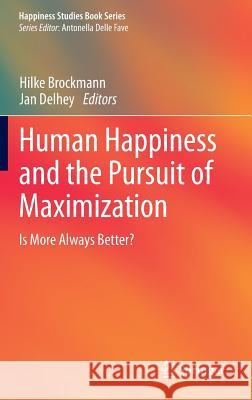
Human Happiness and the Pursuit of Maximization: Is More Always Better? Hilke Brockmann, Jan Delhey 9789400766082 Springer - książkaWidoczna okładka, to zdjęcie poglądowe, a rzeczywista szata graficzna może różnić się od prezentowanej.

Human Happiness and the Pursuit of Maximization: Is More Always Better?

ISBN-13: 9789400766082 / Angielski / Twarda / 2013 / 216 str.

Hilke Brockmann;Jan Delhey
cena 403,47 zł
(netto: 384,26 VAT:  5%)

Najniższa cena z 30 dni: 385,52 zł
Termin realizacji zamówienia:
ok. 22 dni roboczych
Bez gwarancji dostawy przed świętami

Darmowa dostawa!

This book tests the critical potential of happiness research to evaluate contemporary high-performance societies. These societies, defined as affluent capitalist societies, emphasize competition and success both institutionally and culturally. Growing affluence improves life in many ways, for a large number of people. We lead longer, safer, and more comfortable lives than previous generations. But we also live faster, and are competition-toughened, like top athletes. As a result, we suspect limits and detect downsides of our high-speed lives. The ubiquitous maximization principle opens up a systematic gateway to the pleasures and pains of contemporary life. Using happiness as a reference point, this book explores the philosophical and empirical limits of the maximization rule. It considers the answer to questions such as: Precisely, why did the idea of (economic) maximization gain so much ground in our Western way of thinking? When, and in which life domains, does maximization work, when does it fail? When do qualities and when do quantities matter? Does maximization yield a different (un)happiness dividend in different species, cultures, and societies? "


Kategorie:
Nauka, Socjologia i społeczeństwo
Kategorie BISAC:
Social Science > Socjologia
Psychology > Movements - General
Science > Life Sciences - Zoology - Ethology (Animal Behavior)
Wydawca:
Springer
Seria wydawnicza:
Happiness Studies Book Series
Język:
Angielski
ISBN-13:
9789400766082
Rok wydania:
2013
Dostępne języki:
Angielski
Wydanie:
2013
Numer serii:
000459400
Ilość stron:
216
Waga:
4.62 kg
Wymiary:
23.523.5 x 15.5
Oprawa:
Twarda
Wolumenów:
01
Dodatkowe informacje:
Wydanie ilustrowane

From the reviews:

"This is an important book presenting clear evidence within the fields of philosophy, social, and natural science about the myth of maximization as the source of happiness. ... Human Happiness and the Pursuit of Maximization is an important contribution to the literature that encourages readers to look at maximization in its relation to happiness at the individual and social levels." (Louis Hoffman and Monica Mansilla, PsycCRITIQUES, Vol. 59 (17), 2014)

Chapter 1. Is More Always Better? An Introduction; Hilke Brockmann and Jan Delhey.- Chapter 2. When the Pursuit of More Backfires - The American Experiment; Peter Whybrow.- Chapter 3. More Nonsense and Less Happiness: The Uninteded Effects of Artificial Competitions; Mathias Binswanger.- Chapter 4. Happiness by Maximization?; Kurt Bayertz.- Chapter 5. Maximization and the Good; Valerie Tiberius.- Chapter 6. How Wise is Mother Nature? Maximization, Optimization and Short-Sighted Resource Use in Biological Evolution; Hanna Kokko.- Chapter 7. Towards a Neuroscience of Well-being – Implications of Insights from Pleasure Research; Kent C. Berridge and Morten L. Kringelbach.- Chapter 8. From Treating Mental Dysfunction to Neuroenhancement; Michael Koch.- Chapter 9. Do Aspirations and Adaptation Impede the Maximization of Happiness?; Ulrich Schimmack and Hyunji Kim.- Chapter 10. My Car is Bigger than Yours. Consumption, Status Competition, and Happiness in Times of Affluence; Hilke Brockmann and Song Yan.- Chapter 11. Some Lessons from Happiness Economics for Environmental Sustainability; Heinz Welsch.- Chapter 12. Public Policy and Human Happiness: The Welfare State and the Market as Agents of Well-Being; Robert Davidson, Alexander C. Pacek, and Benjamin Radcliff.- Chapter 13 Should the State Care for the Happiness of Its Citizens?; Aloys Prinz.- Chapter 14. A “Happiness Test” for the New Measures of National Well-Being: How Much Better than GDP are they?; Jan Delhey and Christian Kroll.

Hilke Brockmann is a Professor of Sociology at Jacobs University, Bremen and an experienced expert in population aging and well-being research. Her work deals with the individual and health related consequences of large-scale demographic, political and social changes. She has published in major international journals, is a member of the Editorial Board of Health Sociology Review, of several professional associations and an alumni of the Max Planck Society. She also counsels public health insurances, marketing boards, firms, and political parties.

Jan Delhey, Professor of Sociology at Jacobs University, Bremen, is an internationally renowned expert in comparative quality of life research. He has published on living conditions, subjective well-being, trust, and social cohesion in leading European and international journals (his next piece of work on trust will appear in the American Sociological Review). He is a member of the Editorial Board of the Journal of Happiness Studies and member of the board of directors of the International Society for Quality-of-Life Studies. For the European Foundation for the Improvement of Living and Working Conditions he has worked as an expert advisor for European-wide social reporting. Contributor to the World Book of Happiness; numerous radio and newspaper interviews.

This book tests the critical potential of happiness research to evaluate contemporary high-performance societies. These societies, defined as affluent capitalist societies, emphasize competition and success both  institutionally and culturally. Growing affluence improves life in many ways, for a large number of people. We lead longer, safer, and more comfortable lives than previous generations. But we also live faster, and are competition-toughened, like top athletes. As a result, we suspect limits and detect downsides of our high-speed lives. The ubiquitous maximization principle opens up a systematic gateway to the pleasures and pains of contemporary life. Using happiness as a reference point, this book explores the philosophical and empirical limits of the maximization rule. It considers the answer to questions such as: Precisely, why did the idea of (economic) maximization gain so much ground in our Western way of thinking? When, and in which life domains, does maximization work, when does it fail? When do qualities and when do quantities matter? Does maximization yield a different (un)happiness dividend in different species, cultures, and societies?


Udostępnij

Facebook - konto krainaksiazek.pl


Opinie o Krainaksiazek.pl na Opineo.pl

Partner Mybenefit

Krainaksiazek.pl w programie rzetelna firma Krainaksiaze.pl - płatności przez paypal

Czytaj nas na:

Facebook - krainaksiazek.pl
  • książki na zamówienie
  • granty
  • książka na prezent
  • kontakt
  • pomoc
  • opinie
  • regulamin
  • polityka prywatności

Zobacz:

  • Księgarnia czeska

  • Wydawnictwo Książkowe Klimaty

1997-2025 DolnySlask.com Agencja Internetowa

© 1997-2022 krainaksiazek.pl
     
KONTAKT | REGULAMIN | POLITYKA PRYWATNOŚCI | USTAWIENIA PRYWATNOŚCI
Zobacz: Księgarnia Czeska | Wydawnictwo Książkowe Klimaty | Mapa strony | Lista autorów
KrainaKsiazek.PL - Księgarnia Internetowa

Polityka prywatnosci - link
Krainaksiazek.pl - płatnośc Przelewy24
Przechowalnia Przechowalnia






