• Wyszukiwanie zaawansowane
  • Kategorie
  • Kategorie BISAC
  • Książki na zamówienie
  • Promocje
  • Granty
  • Książka na prezent
  • Opinie
  • Pomoc
  • Załóż konto
  • Zaloguj się

Human Growth: Volume 3 Neurobiology and Nutrition » książka


zaloguj się | załóż konto
Logo Krainaksiazek.pl

koszyk

konto

szukaj
topmenu
Księgarnia internetowa
Szukaj
Książki na zamówienie
Promocje
Granty
Książka na prezent
Moje konto
Pomoc
 
 
Wyszukiwanie zaawansowane
Pusty koszyk
Bezpłatna dostawa dla zamówień powyżej 20 złBezpłatna dostawa dla zamówień powyżej 20 zł

Kategorie główne

• Nauka
 [2952079]
• Literatura piękna
 [1850969]

  więcej...
• Turystyka
 [71058]
• Informatyka
 [151066]
• Komiksy
 [35579]
• Encyklopedie
 [23181]
• Dziecięca
 [620496]
• Hobby
 [139036]
• AudioBooki
 [1646]
• Literatura faktu
 [228729]
• Muzyka CD
 [379]
• Słowniki
 [2932]
• Inne
 [445708]
• Kalendarze
 [1409]
• Podręczniki
 [164793]
• Poradniki
 [480107]
• Religia
 [510956]
• Czasopisma
 [511]
• Sport
 [61267]
• Sztuka
 [243299]
• CD, DVD, Video
 [3411]
• Technologie
 [219640]
• Zdrowie
 [100984]
• Książkowe Klimaty
 [124]
• Zabawki
 [2281]
• Puzzle, gry
 [3363]
• Literatura w języku ukraińskim
 [258]
• Art. papiernicze i szkolne
 [8020]
Kategorie szczegółowe BISAC

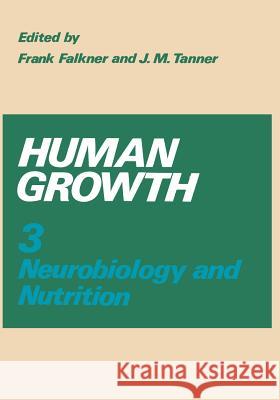
Human Growth: Volume 3 Neurobiology and Nutrition

ISBN-13: 9781468408195 / Angielski / Miękka / 2012 / 606 str.
F. Falkner
Human Growth: Volume 3 Neurobiology and Nutrition Falkner, F. 9781468408195 Springer - książkaWidoczna okładka, to zdjęcie poglądowe, a rzeczywista szata graficzna może różnić się od prezentowanej.

Human Growth: Volume 3 Neurobiology and Nutrition

ISBN-13: 9781468408195 / Angielski / Miękka / 2012 / 606 str.

F. Falkner
cena 201,24
(netto: 191,66 VAT:  5%)

Najniższa cena z 30 dni: 192,74
Termin realizacji zamówienia:
ok. 22 dni roboczych
Dostawa w 2026 r.

Darmowa dostawa!

Growth, as we conceive it, is the study of change in an organism not yet mature. Differential growth creates form: external form through growth rates which vary from one part of the body to another and one tissue to another; and internal form through the series of time-entrained events which build up in each cell the special- ized complexity of its particular function. We make no distinction, then, between growth and development, and if we have not included accounts of differentiation it is simply because we had to draw a quite arbitrary line somewhere. It is only rather recently that those involved in pediatrics and child health have come to realize that growth is the basic science peculiar to their art. It is a science which uses and incorporates the traditional disciplines of anatomy, physiology, biophysics, biochemistry, and biology. It is indeed a part of biology, and the study of human growth is a part of the curriculum of the rejuvenated science of Human Biology. What growth is not is a series of charts of height and weight. Growth standards are useful and necessary, and their construction is by no means void of intellectual challenge. They are a basic instrument in pediatric epidemiology. But they do not appear in this book, any more than clinical accounts of growth disorders. This appears to be the first large handbook-in three volumes-devoted to Human Growth.


Kategorie:
Nauka
Kategorie BISAC:
Medical > Fizjologia
Science > General
Gardening > General
Wydawca:
Springer
Język:
Angielski
ISBN-13:
9781468408195
Rok wydania:
2012
Wydanie:
Softcover Repri
Ilość stron:
606
Waga:
1.06 kg
Wymiary:
25.4 x 17.78 x 3.23
Oprawa:
Miękka
Wolumenów:
01
Dodatkowe informacje:
Wydanie ilustrowane

VI. Neurobiology.- 1 Neuroembryology and the Development of Perception.- 1. Introduction.- 2. Innate Strategy of Perceptual Systems.- 3. Early Embryo.- 4. Late Embryos and Lower Vertebrates.- 5. The Fetus: Reptiles, Birds, and Mammals.- 6. Late Fetus, Birth, and Infancy.- 7. Conclusions.- 8. References.- 2 The Differentiate Maturation of the Human Cerebral Cortex.- 1. Introduction.- 2. Material and Methods.- 3. Frontal Lobe.- 4. Parietal Lobe.- 5. Temporal Lobe.- 6. Occipital Lobe.- 7. Limbic Lobe.- 8. General Considerations.- 9. References.- 3 Organization and Reorganization in the Central Nervous System: Evolving Concepts of Brain Plasticity.- 1. Introduction.- 2. Effects of Experience and Environment on the “Molar” Composition of the Brain.- 3. Reorganizing the Anatomy of the Developing Brain.- 4. Anatomical Plasticity in the Adult Brain.- 5. Discussion.- 6. References.- 4 Developmental Aspects of the Neuronal Control of Breathing.- 1. Brain Stem Respiratory Neurons.- 2. Chemoreceptor Regulation of Breathing.- 3. Mechanoreceptor Regulation of Breathing.- 4. Patterns of Fetal and Neonatal Respiration.- 5. Brain Mechanisms Responsible for the Preterm Infant’s Difficulties in Breathing: A Summary.- 6. References.- 5 Ontogenesis of Brain Bioelectrlcal Activity and Sleep Organization in Neonates and Infants.- 1. Introduction.- 2. EEG and Sleep of Full-Term Neonates.- 3. EEG and Sleep of Preterm Infants.- 4. Development of EEG and Sleep Organization during the First Three Years of Life.- 5. Conclusions.- 6. References.- 6 Sexual Differentiation of the Brain.- 1. Introduction.- 2. Evidence for Sexual Differentiation of the Brain in Nonprimates.- 3. Evidence for Sexual Differentiation of the Brain in Primates.- 4. Differentiation of the Female Brain.- 5. Summary and Conclusions.- 6. References.- 7 Critical Periods in Organizational Processes.- 1. Introduction.- 2. Physical Growth and Behavioral Development — A Comparison.- 3. Theory of Organizational Change.- 4. Critical Periods.- 5. General Theory of Critical Periods.- 6. Optimal Periods and Critical Periods.- 7. Vulnerable and Sensitive Periods.- 8. Conclusion.- 9. References.- 8 Patterns of Early Neurological Development.- 1. Introduction.- 2. Survey of Methods.- 3. Development.- 4. Value for Determination of Postmenstrual Age: A Critical Evaluation.- 5. Prognostic Value.- 6. References.- 9 Early Development of Neonatal and Infant behavior.- 1. Introduction.- 2. Intrauterine Psychological Capabilities.- 3. Behavior of the Premature Infant.- 4. Behavior of the Newborn.- 5. Modal Newborn Behavioral Development during the Neonatal Period.- 6. Behavior of the Infant in Context: The Infant-Adult Communication System.- 7. Summary.- 8. References.- VII. Nutrition.- 10 Nutrition and Growth in Infancy.- 1. Introduction.- 2. Food Intake and Growth of Normal Infants under Controlled Conditions.- 3. Interrelationship of Growth and Nutritional Requirements: Model Considerations.- 4. Adverse Effects of Deficient or Excessive Intake of Some Nutrients on Infant Growth.- 5. Summary and Conclusions.- 6. References.- 11 Protein — Energy Malnutrition and Growth.- 1. Introduction.- 2. Prenatal Growth.- 3. Early Postnatal Growth.- 4. School Age to Maturity.- 5. Development of Secondary Sex Characteristics.- 6. Skeletal Development.- 7. Dental Development.- 8. Body Proportions.- 9. Conclusion and Summary.- 10. References.- 12 Population Differences in Growth: Environmental and Genetic Factors.- 1. Introduction.- 2. Population Differences in Body Size.- 3. Population Differences in Body Shape.- 4. Differences in Amount of Subcutaneous Fat.- 5. Skeletal Maturation.- 6. Sexual Maturation.- 7. Dental Maturation.- 8. Summary and Generalization.- 9. References.- 13 Epidemiological Considerations.- 1. Introduction: Interrelationships of Growth and Epidemiology.- 2. Community Diagnosis and Practical Programs.- 3. Nutritional Surveillance and Conclusions.- 4. References.- 14 Obesity.- 1. Introduction.- 2. Adipose Tissue.- 3. The Fat Cell.- 4. The Fat Mass.- 5. Adipose Tissue Distribution.- 6. Adipocyte Number.- 7. Nutrition and Adipocyte Number and Size.- 8. Treatment.- 9. References.- 15 Nutritional Deficiencies and Brain Development.- 1. Introduction.- 2. Some Comments on Methods.- 3. Effect of Undernutrition on Cell Acquisition in the Brain.- 4. Effect of Undernutrition on Brain Maturation.- 5. Effects of Vitamin Deficiencies on Brain Growth.- 6. Functional Consequences.- 7. References.- 16 Nutrition, Mental Development and Learning.- 1. Introduction.- 2. Some Problems Involved in the Assessment of the Role of Malnutrition.- 3. Sensory-Motor Development in Malnourished Infants.- 4. Early Malnutrition and Intelligence at School Age.- 5. Early Malnutrition and Intersensory Organization.- 6. Visual Perception.- 7. Language Development.- 8. Styles of Response to Cognitive Demands.- 9. Influence of Age and Duration of Malnutrition on Later Performance.- 10. Mechanisms of Action of Malnutrition.- 11. References.- VIII. History of Growth Studies.- 17 A Concise History of Growth Studies from Buffon to Boas.- 1. Buffon and the First Growth Study.- 2. Schiller and the Carlschule.- 3. Goethe and the Recruiting Officers.- 4. Quetelet and the Mathematics of Growth.- 5. Chadwick, Horner, and Villermé: The Beginning of Auxological Epidemiology.- 6. Roberts, Galton, and Bowditch: Social Class and Family Likeness.- 7. Educational Auxology: School Surveys and School Surveillance.- 8. Franz Boas and D’Arcy Thompson.- 9. Coda.- 10. References.


Udostępnij

Facebook - konto krainaksiazek.pl


Opinie o Krainaksiazek.pl na Opineo.pl

Partner Mybenefit

Krainaksiazek.pl w programie rzetelna firma Krainaksiaze.pl - płatności przez paypal

Czytaj nas na:

Facebook - krainaksiazek.pl
  • książki na zamówienie
  • granty
  • książka na prezent
  • kontakt
  • pomoc
  • opinie
  • regulamin
  • polityka prywatności

Zobacz:

  • Księgarnia czeska

  • Wydawnictwo Książkowe Klimaty

1997-2025 DolnySlask.com Agencja Internetowa

© 1997-2022 krainaksiazek.pl
     
KONTAKT | REGULAMIN | POLITYKA PRYWATNOŚCI | USTAWIENIA PRYWATNOŚCI
Zobacz: Księgarnia Czeska | Wydawnictwo Książkowe Klimaty | Mapa strony | Lista autorów
KrainaKsiazek.PL - Księgarnia Internetowa

Polityka prywatnosci - link
Krainaksiazek.pl - płatnośc Przelewy24
Przechowalnia Przechowalnia





