• Wyszukiwanie zaawansowane
  • Kategorie
  • Kategorie BISAC
  • Książki na zamówienie
  • Promocje
  • Granty
  • Książka na prezent
  • Opinie
  • Pomoc
  • Załóż konto
  • Zaloguj się

How Societies Embrace Information Technology: Lessons for Management and the Rest of Us » książka

zaloguj się | załóż konto
Logo Krainaksiazek.pl

koszyk

konto

szukaj
topmenu
Księgarnia internetowa
Szukaj
Książki na zamówienie
Promocje
Granty
Książka na prezent
Moje konto
Pomoc
 
 
Wyszukiwanie zaawansowane
Pusty koszyk
Bezpłatna dostawa dla zamówień powyżej 20 złBezpłatna dostawa dla zamówień powyżej 20 zł

Kategorie główne

• Nauka
 [2950560]
• Literatura piękna
 [1849509]

  więcej...
• Turystyka
 [71097]
• Informatyka
 [151150]
• Komiksy
 [35848]
• Encyklopedie
 [23178]
• Dziecięca
 [617388]
• Hobby
 [139064]
• AudioBooki
 [1657]
• Literatura faktu
 [228597]
• Muzyka CD
 [383]
• Słowniki
 [2855]
• Inne
 [445295]
• Kalendarze
 [1464]
• Podręczniki
 [167547]
• Poradniki
 [480102]
• Religia
 [510749]
• Czasopisma
 [516]
• Sport
 [61293]
• Sztuka
 [243352]
• CD, DVD, Video
 [3414]
• Technologie
 [219456]
• Zdrowie
 [101002]
• Książkowe Klimaty
 [124]
• Zabawki
 [2311]
• Puzzle, gry
 [3459]
• Literatura w języku ukraińskim
 [254]
• Art. papiernicze i szkolne
 [8079]
Kategorie szczegółowe BISAC

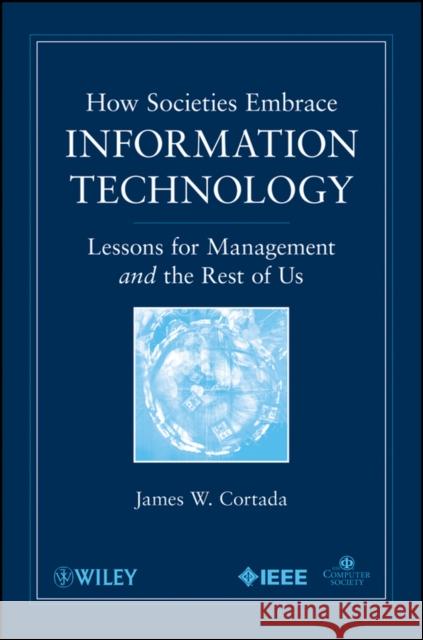
How Societies Embrace Information Technology: Lessons for Management and the Rest of Us

ISBN-13: 9780470534984 / Angielski / Miękka / 2009 / 288 str.
James W. Cortada
How Societies Embrace Information Technology: Lessons for Management and the Rest of Us Cortada, James W. 9780470534984 IEEE Computer Society Press - książkaWidoczna okładka, to zdjęcie poglądowe, a rzeczywista szata graficzna może różnić się od prezentowanej.

How Societies Embrace Information Technology: Lessons for Management and the Rest of Us

ISBN-13: 9780470534984 / Angielski / Miękka / 2009 / 288 str.

James W. Cortada
cena 173,61
(netto: 165,34 VAT:  5%)

Najniższa cena z 30 dni: 172,54
Termin realizacji zamówienia:
ok. 30 dni roboczych
Dostawa w 2026 r.

Darmowa dostawa!

This book discusses how computers are shaping contemporary society, with a tight focus on the role of corporations and governments. It is aimed at government policymakers interested in economic development and at private-sector managers who routinely make decisions to acquire and use information technology, now a worldwide expenditure of over $2 trillion annually. The book will also interest a wide range of academics concerned with the sociology, history, economics, and the effects of IT on contemporary society, ands to the general trade market.


Kategorie:
Informatyka
Kategorie BISAC:
Computers > Information Technology
Computers > Social Aspects
Wydawca:
IEEE Computer Society Press
Język:
Angielski
ISBN-13:
9780470534984
Rok wydania:
2009
Ilość stron:
288
Waga:
0.47 kg
Wymiary:
23.11 x 15.49 x 2.03
Oprawa:
Miękka
Wolumenów:
01
Dodatkowe informacje:
Bibliografia
Wydanie ilustrowane

"The book also presents ideas for educators. For instance, to encourage IT people to be naturally proactive, courses should leverage the creation and production of IT projects with solving society′s problems. With some effort, this can be done in computers and society courses, at both the general and professional education level. At the professional level, IT workers with such experience and training will more likely choose to work on problem areas. At the general level, people with such experience will act politically, to vocalize the expectation that the IT industry will create products that help society." ( Computing Reviews, September 2010)

Preface ix

1 Introducing the Big Picture 1

The presence of information technology 2

Megatrends at work 7

How societies use technology to shape their world 19

Notes and references 24

2 How Computers Spread Around the World So Fast 27

Definitions and issues 29

Government–supported/private–sector–driven model 33

National champion model 37

Asian private–sector–driven model 39

Planned economy: public policy model 42

Industry–driven model 48

Corporate diffusion model 51

Application diffusion model 57

Technology–standards diffusion model 59

Patterns, practices, and implications 61

Notes and references 65

3 How Governments Leverage Information Technologies to Improve Their National Economies 71

A brief historical reminder 72

Economic development in a connected world: the big picture 75

How governments use it to encourage economic development 77

What motivates governments to encourage their citizens and economies to use it? 91

Emerging strategies for the most advanced nations compared to rapidly advancing nations 96

The special role of labor 100

Global recession, twenty–first century style 102

Implications for public officials 106

Implications for business leaders 112

The way forward with policies and practices 116

Notes and references 122

4 How Managers and Officials Decide What Technology to Use 129

The kinds of decisions made by managers 131

Types of justification 135

Managerial practices 138

Some possible less effective practices 143

Special role of industries 149

Path forward 151

Notes and references 157

5 Adding Up the Results So Far: Do We Now Live in the Information Age? 163

Why naming an age is a useful exercise and so hard to do 165

What historians can teach us about the process 167

The case against the information age 173

Can we coexist on the frontiers of a new age? 175

Lessons for management and a strategy for change 179

Concluding thoughts 185

Notes and references 186

6 An Expanding Role for Scientists and Engineers 191

The rise of the computer scientist 192

Their role in modern society 197

When scientists and tech folk take things into their own hands 201

When technologists go green 204

Their future world 212

An old role made new 218

Notes and references 220

7 Looking Down the Road into the Twenty–First Century 223

How to see the future of an industry 225

Knowing how information technology is evolving 233

A strategy for managers and public officials 240

Special role of the computer science community 247

The ultimate trend 252

Notes and references 254

8 Keeping Up: Bibliographic Essay 257

The big picture 257

How computers spread around the world 259

Governments leveraging it for economic development 260

Deciding what technology to use 261

Living in the information age 263

Role of technologists 264

Into the twenty–first century 265

Index 267

James W. Cortada has thirty–five years of experience with IBM in various sales, consulting, and managerial positions related to information technology and its use. In particular, he helped design and deploy processes related to employee skills development, including IBM′s worldwide consultant skills certification process, sales processes, and specialized training seminars. An author of more than fifty books on the management and history of information technology, Cortada′s work has been translated into Spanish, Portuguese, Chinese, and Korean.

A truly global look at IT deployment and use

No technology in our history has spread as fast as computers and their digital technologies. In How Societies Embrace Information Technology, leading IT authority James Cortada examines how this phenomenon is shaping contemporary society, focusing on the role of corporations and governments. By revealing what history teaches about the adoption of information technologies, Cortada prepares business and government leaders to spot new trends and successfully develop strategies for implementing and managing emerging technologies. Coverage includes:

  • Summaries of the new best practices based on sixty years of historical experience, all research–based

  • How technology spread so quickly and completely across the globe

  • A look at the decision–making process of managers in the private and public sectors

  • How governments leverage IT to improve their national economies

  • An examination of the "Information Age" and whether it actually exists

  • The most current developments in IT

This authoritative reference is ideal for government policymakers and for private–sector managers who routinely make decisions to acquire and use information technology. It is also aimed at academics concerned with the sociology, history, economics, and the effects of IT on contemporary society, as well as business schools and engineering and IT professionals serving in management roles or interested in the managerial/user history of IT.

The author′s royalties on sales of this book will be donated to the IEEE Computer Society′s Educational Activities Board.

Cortada, James W. James W. Cortada is the author of a dozen books on... więcej >


Udostępnij

Facebook - konto krainaksiazek.pl


Opinie o Krainaksiazek.pl na Opineo.pl

Partner Mybenefit

Krainaksiazek.pl w programie rzetelna firma Krainaksiaze.pl - płatności przez paypal

Czytaj nas na:

Facebook - krainaksiazek.pl
  • książki na zamówienie
  • granty
  • książka na prezent
  • kontakt
  • pomoc
  • opinie
  • regulamin
  • polityka prywatności

Zobacz:

  • Księgarnia czeska

  • Wydawnictwo Książkowe Klimaty

1997-2025 DolnySlask.com Agencja Internetowa

© 1997-2022 krainaksiazek.pl
     
KONTAKT | REGULAMIN | POLITYKA PRYWATNOŚCI | USTAWIENIA PRYWATNOŚCI
Zobacz: Księgarnia Czeska | Wydawnictwo Książkowe Klimaty | Mapa strony | Lista autorów
KrainaKsiazek.PL - Księgarnia Internetowa

Polityka prywatnosci - link
Krainaksiazek.pl - płatnośc Przelewy24
Przechowalnia Przechowalnia






