• Wyszukiwanie zaawansowane
  • Kategorie
  • Kategorie BISAC
  • Książki na zamówienie
  • Promocje
  • Granty
  • Książka na prezent
  • Opinie
  • Pomoc
  • Załóż konto
  • Zaloguj się

How Ficta Follow Fiction: A Syncretistic Account of Fictional Entities » książka


zaloguj się | załóż konto
Logo Krainaksiazek.pl

koszyk

konto

szukaj
topmenu
Księgarnia internetowa
Szukaj
Książki na zamówienie
Promocje
Granty
Książka na prezent
Moje konto
Pomoc
 
 
Wyszukiwanie zaawansowane
Pusty koszyk
Bezpłatna dostawa dla zamówień powyżej 20 złBezpłatna dostawa dla zamówień powyżej 20 zł

Kategorie główne

• Nauka
 [2946912]
• Literatura piękna
 [1852311]

  więcej...
• Turystyka
 [71421]
• Informatyka
 [150889]
• Komiksy
 [35717]
• Encyklopedie
 [23177]
• Dziecięca
 [617324]
• Hobby
 [138808]
• AudioBooki
 [1671]
• Literatura faktu
 [228371]
• Muzyka CD
 [400]
• Słowniki
 [2841]
• Inne
 [445428]
• Kalendarze
 [1545]
• Podręczniki
 [166819]
• Poradniki
 [480180]
• Religia
 [510412]
• Czasopisma
 [525]
• Sport
 [61271]
• Sztuka
 [242929]
• CD, DVD, Video
 [3371]
• Technologie
 [219258]
• Zdrowie
 [100961]
• Książkowe Klimaty
 [124]
• Zabawki
 [2341]
• Puzzle, gry
 [3766]
• Literatura w języku ukraińskim
 [255]
• Art. papiernicze i szkolne
 [7810]
Kategorie szczegółowe BISAC

How Ficta Follow Fiction: A Syncretistic Account of Fictional Entities

ISBN-13: 9789048172955 / Angielski / Miękka / 2010 / 280 str.
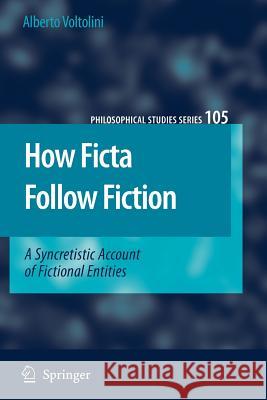
Alberto Voltolini
How Ficta Follow Fiction: A Syncretistic Account of Fictional Entities Alberto Voltolini 9789048172955 Springer - książkaWidoczna okładka, to zdjęcie poglądowe, a rzeczywista szata graficzna może różnić się od prezentowanej.

How Ficta Follow Fiction: A Syncretistic Account of Fictional Entities

ISBN-13: 9789048172955 / Angielski / Miękka / 2010 / 280 str.

Alberto Voltolini
cena 603,81
(netto: 575,06 VAT:  5%)

Najniższa cena z 30 dni: 578,30
Termin realizacji zamówienia:
ok. 22 dni roboczych
Bez gwarancji dostawy przed świętami

Darmowa dostawa!

This book is devoted to fictional entities or, to be more precise, fictional entities as they emerge from the literary process of storytelling. They encompass the great immortal figures in human literature Don Quixote, Faust, Sherlock Holmes and so on as well as the protagonists of single novels such as Anna Karenina, Emma Woodhouse and Emma Bovary and even the unknown characters in the oral tradition of storytelling developed by small communities of people for their own entertainment. This is p- sumably how Achilles, Penelope and Ulysses originated. We must also include among these figures mythological characters such as Apollo, Odin and Zeus, regardless of the fact that they were originally thought to be supernatural beings rather than fictional individuals. The subject of this book is not new, which may make it seem less appe- ing to a prospective reader just one more book on fictional entities. Yet I would argue that this apparent drawback is fundamental to the purpose of the book, which is to present a syncretistic doctrine of fictional entities. In other words, it is a theory which firmly acknowledges that the various other theories already developed on this subject have great merits. Their main flaw, however, is not that they are wrong but, rather, that they are inc- plete. Accordingly, they are not to be put to one side; instead, they need to be integrated into a single theory that aims both to maintain their positive results and to overcome their defects."


Kategorie:
Nauka, Filozofia
Kategorie BISAC:
Philosophy > Reference
Philosophy > Metaphysics
Wydawca:
Springer
Seria wydawnicza:
Philosophical Studies Series
Język:
Angielski
ISBN-13:
9789048172955
Rok wydania:
2010
Dostępne języki:
Angielski
Ilość stron:
280
Waga:
0.49 kg
Wymiary:
24.024.0 x 16.0
Oprawa:
Miękka
Wolumenów:
01
Dodatkowe informacje:
Bibliografia
Glosariusz/słownik

From the reviews:

"In How Ficta Follow Fiction,Voltolini presents us with one of the richest and most ingenious defences of fictional entities (ficta)." (Eros Corazza, Carleton University, in dialectica Vol. 63 (1), 2009, book symposium on A. Voltolini's How Ficta Follow Fiction)

"The book will be very useful for all those who want to have a guided overview of the state of the art in the field, and very helpful if used as a main text for an introductory graduate course." (Manuel García-Carpintero, University of Barcelona, in dialectica Vol. 63 (1), 2009, book symposium on A. Voltolini's How Ficta Follow Fiction)

"This book is extremely well written and the issues clearly set before the reader. I happily recommend this work. It provides genuine food for thought and is a must for students, specialists and anyone interested in fiction, the philosophy of language, or metaphysics." (Alex Orenstein, Queens College and the Graduate Center, CUNY, in The Review of Metaphysics)

"[...] one can't but be impressed by the quality of Voltolini's contribution to the question he sets out to discuss in the book." (Frederick Kroon, University of Auckland, in Australasian Journal of Philosophy)

"[How Ficta Follow Fiction] is a paradigm of excellent philosophy and sets a new benchmark in the discussion of fictional objects." (Anthony Everett, Bristol University, in Notre Dame Philosophical Reviews)

"How Ficta Follow Fiction is divided in three parts. ... Voltolini's work is an outstanding contribution to the debate in the ontology of fiction, and a must reading for any interested in the topic. More than this, it is a deep and original book, filled with bold positions and provocative insights on a host of different themes in metaphysics and the philosophy of language." (Giuseppe Spolaore, in Epistemologia Vol. 30 (2), 2007)

The Metaphysical Side.- The Committal Theories (I).- The Committal Theories (II).- The Syncretistic Theory.- Further Developments of the Syncretistic Theory.- The Semantic Side.- The Noncommittal Theories.- The Syncretistic Theory.- The Ontological Side.- An Ontological Argument in Favor of the Existence of Fictional Entities.

This book presents a novel theory of fictional entities which is syncretistic insofar as it integrates the work of previous authors. It puts forward a new metaphysical conception of the nature of these entities, according to which a fictional entity is a compound entity built up from both a make-believe theoretical element and a set theoretical element. The fictional entity is constructed by imagining the existence of an individual with certain properties and adding a set-theoretical element consisting of the set of properties corresponding to the properties of the imagined entity.

Moreover, the book advances a new combined semantic and ontological defence of the existence of fictional entities.


Udostępnij

Facebook - konto krainaksiazek.pl


Opinie o Krainaksiazek.pl na Opineo.pl

Partner Mybenefit

Krainaksiazek.pl w programie rzetelna firma Krainaksiaze.pl - płatności przez paypal

Czytaj nas na:

Facebook - krainaksiazek.pl
  • książki na zamówienie
  • granty
  • książka na prezent
  • kontakt
  • pomoc
  • opinie
  • regulamin
  • polityka prywatności

Zobacz:

  • Księgarnia czeska

  • Wydawnictwo Książkowe Klimaty

1997-2025 DolnySlask.com Agencja Internetowa

© 1997-2022 krainaksiazek.pl
     
KONTAKT | REGULAMIN | POLITYKA PRYWATNOŚCI | USTAWIENIA PRYWATNOŚCI
Zobacz: Księgarnia Czeska | Wydawnictwo Książkowe Klimaty | Mapa strony | Lista autorów
KrainaKsiazek.PL - Księgarnia Internetowa

Polityka prywatnosci - link
Krainaksiazek.pl - płatnośc Przelewy24
Przechowalnia Przechowalnia






