How Did They Do It: Ancient Engineering Wonders » książka





How Did They Do It: Ancient Engineering Wonders
ISBN-13: 9783565253777 / Angielski / Miękka / 184 str.
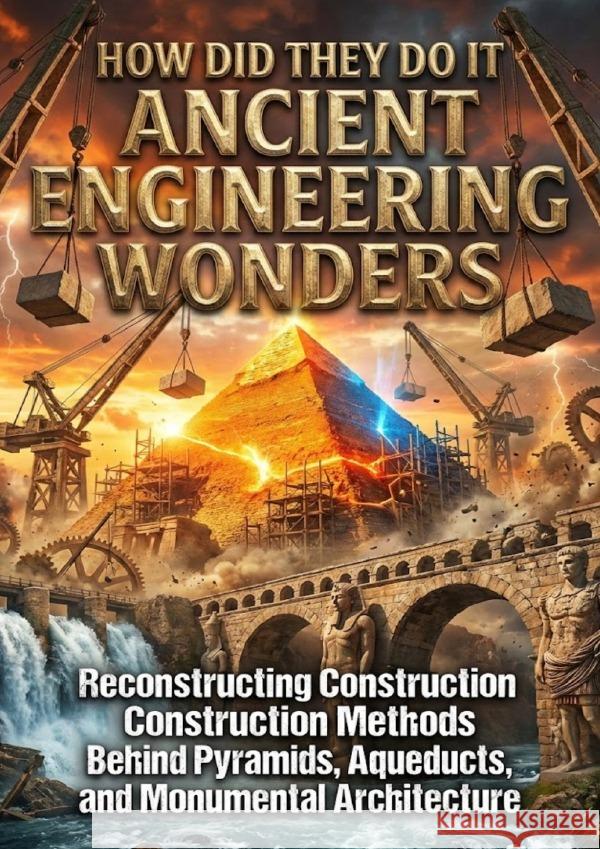
Ancient civilizations achieved engineering feats that challenge modern understanding, constructing monuments whose precision and scale seem impossible given available technology. This exploration examines how societies without modern machinery built structures like Egyptian pyramids, Roman aqueducts, Inca stonework, and Gothic cathedrals, using archaeological evidence, experimental archaeology, and engineering analysis to reconstruct plausible construction methods.Through systematic investigation of tool marks, quarry sites, ramp remains, and structural analysis, discover the practical solutions ancient engineers developed. Examine how Egyptians moved multi-ton blocks using sledges, rollers, and coordinated labor rather than mythical lost technologies. Witness how Roman engineers calculated aqueduct gradients with remarkable precision using simple leveling instruments. Understand how Inca masons achieved earthquake-resistant masonry through empirical experimentation rather than theoretical knowledge.Archaeological evidence-abandoned quarries, unfinished monuments, construction debris, tool assemblages-provides concrete information about techniques. Experimental archaeology, where researchers attempt reconstruction using period-appropriate methods, tests hypotheses about feasibility and labor requirements. Engineering analysis reveals how ancient builders understood structural principles through practice even without formal mathematical theory.Each case study examines specific monuments and their construction contexts. Understand how social organization enabled massive labor mobilization, how religious or political motivations justified enormous resource investment, how incremental technological improvements accumulated across generations, and how practical problem-solving rather than mysterious lost knowledge explains achievements that continue inspiring wonder.
Egyptian pyramid builders left evidence everywhere-abandoned quarries, copper tools, construction ramps, worker villages.




Czytaj nas na:
KrainaKsiazek.PL - Księgarnia Internetowa


