How Cosmologists Explain the Universe to Friends and Family » książka





How Cosmologists Explain the Universe to Friends and Family
ISBN-13: 9783030327330 / Angielski / Miękka / 2019 / 258 str.
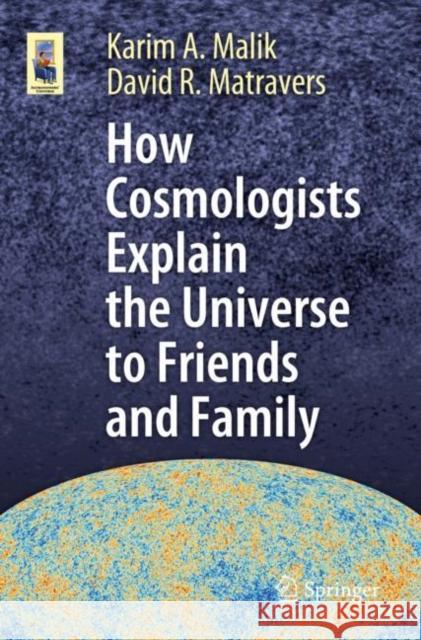
How Cosmologists Explain the Universe to Friends and Family
ISBN-13: 9783030327330 / Angielski / Miękka / 2019 / 258 str.
(netto: 114,98 VAT: 5%)
Najniższa cena z 30 dni: 115,63
ok. 22 dni roboczych.
Darmowa dostawa!
In particular, the book discusses the formation of the Cosmic Microwave Background and the evolution of large scale structures in the universe, the distribution of galaxies and clusters of galaxies on very large distance scales.Following a brief introduction, the authors describe the scientific method - how science is done.
Wydanie ilustrowane
Preface 1
1 Introduction
1.1 The cosmological standard model . . . . . . . . . . . . . . . . . . . . 4
2 How does Science work? 13
2.1 Introduction . . . . . . . . . . . . . . . . . . . . . . . . . . . . . . . . 13
2.2 Scientific Method . . . . . . . . . . . . . . . . . . . . . . . . . . . . . 14
2.3 Examples . . . . . . . . . . . . . . . . . . . . . . . . . . . . . . . . . 17
2.3.1 Colour dependent gravity . . . . . . . . . . . . . . . . . . . . 17
2.3.2 The Perihelion Shift in the Orbit of Mercury . . . . . . . . . . 19
2.4 Changing Theory in Physics . . . . . . . . . . . . . . . . . . . . . . . 20
2.5 Cosmological Simulations . . . . . . . . . . . . . . . . . . . . . . . . . 22
3 What observations do we use? 273.1 Introduction . . . . . . . . . . . . . . . . . . . . . . . . . . . . . . . . 27
3.2 What reaches us . . . . . . . . . . . . . . . . . . . . . . . . . . . . . . 27
3.2.1 Different forms of light – electromagnetic radiation . . . . . . 28
3.2.2 Non-standard messengers – neutrinos and gravitational waves 31
3.3 How Observations are Made . . . . . . . . . . . . . . . . . . . . . . . 34
3.3.1 Optical Telescopes . . . . . . . . . . . . . . . . . . . . . . . . 35
3.3.2 Radio Telescopes . . . . . . . 1 . . . . . . . . . . . . . . . . . . 38
3.3.3 Microwave Telescopes . . . . . . . . . . . . . . . . . . . . . . . 40
3.3.4 Examples for non-standard messenger observatories . . . . . . 43
3.4 Future experiments and telescopes . . . . . . . . . . . . . . . . . . . . 47
3.5 Closing Comments . . . . . . . . . . . . . . . . . . . . . . . . . . . . 48
4 What can we actually observe and measure? 51
4.1 Things we can observe directly . . . . . . . . . . . . . . . . . . . . . . 51
4.2 Distance units in cosmology . . . . . . . . . . . . . . . . . . . . . . . 55
4.3 How to measure distances in cosmology . . . . . . . . . . . . . . . . . 56
4.4 Putting things into perspective . . . . . . . . . . . . . . . . . . . . . 624.5 A very large map: the distribution of galaxies . . . . . . . . . . . . . 63
4.6 An even larger map: the Cosmic Microwave Background . . . . . . . 66
5 What is the universe made of? 69
5.1 Familiar types of matter, what is normal stuff made off? . . . . . . . 69
5.1.1 Matter on the smallest scales – up to atoms . . . . . . . . . . 69
5.1.2 Larger scales – particles interacting . . . . . . . . . . . . . . . 71
5.1.3 Radiation . . . . . . . . . . . . . . . . . . . . . . . . . . . . . 74
5.2 Where does normal matter come from . . . . . . . . . . . . . . . . . 76
5.3 Exotic Stuff . . . . . . . . . . . . . . . . . . . . . . . . . . . . . . . . 79
5.3.1 Dark Matter - Cold and Hot . . . . . . . . . . . . . . . . . . . 79
5.3.2 Dark matter candidates – WIMPS, MACHOS, and Black Holes 82
5.4 Weird stuff . . . . . . . . . . . . . . . . . . . . . . . . . . . . . . . . . 82
5.4.1 The cosmological constant – _ . . . . . . . . . . . . . . . . . . 83
5.4.2 Quintessence . . . . . . . . . . . . . . . . . . . . . . . . . . . 84
5.5 Cutouts and leftovers . . . . . . . . . . . . . . . . . . . . . . . . . . . 856 What underlying Forces shape the Universe? 87
6.1 The four forces . . . . . . . . . . . . . . . . . . . . . . . . . . . . . . 87
6.2 What are forces and fields . . . . . . . . . . . . . . . . . . . . . . . . 88
6.3 Forces in Newtonian mechanics . . . 1 . . . . . . . . . . . . . . . . . . 88
6.4 Electromagnetism . . . . . . . . . . . . . . . . . . . . . . . . . . . . . 90
6.5 The other forces . . . . . . . . . . . . . . . . . . . . . . . . . . . . . . 92
6.6 Gravity . . . . . . . . . . . . . . . . . . . . . . . . . . . . . . . . . . 92
6.6.1 Newtonian Gravity . . . . . . . . . . . . . . . . . . . . . . . . 92
6.6.2 Einstein’s Theory of Gravity . . . . . . . . . . . . . . . . . . . 93
6.7 Introduction . . . . . . . . . . . . . . . . . . . . . . . . . . . . . . . . 95
6.8 From previous – cutouts . . . . . . . . . . . . . . . . . . . . . . . . . 95
6.9 Was old chapter6: The Underlying Forces Shaping the Universe . . . 98
6.10 Cut from Chapter 1 . . . . . . . . . . . . . . . . . . . . . . . . . . . . 99
7 Going Back in Time? 105
7.1 Matter Domination . . . . . . . . . . . . . . . . . . . . . . . . . . . . 105
7.1.1 Early Star Formation and Re-ionisation . . . . . . . . . . . . . 106
7.1.2 Dark Ages . . . . . . . . . . . . . . . . . . . . . . . . . . . . . 106
7.1.3 Equality . . . . . . . . . . . . . . . . . . . . . . . . . . . . . . 1077.2 Radiation Domination . . . . . . . . . . . . . . . . . . . . . . . . . . 107
7.2.1 CMB Formation . . . . . . . . . . . . . . . . . . . . . . . . . 107
7.2.2 BB Nucleo-synthesis . . . . . . . . . . . . . . . . . . . . . . . 107
8 How did it all begin? 109
8.1 Inflation . . . . . . . . . . . . . . . . . . . . . . . . . . . . . . . . . . 109
8.2 Four Cosmological Observations Explained by Inflation . . . . . . . . 112
8.2.1 The Four Observations . . . . . . . . . . . . . . . . . . . . . . 112
8.2.2 Digression . . . . . . . . . . . . . . . . . . . . . . . . . . . . . 114
8.2.3 Inflation - provides the answers . . . . . . . . . . . . . . . . . 114
8.3 Evidence for and against Inflation . . . . . . . . . . . . . . . . . . . . 1159 What was before Inflation? 117
9.0.1 Ideas that have been proposed for the pre-inflation period that
have come out of theoretical work . . . . . . . . . . . . . . . . 117
9.0.2 Location - pre-inflation . . . . . 1 . . . . . . . . . . . . . . . . . 118
10 What next? 119
11 Appendix 123
11.1 Numbers large and small . . . . . . . . . . . . . . . . . . . . . . . . . 123
11.2 Units . . . . . . . . . . . . . . . . . . . . . . . . . . . . . . . . . . . . 123
11.3 Equations . . . . . . . . . . . . . . . . . . . . . . . . . . . . . . . . . . 124
11.3.1 “Normal” equations . . . . . . . . . . . . . . . . . . . . . . . . 124
11.3.2 Differential equations . . . . . . . . . . . . . . . . . . . . . . . 124
12 Glossary 125
David R. Matravers is Professor Emeritus at the Institute of Cosmology and Gravitation at the University of Portsmouth.
Karim A. Malik is Director of the Astronomy Unit at Queen Mary University of London and Reader in Theoretical Cosmology.
Their research interests include all aspects of theoretical cosmology, such as the physics of the early universe, the formation of the Cosmic Microwave Background and the large scale structure of the universe.
This fascinating book provides an accessible and up-to-date overview of modern cosmology. In particular, the book discusses the formation of the Cosmic Microwave Background and the evolution of large scale structures in the universe, the distribution of galaxies and clusters of galaxies on very large distance scales.
Following a brief introduction, the authors describe the scientific method – how science is done. They then discuss observational cosmology, the instruments and what observations can be done with them, and what is derived from those observations. After discussing the constituents of the universe, including dark matter and dark energy, the authors provide an outline of the forces that shape the universe, with particular emphasis on gravitation. Following this, the reader is taken on a journey in time from the present day back to the very beginning of the universe, a period called inflation, which sets the initial conditions for the subsequent evolution of the universe. The book ends with a brief chapter on what lies beyond.
Written by two experts, the book is aimed at the interested lay-person with little or no physics background, but an interest in modern cosmology.




Czytaj nas na:
1997-2026 DolnySlask.com Agencja Internetowa
KrainaKsiazek.PL - Księgarnia Internetowa


