• Wyszukiwanie zaawansowane
  • Kategorie
  • Kategorie BISAC
  • Książki na zamówienie
  • Promocje
  • Granty
  • Książka na prezent
  • Opinie
  • Pomoc
  • Załóż konto
  • Zaloguj się

Homogeneous Catalysis: Understanding the Art » książka

zaloguj się | załóż konto
Logo Krainaksiazek.pl

koszyk

konto

szukaj
topmenu
Księgarnia internetowa
Szukaj
Książki na zamówienie
Promocje
Granty
Książka na prezent
Moje konto
Pomoc
 
 
Wyszukiwanie zaawansowane
Pusty koszyk
Bezpłatna dostawa dla zamówień powyżej 20 złBezpłatna dostawa dla zamówień powyżej 20 zł

Kategorie główne

• Nauka
 [2946600]
• Literatura piękna
 [1856966]

  więcej...
• Turystyka
 [72221]
• Informatyka
 [151456]
• Komiksy
 [35826]
• Encyklopedie
 [23190]
• Dziecięca
 [619653]
• Hobby
 [140543]
• AudioBooki
 [1577]
• Literatura faktu
 [228355]
• Muzyka CD
 [410]
• Słowniki
 [2874]
• Inne
 [445822]
• Kalendarze
 [1744]
• Podręczniki
 [167141]
• Poradniki
 [482898]
• Religia
 [510455]
• Czasopisma
 [526]
• Sport
 [61590]
• Sztuka
 [243598]
• CD, DVD, Video
 [3423]
• Technologie
 [219201]
• Zdrowie
 [101638]
• Książkowe Klimaty
 [124]
• Zabawki
 [2473]
• Puzzle, gry
 [3898]
• Literatura w języku ukraińskim
 [254]
• Art. papiernicze i szkolne
 [8170]
Kategorie szczegółowe BISAC

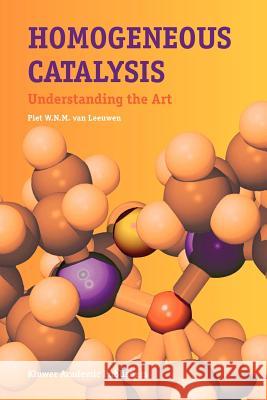
Homogeneous Catalysis: Understanding the Art

ISBN-13: 9781402031762 / Angielski / Miękka / 2005 / 408 str.
Piet W. Van Leeuwen
Homogeneous Catalysis: Understanding the Art Van Leeuwen, Piet W. N. M. 9781402031762 Springer - książkaWidoczna okładka, to zdjęcie poglądowe, a rzeczywista szata graficzna może różnić się od prezentowanej.

Homogeneous Catalysis: Understanding the Art

ISBN-13: 9781402031762 / Angielski / Miękka / 2005 / 408 str.

Piet W. Van Leeuwen
cena 887,69 zł
(netto: 845,42 VAT:  5%)

Najniższa cena z 30 dni: 771,08 zł
Termin realizacji zamówienia:
ok. 22 dni roboczych
Bez gwarancji dostawy przed świętami

Darmowa dostawa!
inne wydania

Homogeneous catalysis using transition metal complexes is an area of research that has grown enormously in recent years. Many amazing catalytic discoveries have been reported by researchers both in industry and in academia.

Homogeneous Catalysis: Understanding the Art gives real insight in the many new and old reactions of importance. It is based on the author's extensive experience in both teaching and industrial practice. Each chapter starts with the basic knowledge and ends with up-to-date concepts.

The focus of this book is on concepts, but many key industrial processes and applications that are important in the laboratory synthesis of organic chemicals are used as examples. The full range of topics is covered, such as fine chemicals, bulk chemicals, polymers, high-tech polymers, pharmaceuticals, but also important techniques and reaction types among other aspects. For a few reactions the process schemes, environmental concerns and safety aspects are included, to encourage catalyst researchers to think about these topics at an early stage of their projects and to communicate with chemical engineers, customers and the end-users.

Homogeneous Catalysis: Understanding the Art provides a balanced overview of the vibrant and growing field of homogeneous catalysis to chemists trained in different disciplines and to graduate students who take catalysis as a main or secondary subject. This book is an invaluable tool for practising professionals and academia, including:

  • Chemists in academia with an inorganic, organic, catalytic, etc., chemistry background;
  • PhD-students in these fields, and advanced students;
  • Research Institutes of Petrochemical industries;
  • Fine-chemical industries;
  • Pharmaceutical industries;
  • Chemical Laboratories of Universities for Organic, Industrial, Inorganic, and Physical Chemistry, and Catalysis;
  • Graduate schools.
Currently, there is no other book available that gives insight into so many reactions of importance, while the field of homogeneous catalysis is becoming more and more important to organic chemists, industrial chemists, and academia. This book will provide this background to chemists trained in a different discipline and graduate and masters students who take catalysis as a main or secondary topic.

Kategorie:
Technologie
Kategorie BISAC:
Science > Chemistry - Industrial & Technical
Science > Chemia - Nieorganiczna
Science > Chemia - Organiczna
Wydawca:
Springer
Język:
Angielski
ISBN-13:
9781402031762
Rok wydania:
2005
Wydanie:
2004
Ilość stron:
408
Waga:
0.69 kg
Wymiary:
24.03 x 16.15 x 2.06
Oprawa:
Miękka
Wolumenów:
01
Dodatkowe informacje:
Wydanie ilustrowane

From the reviews:

"Van Leeuwen deals with the subject thoroughly and logically. He helps to pull together all the various strands, with very accessible sections ... . this is an extremely interesting and useful book for a wide range of practising chemists. It is both an excellent place to start and, for those closer to the subject ... it is a good reference book." (Duncan MacQuarrie, Chemistry World, Vol. 2 (9), September, 2005) 

Preface.- Acknowledgements.- 1: Introduction.- 1.1. Catalysis. 1.2. Homogeneous catalysis. 1.3. Historical notes on homogeneous catalysis. 1.4. Characterization of the catalyst. 1.5. Ligand effects. 1.6. Ligands according to donor atoms. 2: Elementary Steps.- 2.1. Creation of a 'vacant' site and co-ordination of the substrate. 2.2. Insertion versus migration. 2.3. beta-Elimination and de-insertion. 2.4. Oxidative addition. 2.5. Reductive elimination. 2.6. alpha-Elimination reactions. 2.7. Cycloaddition reactions involving a metal. 2.8. Activation of a substrate toward nucleophilic attack. 2.9. sigma-Bond metathesis. 2.10. Dihydrogen activation. 2.11. Activation by Lewis acids. 2.12. Carbon-to-phosphorus bond breaking. 2.13. Carbon-to-sulfur bond breaking. 2.14. Radical reactions. 3: Kinetics.- 3.1. Introduction. 3.2. Two-step reaction scheme. 3.3. Simplifications of the rate equation and the rete-determining step. 3.4. Determining the selectivity. 3.5. Collection of rate data. 3.6. Irregularities in catalysis. 4: Hydrogenation.- 4.1. Wilkinson's catalyst. 4.2. Asymmetric hydrogenation. 4.3. Overview of chiral bidentate ligands. 4.4. Monodentate ligands. 4.5. Non-linear effects. 4.6. Hydrogen transfer. 5: Isomerisation.- 5.1. Hydrogen shifts. 5.2. Asymmetric isomerisation. 5.3. Oxygen shifts. 6: Carbonylation of Methanol and Methyl Acetate.- 6.1. Acetic acid. 6.2. Process scheme Monsanto process. 6.3. Acetic anhydride. 6.4. Other systems. 7: Cobalt Catalysed Hydroformylation.- 7.1. Introduction. 7.2. Thermodynamics. 7.3. Cobalt catalysed processes. 7.4. Cobalt catalysed processes for higher alkenes. 7.5. Kuhlmann cobalt hydroformylation process. 7.6. Phosphine modified cobalt catalysts: the shell process. 7.7. Cobalt carbonyl phosphine complexes. 8: Rhodium Catalysed Hydroformylation.- 8.1. Introduction. 8.2. Triphenylphosphine asthe ligand. 8.3. Diphosphines as ligands. 8.4. Phosphites as ligands. 8.5. Diphosphites. 8.6. Asymmetric hydroformylation. 9: Alkene Oligomerisation.- 9.1. Introduction. 9.2. Shell-higher-olefins-process. 9.3. Ethene trimerisation. 9.4. Other alkene oligomerisation reactions. 10: Propene Polymerisation.- 10.1. Introduction to polymer chemistry. 10.2. Mechanistic investigations. 10.3. Analysis by 13CNMR spectroscopy. 10.4. The development of metallocene catalysts. 10.5. Agostic interactions. 10.6. The effect of dihydrogen. 10.7. Further work using propene and other alkenes. 10.8. Non-metallocene ETM catalysts. 10.9. Late transition metal catalysts. 11: Hydrocyanation of Alkenes.- 11.1. The adiponitrile process. 11.2. Ligand effects. 12: Palladium Catalysed Carbonylations of Alkenes.- 12.1. Introduction. 12.2. Polyketone. 12.3. Ligand effects on chain length. 12.4. Ethene/propene/CO terpolymers. 12.5. Stereoselective styrene/CO terpolymers. 13: Palladium Catalysed Cross-Coupling Reactions.- 13.1. Introduction. 13.2. Allylic reaction. 13.3. Heck reaction. 13.4. Cross-coupling reaction. 13.5. Heteroatom-carbon bond formation. 13.6. Suzuki reaction. 14: Epoxidation.- 14.1. Ethene and propene oxide. 14.2. Asymmetric epoxidation. 14.3. Asymmetric hydroxilation of alkenes with osmium tetroxide. 14.4. Jacobsen asymmetric ring-opening of epoxides. 14.5. Epoxidations with dioxygen. 15: Oxydation with Dioxygen.- 15.1. Introduction. 15.2. The Wacker reaction. 15.3. Wacker type reactions. 15.4. Terephthalic acid. 15.5. PPO. 16: Alkene Metathesis.- 16.1. Introduction. 16.2. The mechanism. 16.3. Reaction overview. 16.4. Well-characterised tungsten and molybdenum catalysts. 16.5. Ruthenium catalysts. 16.6. Stereochemistry. 16.7. Catalyst decomposition. 16.8. Alkynes. 16.9. Industrial applications. 17: Enantioselective Cyclopropanation.-

A practical guide filled with techniques and examples of classroom-based assessments

Homogeneous catalysis using transition metal complexes is an area of research that has grown enormously in recent years. Many amazing catalytic discoveries have been reported by researchers both in industry and in academia.

Homogeneous Catalysis: Understanding the Art gives real insight into the many new and old reactions of importance. It is based on the author’s extensive experience in both teaching and industrial practice. Each chapter starts with the basic knowledge and ends with up-to-date concepts.

The focus of this book is on concepts, but many key industrial processes and applications that are important in the laboratory synthesis of organic chemicals are used as examples. The full range of topics is covered, such as fine chemicals, bulk chemicals, polymers, high-tech polymers, pharmaceuticals, but also important techniques and reaction types among other aspects. For a few reactions the process schemes, environmental concerns and safety aspects are included, to encourage catalyst researchers to think about these topics at an early stage of their projects and to communicate with chemical engineers, customers and the end-users. There is no other book available that gives insight into so many reactions of importance. Such a resource is critical as the field of homogeneous catalysis becomes ever more central to the interests of organic chemists and academia. This book provides the background for chemists trained in different disciplines and for graduate and masters students who take catalysis as a main or secondary topic.

Piet W.N.M. van Leeuwen is Professor of Homogeneous Catalysis, University of Amsterdam, The Netherlands.


Udostępnij

Facebook - konto krainaksiazek.pl


Opinie o Krainaksiazek.pl na Opineo.pl

Partner Mybenefit

Krainaksiazek.pl w programie rzetelna firma Krainaksiaze.pl - płatności przez paypal

Czytaj nas na:

Facebook - krainaksiazek.pl
  • książki na zamówienie
  • granty
  • książka na prezent
  • kontakt
  • pomoc
  • opinie
  • regulamin
  • polityka prywatności

Zobacz:

  • Księgarnia czeska

  • Wydawnictwo Książkowe Klimaty

1997-2025 DolnySlask.com Agencja Internetowa

© 1997-2022 krainaksiazek.pl
     
KONTAKT | REGULAMIN | POLITYKA PRYWATNOŚCI | USTAWIENIA PRYWATNOŚCI
Zobacz: Księgarnia Czeska | Wydawnictwo Książkowe Klimaty | Mapa strony | Lista autorów
KrainaKsiazek.PL - Księgarnia Internetowa

Polityka prywatnosci - link
Krainaksiazek.pl - płatnośc Przelewy24
Przechowalnia Przechowalnia








