• Wyszukiwanie zaawansowane
  • Kategorie
  • Kategorie BISAC
  • Książki na zamówienie
  • Promocje
  • Granty
  • Książka na prezent
  • Opinie
  • Pomoc
  • Załóż konto
  • Zaloguj się

History of Rotating Machinery Dynamics » książka


zaloguj się | załóż konto
Logo Krainaksiazek.pl

koszyk

konto

szukaj
topmenu
Księgarnia internetowa
Szukaj
Książki na zamówienie
Promocje
Granty
Książka na prezent
Moje konto
Pomoc
 
 
Wyszukiwanie zaawansowane
Pusty koszyk
Bezpłatna dostawa dla zamówień powyżej 20 złBezpłatna dostawa dla zamówień powyżej 20 zł

Kategorie główne

• Nauka
 [2944077]
• Literatura piękna
 [1814251]

  więcej...
• Turystyka
 [70679]
• Informatyka
 [151074]
• Komiksy
 [35590]
• Encyklopedie
 [23169]
• Dziecięca
 [611005]
• Hobby
 [136031]
• AudioBooki
 [1718]
• Literatura faktu
 [225599]
• Muzyka CD
 [379]
• Słowniki
 [2916]
• Inne
 [443741]
• Kalendarze
 [1187]
• Podręczniki
 [166463]
• Poradniki
 [469211]
• Religia
 [506887]
• Czasopisma
 [481]
• Sport
 [61343]
• Sztuka
 [242115]
• CD, DVD, Video
 [3348]
• Technologie
 [219293]
• Zdrowie
 [98602]
• Książkowe Klimaty
 [124]
• Zabawki
 [2385]
• Puzzle, gry
 [3504]
• Literatura w języku ukraińskim
 [260]
• Art. papiernicze i szkolne
 [7151]
Kategorie szczegółowe BISAC

History of Rotating Machinery Dynamics

ISBN-13: 9789400735330 / Angielski / Miękka / 2014 / 358 str.
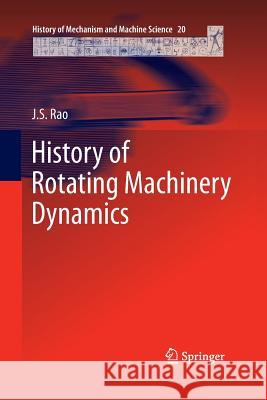
J.S. Rao
History of Rotating Machinery Dynamics J.S. Rao 9789400735330 Springer - książkaWidoczna okładka, to zdjęcie poglądowe, a rzeczywista szata graficzna może różnić się od prezentowanej.

History of Rotating Machinery Dynamics

ISBN-13: 9789400735330 / Angielski / Miękka / 2014 / 358 str.

J.S. Rao
cena 402,53
(netto: 383,36 VAT:  5%)

Najniższa cena z 30 dni: 385,52
Termin realizacji zamówienia:
ok. 22 dni roboczych.

Darmowa dostawa!

This book starts with the invention of the wheel nearly 5000 years ago, and via Archimedes, Aristotle and Hero describes the first practical applications such as water wheels and grinding wheels, pushing on to more rigorous scientific research by inquiring minds such as Leonardo da Vinci and Copernicus in later ages. Newton and Leibniz followed, and beam structures received maximum attention three centuries ago. As focus shifts and related disciplines such as mathematics and physics also develop, slowly turbomachines and rotor and blade dynamics as we know the subject now take shape. While the book traces the events leading to Laval and Parsons Turbines, the emphasis is on rotor and blade dynamics aspects that pushed these turbines to their limits in the last century. The tabular and graphical methods developed in the pre-computer era have taken different form in the last fifty years through finite element methods. The methods evolved in the last century are discussed in detail to help modern day designers and researchers. This book will be useful to young researchers and engineers in industry and educational institutions engaged in rotor and blade dynamics work in understanding the past and the present developments and what is expected in future. Faculty and industry engineers can benefit from this broad perspective history in formulating their developmental plans.


Kategorie:
Technologie
Kategorie BISAC:
Technology & Engineering > Mechanical
Technology & Engineering > Machinery
Science > Mechanics - Solids
Wydawca:
Springer
Seria wydawnicza:
History of Mechanism and Machine Science
Język:
Angielski
ISBN-13:
9789400735330
Rok wydania:
2014
Dostępne języki:
Angielski
Wydanie:
2011
Ilość stron:
358
Waga:
0.58 kg
Wymiary:
23.523.5 x 15.5
Oprawa:
Miękka
Wolumenów:
01
Dodatkowe informacje:
Wydanie ilustrowane

Foreword; Preface; Acknowledgements; 1 Beginnings of the Wheel; References; 2 Science before the Medieval Period; References; 3 Water Wheels; References; 4 Wind Mills; References; 5 Renaissance and Scientific Revolution; References; 6 Renaissance Engineers; References; 7 Industrial Revolution; References; 8 Turbomachines; References  9 Fundamentals of Elasticity; References; 10 Energy Methods; 10.1 Euler—Lagrange Equations; 10.2 Lagrange Method; 10.3 Rayleigh's Energy Approach; 10.4 Ritz Method; 10.5 Lagrange Method for Vibration Problems; 10.6 Galerkin Method; 10.7 Hamilton's Principle; 10.8 Complementary Virtual Work; 10.9 Hellinger—Reissner Variational Principle; 10.10 Hu—Washizu Principle; 10.11Different Theories of Torsion of Rods; 10.11.1 Coulomb (1784) Elementary Theory , see Timoshenko and Goodier [42] for Circular Rods; 10.11.2St. Venant (1853) Theory, see Todhunter [43] and Timoshenko and Goodier [42] for Circular Rods; 10.11.3 Love's (1944) Theory; 10.11.4 Timoshenko (1945) — Gere's (1954) Theory; 10.11.5  Reissner (1952) and Lo—Goulard's (1955) Theory; 10.11.6 Barr's (1962) Theory; 10.11.7 Refined Theory by Rao (1974); References; 11 20th Century Graphical and Numerical Methods; 11.1 Stodola—Viannello (Rayleigh's Maximum Energy) Method in Graphical Form; 11.2 Stodola—Viannello Iterative Method in Tabular Form; 11.3 Dunkerley's Method; 11.4 Proof of the Dunkerley Formula by Blaess [1]; 11.5 Hahn's Proof Using Matrix Algebra [3]; 11.6 Holzer Method for Torsional Vibration; 11.7 The Myklestad Method [7,8]; 11.8 Prohl's Method [9]; References; 12 Matrix Methods; 12.1 Torsional Vibration Systems; 12.2 Far-Coupled Systems; 12.3 Gräffe's Method of Successive Approximations; 12.4 Matrix Iteration Method; 12.5 Method of Priebs [10]; 12.6 The Holzer Method (Close Coupled Systems) in Transfer Matrix Form; 12.7 Myklestad—Thomson (1949, 1953) — Prohl Methods in Transfer Matrix Form for Far-Coupled Systems; 12.8 A Brief Note on Computers and Evolution; References; 13 Finite Element Methods; 13.1 Beam Finite Element; 13.2 Tocher Triangular Plate Element (1962); 13.3 Shell Element; 13.4 Interface Damping through Finite Element Analysis; 13.5 Illustration of Turbomachine Blade Analysis using Commercial Codes; References; 14 Rotor Dynamics Methods; 14.1 De Laval Model; 14.2 Jeffcott Rotor Analysis; 14.3 Fluid Film Bearings; 14.4 Oil Film Instabilities; 14.5 Quality Factor; 14.6 Gyroscopic Effects; 14.7 Internal Friction, Hysteresis; 14.8 Shafts with Gravity and Variable Elasticity; 14.9 Misalignment; 14.10 Bowed Rotors; 14.11  Variable Inertia; 14.12  Seals and Instabilities; 14.13  Steam Whirl; 14.14 Cracked Shafts; References; 15 Transfer Matrix Methods; 15.1 Torsional Vibration due to Short Circuit of Generators; 15.2 Transfer Matrix Method for Lateral Vibrations of Rotors; 15.3 Twin Spool Rotor Analysis; References;16 Finite Element Methods for Rotor Dynamics; 16.1 Nelson's Beam Element; 16.2 Geared Rotors and Chaos; 16.3 Solid Rotors; 16.4 Two Spool Aircraft Engine [21]; 16.5 Cryogenic Pump Rotor Dynamic Analysis; References; 17 Bladed Disks; 17.1 Armstrong's Analysis for Tuned Systems; 17.2 Ewins' Analysis; 17.3 Mistuning Arrangement; 17.4 Damping; 17.5 Micro-Slip Damping (Fretting Fatigue);  References; 18 Lifing; 18.1 High Cycle Fatigue (HCF) Life Estimation; 18.2 Low Cycle Fatigue (Strain Based Life Estimation); 18.3 Linear Elastic Fracture Mechanics; References; 19 Optimization; 19.1 Shape Optimization; 19.2 Weight Optimization; References; 20 Concluding Remarks; Index.

This book starts with the invention of the wheel nearly 5000 years ago, and via Archimedes, Aristotle and Hero describes the first practical applications such as water wheels and grinding wheels, pushing on to more rigorous scientific research by inquiring minds such as Leonardo da Vinci and Copernicus in later ages. Newton and Leibniz followed, and beam structures received maximum attention three centuries ago.  As focus shifts and related disciplines such as mathematics and physics also develop, slowly turbomachines and rotor and blade dynamics as we know the subject now take shape.


While the book traces the events leading to Laval and Parsons Turbines, the emphasis is on rotor and blade dynamics aspects that pushed these turbines to their limits in the last century. The tabular and graphical methods developed in the pre-computer era have taken different form in the last fifty years through finite element methods. The methods evolved in the last century are discussed in detail to help modern day designers and researchers.


This book will be useful to young researchers and engineers in industry and educational institutions engaged in rotor and blade dynamics work in understanding the past and the present developments and what is expected in future. Faculty and industry engineers can benefit from this broad perspective history in formulating their developmental plans.

Indexed in the Book Citation Index– Science (BKCI-S)


Udostępnij

Facebook - konto krainaksiazek.pl


Opinie o Krainaksiazek.pl na Opineo.pl

Partner Mybenefit

Krainaksiazek.pl w programie rzetelna firma Krainaksiaze.pl - płatności przez paypal

Czytaj nas na:

Facebook - krainaksiazek.pl
  • książki na zamówienie
  • granty
  • książka na prezent
  • kontakt
  • pomoc
  • opinie
  • regulamin
  • polityka prywatności

Zobacz:

  • Księgarnia czeska

  • Wydawnictwo Książkowe Klimaty

1997-2026 DolnySlask.com Agencja Internetowa

© 1997-2022 krainaksiazek.pl
     
KONTAKT | REGULAMIN | POLITYKA PRYWATNOŚCI | USTAWIENIA PRYWATNOŚCI
Zobacz: Księgarnia Czeska | Wydawnictwo Książkowe Klimaty | Mapa strony | Lista autorów
KrainaKsiazek.PL - Księgarnia Internetowa

Polityka prywatnosci - link
Krainaksiazek.pl - płatnośc Przelewy24
Przechowalnia Przechowalnia




