• Wyszukiwanie zaawansowane
  • Kategorie
  • Kategorie BISAC
  • Książki na zamówienie
  • Promocje
  • Granty
  • Książka na prezent
  • Opinie
  • Pomoc
  • Załóż konto
  • Zaloguj się

High-Performance Algorithms for Mass Spectrometry-Based Omics » książka


zaloguj się | załóż konto
Logo Krainaksiazek.pl

koszyk

konto

szukaj
topmenu
Księgarnia internetowa
Szukaj
Książki na zamówienie
Promocje
Granty
Książka na prezent
Moje konto
Pomoc
 
 
Wyszukiwanie zaawansowane
Pusty koszyk
Bezpłatna dostawa dla zamówień powyżej 20 złBezpłatna dostawa dla zamówień powyżej 20 zł

Kategorie główne

• Nauka
 [2949965]
• Literatura piękna
 [1857847]

  więcej...
• Turystyka
 [70818]
• Informatyka
 [151303]
• Komiksy
 [35733]
• Encyklopedie
 [23180]
• Dziecięca
 [617748]
• Hobby
 [139972]
• AudioBooki
 [1650]
• Literatura faktu
 [228361]
• Muzyka CD
 [398]
• Słowniki
 [2862]
• Inne
 [444732]
• Kalendarze
 [1620]
• Podręczniki
 [167233]
• Poradniki
 [482388]
• Religia
 [509867]
• Czasopisma
 [533]
• Sport
 [61361]
• Sztuka
 [243125]
• CD, DVD, Video
 [3451]
• Technologie
 [219309]
• Zdrowie
 [101347]
• Książkowe Klimaty
 [123]
• Zabawki
 [2362]
• Puzzle, gry
 [3791]
• Literatura w języku ukraińskim
 [253]
• Art. papiernicze i szkolne
 [7933]
Kategorie szczegółowe BISAC

High-Performance Algorithms for Mass Spectrometry-Based Omics

ISBN-13: 9783031019593 / Angielski / Twarda / 2022
Fahad Saeed;Muhammad Haseeb
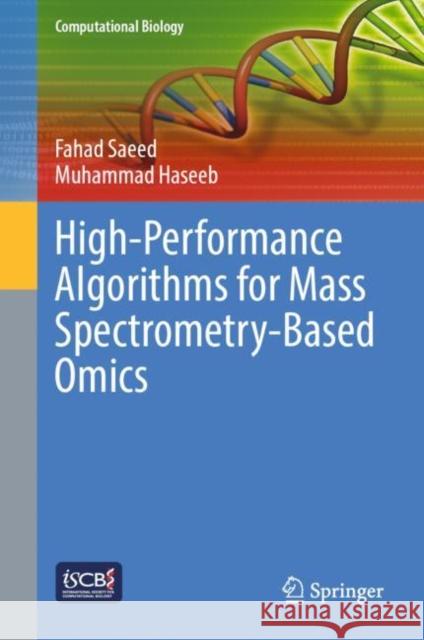
High-Performance Algorithms for Mass Spectrometry-Based Omics Fahad Saeed, Muhammad Haseeb 9783031019593 Springer International Publishing - książkaWidoczna okładka, to zdjęcie poglądowe, a rzeczywista szata graficzna może różnić się od prezentowanej.

High-Performance Algorithms for Mass Spectrometry-Based Omics

ISBN-13: 9783031019593 / Angielski / Twarda / 2022

Fahad Saeed;Muhammad Haseeb
cena 403,47 zł
(netto: 384,26 VAT:  5%)

Najniższa cena z 30 dni: 385,52 zł
Termin realizacji zamówienia:
ok. 22 dni roboczych
Bez gwarancji dostawy przed świętami

Darmowa dostawa!
inne wydania

To date, processing of high-throughput Mass Spectrometry (MS) data is accomplished using serial algorithms. Developing new methods to process MS data is an active area of research but there is no single strategy that focuses on scalability of MS based methods.  Mass spectrometry is a diverse and versatile technology for high-throughput functional characterization of proteins, small molecules and metabolites in complex biological mixtures. In the recent years the technology has rapidly evolved and is now capable of generating increasingly large (multiple tera-bytes per experiment) and complex (multiple species/microbiome/high-dimensional) data sets. This rapid advance in MS instrumentation  must  be matched by equally fast and rapid evolution of scalable methods developed for analysis of these complex data sets. Ideally, the new methods should leverage the rich heterogeneous computational resources available in a ubiquitous fashion in the form of  multicore,  manycore,  CPU-GPU, CPU-FPGA, and IntelPhi architectures.  The absence of these high-performance computing algorithms now hinders scientific advancements for mass spectrometry research. In this book we illustrate the need for high-performance computing algorithms for MS based proteomics, and proteogenomics and showcase our progress in developing these high-performance algorithms.


Kategorie:
Nauka, Biologia i przyroda
Kategorie BISAC:
Science > Life Sciences - Anatomy & Physiology
Science > Spectroscopy & Spectrum Analysis
Computers > Computer Science
Wydawca:
Springer International Publishing
Seria wydawnicza:
Computational Biology
Język:
Angielski
ISBN-13:
9783031019593
Rok wydania:
2022
Waga:
0.40 kg
Wymiary:
23.5 x 15.5
Oprawa:
Twarda

1. Need for High Performance Computing for Big MS Data.- 2. Introduction to Mass Spectrometry Data.- 3. A Review of Spectral Pre-processing.- 4. MS-REDUCE: An Ultra Data Reduction Algorithm.- 5. GPU-DAEMON: A Template to Support Development of GPU Algorithms.- 6. GPU-ArraySort: GPU Based Array Sorting Technique.- 7. G-MSR: A GPU Based Dimensionality Reduction Algorithm.- 8. Simulator Driven Proteomics.- 9. Future and Proposed Work.

Fahad Saeed is an Associate Professor with Tenure in the School of Computing and Information Sciences at Florida International University (FIU), Miami FL and is the director of Saeed Lab which is a parallel computing and data science group at FIU. Dr. Saeed’s research interests are at the intersection of machine-learning, high performance computing and real-world applications, especially in computational biology.

Dr. Saeed has published 80+ peer-reviewed research papers in leading peer-reviewed proceedings, and journals, 1 Book Chapter, and edited 4 Conference Proceedings, and 3 special issue journals. His research is supported by highly competitive grants mainly from National Science Foundation (NSF) and National Institutes of Health (NIH). He has secured over US$ 2.7 Million (directly went to his lab) in external research funds as principal investigator and about US$ 2.61 Million overall since 2015. He was awarded the NSF Research Initiation Initiative (CRII) Award bestowed to young and promising scientists in the first two years of their tenure-track position. Most recently he was awarded the NSF Faculty Early Career Development (CAREER) Award which is NSF’s most prestigious award in support of early-career faculty who have the potential to serve as academic role models in research and education. His research has been supported by WMU, NVIDIA, Intel/Altera, National Science Foundation (NSF) and National Institutes of Health (NIH).

Prior to joining FIU, Prof. Saeed was a tenure-track Assistant Professor in the Department of Electrical & Computer Engineering and Department of Computer Science at Western Michigan University (WMU), Kalamazoo Michigan since Jan 2014. He was tenured and promoted to the rank of Associate Professor at WMU in August 2018. Dr. Saeed was a Post-Doctoral Fellow and then a Research Fellow in the Systems Biology Center at National Institutes of Health (NIH), Bethesda MD from Aug 2010 to June 2011 and from June 2011 to January 2014 respectively. He received his PhD in the Department of Electrical and Computer Engineering, University of Illinois at Chicago (UIC) in 2010. He has served as a visiting scientist in world-renowned prestigious institutions such as Department of Bio-Systems Science and Engineering (D-BSSE), ETH Zürich, Swiss Institute of Bioinformatics (SIB) and  Epithelial Systems Biology Laboratory (ESBL) at National Institutes of Health (NIH) Bethesda, Maryland.

Dr. Saeed has established a global profile as an Independent Researcher and leader in the field, and has been sought as panelist at the National and International funding agencies. These include serving as panelist at various study sections at National Institutes of Health (NIH), National Science Foundation (NSF), NIH NIDDK, National Nuclear Security Administration (NNSA) Department of Energy (DOE), and as International expert and panelist for Croatian Science Foundation (CSF), University of Queensland Diamantina Institute in Australia, Belgium Fund for Scientific Research (F.R.S.– FNRS), and Natural Sciences & Engineering Research Council of Canada. He has served as the program co-chair of the Bioinformatics and Computational Biology (BICoB) Conference and IEEE International Conference on Bioinformatics and Biomedicine (IEEE BIBM). He is also a founding chair of IEEE Workshop on HPC solutions to Big Data Computational Biology (IEEE HPC-BCB). He also serves on the editorial board of Springer Journal of Network Modeling Analysis in Health Informatics and Bioinformatics, on the Editorial board of Journal of the American Society of Nephrology, and as Associate Editor for Frontiers of Digital Public Health (specialty section of Frontiersin Public Health, Frontiers in ICT and Frontiers in Computer Science). He has served on numerous IEEE/ACM program committees and is peer-reviewer for more than a two dozen journals.

Dr. Saeed is a Senior Member of ACM and also a Senior Member of IEEE. His honors include ThinkSwiss Fellowship (2007,2008), NIH Postdoctoral Fellowship Award (2010), Fellows Award for Research Excellence (FARE) at NIH (2012), NSF CRII Award (2015), WMU Outstanding New Researcher Award (2016), WMU Distinguished Research and Creative Scholarship Award (2018), NSF CAREER Award (2017), and FIU SCIS Excellence in Applied Research Award (2020).

Muhammad Haseeb is a Ph.D. candidate at the Knight Foundation School of Computing and Information Sciences (KFSCIS), Florida International University (FIU). He is also a Graduate Research Assistant at the KFSCIS, FIU working under the supervision of Dr. Fahad Saeed. His doctoral research focuses on the design of novel high performance computing algorithms and techniques for scalable acceleration of computational proteomics analyses on supercomputing machines. Haseeb has worked as an Application Performance Intern at the National Energy Research and Scientific Computing Center (NERSC) at the Lawrence Berkeley National Lab (LBNL) where he developed software for platform-independent (+ Python) GPU-acceleration of ADEPT ExaBiome sequence alignment kernels. He also contributed towards the development of a modular HPC application instrumentation and performance analysis software called Timemory. Prior to his PhD career, Haseeb worked as a senior software engineer at Mentor Graphics Corporation where he contributed towards the development of tracing, profiling, system partitioning, remote processor life cycle management, and inter-processor communication software for MEMF and Nucleus OS.

To date, processing of high-throughput Mass Spectrometry (MS) data is accomplished using serial algorithms. Developing new methods to process MS data is an active area of research but there is no single strategy that focuses on scalability of MS based methods.


Mass spectrometry is a diverse and versatile technology for high-throughput functional characterization of proteins, small molecules and metabolites in complex biological mixtures. In the recent years the technology has rapidly evolved and is now capable of generating increasingly large (multiple tera-bytes per experiment) and complex (multiple species/microbiome/high-dimensional) data sets. This rapid advance in MS instrumentation  must  be matched by equally fast and rapid evolution of scalable methods developed for analysis of these complex data sets. Ideally, the new methods should leverage the rich heterogeneous computational resources available in a ubiquitous fashion in the form of  multicore,  manycore,  CPU-GPU, CPU-FPGA, and IntelPhi architectures.


The absence of these high-performance computing algorithms now hinders scientific advancements for mass spectrometry research. In this book we illustrate the need for high-performance computing algorithms for MS based proteomics, and proteogenomics and showcase our progress in developing these high-performance algorithms.




Udostępnij

Facebook - konto krainaksiazek.pl


Opinie o Krainaksiazek.pl na Opineo.pl

Partner Mybenefit

Krainaksiazek.pl w programie rzetelna firma Krainaksiaze.pl - płatności przez paypal

Czytaj nas na:

Facebook - krainaksiazek.pl
  • książki na zamówienie
  • granty
  • książka na prezent
  • kontakt
  • pomoc
  • opinie
  • regulamin
  • polityka prywatności

Zobacz:

  • Księgarnia czeska

  • Wydawnictwo Książkowe Klimaty

1997-2025 DolnySlask.com Agencja Internetowa

© 1997-2022 krainaksiazek.pl
     
KONTAKT | REGULAMIN | POLITYKA PRYWATNOŚCI | USTAWIENIA PRYWATNOŚCI
Zobacz: Księgarnia Czeska | Wydawnictwo Książkowe Klimaty | Mapa strony | Lista autorów
KrainaKsiazek.PL - Księgarnia Internetowa

Polityka prywatnosci - link
Krainaksiazek.pl - płatnośc Przelewy24
Przechowalnia Przechowalnia



