• Wyszukiwanie zaawansowane
  • Kategorie
  • Kategorie BISAC
  • Książki na zamówienie
  • Promocje
  • Granty
  • Książka na prezent
  • Opinie
  • Pomoc
  • Załóż konto
  • Zaloguj się

Herbicide Residue Research in India » książka

zaloguj się | załóż konto
Logo Krainaksiazek.pl

koszyk

konto

szukaj
topmenu
Księgarnia internetowa
Szukaj
Książki na zamówienie
Promocje
Granty
Książka na prezent
Moje konto
Pomoc
 
 
Wyszukiwanie zaawansowane
Pusty koszyk
Bezpłatna dostawa dla zamówień powyżej 20 złBezpłatna dostawa dla zamówień powyżej 20 zł

Kategorie główne

• Nauka
 [2946600]
• Literatura piękna
 [1856966]

  więcej...
• Turystyka
 [72221]
• Informatyka
 [151456]
• Komiksy
 [35826]
• Encyklopedie
 [23190]
• Dziecięca
 [619653]
• Hobby
 [140543]
• AudioBooki
 [1577]
• Literatura faktu
 [228355]
• Muzyka CD
 [410]
• Słowniki
 [2874]
• Inne
 [445822]
• Kalendarze
 [1744]
• Podręczniki
 [167141]
• Poradniki
 [482898]
• Religia
 [510455]
• Czasopisma
 [526]
• Sport
 [61590]
• Sztuka
 [243598]
• CD, DVD, Video
 [3423]
• Technologie
 [219201]
• Zdrowie
 [101638]
• Książkowe Klimaty
 [124]
• Zabawki
 [2473]
• Puzzle, gry
 [3898]
• Literatura w języku ukraińskim
 [254]
• Art. papiernicze i szkolne
 [8170]
Kategorie szczegółowe BISAC

Herbicide Residue Research in India

ISBN-13: 9789811345531 / Angielski / Miękka / 2019 / 465 str.
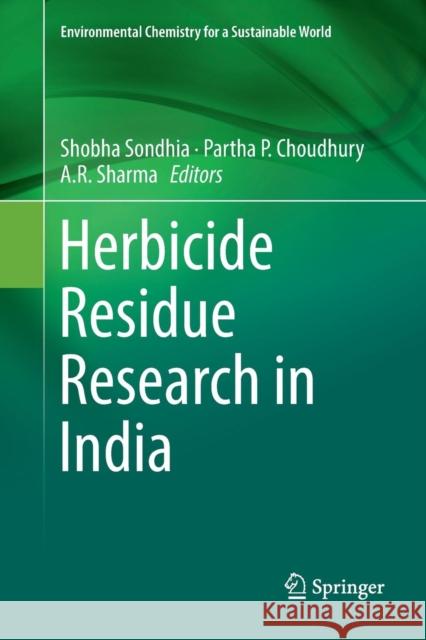
Shobha Sondhia; Partha P. Choudhury; A. R. Sharma
Herbicide Residue Research in India Shobha Sondhia Partha P. Choudhury A. R. Sharma 9789811345531 Springer - książkaWidoczna okładka, to zdjęcie poglądowe, a rzeczywista szata graficzna może różnić się od prezentowanej.

Herbicide Residue Research in India

ISBN-13: 9789811345531 / Angielski / Miękka / 2019 / 465 str.

Shobha Sondhia; Partha P. Choudhury; A. R. Sharma
cena 605,23 zł
(netto: 576,41 VAT:  5%)

Najniższa cena z 30 dni: 578,30 zł
Termin realizacji zamówienia:
ok. 22 dni roboczych
Bez gwarancji dostawy przed świętami

Darmowa dostawa!
Kategorie:
Nauka, Biologia i przyroda
Kategorie BISAC:
Technology & Engineering > Agriculture - General
Science > Life Sciences - Ecology
Science > Environmental Science (see also Chemistry - Environmental)
Wydawca:
Springer
Seria wydawnicza:
Environmental Chemistry for a Sustainable World
Język:
Angielski
ISBN-13:
9789811345531
Rok wydania:
2019
Wydanie:
Softcover Repri
Numer serii:
000466533
Ilość stron:
465
Waga:
0.67 kg
Wymiary:
23.39 x 15.6 x 2.46
Oprawa:
Miękka
Wolumenów:
01
Dodatkowe informacje:
Wydanie ilustrowane


1. Fate and Persistence of Herbicide Residue in India.

2. Environmental fate of herbicides use in Central India.
3. Environmental Aspects of Herbicides Use under Intensive Agriculture Scenario of Punjab.
4. Herbicide Residues in Rice–Rice System in Kerala.
5. Dissipation and Impact of Herbicides on Soil Properties in Tamil Nadu.
6. Herbicide Residues under Potato-Pearlmillet Cropping System in Western India.
7. Herbicide Residues in Rice–Wheat Cropping System in Uttarakhand.
8. Herbicide Residues in Rice-Wheat System under North-Western Mid-Hills Conditions.
9. Persistence of Herbicides under Pearlmillet–Wheat Cropping System in Madhya Pradesh.
10. Persistence of Herbicides in Rice–Maize Cropping System in Andhra Pradesh.
11. Herbicide Residues in Rice–Based Cropping Systems in Assam.
12. Herbicide Residues under Rice–Wheat System in Eastern Uttar Pradesh.
13. Status of herbicide residues in Haryana.
14. Herbicides Residues Research in Alluvial Soils of North-Western India.
15. Transformation of Herbicides in The Environment.
16. Good Agricultural Practices and Monitoring of Herbicide Residues in India.

Dr. Shobha Sondhia is a Senior Scientist at the Directorate of Weed Research, Jabalpur. With a career spanning over about two decades, she has vast research and teaching experience of in the field of the environmental impact of herbicides. Dr Sondhia has received numerous awards, fellowships, and recognition from national and international agencies. She has published 75 research papers, given more than 100 presentations on national and international platforms and authored two reference books entitled ‘Herbicides’ and ‘Herbicide Residue Analysis’. She has also organized five national training programs.

Dr. Partha P. Choudhury started his professional career in the pesticide industry after completing his doctoral studies at the Indian Agricultural Research Institute, New Delhi. He served in various capacities, from research scientist to research manager. He was an Assistant and Associate Professor in Uttar Banga Krishi Viswavidyalaya, Coochbehar, West Bengal, where he taught Pesticide Chemistry. Dr. Choudhury served ICAR-Directorate of Weed Research in the capacity of Senior Scientist and Principal Scientist. Here, his research work mainly focused on herbicide degradation in the environment and monitoring of their residues and mitigation. Dr. Choudhury is currently a Principal Scientist in the Food Safety Referral Laboratory at ICAR-Indian Institute of Horticultural Research, Bangalore. His industrial and academic experience spans over 25 years, and he has been involved in various aspects of pesticide science. He has published several research articles, patents, book chapters, and a book.

Dr. A.R. Sharma served as Director, ICAR-Directorate of Weed Research, Jabalpur, Madhya Pradesh, India from 2012-17, and made monumental contributions in the field of weed science and conservation agriculture. He has an outstanding record of academic and scientific contributions, and received several awards and recognitions from the ICAR, NAAS, ISCA, IARI, FAI, ISA and others. He has given new directions to agronomic research and education particularly in the field of weed science. He is currently Principal Scientist (Agronomy), ICAR-Indian Agricultural Research Institute, New Delhi.


Herbicides constitute about 60% of the total pesticides consumed globally. In India, the use of herbicides started initially in tea gardens and picked up in the 1970s, when the high-yielding varieties of rice and wheat were introduced. Presently, 67 herbicides are registered in the country for controlling weeds in crops including cereals, pulses, oilseeds, fibre and tuber crops, and also in the non-crop situations. These chemicals are becoming increasingly popular because of their efficiency and relatively low cost compared with manual or mechanical weeding operations. The contribution of herbicide to total pesticide use, which was only 10-15% during the first decade of the 21st century, has now increased to about 25% with an annual growth rate of 15-20%, which is much higher than insecticides and fungicides. Though the application of herbicides is minimizing yield loss to a great extent, their residues in the food chain and surface and groundwater create some environmental nuisance particularly to non-target organisms.   

Research on pesticide residues in India was started during 1970s, when such chemicals were introduced on a greater scale along with high-yielding variety seeds, irrigation and chemical fertilizers for increasing food production. However, the herbicide residue research was not given much emphasis until 1990s. The Indian Council of Agricultural Research initiated a national level programme known as All India Coordinated Research Project on Weed Management through the NRC-Weed Science as the main centre along with some centers of ICAR Institutes and state agricultural universities. Over the last two decades, adequate information was generated on estimation, degradation and mitigation of herbicide residues, which were documented in annual reports, bulletins, monographs and scientific articles. However, there was no consolidated compilation of all the available information providing a critical analysis of herbicide residues. Accordingly, an effort has been made in the publication to compile the available information on herbicide residues in India. This is the first report of its kind which presents the findings of herbicide residues and their interactions in the biotic and abiotic environment. There are 16 chapters contributed by the leading herbicide residue scientists, each describing the present status of herbicide use, crops and cropping systems, monitoring, degradation and mitigation, followed by conclusions and future lines of work.

This book will be useful to the weed scientists in general and herbicide residue chemists in particular, besides the policy makers, students and all those concerned with the agricultural production in the country.


Udostępnij

Facebook - konto krainaksiazek.pl


Opinie o Krainaksiazek.pl na Opineo.pl

Partner Mybenefit

Krainaksiazek.pl w programie rzetelna firma Krainaksiaze.pl - płatności przez paypal

Czytaj nas na:

Facebook - krainaksiazek.pl
  • książki na zamówienie
  • granty
  • książka na prezent
  • kontakt
  • pomoc
  • opinie
  • regulamin
  • polityka prywatności

Zobacz:

  • Księgarnia czeska

  • Wydawnictwo Książkowe Klimaty

1997-2025 DolnySlask.com Agencja Internetowa

© 1997-2022 krainaksiazek.pl
     
KONTAKT | REGULAMIN | POLITYKA PRYWATNOŚCI | USTAWIENIA PRYWATNOŚCI
Zobacz: Księgarnia Czeska | Wydawnictwo Książkowe Klimaty | Mapa strony | Lista autorów
KrainaKsiazek.PL - Księgarnia Internetowa

Polityka prywatnosci - link
Krainaksiazek.pl - płatnośc Przelewy24
Przechowalnia Przechowalnia






