Hepatic Circulation » książka





Hepatic Circulation
ISBN-13: 9781615040094 / Angielski / Miękka / 2009 / 174 str.
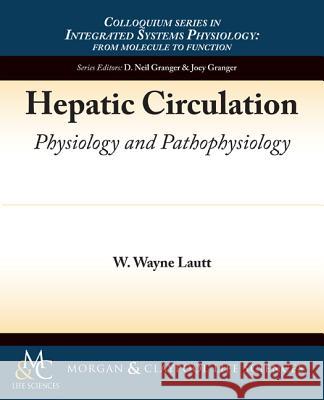
The Hepatic circulation is unique among vascular beds. The most obvious unique features include the dual vascular supply; the mechanism of intrinsic regulation of the hepatic artery (the hepatic arterial buffer response); the fact that portal blood flow, supplying two thirds of liver blood flow, is not controlled directly by the liver; the fact that 20% of the cardiac output rushes through the most vascularized organ in the body, driven by a pressure gradient of only a few millimeters of mercury; the extremely distensible capacitance and venous resistance sites; the unidirectional acinar blood flow that regulates parenchymal cell metabolic specialization; and the high concentration of macrophagic (Kupffer) cells filtering the blood. The liver is the only organ reported to have regional blood flow monitored by the autonomic nervous system. This mechanism, when dysfunctional, accounts for the hepatorenal syndrome and offers a mechanistic therapeutic target to treat this syndrome. The trigger for liver regeneration is dependent on hepatic hemodynamics so that chronic liver blood flow regulates liver cell mass. In severe liver disease, the whole body circulation is reorganized, by forming portacaval shunts, to accommodate the increased intrahepatic venous resistance. These shunts protect the venous drainage of the splanchnic organs but lead to loss of major regulatory roles of the liver. The development of knowledge of the hepatic vasculature is presented from a historical perspective with modern concepts summarized based on the perspective of the author's four decades of devotion to this most marvelous of organs. Table of Contents: Acknowledgements / Historical Perspectives / Overview / Fluid Exchange / Capacitance / Resistance in the Hepatic Artery / Resistance in the Venous System / Fetal and Neonatal Hepatic Circulation / In Vivo Pharmacodynamic Approaches / Nitric Oxide / Adenosine / Hepatic Nerves / Hepatic Circulation and Toxicology / Hepatorenal Syndrome / Integrative Hepatic Response to Hemorrhage / Blood Flow Regulation of Hepatocyte Proliferation / Multiple Mechanisms Maintaining a Constant Hepatic Blood Flow to Liver Mass Ratio / Pathopharmacology and Repurposing Drugs as a Research Strategy / References
The Hepatic circulation is unique among vascular beds. The most obvious unique features include the dual vascular supply; the mechanism of intrinsic regulation of the hepatic artery (the hepatic arterial buffer response); the fact that portal blood flow, supplying two thirds of liver blood flow, is not controlled directly by the liver; the fact that 20% of the cardiac output rushes through the most vascularized organ in the body, driven by a pressure gradient of only a few millimeters of mercury; the extremely distensible capacitance and venous resistance sites; the unidirectional acinar blood flow that regulates parenchymal cell metabolic specialization; and the high concentration of macrophagic (Kupffer) cells filtering the blood. The liver is the only organ reported to have regional blood flow monitored by the autonomic nervous system. This mechanism, when dysfunctional, accounts for the hepatorenal syndrome and offers a mechanistic therapeutic target to treat this syndrome. The trigger for liver regeneration is dependent on hepatic hemodynamics so that chronic liver blood flow regulates liver cell mass. In severe liver disease, the whole body circulation is reorganized, by forming portacaval shunts, to accommodate the increased intrahepatic venous resistance. These shunts protect the venous drainage of the splanchnic organs but lead to loss of major regulatory roles of the liver. The development of knowledge of the hepatic vasculature is presented from a historical perspective with modern concepts summarized based on the perspective of the authors four decades of devotion to this most marvelous of organs.Table of Contents: Acknowledgements / Historical Perspectives / Overview / Fluid Exchange / Capacitance / Resistance in the Hepatic Artery / Resistance in the Venous System / Fetal and Neonatal Hepatic Circulation / In Vivo Pharmacodynamic Approaches / Nitric Oxide / Adenosine / Hepatic Nerves / Hepatic Circulation and Toxicology / Hepatorenal Syndrome / Integrative Hepatic Response to Hemorrhage / Blood Flow Regulation of Hepatocyte Proliferation / Multiple Mechanisms Maintaining a Constant Hepatic Blood Flow to Liver Mass Ratio / Pathopharmacology and Repurposing Drugs as a Research Strategy / References




Czytaj nas na:
KrainaKsiazek.PL - Księgarnia Internetowa


