• Wyszukiwanie zaawansowane
  • Kategorie
  • Kategorie BISAC
  • Książki na zamówienie
  • Promocje
  • Granty
  • Książka na prezent
  • Opinie
  • Pomoc
  • Załóż konto
  • Zaloguj się

Heavy Metal Toxicity: Environmental Concerns, Remediation and Opportunities » książka


zaloguj się | załóż konto
Logo Krainaksiazek.pl

koszyk

konto

szukaj
topmenu
Księgarnia internetowa
Szukaj
Książki na zamówienie
Promocje
Granty
Książka na prezent
Moje konto
Pomoc
 
 
Wyszukiwanie zaawansowane
Pusty koszyk
Bezpłatna dostawa dla zamówień powyżej 20 złBezpłatna dostawa dla zamówień powyżej 20 zł

Kategorie główne

• Nauka
 [2949965]
• Literatura piękna
 [1857847]

  więcej...
• Turystyka
 [70818]
• Informatyka
 [151303]
• Komiksy
 [35733]
• Encyklopedie
 [23180]
• Dziecięca
 [617748]
• Hobby
 [139972]
• AudioBooki
 [1650]
• Literatura faktu
 [228361]
• Muzyka CD
 [398]
• Słowniki
 [2862]
• Inne
 [444732]
• Kalendarze
 [1620]
• Podręczniki
 [167233]
• Poradniki
 [482388]
• Religia
 [509867]
• Czasopisma
 [533]
• Sport
 [61361]
• Sztuka
 [243125]
• CD, DVD, Video
 [3451]
• Technologie
 [219309]
• Zdrowie
 [101347]
• Książkowe Klimaty
 [123]
• Zabawki
 [2362]
• Puzzle, gry
 [3791]
• Literatura w języku ukraińskim
 [253]
• Art. papiernicze i szkolne
 [7933]
Kategorie szczegółowe BISAC

Heavy Metal Toxicity: Environmental Concerns, Remediation and Opportunities

ISBN-13: 9789819903962 / Angielski
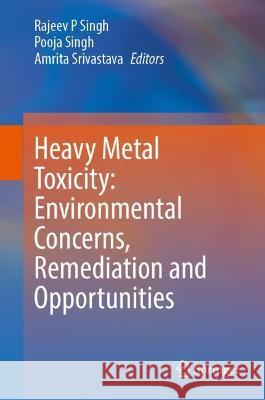
Rajeev P. Singh; Pooja Singh; Amrita Srivastava
Heavy Metal Toxicity: Environmental Concerns, Remediation and Opportunities Rajeev P. Singh Pooja Singh Amrita Srivastava 9789819903962 Springer - książkaWidoczna okładka, to zdjęcie poglądowe, a rzeczywista szata graficzna może różnić się od prezentowanej.

Heavy Metal Toxicity: Environmental Concerns, Remediation and Opportunities

ISBN-13: 9789819903962 / Angielski

Rajeev P. Singh; Pooja Singh; Amrita Srivastava
cena 806,99 zł
(netto: 768,56 VAT:  5%)

Najniższa cena z 30 dni: 771,08 zł
Termin realizacji zamówienia:
ok. 22 dni roboczych
Bez gwarancji dostawy przed świętami

Darmowa dostawa!
inne wydania

This contributed volume covers a comprehensive account of the sources, toxic biological as well as environmental impacts, and possible remediation strategies for contamination by heavy metals. In biological systems, toxic metals affect the integrity of cellular organelles and act as carcinogens causing chromosomal aberrations or as systemic toxicants leading to cardiovascular, neurobehavioral, and immunological disorders. In plants, they interfere with photosynthesis, fertility, metabolite, and chlorophyll synthesis. Toxicity induced by heavy metals involves mechanistic approaches that need to be understood properly. They cannot be degraded by biological or chemical means and thus can only be converted to less harmful forms. The conventional detection methods include biosensors, voltammetry, atomic absorption spectrometry, and inductively coupled plasma with atomic emission spectrometry. All such strategies for metal detection and mitigation strategies are covered in this title under one section.This book incorporates classical views along with modern scientific approaches to develop an understanding of the subject matter suitable for academicians, researchers, planners, policymakers, NGOs, and environmental consultancies and raise awareness on this concern. Topics representing diverse sections namely environmental impacts, biological effects, and methods used for detection and remediation have been included to address all possible contemporary issues on the topic in one concise volume.


This contributed volume covers a comprehensive account of the sources, toxic biological as well as environmental impacts, and possible remediation strategies for contamination by heavy metals. In biological systems, toxic metals affect the integrity of cellular organelles and act as carcinogens causing chromosomal aberrations or as systemic toxicants leading to cardiovascular, neurobehavioral, and immunological disorders. In plants, they interfere with photosynthesis, fertility, metabolite, and chlorophyll synthesis. Toxicity induced by heavy metals involves mechanistic approaches that need to be understood properly. They cannot be degraded by biological or chemical means and thus can only be converted to less harmful forms. The conventional detection methods include biosensors, voltammetry, atomic absorption spectrometry, and inductively coupled plasma with atomic emission spectrometry. All such strategies for metal detection and mitigation strategies are covered in this title under one section.This book incorporates classical views along with modern scientific approaches to develop an understanding of the subject matter suitable for academicians, researchers, planners, policymakers, NGOs, and environmental consultancies and raise awareness on this concern. Topics representing diverse sections namely environmental impacts, biological effects, and methods used for detection and remediation have been included to address all possible contemporary issues on the topic in one concise volume. 

Kategorie:
Nauka, Biologia i przyroda
Kategorie BISAC:
Science > Botanika
Science > Life Sciences - Ecology
Wydawca:
Springer
Język:
Angielski
ISBN-13:
9789819903962

Attached 

Dr. Rajeev Pratap Singh works in the area of waste management and has worked on various kinds of wastes, i.e., fly ash, sewage sludge, tannery sludge, palm oil mill waste, contaminated water irrigation, etc. He has many publications in reputed journals on waste management and similar topics. He has been honored with several international awards including “Green Talent” Award from the Federal Ministry of Education and Research (BMBF), Germany; Prosper.Net Scopus Young Scientist Award; DST Young Scientist Award; and Water Advanced Research and Innovation (WARI) Fellowship, a fellowship supported by the Department of Science and Technology (DST), Government of India, the Indo-US Science and Technology Forum (IUSSTF), University of Nebraska-Lincoln (UNL), and the Robert Daugherty Water for Food Institute (DWFI). He has coauthored 4 books and more than 40 highly cited research and review articles on solid waste management.

Dr. Amrita Srivastava holds PhD from the Department of Botany, Banaras Hindu University and works at Central University of South Bihar, Gaya. She works in the area of microbial secondary metabolite applications. Her major interest is in the characterization of microbial secondary metabolites called siderophores. Recently, she has started working on heavy metal stress, specifically arsenic and cadmium stress. The focus of her work lies in the extraction and purification of microbial secondary metabolite siderophores and their application for heavy metal mitigation in crops, bioremediation, and various symbiotic/antibiotic interactions mediated by them. This includes antifungal and anticancer properties of siderophore and physiological effects on plants and other microbes. She has published 23 research and review articles in journals of international repute, edited 1 book, and authored over 13 book chapters.

Dr. Pooja Singh holds a PhD from the School of Industrial Technology, University Sains Malaysia, Penang, Malaysia; an MSc (Biotechnology) from Devi Ahilya University, Indore; and an MTech in Biotechnology from Rajiv Gandhi Proudyogiki Vishwavidyalaya, Bhopal, MP. She is currently a faculty member at ICST, SHEPA, Varanasi. Her current research interests include enzymes, biopulping of oil palm biomass, and vermicomposting using various types of wastes. She has published 18 papers in various reputed international journals, 5 book chapters, and 1 edited book.


This contributed volume covers a comprehensive account of the sources, toxic biological as well as environmental impacts, and possible remediation strategies for contamination by heavy metals. In biological systems, toxic metals affect the integrity of cellular organelles and act as carcinogens causing chromosomal aberrations or as systemic toxicants leading to cardiovascular, neurobehavioral, and immunological disorders. In plants, they interfere with photosynthesis, fertility, metabolite, and chlorophyll synthesis. Toxicity induced by heavy metals involves mechanistic approaches that need to be understood properly. They cannot be degraded by biological or chemical means and thus can only be converted to less harmful forms. The conventional detection methods include biosensors, voltammetry, atomic absorption spectrometry, and inductively coupled plasma with atomic emission spectrometry. All such strategies for metal detection and mitigation strategies are covered in this title under one section.

This book incorporates classical views along with modern scientific approaches to develop an understanding of the subject matter suitable for academicians, researchers, planners, policymakers, NGOs, and environmental consultancies and raise awareness on this concern. Topics representing diverse sections namely environmental impacts, biological effects, and methods used for detection and remediation have been included to address all possible contemporary issues on the topic in one concise volume. 



Udostępnij

Facebook - konto krainaksiazek.pl


Opinie o Krainaksiazek.pl na Opineo.pl

Partner Mybenefit

Krainaksiazek.pl w programie rzetelna firma Krainaksiaze.pl - płatności przez paypal

Czytaj nas na:

Facebook - krainaksiazek.pl
  • książki na zamówienie
  • granty
  • książka na prezent
  • kontakt
  • pomoc
  • opinie
  • regulamin
  • polityka prywatności

Zobacz:

  • Księgarnia czeska

  • Wydawnictwo Książkowe Klimaty

1997-2025 DolnySlask.com Agencja Internetowa

© 1997-2022 krainaksiazek.pl
     
KONTAKT | REGULAMIN | POLITYKA PRYWATNOŚCI | USTAWIENIA PRYWATNOŚCI
Zobacz: Księgarnia Czeska | Wydawnictwo Książkowe Klimaty | Mapa strony | Lista autorów
KrainaKsiazek.PL - Księgarnia Internetowa

Polityka prywatnosci - link
Krainaksiazek.pl - płatnośc Przelewy24
Przechowalnia Przechowalnia



