• Wyszukiwanie zaawansowane
  • Kategorie
  • Kategorie BISAC
  • Książki na zamówienie
  • Promocje
  • Granty
  • Książka na prezent
  • Opinie
  • Pomoc
  • Załóż konto
  • Zaloguj się

Handbook of the Sociology of Emotions » książka


zaloguj się | załóż konto
Logo Krainaksiazek.pl

koszyk

konto

szukaj
topmenu
Księgarnia internetowa
Szukaj
Książki na zamówienie
Promocje
Granty
Książka na prezent
Moje konto
Pomoc
 
 
Wyszukiwanie zaawansowane
Pusty koszyk
Bezpłatna dostawa dla zamówień powyżej 20 złBezpłatna dostawa dla zamówień powyżej 20 zł

Kategorie główne

• Nauka
 [2949965]
• Literatura piękna
 [1857847]

  więcej...
• Turystyka
 [70818]
• Informatyka
 [151303]
• Komiksy
 [35733]
• Encyklopedie
 [23180]
• Dziecięca
 [617748]
• Hobby
 [139972]
• AudioBooki
 [1650]
• Literatura faktu
 [228361]
• Muzyka CD
 [398]
• Słowniki
 [2862]
• Inne
 [444732]
• Kalendarze
 [1620]
• Podręczniki
 [167233]
• Poradniki
 [482388]
• Religia
 [509867]
• Czasopisma
 [533]
• Sport
 [61361]
• Sztuka
 [243125]
• CD, DVD, Video
 [3451]
• Technologie
 [219309]
• Zdrowie
 [101347]
• Książkowe Klimaty
 [123]
• Zabawki
 [2362]
• Puzzle, gry
 [3791]
• Literatura w języku ukraińskim
 [253]
• Art. papiernicze i szkolne
 [7933]
Kategorie szczegółowe BISAC

Handbook of the Sociology of Emotions

ISBN-13: 9780387307138 / Angielski / Twarda / 2006 / 666 str.
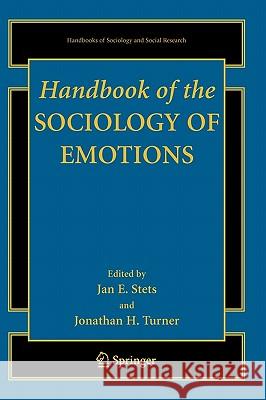
Jan E. Stets; Jonathan H. Turner
Handbook of the Sociology of Emotions Jan E. Stets Jonathan H. Turner 9780387307138 Springer - książkaWidoczna okładka, to zdjęcie poglądowe, a rzeczywista szata graficzna może różnić się od prezentowanej.

Handbook of the Sociology of Emotions

ISBN-13: 9780387307138 / Angielski / Twarda / 2006 / 666 str.

Jan E. Stets; Jonathan H. Turner
cena 403,47
(netto: 384,26 VAT:  5%)

Najniższa cena z 30 dni: 385,52
Termin realizacji zamówienia:
ok. 22 dni roboczych
Bez gwarancji dostawy przed świętami

Darmowa dostawa!

For almost thirty years, sociologists have increasingly theorized about and conducted research on human emotions. Surprisingly, it was not until the 1970s that the sociology of emotions emerged as a coherent field of inquiry. What makes this late date surprising is that it is now obvious that human behavior, interaction, and organization are driven by emotions. It was an immense oversight for emotions to be de-emphasized in sociological theorizing and research for most of its 175 year history. Since the 1970s, however, the study of emotions has accelerated and is now at the forefront of sociological analysis. This book is designed to bring the reader up to date on the theory and research traditions that have proliferated in the analysis of human emotions. Key figures who have carried the sociology of emotions to its current level of prominence review their own work and the work of others who have made contributions to a particular approach to the study of emotions. The outcome is a comprehensive book that serves as a primer on the cutting edge of sociological work in what is obviously a key dynamic in human affairs. The first section of the book addresses the range of emotions and how they can be classified, the neurological underpinnings of emotions, and the effect of gender on emotions. The second section reviews the prominent sociological theories of emotions, including theories emphasizing power and status, rituals, identity and self, psychoanalytic dynamics, exchange, expectation states, and evolution.While there is little integration among these theories, this state of affairs will not last forever. The third section addresses theory and research on specific emotions such as love, jealousy and envy, empathy, sympathy, anger, grief, and the moral emotions. While this list does not exhaust the range of human feeling, they are central emotions that drive human behavior, interaction, and social organization. The last section explores how the study of emotions has added new insight into other subfields within sociology such as the study of the workplace, health, and social movements. These chapters illustrate how the sociology of emotions can provide new research and theory for the large numbers of specialties within sociology. Although no book can completely cover a field, even a relatively new one like the sociology of emotions, this Handbook of the Sociology of Emotions comes close to being comprehensive. The reader will come away with a greater appreciation for how far the sociology of emotions has developed and prospered over the last thirty years.


Kategorie:
Nauka, Socjologia i społeczeństwo
Kategorie BISAC:
Social Science > Socjologia
Psychology > Emotions
Psychology > Personality
Wydawca:
Springer
Seria wydawnicza:
Handbooks of Sociology and Social Research (Hardcover)
Język:
Angielski
ISBN-13:
9780387307138
Rok wydania:
2006
Wydanie:
2006
Numer serii:
000131327
Ilość stron:
666
Waga:
1.23 kg
Wymiary:
26.26 x 17.88 x 3.86
Oprawa:
Twarda
Wolumenów:
01
Dodatkowe informacje:
Bibliografia
Wydanie ilustrowane

Basic Processes.- The Classification of Emotions.- The Neuroscience of Emotions.- Gender and Emotion.- Theories.- Power and Status and the Power-Status Theory of Emotions.- Cultural Theory and Emotions.- Ritual Theory.- Symbolic Interactionism, Inequality, and Emotions.- Affect Control Theory.- Identity Theory and Emotions.- Self Theory and Emotions.- Emotion-Based Self Theory.- Psychoanalytic Sociological Theories and Emotions.- Social Exchange Theory of Emotions.- Emotion in Justice Processes.- Expectation States Theory and Emotion.- Evolutionary Theory and Emotions.- Select Emotions.- Love.- Jealousy and Envy.- Empathy.- Sympathy.- Anger.- Grief.- Moral Emotions.- Emotions in Social Life.- Emotions in the Workplace.- Emotions and Health.- Emotions and Social Movements.

Jonathan Turner is a general theorist who seeks to integrate existing theories into more robust and formal theories. He is the author of twenty-eight books and over 140 articles and chapters as well as editor of four other books. He also has been editor of Sociological Perspectives and is currently editor of Sociological Theory.

For almost thirty years, sociologists have increasingly theorized about and conducted research on human emotions. Surprisingly, it was not until the 1970s that the sociology of emotions emerged as a coherent field of inquiry. What makes this late date surprising is that it is now obvious that human behavior, interaction, and organization are driven by emotions. It was an immense oversight for emotions to be de-emphasized in sociological theorizing and research for most of its 175 year history. Since the 1970s, however, the study of emotions has accelerated and is now at the forefront of sociological analysis.

This book is designed to bring the reader up to date on the theory and research traditions that have proliferated in the analysis of human emotions. Key figures who have carried the sociology of emotions to its current level of prominence review their own work and the work of others who have made contributions to a particular approach to the study of emotions. The outcome is a comprehensive book that serves as a primer on the cutting edge of sociological work in what is obviously a key dynamic in human affairs.

The first section of the book addresses the range of emotions and how they can be classified, the neurological underpinnings of emotions, and the effect of gender on emotions. The second section reviews the prominent sociological theories of emotions, including theories emphasizing power and status, rituals, identity and self, psychoanalytic dynamics, exchange, expectation states, and evolution.While there is little integration among these theories, this state of affairs will not last forever. The third section addresses theory and research on specific emotions such as love, jealousy and envy, empathy, sympathy, anger, grief, and the moral emotions. While this list does not exhaust the range of human feeling, they are central emotions that drive human behavior, interaction, and social organization. The last section explores how the study of emotions has added new insight into other subfields within sociology such as the study of the workplace, health, and social movements. These chapters illustrate how the sociology of emotions can provide new research and theory for the large numbers of specialties within sociology.

Although no book can completely cover a field, even a relatively new one like the sociology of emotions, this Handbook of the Sociology of Emotions comes close to being comprehensive. The reader will come away with a greater appreciation for how far the sociology of emotions has developed and prospered over the last thirty years.

Stets, Jan E. Jan Stets is a sociological social psychologist wh... więcej >
Turner, Jonathan H. Jonathan Turner is a general theorist who seeks to... więcej >


Udostępnij

Facebook - konto krainaksiazek.pl


Opinie o Krainaksiazek.pl na Opineo.pl

Partner Mybenefit

Krainaksiazek.pl w programie rzetelna firma Krainaksiaze.pl - płatności przez paypal

Czytaj nas na:

Facebook - krainaksiazek.pl
  • książki na zamówienie
  • granty
  • książka na prezent
  • kontakt
  • pomoc
  • opinie
  • regulamin
  • polityka prywatności

Zobacz:

  • Księgarnia czeska

  • Wydawnictwo Książkowe Klimaty

1997-2025 DolnySlask.com Agencja Internetowa

© 1997-2022 krainaksiazek.pl
     
KONTAKT | REGULAMIN | POLITYKA PRYWATNOŚCI | USTAWIENIA PRYWATNOŚCI
Zobacz: Księgarnia Czeska | Wydawnictwo Książkowe Klimaty | Mapa strony | Lista autorów
KrainaKsiazek.PL - Księgarnia Internetowa

Polityka prywatnosci - link
Krainaksiazek.pl - płatnośc Przelewy24
Przechowalnia Przechowalnia





