• Wyszukiwanie zaawansowane
  • Kategorie
  • Kategorie BISAC
  • Książki na zamówienie
  • Promocje
  • Granty
  • Książka na prezent
  • Opinie
  • Pomoc
  • Załóż konto
  • Zaloguj się

Handbook of Social Sciences and Global Public Health » książka


zaloguj się | załóż konto
Logo Krainaksiazek.pl

koszyk

konto

szukaj
topmenu
Księgarnia internetowa
Szukaj
Książki na zamówienie
Promocje
Granty
Książka na prezent
Moje konto
Pomoc
 
 
Wyszukiwanie zaawansowane
Pusty koszyk
Bezpłatna dostawa dla zamówień powyżej 20 złBezpłatna dostawa dla zamówień powyżej 20 zł

Kategorie główne

• Nauka
 [2946600]
• Literatura piękna
 [1856966]

  więcej...
• Turystyka
 [72221]
• Informatyka
 [151456]
• Komiksy
 [35826]
• Encyklopedie
 [23190]
• Dziecięca
 [619653]
• Hobby
 [140543]
• AudioBooki
 [1577]
• Literatura faktu
 [228355]
• Muzyka CD
 [410]
• Słowniki
 [2874]
• Inne
 [445822]
• Kalendarze
 [1744]
• Podręczniki
 [167141]
• Poradniki
 [482898]
• Religia
 [510455]
• Czasopisma
 [526]
• Sport
 [61590]
• Sztuka
 [243598]
• CD, DVD, Video
 [3423]
• Technologie
 [219201]
• Zdrowie
 [101638]
• Książkowe Klimaty
 [124]
• Zabawki
 [2473]
• Puzzle, gry
 [3898]
• Literatura w języku ukraińskim
 [254]
• Art. papiernicze i szkolne
 [8170]
Kategorie szczegółowe BISAC

Handbook of Social Sciences and Global Public Health

ISBN-13: 9783031251092 / Angielski
Pranee Liamputtong
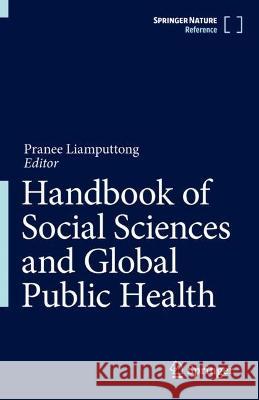
Handbook of Social Sciences and Global Public Health Pranee Liamputtong 9783031251092 Springer - książkaWidoczna okładka, to zdjęcie poglądowe, a rzeczywista szata graficzna może różnić się od prezentowanej.

Handbook of Social Sciences and Global Public Health

ISBN-13: 9783031251092 / Angielski

Pranee Liamputtong
cena 5649,17 zł
(netto: 5380,16 VAT:  5%)

Najniższa cena z 30 dni: 5012,24 zł
Termin realizacji zamówienia:
ok. 22 dni roboczych
Bez gwarancji dostawy przed świętami

Darmowa dostawa!

This Handbook highlights the important role of social sciences in global public health.Social sciences such as medical sociology, medical anthropology and social psychology, are the disciplines that examine the sociocultural causes and consequences of health and illness. Major areas of investigation include the social/cultural determinants of health and disease, the social/cultural behaviour of patients and healthcare providers, the social and political functions of health organisations and institutions, the social/cultural patterns of the utilisation of health services, the relationship of healthcare delivery systems to other social/political institutions, and social/political policies toward health. What makes social sciences important is the critical role social, cultural, economic, and political factors play in determining or influencing the health of individuals, communities, and the larger society and nation. Sociocultural and political conditions and situations not only promote and, in some cases, cause the possibility of illness and disability, but also enhance prospects of disease prevention and health maintenance.It is evident that biomedicine cannot be the only answer to improve the health of people. Social sciences have played a significantly crucial role in the explanation of health and illness in different population groups, the improvement of health, and prevention of illnesses around the globe. The essence of social sciences in global public health can be seen as timely at the present time due to the pandemic of Covid-19. Until the development of drugs or vaccinations that can stop the spread of, or even eradicate, the disease, people around the world have to deal with the virus physically, mentally and economically. Do we know how people deal with the virus, and their fear and other emotional burdens when trying to live through each day? What is the impact of the lockdown on their mental health and well-being? Who are most vulnerable to the impact of the pandemic? What are social issues that contribute to their vulnerability? Is the pandemic a human rights issue that we have to address in many parts of the world? This is when social sciences are especially crucial. Knowledge generated via social science theories and research methodologies allow healthcare providers, policy-makers and politicians to understand and appreciate the lived experience of their people, and to provide sensitive health and social care to them at a time of most need.This Handbook is comprehensive in its nature and contents, with nine sections ranging from a more disciplinary-based approach, theoretical frameworks, and methodological frameworks, to different aspects of global public health. Each section has 15-20 chapters with different angles included; one section, however, has more than 30 chapters. The Handbook covers:Discussions of the social science disciplines and their essence for global public healthTheoretical frameworks in social sciences that can be used to explain health and illness in populationsMethodological inquiries that social science researchers use to examine global public health issuesExamples of social science research in several global public health areas and concerns such as chronic illnesses, emerging/infectious diseases, mental health, sexual and reproductive health, globalisation, and climate changeExamples of social science research in a number of population groups such as women and men, children and older people, and marginalised/oppressed groups around the globeIn this Handbook, readers learn about concepts of social science disciplines and theories relating to global public health. They also learn about research methodologies that can be adopted to examine and understand social issues relating to health in different population groups and regions. As examples from the research are included in this Handbook, readers see the real-life situations that can promote the health and well-being of different groups which they can adopt in their own work. A good understanding of issues that can impact the health and well-being of people in society may lead to culturally sensitive health and social care to people that will ultimately lead to a more equitable society around the globe.TheHandbook of Social Sciences and Global Public Healthis a useful reference for students, researchers, lecturers, practitioners, and policy-makers in global health, public health and social science disciplines; and libraries in universities and health and social care institutions.

This Handbook highlights the important role of social sciences in global public health. 

Social sciences such as medical sociology, medical anthropology and social psychology, are the disciplines that examine the sociocultural causes and consequences of health and illness. Major areas of investigation include the social/cultural determinants of health and disease, the social/cultural behaviour of patients and healthcare providers, the social and political functions of health organisations and institutions, the social/cultural patterns of the utilisation of health services, the relationship of healthcare delivery systems to other social/political institutions, and social/political policies toward health. What makes social sciences important is the critical role social, cultural, economic, and political factors play in determining or influencing the health of individuals, communities, and the larger society and nation. Sociocultural and political conditions and situations not only promote and, in some cases, cause the possibility of illness and disability, but also enhance prospects of disease prevention and health maintenance. 

It is evident that biomedicine cannot be the only answer to improve the health of people. Social sciences have played a significantly crucial role in the explanation of health and illness in different population groups, the improvement of health, and prevention of illnesses around the globe. The essence of social sciences in global public health can be seen as timely at the present time due to the pandemic of Covid-19. Until the development of drugs or vaccinations that can stop the spread of, or even eradicate, the disease, people around the world have to deal with the virus physically, mentally and economically. Do we know how people deal with the virus, and their fear and other emotional burdens when trying to live through each day? What is the impact of the lockdown on their mental health and well-being? Who are most vulnerable to the impact of the pandemic? What are social issues that contribute to their vulnerability? Is the pandemic a human rights issue that we have to address in many parts of the world? This is when social sciences are especially crucial. Knowledge generated via social science theories and research methodologies allow healthcare providers, policy-makers and politicians to understand and appreciate the lived experience of their people, and to provide sensitive health and social care to them at a time of most need. 

This Handbook is comprehensive in its nature and contents, with nine sections ranging from a more disciplinary-based approach, theoretical frameworks, and methodological frameworks, to different aspects of global public health. Each section has 15-20 chapters with different angles included; one section, however, has more than 30 chapters. The Handbook covers:
  • Discussions of the social science disciplines and their essence for global public health
  • Theoretical frameworks in social sciences that can be used to explain health and illness in populations 
  • Methodological inquiries that social science researchers use to examine global public health issues 
  • Examples of social science research in several global public health areas and concerns such as chronic illnesses, emerging/infectious diseases, mental health, sexual and reproductive health, globalisation, and climate change 
  • Examples of social science research in a number of population groups such as women and men, children and older people, and marginalised/oppressed groups around the globe
In this Handbook, readers learn about concepts of social science disciplines and theories relating to global public health. They also learn about research methodologies that can be adopted to examine and understand social issues relating to health in different population groups and regions. As examples from the research are included in this Handbook, readers see the real-life situations that can promote the health and well-being of different groups which they can adopt in their own work. A good understanding of issues that can impact the health and well-being of people in society may lead to culturally sensitive health and social care to people that will ultimately lead to a more equitable society around the globe.

The Handbook of Social Sciences and Global Public Health is a useful reference for students, researchers, lecturers, practitioners, and policy-makers in global health, public health and social science disciplines; and libraries in universities and health and social care institutions.

Kategorie:
Nauka, Medycyna
Kategorie BISAC:
Medical > Zdrowie publiczne
Social Science > General
Medical > Preventive Medicine
Wydawca:
Springer
Język:
Angielski
ISBN-13:
9783031251092

Preliminary ToC of approximately 170 entries


Chapter 1: The essence of social sciences in global public health: An introduction


Part I: Social Sciences and Health Disciplines

Chapter 1: Medical sociology

Chapter 2: Medical anthropology

Chapter 3: Feminism and women’s studies

Chapter 4: Critical social work

Chapter 5: Social psychology

Chapter 6: Social epidemiology

Chapter 7: Public health and global health

Chapter 8: Health promotion

Chapter 9: Health education

Chapter 10: Community nursing

Chapter 11: Community medicine

Chapter 12: Primary health care

Chapter 13: Occupational therapy

Chapter 14: Political science

Chapter 15: Traditional medicine


Part II: Theoretical Frameworks and Social Sciences

Chapter 1: Grand theories in sociology (Functionalism, Conflict theory, Weberianism)

Chapter 2: Stigma of Erving Goffman

Chapter 3: Illness experience and chaos of Arthur Frank

Chapter 4: Biographical disruption of Michael Bury

Chapter 5: Therapeutic landscape

Chapter 6: Social capital/Social support/Social connection

Chapter 7: Resilience theory

Chapter 8: Risk theory

Chapter 9: Stress and coping theory

Chapter 10: Health promoting theory

Chapter 11: Critical public health framework

Chapter 12: Explanatory model of health of Arthur Kleinman

Chapter 13: Liminality theory

Chapter 14: Intersectionality theory

Chapter 15: Gender identity and gender role theory

Chapter 16: Social justice and health

Chapter 17: Human rights and health

Chapter 18: Social determinants of health

Chapter 19: TheoryU and extended epistemology framework          

Chapter 20: Healthcare system (Universal Health Coverage/Traditional health care/medicine)


Part III: Research Methodologies, Social Sciences and Global Health

Chapter 1: Social constructionism

Chapter 2: Symbolic interactionism and postmodernism

Chapter 3: Critical theory

Chapter 4: Feminist methodology

Chapter 5: Decolonising methodology

Chapter 6: Cultural sensitivity approach

Chapter 7: Cross-cultural research

Chapter 8: Common qualitative research methods (including ID, FG & Narrative research)

Chapter 9: Ethnography

Chapter 10: Participatory Action Research

Chapter 11: Feminist action research (FAR)

Chapter 12: Participatory rural appraisal method

Chapter 13: Case study research

Chapter 14: Grounded theory research

Chapter 15: Unobtrusive methods

Chapter 16: Auto-ethnography

Chapter 17: Community mapping method

Chapter 18: Social surveys

Chapter 19: Virtual research methodology (including virtual interview, email, chat, virtual focus group, virtual ethnography)

Chapter 20: Social media as research tool

Chapter 21: Walking interviewing method

Chapter 22: Digital storytelling method

Chapter 23: Freelisting method

Chapter 24: Social epidemiology

Chapter 25: GIS method

Chapter 26: Delphi method

Chapter 27: Q methodology

Chapter 28: Social network method

Chapter 29: Looping methodology

Chapter 30: Mixed methods research

Chapter 31: Ethical issues in social sciences and global public health


Part IV: The Role of Social Sciences in Emerging/Infectious Illnesses

Chapter 1: Ebola

Chapter 2: SARS

Chapter 3: MERS

Chapter 4: Zika

Chapter 5: Influenza

Chapter 6: Covid-19

Chapter 7: Leprosy

Chapter 8: Tuberculosis

Chapter 9: Hepatitis

Chapter 10: Malaria

Chapter 11: Dengue fever

Chapter 12: Sexually transmitted infections (STI)

Chapter 13: Polio

Chapter 14: Cholera

Chapter 15: Hand, foot and mouth disease (HFMD)

Chapter 16: Tropical diseases


Part V: The Role of Social Sciences in Chronic Illnesses

Chapter 1: Breast cancer

Chapter 2: Prostate cancer

Chapter 3: Lung cancer

Chapter 4: Childhood cancer

Chapter 5: Heart disease

Chapter 6: HIV/AIDS

Chapter 7: Mental health/illness

Chapter 8: Diabetes/Obesity

Chapter 9: Dementia

Chapter 10: Disabilities

Chapter 11: Asthma

Chapter 12: Pain

Chapter 13: Stroke

Chapter 14: Epilepsy

Chapter 15: Eating disorders

Chapter 16: Substance abuse

Chapter 17: Domestic violence

Chapter 18: Violence in conflict situations (wars, etc.)

Chapter 19: Food insecurity and malnutrition


Part VI: Social Science Research Projects, Sexuality, and Sexual and Reproductive Health

Chapter 1: Motherhood

Chapter 2: Infertility

Chapter 3: Abortion

Chapter 4: Miscarriage

Chapter 5: Childbirth and postpartum practices

Chapter 6: Infant feeding practices

Chapter 7: Sexuality and LGBTI

Chapter 8: Sexuality and young people

Chapter 9: Sexuality and older persons

Chapter 10: Sexual dysfunction in women

Chapter 11: Sexual dysfunction in men

Chapter 12: HIV/AIDS among women/men in South Africa

Chapter 13: HIV/AIDS among women who are mothers in Thailand

Chapter 14: HIV/AIDS among people in Kenya

Chapter 15: Sexual and reproductive health of young immigrants in Australia

Chapter 16: Sexual and reproductive health needs among people with physical disabilities

Chapter 17: TBD

Chapter 18: TBD

Chapter 19: TBD

Chapter 20: TBD


Part VII: Social Science Research Projects and Mental Health/Illness

Chapter 1: Mental health among ex-service men/women

Chapter 2: Mental health of incarcerated individuals

Chapter 3: Mental health among young people

Chapter 4: Mental health in older persons

Chapter 5: Mental health among Indigenous peoples

Chapter 6: Mental health among young refugees

Chapter 7: Mental health among homeless people

Chapter 8: Dementia and older persons in Australia

Chapter 9: Dementia and older persons in UK

Chapter 10: Dementia and older persons in the United States

Chapter 11: Loneliness and social isolation in older persons during Covid-19

Chapter 12: Impact of Covid-19 on vulnerable families

Chapter 13: Impact of Covid-19 on healthcare professionals

Chapter 14: TBD

Chapter 15: TBD


Part VIII: Social Science Research Projects and the Health of Socially Excluded and Marginalised Groups

Chapter 1: Indigenous people in Canada

Chapter 2: Indigenous people in Australia

Chapter 3: Indigenous people in the United States

Chapter 4: Indigenous people in New Zealand

Chapter 5: Ethnic minority groups

Chapter 6: Refugees and Immigrants

Chapter 7: Homeless people

Chapter 8: Incarcerated individuals

Chapter 9: Ex-prisoners

Chapter 10: People living with poverty

Chapter 11: Roma and other gypsies

Chapter 12: Sex workers

Chapter 13: The health of LGBTI individuals

Chapter 14: Sexual violence and trans women of colour

Chapter 15: Sexual violence among street sex workers

Chapter 16: Food insecurity among immigrant families

Chapter 17: Obesity in children from minority groups

Chapter 18: Sex trafficking of men, girls and women


Part IX: Social Science Research, Globalisation and Climate Change

Chapter 1: Globalisation and its impact on population health (including the spread of viruses like Covid-19)

Chapter 2: Globalisation and migration

Chapter 3: Globalisation and poverty

Chapter 4: Globalisation and food security/insecurity

Chapter 5: Globalisation and mental health

Chapter 6: Globalisation and physical health

Chapter 7: Globalisation and substance abuse

Chapter 8: Globalisation and trafficking of women/children

Chapter 9: Glogalisation and abuse and violence

Chapter 10: Climate change and infectious diseases impacting on well-being of people

Chapter 11: Climate change and poverty

Chapter 12: Climate change and food insecurity

Chapter 13: Climate change and mental health

Chapter 14: Climate change and physical health

Chapter 15: TBD

Pranee Liamputtong is currently a professor in behaviour sciences at the College of Health Sciences, VinUniversity, Vietnam.  She is also an Adjunct Professor at the Translation Health Research Institute (THRI) at Western Sydney University and at the School of Public Health, La Trobe University in Australia. Previously, she held a position of Professor of Public Health at the School of Health Sciences, Western Sydney University, and Personal Chair in Public Health at the School of Public Health, La Trobe University, Australia. Pranee has also taught in the School of Sociology and Anthropology and worked as a public health research fellow at the Centre for the Study of Mothers’ and Children’s Health, La Trobe University. Pranee’s particular interests include issues related to socio-cultural influences on childbearing, childrearing, motherhood, infant feeding practices, and reproductive and sexual health. Her current research includes motherhood, HIV/AIDS, breast cancer, sexuality and sexual violence, and the health impact of air pollution in Asia.

Pranee has published several books and a large number of papers in these areas. These include Maternity and Reproductive Health in Asian Societies (with Lenore Manderson, Harwood Academic Press, 1996); Asian Mothers, Western Birth (Ausmed Publications, 1999); Living in a New Country: Understanding Migrants’ Health (Ausmed Publications, 1999); Hmong Women and Reproduction (Bergin & Garvey, 2000); Coming of Age in South and Southeast Asia: Youth, Courtship and Sexuality (with Lenore Manderson, Curzon Press, 2002); Health, Social Change and Communities (with Heather Gardner, Oxford University Press, 2003). Her more recent books include Reproduction, Childbearing and Motherhood: A Cross-Cultural Perspective (Nova Science Publishers, 2007); Childrearing and Infant Care Issues: A Cross-Cultural Perspective (Nova Science Publishers, 2007); The Journey of Becoming a Mother amongst Thai Women in Northern Thailand (Lexington Books, 2007); Population, Community, & Health Promotion (with Sansnee Jirojwong, Oxford University Press, 2008); Infant Feeding Practices: A Cross-Cultural Perspective (Springer, New York, 2011); Motherhood and Postnatal Depression: Narratives of Women and their Partners (with Carolyn Westall, Springer, Dordrecht, The Netherlands, 2011); Health, Illness and Well-Being: Perspectives and Social Determinants (with Rebecca Fanany and Glenda Verrinder, Oxford University Press, 2012), Contemporary Socio-Cultural and Political Perspectives in Thailand (Springer, 2014); Public Health: Local and Global Perspectives (Cambridge University Press, 2016, second edition in 2019, third edition in 2022), and Social Determinants of Health (Oxford University Press, 2019).

   Pranee was a general editor of a book series, HIV/AIDS and Cross-Cultural Research. The series is being published by Springer in the Netherlands between 2012-2020. Her two books in the series were published by Springer in 2013. These were Stigma, Discrimination and Living with HIV/AIDS and Women, Motherhood and Living with HIV/AIDS. The third one in the series is Children, Young People and Living with HIV/AIDS: A Cross-Cultural Perspective, published in 2016.

    Pranee has also written and edited a number of research method books. Her first research method book was Qualitative Research Methods: A Health Focus (with Douglas Ezzy, Oxford University Press, 1999); the second edition of the book was titled Qualitative Research Methods (2005); the third edition was published in 2009; the fourth edition was published in 2013, and the fifth edition was published in 2020. Pranee has also published a book on doing qualitative research online: Health Research in Cyberspace: Methodological, Practical and Personal Issues (Nova Science Publishers, 2006). Her other books include Researching the Vulnerable: A Guide to Sensitive Research Methods (Sage, 2007); Undertaking Sensitive Research: Managing Boundaries, Emotions and Risk (with Virginia Dickson-Swift and Erica James, Cambridge University Press, 2008); Knowing Differently: Arts-Based and Collaborative Research Methods (with Jean Rumbold, Nova Science Publishers, 2008); Doing Cross-Cultural Research: Ethical and Methodological Issues (Springer, 2008), Performing Qualitative Cross-Cultural Research (Cambridge University Press, 2010); Research Methods in Health and Evidence-Based Practice (Oxford University Press, 2010, 2013, 2017, 2022); Focus Group Methodology: Principles and Practice (Sage, 2011, online version in 2016); and Using Participatory Qualitative Research Methodologies in Health (with Gina Higginbottom, Sage, 2015). In 2019, her Handbook of Research Methods in Health Social Sciences was published by Springer. She has recently published a number of books including How to Conduct Qualitative Research in Social Science (Edward Elgar, 2022), Handbook of Qualitative Cross-Cultural Research: A Social Science Perspective (Edward Elgar, 2023), and Handbook of Social Science in Global Public Health (Springer, 2023).


Udostępnij

Facebook - konto krainaksiazek.pl


Opinie o Krainaksiazek.pl na Opineo.pl

Partner Mybenefit

Krainaksiazek.pl w programie rzetelna firma Krainaksiaze.pl - płatności przez paypal

Czytaj nas na:

Facebook - krainaksiazek.pl
  • książki na zamówienie
  • granty
  • książka na prezent
  • kontakt
  • pomoc
  • opinie
  • regulamin
  • polityka prywatności

Zobacz:

  • Księgarnia czeska

  • Wydawnictwo Książkowe Klimaty

1997-2025 DolnySlask.com Agencja Internetowa

© 1997-2022 krainaksiazek.pl
     
KONTAKT | REGULAMIN | POLITYKA PRYWATNOŚCI | USTAWIENIA PRYWATNOŚCI
Zobacz: Księgarnia Czeska | Wydawnictwo Książkowe Klimaty | Mapa strony | Lista autorów
KrainaKsiazek.PL - Księgarnia Internetowa

Polityka prywatnosci - link
Krainaksiazek.pl - płatnośc Przelewy24
Przechowalnia Przechowalnia






