• Wyszukiwanie zaawansowane
  • Kategorie
  • Kategorie BISAC
  • Książki na zamówienie
  • Promocje
  • Granty
  • Książka na prezent
  • Opinie
  • Pomoc
  • Załóż konto
  • Zaloguj się

Handbook of Psychopharmacology: Volume 15 New Techniques in Psychopharmacology » książka


zaloguj się | załóż konto
Logo Krainaksiazek.pl

koszyk

konto

szukaj
topmenu
Księgarnia internetowa
Szukaj
Książki na zamówienie
Promocje
Granty
Książka na prezent
Moje konto
Pomoc
 
 
Wyszukiwanie zaawansowane
Pusty koszyk
Bezpłatna dostawa dla zamówień powyżej 20 złBezpłatna dostawa dla zamówień powyżej 20 zł

Kategorie główne

• Nauka
 [2949965]
• Literatura piękna
 [1857847]

  więcej...
• Turystyka
 [70818]
• Informatyka
 [151303]
• Komiksy
 [35733]
• Encyklopedie
 [23180]
• Dziecięca
 [617748]
• Hobby
 [139972]
• AudioBooki
 [1650]
• Literatura faktu
 [228361]
• Muzyka CD
 [398]
• Słowniki
 [2862]
• Inne
 [444732]
• Kalendarze
 [1620]
• Podręczniki
 [167233]
• Poradniki
 [482388]
• Religia
 [509867]
• Czasopisma
 [533]
• Sport
 [61361]
• Sztuka
 [243125]
• CD, DVD, Video
 [3451]
• Technologie
 [219309]
• Zdrowie
 [101347]
• Książkowe Klimaty
 [123]
• Zabawki
 [2362]
• Puzzle, gry
 [3791]
• Literatura w języku ukraińskim
 [253]
• Art. papiernicze i szkolne
 [7933]
Kategorie szczegółowe BISAC

Handbook of Psychopharmacology: Volume 15 New Techniques in Psychopharmacology

ISBN-13: 9781461334545 / Angielski / Miękka / 2012 / 442 str.
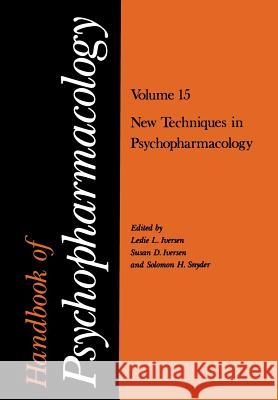
Leslie L. Iversen; Susan D. Iversen; M.D. Solomon H. Snyder
Handbook of Psychopharmacology: Volume 15 New Techniques in Psychopharmacology Iversen, Leslie L. 9781461334545 Springer - książkaWidoczna okładka, to zdjęcie poglądowe, a rzeczywista szata graficzna może różnić się od prezentowanej.

Handbook of Psychopharmacology: Volume 15 New Techniques in Psychopharmacology

ISBN-13: 9781461334545 / Angielski / Miękka / 2012 / 442 str.

Leslie L. Iversen; Susan D. Iversen; M.D. Solomon H. Snyder
cena 403,47
(netto: 384,26 VAT:  5%)

Najniższa cena z 30 dni: 385,52
Termin realizacji zamówienia:
ok. 22 dni roboczych
Bez gwarancji dostawy przed świętami

Darmowa dostawa!

Volume 15 of Handbook of Psychopharmacology represents the first of a new series of volumes whose aim is to bring earlier sections of the work up to date by describing the latest developments in the field. It is now seven years since the first Handbook volumes on Basic Neuropharmacology were published, and there have been many important advances. As in many other areas in science, progress in this field has depended to a considerable extent on the availability of new experimental methods, and Volume 15 reviews some major recent developments, including new autoradiographic techniques that allow direct visualization of drug and transmitter receptors in the nervous system, and the pinpointing of the precise locations of the changes in brain metabolism elicited by various drug treatments. Volumes 16 and 17 will cover two of the most active areas for basic research in psychopharmacology at the moment: the characterization of drug and transmitter receptors in brain by radioligand binding techniques, and studies of the role of small peptides in brain function. The latter area, in particular, illustrates how rapidly progress continues to be made in basic research on the mechanisms of chemical communication within the nervous system. Seven years ago when the Handbook first appeared none of the opioid peptides (enkephalins and endorphins) had yet been identified. Since then a whole new area of basic biological research has focused on these substances, and in addition we know of more than thirty other neuropeptides with putative eNS transmitter functions.


Kategorie:
Nauka, Medycyna
Kategorie BISAC:
Medical > Neuroscience
Medical > Leczenie bólu
Medical > Neurologia i neurofizjologia kliniczna
Wydawca:
Springer
Język:
Angielski
ISBN-13:
9781461334545
Rok wydania:
2012
Wydanie:
Softcover Repri
Ilość stron:
442
Waga:
0.70 kg
Wymiary:
24.41 x 16.99 x 2.29
Oprawa:
Miękka
Wolumenów:
01

1 Electrochemical Detection Methods for Monoamine Measurements in Vitro and in Vivo.- 1. Introduction.- 1.1. Oxidation-Reduction Reactions in Solution and at Electrodes.- 1.2. General Principles of Electrolysis Reactions.- 1.3. Electrochemical Apparatus and Electrodes.- 1.4. Voltammetry and Current Measurements in Flowing Solution.- 2. Assay of Aromatic Amines by HPLC with Electrochemical Detection.- 2.1. Electroactivity of Amines and Related Drugs.- 2.2. Electrochemical Detection.- 2.3. Preparation and Extraction of Tissues.- 2.4. Liquid Chromatographic Separation.- 2.5. Comparison with Other Assay Techniques.- 2.6. Applications of LC with Electrochemical Detection to Brain Amine Studies.- 2.7. Future Developments and Conclusions.- 3. Faradaic Electrochemistry in the CNS.- 3.1. Voltammetric Measurements in Quiet Solution.- 3.2. Practical Electrodes for CNS Measurements.- 3.3. Oxidation Potentials in CNS Measurements and Specificity of Response.- 3.4. General Protocol for CNS Voltammetry.- 3.5. Applications.- Appendix: Instrumentation for Electrochemical Studies.- Liquid Chromatography.- In Vivo Electrochemistry.- Commercial Voltammetric Equipment.- 4. References.- 2 Radioreceptor Assays for Neurotransmitters and Drugs.- 1. Introduction.- 2. Fundamentals of Receptor Binding Assays.- 2.1. Saturability.- 2.2. Specificity.- 3. Fundamentals of Radioreceptor Assays.- 3.1. Basic Principles.- 3.2. Methodology.- 3.3. Standard Curve.- 3.4. Sensitivity and Precision.- 3.5. Specificity.- 4. Applications.- 5. Summary.- 6. References.- 3 Intracellular Recording from Neurons in Brain Slices in Vitro.- 1. Introduction.- 2. Procedures for Preparing and Maintaining Brain Slices.- 2.1. Slicing the Brain.- 2.2. Composition of Artificial Cerebrospinal Fluid.- 2.3. Design of Slice Chambers.- 2.4. Temperature.- 2.5. Submerged versus Interface Slices.- 2.6. Organotypic Cultures as an Alternative to Acute Slices.- 2.7. Electrophysiological Tests for Viability.- 2.8. Correlations between Electrical Activity and Ultrastructure.- 2.9. New Tests of Viability Using Fluorescence or Ionic Activity.- 3. Intracellular Studies.- 3.1. Anomalous Rectification.- 3.2. Hyperpolarizing and Depolarizing After-potentials.- 3.3. Spontaneous Synaptic Potentials.- 3.4. Gap Junctions.- 3.5. Dendrites as Seen from the Soma.- 3.6. Intradendritic Recording.- 3.7. Integration of Synaptic and Dendritic Events.- 4. Epileptogenesis.- 5. Synaptic Plasticity.- 6. Iontophoresis.- 6.1. Glutamate.- 6.2. Gaba.- 6.3. 5-Hydroxytryptamine.- 6.4. Norepinephrine.- 6.5. Acetylcholine.- 6.6. Application of Peptides to Cells by Pressure Ejection.- 6.7. Enkephalin.- 7. Concluding Remarks.- 8. References.- 4 Capsaicin: A Chemical Probe for Sensory Neuron Mechanisms.- 1. Introduction.- 1.1. The Hungarian Contribution.- 1.2. Scope of the Present Review.- 2. Chemical Analysis of Capsaicin and Related Natural Products.- 3. General Considerations of Capsaicin Administration.- 4. Effects on the Respiratory and Cardiovascular System.- 5. Neuroanatomical Observations.- 5.1. Sensory Nerves.- 5.2. The Spinal Cord.- 6. Neurophysiological Observations.- 6.1. The Somatic System.- 6.2. The Visceral System.- 7. Effects on Inflammation.- 8. Effects on Thermoregulation.- 8.1. Peripheral Sites of Action.- 8.2. Central Sites of Action.- 9. Effects on the Gastrointestinal Tract.- 9.1. Gastric System.- 9.2. Intestinal System.- 10. Noxious Properties and Effects on Nociception.- 10.1. Adult Administration.- 10.2. Neonatal Administration.- 10.3. Topical Application.- 11. Biochemical Observations.- 11.1. Primary Afferent Peptides.- 11.2. Primary Afferent Presynaptic Receptors.- 11.3. Capsaicin-Evoked Peptide Release.- 11.4. Adenylate Cyclase.- 11.5. Nonneuronal Sites of Action.- 12. Structure-Activity Relationships.- 13. Summary and Perspectives.- 14. References.- 5 Excitatory Amino Acid Neurotoxins.- 1. Introduction.- 1.1. Selective Lesions.- 1.2. Historical Perspective.- 2. Pharmacology of Excitatory Amino Acids.- 2.1. Neurophysiology.- 2.2. Receptor Binding.- 2.3. Multiple Receptors.- 3. Excitotoxins: Structure-Activity Relations.- 3.1. Peripheral Administration.- 3.2. Intracerebral Injection.- 4. Kainic Acid.- 4.1. Striatum.- 4.2. Hippocampus.- 4.3. Other Regions.- 4.4. Overview.- 5. Other Excitotoxins.- 5.1. Ibotenic Acid.- 5.2. N-Methyl-D-Aspartic Acid.- 6. Practical Applications.- 6.1. Injection Parameters.- 6.2. Biologic Variables.- 6.3. Histologic Analysis.- 6.4. Neurochemical Alterations.- 6.5. Evolution of the Lesion.- 7. Conclusion.- 8. References.- 6 High-Performance Liquid Chromatography: Purification and Characterization of Neuropeptides.- 1. Introduction.- 2. Equipment.- 2.1 Pumps.- 2.2 Injector.- 2.3 Programmer.- 2.4 Detector.- 3. HPLC Column.- 4. Reverse-Phase HPLC.- 5. Polar and Ion-Exchange Phases.- 6. Exclusion Chromatography.- 7. Strategy.- 8. Neuropeptide Analysis by HPLC.- 9. Neurological Disorders and Pain.- 10. Schizophrenia.- 11. Stimulation of Aldosterone Release.- 12. Future Trends: HPLC-MS.- 13. References.- 7 Localization of Drug and Neurotransmitter Receptors in Brain by Light Microscopic Autoradiography.- 1. Introduction.- 2. Methodology.- 2.1. In Vivo Labeling of Receptors.- 2.2. In Vitro Labeling Autoradiography.- 2.3. The Problem of Diffusion.- 2.4. The Autoradiographs.- 3. Radiohistochemistry of Receptors as a Complement to Neurotransmitter Mapping.- 4. Suggestions about Mechanisms of CNS Drug Action.- 5. Other Uses of Receptor Mapping.- 6. Electron Microscopic Studies.- 7. Summary.- 8. References.- 8 Mapping Functional Alterations in the CNS with 14[C]Deoxyglucose.- 1. Introduction.- 2. General Methodological Considerations.- 2.1 The Quantitative Autoradiographic 2-Deoxyglucose Technique.- 2.2 Modification of the Quantitative Autoradiographic 2-Deoxyglucose Technique.- 2.3 Limitations and Constraints of the Autoradiographic Deoxyglucose Technique.- 2.4 Glucose Utilization as Functional Activity.- 2.5 Environmental and Systemic Factors Influencing Cerebral Glucose Utilization.- 3. Metabolic Consequences of Manipulating Central Neurotransmitter Systems.- 3.1. Dopaminergic Influences on Glucose Utilization…..- 3.2 Noradrenergic Influences on Glucose Utilization.- 3.3 Cholinergic Influences on Glucose Utilization.- 3.4 Peptidergic Influences on Glucose Utilization.- 3.5 GABAergic Influences on Glucose Utilization.- 4. Glucose Utilization following Neuropharmacological Manipulations.- 4.1. Anesthetic Agents.- 4.2. Drug-Induced Seizures.- 4.3. Miscellaneous Pharmacological Influences on Glucose Utilization.- 5. Perspectives of Metabolic Mapping in Neuropharmacology.- 6. References.

Iversen, Leslie L. Leslie Iversen is Professor of Pharmacology at Oxf... więcej >


Udostępnij

Facebook - konto krainaksiazek.pl


Opinie o Krainaksiazek.pl na Opineo.pl

Partner Mybenefit

Krainaksiazek.pl w programie rzetelna firma Krainaksiaze.pl - płatności przez paypal

Czytaj nas na:

Facebook - krainaksiazek.pl
  • książki na zamówienie
  • granty
  • książka na prezent
  • kontakt
  • pomoc
  • opinie
  • regulamin
  • polityka prywatności

Zobacz:

  • Księgarnia czeska

  • Wydawnictwo Książkowe Klimaty

1997-2025 DolnySlask.com Agencja Internetowa

© 1997-2022 krainaksiazek.pl
     
KONTAKT | REGULAMIN | POLITYKA PRYWATNOŚCI | USTAWIENIA PRYWATNOŚCI
Zobacz: Księgarnia Czeska | Wydawnictwo Książkowe Klimaty | Mapa strony | Lista autorów
KrainaKsiazek.PL - Księgarnia Internetowa

Polityka prywatnosci - link
Krainaksiazek.pl - płatnośc Przelewy24
Przechowalnia Przechowalnia






