• Wyszukiwanie zaawansowane
  • Kategorie
  • Kategorie BISAC
  • Książki na zamówienie
  • Promocje
  • Granty
  • Książka na prezent
  • Opinie
  • Pomoc
  • Załóż konto
  • Zaloguj się

Handbook of Genomics and the Family: Psychosocial Context for Children and Adolescents » książka


zaloguj się | załóż konto
Logo Krainaksiazek.pl

koszyk

konto

szukaj
topmenu
Księgarnia internetowa
Szukaj
Książki na zamówienie
Promocje
Granty
Książka na prezent
Moje konto
Pomoc
 
 
Wyszukiwanie zaawansowane
Pusty koszyk
Bezpłatna dostawa dla zamówień powyżej 20 złBezpłatna dostawa dla zamówień powyżej 20 zł

Kategorie główne

• Nauka
 [2949965]
• Literatura piękna
 [1857847]

  więcej...
• Turystyka
 [70818]
• Informatyka
 [151303]
• Komiksy
 [35733]
• Encyklopedie
 [23180]
• Dziecięca
 [617748]
• Hobby
 [139972]
• AudioBooki
 [1650]
• Literatura faktu
 [228361]
• Muzyka CD
 [398]
• Słowniki
 [2862]
• Inne
 [444732]
• Kalendarze
 [1620]
• Podręczniki
 [167233]
• Poradniki
 [482388]
• Religia
 [509867]
• Czasopisma
 [533]
• Sport
 [61361]
• Sztuka
 [243125]
• CD, DVD, Video
 [3451]
• Technologie
 [219309]
• Zdrowie
 [101347]
• Książkowe Klimaty
 [123]
• Zabawki
 [2362]
• Puzzle, gry
 [3791]
• Literatura w języku ukraińskim
 [253]
• Art. papiernicze i szkolne
 [7933]
Kategorie szczegółowe BISAC

Handbook of Genomics and the Family: Psychosocial Context for Children and Adolescents

ISBN-13: 9781461423959 / Angielski / Miękka / 2011 / 615 str.
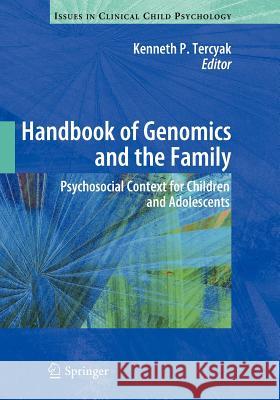
Kenneth P. Tercyak
Handbook of Genomics and the Family: Psychosocial Context for Children and Adolescents Tercyak, Kenneth P. 9781461423959 Springer - książkaWidoczna okładka, to zdjęcie poglądowe, a rzeczywista szata graficzna może różnić się od prezentowanej.

Handbook of Genomics and the Family: Psychosocial Context for Children and Adolescents

ISBN-13: 9781461423959 / Angielski / Miękka / 2011 / 615 str.

Kenneth P. Tercyak
cena 1085,46
(netto: 1033,77 VAT:  5%)

Najniższa cena z 30 dni: 1037,16
Termin realizacji zamówienia:
ok. 22 dni roboczych
Bez gwarancji dostawy przed świętami

Darmowa dostawa!
inne wydania

Today, individuals have greater access to information about their healththaneverbefore(Randeree,2009;Eysenbach,2008).Muchofthis changeisdue, inlargepart, toadvancesinbiotechnologyandtheseque- ing of the human genome (Manolio & Collins, 2009). It is now possible, forexample, forindividualstologontotheInternetand, forafeeofs- eral hundred dollars, order an at-home DNA collection kit and have the resultsofamyriadofgenetictestsdelivereddirectlytotheire-mailinbox (Gurwitz&Bregman-Eschet,2009).Insomecases, thesetestresultsmay indicatepersonalriskforcommonchronicdiseases, suchascertainforms ofcancer, diabetes, cardiovasculardisease, andseveralothers.Companies marketing these test kits often claim that promoting greater access to and awareness of the association between genes and health, and one's genetic susceptibilities to disease, leads to more proactive and insig- fulmethodsofindividualhealthmanagement(Hogarth, Javitt,&Melzer, 2008). Moreover, it is consistent with an emerging trend in medicine - that of consumer-oriented medicine - which places health information toolsdirectlyinthehandsofpatientsunderthepremiseoffosteringbetter patient-providercollaboration(Silvestre, Sue,&Allen,2009). Though the principles behind this direct-to-consumer approach to genetics seem laudable and perhaps even exciting, there is consid- ablecontroversyastowhat, ifany, utilitytheinformationactuallyholds (Geransar&Einsiedel,2008;Wasson, Cook,&Helzlsouer,2006).Unlike geneticteststhatarediagnostic(e.g., chromosomeanalysisforDowns- drome)orhighlypredictive(e.g., BRCA1andBRCA2testingforhereditary breast-ovarian cancer risk), this new wave of presymptomatic predictive genetictestsforcommondiseaseyieldsresultsthataremuchmoreunc- tainbecausethestatisticalmodelsonwhichtheyarepresentlybasedare imperfectandwithlimiteddata(Ng, Murray, Levy,&Venter,2009). Theabovescenarioraisesmanyquestionsfortoday'shealth-carec- sumers. For example, for whom is this information applicable, and for whatpopulationsorsubpopulationsisitnot?Underwhatcircumstances might this information be useful, and when should it be disregarded as irrelevant?Andperhapsmostimportantly, what, ifanything, canbedone inlightofinformationaboutpersonalgeneticrisktoeffectivelylowerthe oddsofbecomingsickandraisetheoddsofstayinghealthy? vii viii PREFACE Becausetheprevalenceofmostdiseasesvariesasafunctionofage, gender, race/ethnicity, and other personal characteristics, answers to these questions are complex and many are just beginning to be und- stood(Khouryetal.,2009).Someexpertshaveconcludedthattheanswers tosuchquestionsremainoutofreachatthepresenttimeandmayc- tinue to be elusive for another 5-10 years (Frazer, Murray, Schork, & Topol,2009).Yet, twenty-?rstcenturyhealth-careconsumers, providers, and policy makers face these choices now about incorporating personal genetic information into health management and often do so without a complete and accurate understanding of the potential impact of their decisionsonmultiplelevels(Carlson,2009).


Kategorie:
Nauka, Psychologia
Kategorie BISAC:
Psychology > Psychotherapy - Child & Adolescent
Science > Life Sciences - Genetics & Genomics
Medical > Diseases
Wydawca:
Springer
Seria wydawnicza:
Issues in Clinical Child Psychology
Język:
Angielski
ISBN-13:
9781461423959
Rok wydania:
2011
Wydanie:
2010
Numer serii:
000051436
Ilość stron:
615
Waga:
1.13 kg
Wymiary:
24.9 x 18.0 x 3.4
Oprawa:
Miękka
Wolumenów:
01

From the reviews:

"This book not only aims to provide a review of the state of the science, but also to explore the larger psychosocial and ethical issues inherent on this new frontier. It is appropriate for clinical and health psychologists, psychiatrists, genetic counselors, and others interested in the field. ... This is a comprehensive book on a difficult, but important topic. ... The integration of the genetic and disease models with psychosocial challenges is a particularly strong point for the book." (Christopher J. Graver, Doody's Review Service, January, 2011)

The New Era of Genomics: Childhood and Society Revisited.- Key Concepts in Human Genomics and Molecular Biology.- Key Concepts in Human Genomics and Psychology.- Understanding Childhood Gene, Environment, and Gene x Environment Interaction Effects.- Goals, Process, and Content of Genetic Counseling: Applications to Children, Adolescents, and Their Families.- Genomics and the Family: Integrative Frameworks.- Potential Impact of Genomic Information on Parent-Child Relationships.- Potential Impact of Genomic Information on Childhood Sibling Relationships.- Family Communication of Genomic Information.- Developmental Perspectives on Health and Risk Communication: Theories and Applied Methodologies for Genomics.- Prenatal Diagnosis and Carrier Screening.- Single Gene Disorders: Cystic Fibrosis, Sickle Cell Disease, Duchenne's Muscular Dystrophy and Others.- Cancer.- Diabetes.- Cardiovascular Disease.- Obesity.- Tobacco, Alcohol, and Other Risk Behaviors .- Childhood Psychiatric and Neurodevelopmental Genomics.- Bioethical Perspectives on Pediatric Gene Therapy and Pharmacogenomics.- Informed Consent and the Protection of Human Subjects in Genomic Research with Children, Adolescents, and Families .- Ethical, Legal, and Social Issues in the Genetic Testing of Minors.- National Policy Perspectives on Pediatric Genetic Testing.- Privacy and Insurance Issues in Pediatric Genetic Testing.- Training, Practice, and Collaboration: New Opportunities for Pediatric Psychology and Genomic Medicine.-Prevention and Control: Genes, Behavior, and Beyond.

Kenneth P. Tercyak, PhD is an associate professor in the Division of Health Outcomes and Health Behaviors of the Department of Oncology and in Pediatrics at the Georgetown University Medical Center in Washington, DC. He received his bachelor of arts degree in psychology from the University of Pennsylvania, and doctor of philosophy in clinical psychology from the University of Florida’s College of Public Health and Health Professions.

Dr. Tercyak’s research has focused on cancer prevention and control among children, adolescents, and families. This includes investigations of the social and behavioral aspects of genetic testing for hereditary cancer syndromes among parents, developing and testing strategies for informed decision making and communication support in cancer genetics, and evaluating long-term outcomes among children growing-up in environments affected by familial cancer. Dr. Tercyak’s other investigations have included a focus on biopsychosocial influences on youth smoking adoption, pediatric cancer survivorship, adolescent health promotion, and predictive testing for common disease risk. He has received continuous funding by the National Institutes of Health since 1998, including a National Research Service Award and Research Career Development Award from the National Cancer Institute, and funding from the National Human Genome Research Institute’s Ethical, Legal, and Social Implications research program and the Division of Cancer Control and Population Sciences at the National Cancer Institute.

Dr. Tercyak’s scholarly contributions consist of more than 75 journal articles and book chapters. He has delivered invited presentations at a number of scientific organizations, including the American Society of Human Genetics, the Dana-Farber Cancer Institute, and St. Jude Children's Research Hospital.

Dr. Tercyak is a Full Member of the Division of Population Sciences and the Jess and Mildred Fisher Center for Familial Cancer Research at the Lombardi Comprehensive Cancer Center at Georgetown. He is also a member of the Behavioral Medicine Study Section of the National Institutes of Health, and former member of the psychosocial peer review committees of the American Cancer Society and Susan G. Komen for the Cure Foundation; he has served as a grant reviewer for other National Institutes of Health study sections and special emphasis panels and international research organizations as well. Dr. Tercyak is a reviewer for a number of professional journals. Currently, he is serving a term as Associate Editor for prevention science at the Journal of Pediatric Psychology and is a member of the incoming editorial board at Health Psychology.

Today’s consumer can send a company a DNA sample and receive a detailed set of genetic test results in return all without ever visiting a health care provider. Although knowing one’s personal risk for serious disease may lead some individuals to make more informed health choices, an ever-growing set of questions remains: Are predictive genetic tests meaningful? Can the results be harmful as well as helpful? In what ways can genetic information be used by health care providers to predict disease risk and optimize medical management within concerned families? Most important, how might the landscape of genetic testing affect the care of children’s health?

Although there are no easy answers, the Handbook of Genomics and the Family details in one authoritative volume the challenges entailed by the latest genetic advances and offers insights into the potential translation of this knowledge in pediatric and family practice and public health. This timely and comprehensive reference introduces readers to the study of how genes, singly and in combination with each other and the environment, affect health and behavior; summarizes current findings on genetics and genomics in disease etiology and prevention; and provides family-focused perspectives relating to genetic counseling and education.

Key features of the Handbook include:

- In-depth background in genetics and genomics in relationship to disease etiology and epidemiology.

- Integrative frameworks for understanding genetics and genomics in the context of families.

- Considerations for communicating genetic and genomic information.

- Individual chapters on genetic and familial risks for specific diseases and conditions, including cancer, obesity, and Type 1 diabetes among children and adolescents.

- Training, ethics, and other emerging issues and controversies.

- Contemporary policies on genetic testing in children and families.

The Handbook of Genomics and the Family is essential reading for clinical child and pediatric psychologists and psychiatrists, pediatricians and nurses, clinical geneticists and genetic counselors, and public health specialists as advances in genetics lead the way to more personalized models of health.


Udostępnij

Facebook - konto krainaksiazek.pl


Opinie o Krainaksiazek.pl na Opineo.pl

Partner Mybenefit

Krainaksiazek.pl w programie rzetelna firma Krainaksiaze.pl - płatności przez paypal

Czytaj nas na:

Facebook - krainaksiazek.pl
  • książki na zamówienie
  • granty
  • książka na prezent
  • kontakt
  • pomoc
  • opinie
  • regulamin
  • polityka prywatności

Zobacz:

  • Księgarnia czeska

  • Wydawnictwo Książkowe Klimaty

1997-2025 DolnySlask.com Agencja Internetowa

© 1997-2022 krainaksiazek.pl
     
KONTAKT | REGULAMIN | POLITYKA PRYWATNOŚCI | USTAWIENIA PRYWATNOŚCI
Zobacz: Księgarnia Czeska | Wydawnictwo Książkowe Klimaty | Mapa strony | Lista autorów
KrainaKsiazek.PL - Księgarnia Internetowa

Polityka prywatnosci - link
Krainaksiazek.pl - płatnośc Przelewy24
Przechowalnia Przechowalnia






