• Wyszukiwanie zaawansowane
  • Kategorie
  • Kategorie BISAC
  • Książki na zamówienie
  • Promocje
  • Granty
  • Książka na prezent
  • Opinie
  • Pomoc
  • Załóż konto
  • Zaloguj się

Handbook of Emergent Methods » książka


zaloguj się | załóż konto
Logo Krainaksiazek.pl

koszyk

konto

szukaj
topmenu
Księgarnia internetowa
Szukaj
Książki na zamówienie
Promocje
Granty
Książka na prezent
Moje konto
Pomoc
 
 
Wyszukiwanie zaawansowane
Pusty koszyk
Bezpłatna dostawa dla zamówień powyżej 20 złBezpłatna dostawa dla zamówień powyżej 20 zł

Kategorie główne

• Nauka
 [2949965]
• Literatura piękna
 [1857847]

  więcej...
• Turystyka
 [70818]
• Informatyka
 [151303]
• Komiksy
 [35733]
• Encyklopedie
 [23180]
• Dziecięca
 [617748]
• Hobby
 [139972]
• AudioBooki
 [1650]
• Literatura faktu
 [228361]
• Muzyka CD
 [398]
• Słowniki
 [2862]
• Inne
 [444732]
• Kalendarze
 [1620]
• Podręczniki
 [167233]
• Poradniki
 [482388]
• Religia
 [509867]
• Czasopisma
 [533]
• Sport
 [61361]
• Sztuka
 [243125]
• CD, DVD, Video
 [3451]
• Technologie
 [219309]
• Zdrowie
 [101347]
• Książkowe Klimaty
 [123]
• Zabawki
 [2362]
• Puzzle, gry
 [3791]
• Literatura w języku ukraińskim
 [253]
• Art. papiernicze i szkolne
 [7933]
Kategorie szczegółowe BISAC

Handbook of Emergent Methods

ISBN-13: 9781593851477 / Angielski / Twarda / 2008 / 740 str.
Sharlene Hesse-Biber; Patricia Leavy
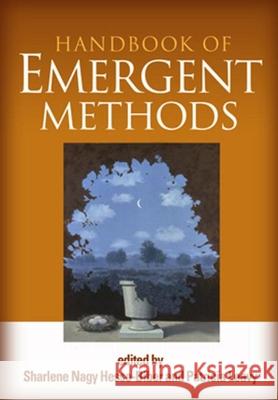
Handbook of Emergent Methods Sharlene Hesse-Biber Patricia Leavy 9781593851477 Guilford Publications - książkaWidoczna okładka, to zdjęcie poglądowe, a rzeczywista szata graficzna może różnić się od prezentowanej.

Handbook of Emergent Methods

ISBN-13: 9781593851477 / Angielski / Twarda / 2008 / 740 str.

Sharlene Hesse-Biber; Patricia Leavy
cena 575,58 zł
(netto: 548,17 VAT:  5%)

Najniższa cena z 30 dni: 569,69 zł
Termin realizacji zamówienia:
ok. 22 dni roboczych
Bez gwarancji dostawy przed świętami

Darmowa dostawa!
inne wydania

Social researchers increasingly find themselves looking beyond conventional methods to address complex research questions. The "Handbook of Emergent Methods" is the first book to comprehensively examine emergent qualitative and quantitative theories and methods across the social and behavioral sciences. Providing scholars and students with a way to retool their research choices, the volume""presents cutting-edge approaches to data collection, analysis, and representation. Leading researchers describe alternative uses of traditional quantitative and qualitative tools; innovative hybrid or mixed methods; and new techniques facilitated by technological advances. Consistently formatted chapters explore the strengths and limitations of each method for studying different types of research questions and offer practical, in-depth examples.

Kategorie:
Nauka, Socjologia i społeczeństwo
Kategorie BISAC:
Social Science > Methodology
Social Science > Antropologia
Wydawca:
Guilford Publications
Język:
Angielski
ISBN-13:
9781593851477
Rok wydania:
2008
Ilość stron:
740
Waga:
1.40 kg
Wymiary:
25.27 x 18.44 x 3.86
Oprawa:
Twarda
Wolumenów:
01
Dodatkowe informacje:
Bibliografia

A 'must read' for anyone interested in remaining current with developing research techniques. The book provides a wealth of information regarding innovative approaches that will permit the investigation of novel research questions.--Larry Christensen, Chair, Department of Psychology, University of South Alabama

In the rapidly changing domain of qualitative methods, this comprehensive handbook places qualitative inquiry in context and provides a much-needed, in-depth view of the latest developments. The book describes the 'roots' of the major qualitative methods and how they are developing, outlines innovations in research design and analysis, and explores the impact that these developments are having on methods per se. Hesse-Biber and Leavy are to be congratulated for bringing together leaders in the field to create this seminal work, which will have a profound impact on qualitative methods.--Janice M. Morse, Professor and Barnes Presidential Endowed Chair, College of Nursing, University of Utah

Methods determine not only how we see, but also what we can see. This comprehensive handbook details creative new approaches to asking and exploring questions within the social sciences. These approaches offer liberation from the narrowing straits of logical positivistic measurement and quantification, and chart the paths to addressing more socially meaningful questions. They provide means for examining social reality with fresh tools. The range of chapters on different emergent methods will be enlightening to both new and experienced researchers.--Ruthellen Josselson, School of Psychology, Fielding Graduate University

With contributions from both emerging and established methodological scholars, this innovative, engaging work articulates a view of research less as a linear series of stages than as an unfolding and evolving process. This orientation is in tune with changes in theoretical underpinnings of research that underline many contemporary methodological approaches, including participatory, feminist, and other inclusive approaches. Readers are offered fodder for beginning to think outside of the traditional methodological box and for revitalizing such methods as focus group interviewing and oral history. This book will be of value to both novice and more well-established investigators who wish to pursue their research endeavors more flexibly, reflectively, and inclusively.--Bruce L. Berg, Department of Criminal Justice, California State University, Long Beach

Hesse-Biber and Leavy's timely and constructive response to the collapse of disciplinary authority and the postmodern challenge in the social sciences does not take an 'anything goes' position. The editors and their collaborators argue for a principled and rational approach to orchestrating research that welcomes and evaluates a bewildering array of emergent methods in the social sciences. This handbook both provides invaluable, specific guidance to researchers and frames the notion of methodological emergence as a theoretical challenge in its own right.--Davydd J. Greenwood, Goldwin Smith Professor of Anthropology, Cornell University

This is a powerful and valuable work for anyone involved in social science research. Hesse-Biber and Leavy have called together many experienced writers in qualitative methods to explore the emergent methods so critical to the current time. Whether deconstructing document research, arts-based approaches, or historical methods, or extending our understanding of interviewing, performance ethnography, and participatory approaches, all of the chapters provide greater clarity about how we do what we do in the qualitative research community. If their goals were to illuminate, transform, and inspire, these editors and contributors have certainly hit their mark. This book is a gift to both students and teachers of emergent methods.--Valerie J. Janesick, Department of Educational Leadership and Policy Studies, University of South Florida

-

Introduction: Pushing on the Methodological Boundaries—The Growing Need for Emergent Methods within and across the Disciplines, Sharlene Nagy Hesse-Biber and Patricia Leavy
I. Historical Context of Emergent Methods and Innovation in the Practice of Research Methods
Introduction to Part I, Patricia Leavy and Sharlene Nagy Hesse-Biber
History
1. History of Methods in Social Science Research, Karen M. Staller, Ellen Block, and Pilar S. Horner
2. Gender Inclusion, Contextual Values, and Strong Objectivity: Emergent Feminist Methods for Research in the Sciences, Sue V. Rosser
3. A Post-Newtonian, Postmodern Approach to Science: New Methods in Social Action Research, Lisa Cosgrove and Maureen McHugh
4. Emergence in and from Quasi-Experimental Design and Analysis, Melvin M. Mark
Document Research
5. Researching Documents: Emergent Methods, Lindsay Prior
6. Emergent Qualitative Document Analysis, David Altheide, Michael Coyle, Katie DeVriese, and Christopher Schneider
Grounded Theory
7. Grounded Theory as an Emergent Method, Kathy Charmaz
Interviewing
8. New Frontiers in Standardized Survey Interviewing, Frederick G. Conrad and Michael F. Schober
9. Emergent Approaches to Focus Group Research, David Morgan, Collin Fellows, and Heather Guevara
10. Emergent Issues in International Focus Group Discussions, Monique M. Hennink
11. Three Dimensions and More: Oral History Beyond the Paradoxes of Method, Michael Frisch
Ethnography
12. Narrative Ethnography, Jaber F. Gubrium and James A. Holstein
13. Public Ethnography, Carol A. Bailey
14. Emergent Methods in Autoethnographic Research: Autoethnographic Narrative and the Multiethnographic Turn, Christine S. Davis and Carolyn Ellis
15. New Critical Collaborative Ethnography, Himika Bhattacharya
Arts-Based Practice
16. Visual Research Methods: Where Are We and Where Are We Going?, Gunilla Holm
17. Performance-Based Emergent Methods, Patricia Leavy
II. Innovations in Research Methods Design and Analysis
Introduction to Part II, Sharlene Nagy Hesse-Biber
18. Mixing Quantitative and Qualitative Approaches: An Introduction to Emergent Mixed Methods Research, Vicki L. Plano Clark, John W. Creswell, Denise O'Neil Green, and Ronald J. Shope
19. Emergent Techniques in the Gathering and Analysis of Mixed Methods Data, Charles Teddlie, Abbas Tashakkori, and Burke Johnson
20. Data Analysis and Interpretation: Emergent Issues in Linking Qualitative and Quantitative Evidence, Sarah Irwin
21. Longitudinal Research: An Emergent Method in the Social Sciences, Elisabetta Ruspini
22. Categorizing and Connecting Strategies in Qualitative Data Analysis, Joseph A. Maxwell and Barbara A. Miller
23. Metaphor Analysis, Zazie Todd and Simon J. Harrison
24. Hearing Voices: Listening for Multiplicity and Movement in Interview Data, Lynn Sorsoli and Deborah L. Tolman
III. The Impact of Emergent Technologies on Research Methods
Introduction to Part III, Sharlene Nagy Hesse-Biber
25. Internet Research as Emergent Practice, Christine Hine
26. Internet-Mediated Research as an Emergent Method and Its Potential Role in Facilitating Mixed Methods Research, Claire Hewson
27. Hypermedia Methods for Qualitative Research, Bella Dicks & Bruce Mason
28. Mixed Emotions, Mixed Methods: The Role of Emergent Technologies in Studying User Experience in Context, Ingrid Mulder and Joke Kort
29. Emergent Methods in Feminist Geography, Mei-Po Kwan
30. Neural Networks an Emergent Method in Quantitative Research: An Example of Self-Organizing Maps, Natalia Sarkisian
31. User-Centered Perspectives on Qualitative Data Analysis Software: The Impact of Emergent Technologies and Future Trends, Sharlene Nagy Hesse-Biber and Christine Crofts
32. The Role of Computer-Assisted Qualitative Data Analysis: Impact on Emergent Methods in Qualitative Research, Nigel Fielding

Sharlene Nagy Hesse-Biber is Professor of Sociology and Director of Women’s Studies at Boston College. She is also the founder and former Executive Director of the National Association for Women in Catholic Higher Education. She has published widely on the impact of sociocultural factors on women’s body image, as well as on feminist and qualitative research methods. She is codeveloper of the software program HyperRESEARCH, a computer-assisted program for analyzing qualitative data, and of the new transcription tool HyperTRANSCRIBE. Her article "Qualitative Approaches to Mixed Methods Practice" was the most downloaded article of 2010 in the journal Qualitative Inquiry.

Patricia Leavy, PhD, is an independent sociologist, novelist, and former Chair of Sociology and Criminology and Founding Director of Gender Studies at Stonehill College in Easton, Massachusetts. She is the author, coauthor, or editor of over 35 books, and the creator and editor of 10 book series. Known for her commitment to public scholarship, she is frequently contacted by the U.S. national news media and has blogged for The Huffington Post, The Creativity Post, and We Are the Real Deal. She is also co-founder and co-editor-in-chief of the journal Art/Research International. Dr. Leavy has received numerous awards for her work in the field of research methods, including the Distinguished Service Outside the Profession Award from the National Art Education Association, the New England Sociologist of the Year Award from the New England Sociological Association, the Special Achievement Award from the American Creativity Association, the Egon Guba Memorial Keynote Lecture Award from the American Educational Research Association Qualitative Special Interest Group, and the Special Career Award from the International Congress of Qualitative Inquiry. In 2016, Mogul, a global women’s empowerment platform, named her an “Influencer.” The School of Fine and Performing Arts at the State University of New York at New Paltz has established the Patricia Leavy Award for Art and Social Justice in her honor. Dr. Leavy delivers invited lectures and keynote addresses at universities and conferences. Her website is www.patricialeavy.com.


Hesse-Biber, Sharlene Sharlene Hesse-Biber is Associate Professor of Soc... więcej >


Udostępnij

Facebook - konto krainaksiazek.pl


Opinie o Krainaksiazek.pl na Opineo.pl

Partner Mybenefit

Krainaksiazek.pl w programie rzetelna firma Krainaksiaze.pl - płatności przez paypal

Czytaj nas na:

Facebook - krainaksiazek.pl
  • książki na zamówienie
  • granty
  • książka na prezent
  • kontakt
  • pomoc
  • opinie
  • regulamin
  • polityka prywatności

Zobacz:

  • Księgarnia czeska

  • Wydawnictwo Książkowe Klimaty

1997-2025 DolnySlask.com Agencja Internetowa

© 1997-2022 krainaksiazek.pl
     
KONTAKT | REGULAMIN | POLITYKA PRYWATNOŚCI | USTAWIENIA PRYWATNOŚCI
Zobacz: Księgarnia Czeska | Wydawnictwo Książkowe Klimaty | Mapa strony | Lista autorów
KrainaKsiazek.PL - Księgarnia Internetowa

Polityka prywatnosci - link
Krainaksiazek.pl - płatnośc Przelewy24
Przechowalnia Przechowalnia





