Handbook of DNA Profiling » książka





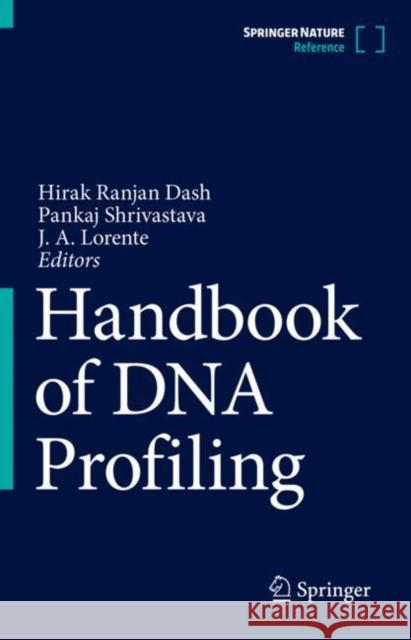
Handbook of DNA Profiling
ISBN-13: 9789811643170 / Angielski / Twarda / 2022 / 1090 str.
Handbook of DNA Profiling
ISBN-13: 9789811643170 / Angielski / Twarda / 2022 / 1090 str.
(netto: 2327,36 VAT: 5%)
Najniższa cena z 30 dni: 2313,32
ok. 16-18 dni roboczych.
Darmowa dostawa!
1. Introduction to forensic DNA typing
2. Biological sources of DNA: the target materials for forensic DNA analysis
3. Collection, preservation and transportation of DNA evidences
4. Tools and techniques used in forensic DNA typing
5. Forensic DNA fingerprinting: evaluation of the currently used autosomal STR markers and kits
6. Forensic DNA fingerprinting: evaluation of the currently used gonosomal markers and kits
7. Usefulness of SNPs in forensic DNA analysis
8. DNA databases: A boon to forensic DNA analysis9. Statistical evaluation of forensic DNA evidence
10. Potential of DNA technique based body fluid identification
11. DNA fingerprinting and legislation
12. A glimpse of famous cases in history solved by DNA typing
13. Usefulness of autosomal STR analysis in solving cases: a case study
14. A case study on the usefulness of Y-STR typing technique
15. Usefulness of X-STR analysis in solving cases: a case study
16. Usefulness of mitochondrial DNA analysis in solving cases: a case study17. Application of NGS in solving mysterious cases
18. A case study on disputed paternity solved by DNA typing
19. Identification of mutilated bodies: a case study
20. A case study on murder mystery solved by DNA typing
21. Identification of sexual assault culprit by DNA typing: a case study
22. Disaster victim identification by DNA typing
23. Cases of robbery solved by DNA typing
24. Ancient DNA analysis: A case study
25. Miscellaneous cases solved by DNA typing
26. DNA analysis for prenatal diagnosis
27. Analysis of DNA for diagnosis of neonatal diseases
28. Diseases of skin, hair and nail and their analysis through DNA
29. A Paediatrician’s perspective of DNA analysis
30. Diseases of metabolism and endocrine disorder by DNA analysis
31. DNA analysis in malignancies; diagnostic and prognostic value
32. The role of DNA analysis in drug reactions
33. Detection of various diseases through DNA typing: case studiesSection V: Modifications in routine methodologies to solve challenging cases
34. Modification of the manual DNA extraction protocols to obtain results in a case
35. A modified protocol of automated DNA extraction technique to obtain results
36. Modification of PCR conditions to obtain results in a case
37. Modification of various parameters of capillary electrophoresis to obtain results in a case
38. Required modifications of default software parameters to obtain results in a case
39. Application of various statistical tools to draw conclusion in a case40. Cases pertaining to wild-life crimes solved by DNA typing
41. Usefulness of plant DNA typing in solving different cases
42. Microbial typing to solve various cases
43. Touch DNA analysis
44. RAPID DNA analysis
45. Interpretation of mixed profiles
46. Role of population data in strengthening forensic DNA analysis
47. Role of genealogy databases for identification of suspected perpetrators
48. Familial searching: an application of forensic DNA profiling
49. An insight on miscarriages of justice through DNA typing
50. Validation kits and instruments and its necessity
51. Quality control in forensic DNA analysis
52. DNA phenotyping: the technique of future
53. Recommendations on report writing of DNA profiling results
54. The role of scientific societies in generating best practices in forensic DNA profiling
Dr. Hirak Ranjan Dash is currently working as an Assistant Professor of Forensic Biology and Biotechnology at the National Forensic Sciences University, Delhi Campus, India. Besides teaching and research, he is actively involved in conducting training programs to various beneficiaries of forensic science. Before joining academics, he served as a forensic DNA expert at Madhya Pradesh Forensic Science Laboratory, India, for over 6 years. He has an experience of conducting DNA examination in more than 1500 complicated cases. He has completed his Ph.D. from the Department of Life Science, National Institute of Technology, Rourkela, India, He received his M.Sc. in Microbiology from Orissa University of Agriculture and Technology, Odisha, India. His research interests include forensic microbiology, thanatomicrobiome analysis, molecular microbiology, DNA fingerprinting, and genetic manipulation. He is one of the pioneers in India to work on NGS technology-based forensic DNA analysis. He has written 8 books and published 50 research papers, 14 book chapters, 12 conference proceedings, and 4 popular science articles.
Dr. Pankaj Shrivastava received his Ph.D. in microbiology with a specialization in biotechnology from the Department of Biological Science, Rani Durgawati University, Jabalpur, Madhya Pradesh, India. He is in charge of the Forensic DNA Fingerprinting facility of the Govt. of Madhya Pradesh, India at Sagar. Dr. Shrivastava has more than 13 years of experience as a bench worker for examining and reporting a wide range of criminal cases using DNA technology and deposing the court evidence. His research interests include population DNA database, improvement of xv methods in forensic DNA typing, finding rapid protocols for the technology, and microbial forensics. He is a two-time recipient of the prestigious Pt. Govind Vallabh Pant Award from the Bureau of Police Research and Development, Ministry of Home Affairs, Govt. of India, and a recipient of the Anusrajan Award from AIISECT University, Bhopal, for his authored books. Dr. Shrivastava is also a recipient of the FICCI Smart Policing award for developing a fast DNA-typing protocol. He is a visiting faculty at many universities, police training institutes, and judicial officers training institutes. Dr. Shrivastava has written 13 books and published 65 research papers in journals of repute in forensic science, 21 book chapters, 84 conference proceedings, and 15 popular science articles.
J. A. Lorente is Professor of Forensic Medicine at the University of Granada, Spain. After graduating from the Faculty of Medicine of Granada in 1985, he completed his Ph.D. (Honors) in medicine and surgery at the University of Granada, in 1989. Dr. Lorente has published over 170 peer-reviewed papers and several books and book chapters. He has a special focus on the use of DNA and its application to human rights (he launched the first-ever database to identify missing people, the Spanish Phoenix Program, back in 1999); he also created and launched the DNA-PROKIDS Program in 2004, and the DNA-Pro-ORGAN Program in 2016. His areas of interest in forensics also deal with population variability and analysis of old and ancient DNA samples and databases expansion and control. Dr. Lorente is also actively working in medical genomics, and he is the scientific director of the Center for Genomics and Oncological Research (GENYO), where his team focuses on liquid biopsy and cancer interception. Dr. Lorente is the founder and first president of the AICEF (Ibero-Latin American Network of Forensic Sciences) and an honorary member of the AFSN (Asian Forensic Sciences Network).




Czytaj nas na:
1997-2026 DolnySlask.com Agencja Internetowa
KrainaKsiazek.PL - Księgarnia Internetowa


