• Wyszukiwanie zaawansowane
  • Kategorie
  • Kategorie BISAC
  • Książki na zamówienie
  • Promocje
  • Granty
  • Książka na prezent
  • Opinie
  • Pomoc
  • Załóż konto
  • Zaloguj się

Handbook of Applied Dog Behavior and Training, Etiology and Assessment of Behavior Problems » książka


zaloguj się | załóż konto
Logo Krainaksiazek.pl

koszyk

konto

szukaj
topmenu
Księgarnia internetowa
Szukaj
Książki na zamówienie
Promocje
Granty
Książka na prezent
Moje konto
Pomoc
 
 
Wyszukiwanie zaawansowane
Pusty koszyk
Bezpłatna dostawa dla zamówień powyżej 20 złBezpłatna dostawa dla zamówień powyżej 20 zł

Kategorie główne

• Nauka
 [2946600]
• Literatura piękna
 [1856966]

  więcej...
• Turystyka
 [72221]
• Informatyka
 [151456]
• Komiksy
 [35826]
• Encyklopedie
 [23190]
• Dziecięca
 [619653]
• Hobby
 [140543]
• AudioBooki
 [1577]
• Literatura faktu
 [228355]
• Muzyka CD
 [410]
• Słowniki
 [2874]
• Inne
 [445822]
• Kalendarze
 [1744]
• Podręczniki
 [167141]
• Poradniki
 [482898]
• Religia
 [510455]
• Czasopisma
 [526]
• Sport
 [61590]
• Sztuka
 [243598]
• CD, DVD, Video
 [3423]
• Technologie
 [219201]
• Zdrowie
 [101638]
• Książkowe Klimaty
 [124]
• Zabawki
 [2473]
• Puzzle, gry
 [3898]
• Literatura w języku ukraińskim
 [254]
• Art. papiernicze i szkolne
 [8170]
Kategorie szczegółowe BISAC

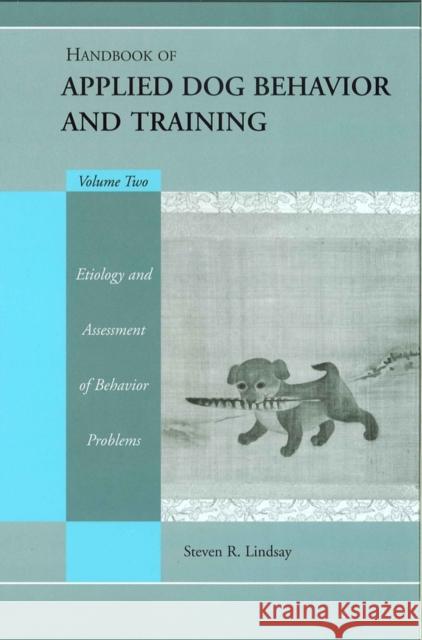
Handbook of Applied Dog Behavior and Training, Etiology and Assessment of Behavior Problems

ISBN-13: 9780813828688 / Angielski / Twarda / 2001 / 344 str.
Steven Lindsay
Handbook of Applied Dog Behavior and Training, Etiology and Assessment of Behavior Problems Lindsay, Steve 9780813828688 Iowa State Press - książkaWidoczna okładka, to zdjęcie poglądowe, a rzeczywista szata graficzna może różnić się od prezentowanej.

Handbook of Applied Dog Behavior and Training, Etiology and Assessment of Behavior Problems

ISBN-13: 9780813828688 / Angielski / Twarda / 2001 / 344 str.

Steven Lindsay
cena 466,03 zł
(netto: 443,84 VAT:  5%)

Najniższa cena z 30 dni: 462,21 zł
Termin realizacji zamówienia:
ok. 30 dni roboczych
Bez gwarancji dostawy przed świętami

Darmowa dostawa!

Handbook of Applied Dog Behaviour and Training, Volume two: Etiology and Assessment of Behaviour Problems is the definitive reference for dog trainers, behaviourists, breeders and veterinarians. Coupled with Volume one, this text provides theoretical and practical framework for understanding the development and treatment of dog behaviour problems. Topics covered include Fear, anxiety and phobias, Separation-related problems, Hyperactivity, and Dominance, territorial, and fear-related aggression. The focus is to present and evaluate the relevant applied and scientific literature, and to highlight what remains to be learned, while the author introduces alternative ways for analysing and understanding the etiology of dog behaviour problems.


Kategorie:
Hobby, Zwierzęta
Kategorie BISAC:
Pets > Dogs - Training
Medical > Medycyna weterynaryjna małych zwierząt
Wydawca:
Iowa State Press
Język:
Angielski
ISBN-13:
9780813828688
Rok wydania:
2001
Wydanie:
Volume 2
Ilość stron:
344
Waga:
0.88 kg
Wymiary:
26.2 x 18.5 x 2.1
Oprawa:
Twarda
Wolumenów:
01
Dodatkowe informacje:
Wydanie ilustrowane

Preface.

Acknowledgements.

1. History of Applied Dog Behavior and Training.

Social Parallelism, Domestication, and Training; Dogs and the Ancient World; Roots of Modern Training; Organized Competitive Obedience; Dogs and Defense; The Monks of New Skete; New York and the North American Society of Dog Trainers; Science and Behavior; Applied Behavior; Contemporary Trends in Dog Training; References.

2. Behavioral Assessment.

Part 1: Descriptive and Functional Assessment; Behavioral Fact–finding; Defining Behavior as a Problem; Functional Analysis and Working Hypotheses; Dead–dog Rule; Training Plan; Describing and Classifying Behavior Problems; Common Etiological Factors Underlying Behavior Problems; Control and Management of Behavior Problems versus Cure.

Part 2: Evaluation Forms; Client Work Sheet; Dog Behavior Questionnaire; Puppy Temperament and Evaluation; Puppy Behavior Profile; References.

3. Fears and Phobias.

Incidence of Fear–related Behavior Problems; Assessment and Evaluation of Fear–related Problems; Contributions of Learning; What Is Fear?; Innate and Acquired Fear; Fear and Conditioning; Anxiety; Phobia; Expectancy Bias; Prediction and Control; Efficacy Expectancies; Primal Sensory Modalities Mediating Attraction and Aversion; Play and Fear; Assessment and Modification of Fear;.

References.

4. Attachment, Separation, and Related Problems.

Part 1: Attachment and Separation; Attachment and Separation Distress; Bowlby′s Social Bond Theory; Psychobiological "Attunement": Bioregulatory Hypothesis; Opponent–process Theory and Separation Distress; Supernormal Attachment Hypothesis; Neoteny and Dependency; Biological Stress and Separation Distress; Separation Distress and Coactive Influences.

Part 2: Ontogenesis of Separation Distress; Development of Attachments and Separation–related Distress; Attachment and Learning; Comparison Between Dog and Wolf Exposure to Social Separation.

Part 3: Separation–Related Problems: Worry and Guilt: The Human Dimension of Separation Distress; Behavioral Expressions of Separation Distress; Assessing Separation–related Problems; Etiology, Ethology, and Risk Factors; Separation Distress and Retroactive Punishment; Aging and Separation–related Problems; References.

5. Excessive Behavior.

Part 1: Compulsive Behavior; Definitions; Etiology; Displacement Activity; Adjunctive Behavior and Compulsions; Conflict and Coactive Factors; Compulsive Behavior Problems; Assessment and Evaluation; Prevention.

Part 2: Hyperactivity; Hyperactivity versus Hyperkinesis; Signs and Incidence; Etiology; CNS–stimulant–response Test; Dietary Factors and Hyperactivity; Two Case Histories; Cognitive Interpretations and Speculation; Behavioral Side Effects of Hyperactivity; References.

6. Aggressive Behavior: Basic Concepts and Principles.

Part 1: Introduction; Characteristics of Dogs That Bite; Age and Sex; Incidence and Targets of Aggression; Emotional Trauma of Dog Attacks on Children: Dogs That Kill; Dog Attacks versus Human Fatal Assaults on Children; Basic Categories; Classifying Aggressive Behavior; A Nomenclature of Aggressive Behavior; Predatory Behavior; Genetics and Aggression; Hormones and Aggressive Behavior; Nutrition and Aggression; Role of Integrated Compliance and Obedience Training.

Part 2: Children, Dogs, and Aggression; Preventing Problems; Dog and Baby; Evaluating the Risk; Preventing Bites; References.

7. Intraspecific and Territorial Aggression.

Part 1: Intraspecific Aggression; Etiology and Assessment; Owner Characteristics of Aggressors and Victims; Domestication and Developmental Factors; Hormonal Influences; Socialization and Aggression; Aggression Between Dogs Sharing the Same Household; Prevention.

Part 2: Territorial Defense; Control Vector Analysis of Territory; How Territory Is Established and Defended Free–floating Territory; Territorial Aggression versus Group Protection; Variables Influencing Territorial Aggression.

Part 3: Fear–related Aggression; Fear and Aggression; Fear and Avoidance–motivated Aggression; Fear and Territorial Aggression; References.

8. Social Competition and Aggression.

Assessment and Identification; Concept of Social Dominance: Defining Dominance: Structure of Dominance Relations: Social Dominance and Aggression: Dominance and Social Harmony: Interspecies Social Dominance: Social Distance and Polarity; Affiliation and Social Dominance; Play and Aggression; Cognition and Aggression; Anxiety, Frustration, and Aggression; Behavioral Thresholds and Aggression; Aversive Trauma, Social Loss, and Aggression; Learning and Dominance; Social Competition, Development, and Aggression; Social versus Competitive (Possessive) Behavior; Temperament Tests and Aggression Prevention;.

References.

9. Appetitive and Elimination Problems.

Part 1: Appetitive Problems; Excessive Eating and Obesity; Inappetence and Anorexia; Pica and Destructive Behavior; Pica and Scavenging; Coprophagy; Putative Causes of Coprophagy; Evolutionary Rationale.

Part 2: Elimination Problems; Physiology, Neural Control, and Learning; Eliminatory Behavior; Common Elimination Problems.

Defecation Problems; Flatulence; Grass Burn and Urine; References.

10. Cynopraxis.

Cynopraxic Counseling; Behavior Problems and the Family.

Joining the Family; Psychological Factors; Attributional Styles; Psychodynamic Factors; Social Placebos; The Cynopraxic Trainer′s Attitude; References.

Index.

Steven R. Lindsay, MA, is a dog behavior consultant and trainer in the Philadelphia, Pennsylvania, area, where he teaches handling, training, and behavior modification based on ethological principles. He also conducts seminars and is the author of numerous articles. Mr. Lindsay evaluated, handled, and trained highly skilled dogs for the U.S. military.

andbook of Applied Dog Behavior and Training, Volume Two: Etiology and Assessment of Behavior Problems is a definitive handbook for dog trainers, behaviorists, breeders, veterinarians, and others who have a serious interest in dog behavior and training. Readers will benefit from the author′s twenty–five years of study and experience with dogs as a behavioral consultant and trainer. The vast majority of dogs exhibit at least one undesirable habit. Most of these problems are responsive to remedial training and brief counseling. However, some behavior problems are the result of a more complex etiology involving adverse emotional influences, cognitive disturbances, or pervasive behavioral disorganization. If not properly identified and treated, such problems may lead to the dog being removed from the home or euthanized. Volume 2 of Handbook of Applied Dog Behavior and Training explores the collective causes underlying the development of serous adjustment problems in dogs. Coupled with Volume 1: Adaptation and Learning, Volume 2 provides a comprehensive theoretical and practical framework for understanding the development and treatment of behavior problems. The focus of Volume 2 is to present and evaluate the relevant applied and scientific literature, with the goals of clarifying what is known about the etiology of dog behavior problems and highlighting what yet remains to be learned. In addition, the author introduces several alternative ways for analyzing and understanding the etiology of behavior problems. Topics covered in depth include: History of applied dog behavior Behavioral etiology and assessment Fear, anxiety, and phobias Separation–related problems Compulsive behavior problems Hyperactivity Dominance, territorial and fear–related aggression Appetitive and elimination problems This volume is an authoritive and thoroughly referenced text that is written in a highly readable and enjoyable style. There are no other applied dog behavior texts of comparable quality and thoroughness available.

Lindsay, Steven Steven R. Lindsay, MA, is a dog behavior consultan... więcej >


Udostępnij

Facebook - konto krainaksiazek.pl


Opinie o Krainaksiazek.pl na Opineo.pl

Partner Mybenefit

Krainaksiazek.pl w programie rzetelna firma Krainaksiaze.pl - płatności przez paypal

Czytaj nas na:

Facebook - krainaksiazek.pl
  • książki na zamówienie
  • granty
  • książka na prezent
  • kontakt
  • pomoc
  • opinie
  • regulamin
  • polityka prywatności

Zobacz:

  • Księgarnia czeska

  • Wydawnictwo Książkowe Klimaty

1997-2025 DolnySlask.com Agencja Internetowa

© 1997-2022 krainaksiazek.pl
     
KONTAKT | REGULAMIN | POLITYKA PRYWATNOŚCI | USTAWIENIA PRYWATNOŚCI
Zobacz: Księgarnia Czeska | Wydawnictwo Książkowe Klimaty | Mapa strony | Lista autorów
KrainaKsiazek.PL - Księgarnia Internetowa

Polityka prywatnosci - link
Krainaksiazek.pl - płatnośc Przelewy24
Przechowalnia Przechowalnia





