• Wyszukiwanie zaawansowane
  • Kategorie
  • Kategorie BISAC
  • Książki na zamówienie
  • Promocje
  • Granty
  • Książka na prezent
  • Opinie
  • Pomoc
  • Załóż konto
  • Zaloguj się

Handbook of Advanced Radioactive Waste Conditioning Technologies » książka

zaloguj się | załóż konto
Logo Krainaksiazek.pl

koszyk

konto

szukaj
topmenu
Księgarnia internetowa
Szukaj
Książki na zamówienie
Promocje
Granty
Książka na prezent
Moje konto
Pomoc
 
 
Wyszukiwanie zaawansowane
Pusty koszyk
Bezpłatna dostawa dla zamówień powyżej 20 złBezpłatna dostawa dla zamówień powyżej 20 zł

Kategorie główne

• Nauka
 [2949965]
• Literatura piękna
 [1857847]

  więcej...
• Turystyka
 [70818]
• Informatyka
 [151303]
• Komiksy
 [35733]
• Encyklopedie
 [23180]
• Dziecięca
 [617748]
• Hobby
 [139972]
• AudioBooki
 [1650]
• Literatura faktu
 [228361]
• Muzyka CD
 [398]
• Słowniki
 [2862]
• Inne
 [444732]
• Kalendarze
 [1620]
• Podręczniki
 [167233]
• Poradniki
 [482388]
• Religia
 [509867]
• Czasopisma
 [533]
• Sport
 [61361]
• Sztuka
 [243125]
• CD, DVD, Video
 [3451]
• Technologie
 [219309]
• Zdrowie
 [101347]
• Książkowe Klimaty
 [123]
• Zabawki
 [2362]
• Puzzle, gry
 [3791]
• Literatura w języku ukraińskim
 [253]
• Art. papiernicze i szkolne
 [7933]
Kategorie szczegółowe BISAC

Handbook of Advanced Radioactive Waste Conditioning Technologies

ISBN-13: 9781845696269 / Angielski / Twarda / 2011 / 512 str.
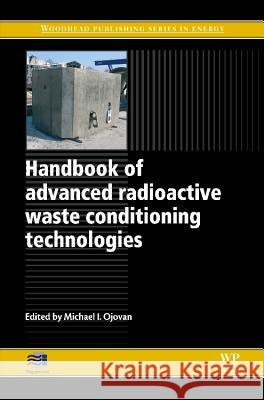
Handbook of Advanced Radioactive Waste Conditioning Technologies  9781845696269 Woodhead Publishing, - książkaWidoczna okładka, to zdjęcie poglądowe, a rzeczywista szata graficzna może różnić się od prezentowanej.

Handbook of Advanced Radioactive Waste Conditioning Technologies

ISBN-13: 9781845696269 / Angielski / Twarda / 2011 / 512 str.

cena 951,16 zł
(netto: 905,87 VAT:  5%)

Najniższa cena z 30 dni: 941,44 zł
Termin realizacji zamówienia:
ok. 30 dni roboczych
Bez gwarancji dostawy przed świętami

Darmowa dostawa!

Radioactive wastes are generated from a wide range of sources, including the power industry, and medical and scientific research institutions, presenting a range of challenges in dealing with a diverse set of radionuclides of varying concentrations. Conditioning technologies are essential for the encapsulation and immobilisation of these radioactive wastes, forming the initial engineered barrier required for their transportation, storage and disposal. The need to ensure the long term performance of radioactive waste forms is a key driver of the development of advanced conditioning technologies.

The Handbook of advanced radioactive waste conditioning technologies provides a comprehensive and systematic reference on the various options available and under development for the treatment and immobilisation of radioactive wastes. The book opens with an introductory chapter on radioactive waste characterisation and selection of conditioning technologies. Part one reviews the main radioactive waste treatment processes and conditioning technologies, including volume reduction techniques such as compaction, incineration and plasma treatment, as well as encapsulation methods such as cementation, calcination and vitrification. This coverage is extended in part two, with in-depth reviews of the development of advanced materials for radioactive waste conditioning, including geopolymers, glass and ceramic matrices for nuclear waste immobilisation, and waste packages and containers for disposal. Finally, part three reviews the long-term performance assessment and knowledge management techniques applicable to both spent nuclear fuels and solid radioactive waste forms.

With its distinguished international team of contributors, the Handbook of advanced radioactive waste conditioning technologies is a standard reference for all radioactive waste management professionals, radiochemists, academics and researchers involved in the development of the nuclear fuel cycle.

  • Provides a comprehensive and systematic reference on the various options available and under development for the treatment and immobilisation of radioactive wastes
  • Explores radioactive waste characterisation and selection of conditioning technologies including the development of advanced materials for radioactive waste conditioning
  • Assesses the main radioactive waste treatment processes and conditioning technologies, including volume reduction techniques such as compaction


Kategorie:
Inne
Kategorie BISAC:
Technology & Engineering > Environmental - Waste Management
Science > Environmental Science (see also Chemistry - Environmental)
Technology & Engineering > Power Resources - Nuclear
Wydawca:
Woodhead Publishing,
Język:
Angielski
ISBN-13:
9781845696269
Rok wydania:
2011
Numer serii:
000436075
Ilość stron:
512
Waga:
0.88 kg
Wymiary:
23.37 x 16.26 x 3.81
Oprawa:
Twarda
Wolumenów:
01
Dodatkowe informacje:
Bibliografia
Glosariusz/słownik
Wydanie ilustrowane

"A comprehensive and valuable reference book written by a team of outstanding experts, dealing with one of the most critical aspects of nuclear power generation: the safe and sound management of the radioactive waste." --Dr Rudolf Burcl, European Commission, JRC - Institute for Energy, Petten, The Netherlands

"Woodhead Publishing has commissioned recognized world experts in reporting on the latest radioactive waste conditioning technologies for this valuable new book." --Gary A. Benda, Deputy Managing Director and Chairman, Program Advisory Committee, WM Symposia, USA

Contributor contact details

Woodhead Publishing Series in Energy

Chapter 1: Radioactive waste characterization and selection of processing technologies

Abstract:

1.1 Introduction

1.2 Radioactive waste classification

1.3 Radioactive waste characterization

1.4 Radioactive waste processing

1.5 Selection of conditioning technologies

1.6 Sources of further information and advice

1.7 Acknowledgements

Part I: Radioactive waste treatment processes and conditioning technologies

Chapter 2: Compaction processes and technology for treatment and conditioning of radioactive waste

Abstract:

2.1 Applicable waste streams in compaction processes and technology

2.2 Compaction processes and technology

2.3 End waste forms and quality control of compaction processes

2.4 Pre-treatment in compaction processes

2.5 Secondary wastes of compaction processes and technology

2.6 Advantages and limitations of compaction processes and technoligy

2.7 Future trends

2.8 Sources of further information and advice

Chapter 3: Incineration and plasma processes and technology for treatment and conditioning of radioactive waste

Abstract:

3.1 Introduction

3.2 Applicable waste streams in incineration processes and technology

3.3 Incineration process and technology

3.4 Plasma process and technology

3.5 End waste form and quality control in incineration (plasma) processes

3.6 Advantages and limitations of incineration (plasma) processes

3.7 Future ternds

3.8 Sources of further information and advice

Chapter 4: Application of inorganic cements to the conditioning and immobilisation of radioactive wastes

Abstract:

4.1 Overview

4.2 Manufacture of Portland cement

4.3 Application of Portland cement

4.4 Hydration of Portland cement

4.5 Porosity and permeability

4.6 Supplementary cementitious materials

4.7 Mineral aggregates

4.8 Service environments and cement performance in its service environment

4.9 Standards and testing

4.10 Organic materials added to Portland cement

4.11 Service environments and lessons from historic concrete

4.12 Non-Portland cement

4.13 Immobilisation mechanisms

4.14 Deterioration processes affecting Portland cement: processes and features

4.15 Deterioration processes: carbonation

4.16 Miscellaneous interactions of cement in its service environment

4.17 Summary and conclusions

Chapter 5: Calcination and vitrification processes for conditioning of radioactive wastes

Abstract:

5.1 Introduction

5.2 Calcination and vitrification processes

5.3 End waste forms and quality control in calcination and vitrification processes

5.4 Future trends

Chapter 6: Historical development of glass and ceramic waste forms for high level radioactive wastes

Abstract:

6.1 Introduction

6.2 Borosilicate glass development in the United States

6.3 Borosilicate glass development in France

6.4 Borosilicate glass development in the United Kingdom

6.5 Aluminosilicate glass development in Canada

6.6 Phosphate glass development in the United States, Russia, Germany and Belgium

6.7 Ceramic waste form development in various countries

Chapter 7: Decommissioning of nuclear facilities and environmental remediation: generation and management of radioactive and other wastes

Abstract:

7.1 Introduction

7.2 What is decommissioning?

7.3 Generation of decommissioning waste

7.4 Waste from dismantling of nuclear facilities

7.5 Waste from decontamination for decommissioning purposes

7.6 Problematic decommissioning waste

7.7 Environmental remediation as a decommissioning component

7.8 Future trends

Part II: Advanced materials and technologies for the immobilisation of radioactive wastes

Chapter 8: Development of geopolymers for nuclear waste immobilisation

Abstract:

8.1 Nuclear wastes around the world

8.2 Cementitious low-level waste (LLW)/intermediate-level waste (ILW) waste forms

8.3 Future work

8.4 Conclusions

8.5 Sources of further information and advice

8.6 Acknowledgements

Chapter 9: Development of glass matrices for high level radioactive wastes

Abstract:

9.1 Introduction

9.2 High level radioactive waste (HLW) glass processing

9.3 Glass formulation and waste loading

9.4 Glass quality: feed-forward process control

9.5 Other glasses

9.6 Future trends

9.7 Sources of further information and advice

Chapter 10: Development of ceramic matrices for high level radioactive wastes

Abstract:

10.1 Introduction

10.2 Ceramic phases

10.3 Ceramic waste forms for the future

10.5 Acknowledgement

Chapter 11: Development of waste packages for the disposal of radioactive waste: French experience

Abstract:

11.1 Introduction

11.2 Existing waste packages used for the disposal of short-lived low- and intermediate-level waste

11.3 Waste packages being developed for other types of radioactive waste

11.4 Future trends

11.5 Sources of further information and advice

11.6 Glossary of terms

Chapter 12: Development and use of metal containers for the disposal of radioactive wastes

Abstract:

12.1 Introduction

12.2 Safety in radioactive waste disposal

12.3 Approaches to physical containment of radioactive waste

12.4 Metal corrosion: an overview

12.5 Radioactive waste containers in use or proposed

12.6 Quality management of metal containers

12.7 Future trends

12.8 Sources of further information and advice

Part III: Radioactive waste long-term performance assessment and knowledge management techniques

Chapter 13: Failure mechanisms of high level nuclear waste forms in storage and geological disposal conditions

Abstract:

13.1 Introduction: the main aspects of the back-end of the nuclear fuel cycle

13.2 Effects of radiation on properties relevant for storage and disposal of high level waste (HLW)

13.3 Chemical corrosion of high level waste (HLW) in presence of water

13.4 Future trends

Chapter 14: Development of long-term behavior models for radioactive waste forms

Abstract:

14.1 Introduction

14.2 Thermo-hydro-mechanical performance modeling

14.3 Corrosion modeling

14.4 Source term release modeling

14.5 Future trends

Chapter 15: Knowledge management for radioactive waste management organisations

Abstract:

15.1 Introduction

15.2 Challenges for managing nuclear knowledge in radioactive waste management organisations

15.3 Managing nuclear knowledge over very long timescales

15.4 Implementing knowledge management in radioactive waste management organisations

15.5 Knowledge management tools and techniques for use in radioactive waste management

15.6 Conclusions

Index

Michael I. Ojovan has been Nuclear Engineer of International Atomic Energy Agency (IAEA), visiting Professor of Imperial College London, Associate Reader in Materials Science and Waste Immobilisation of the University of Sheffield, UK, and Leading Scientist of Radiochemistry Department of Lomonosov Moscow State University. M. Ojovan is Editorial Board Member of scientific journals: "Materials Degradation” (Nature Partner Journal), "International Journal of Corrosion”, "Science and Technology of Nuclear Installations”, "Journal of Nuclear Materials”, and Associate Editor of journal "Innovations in Corrosion and Materials Science”. He has published 12 monographs including the "Handbook of Advanced Radioactive Waste Conditioning Technologies” by Woodhead and three editions of "An Introduction to Nuclear Waste Immobilisation” by Elsevier - 2005, 2013 and 2019. He has founded and led the IAEA International Predisposal Network (IPN) and the IAEA International Project on Irradiated Graphite Processing (GRAPA). M. Ojovan is known for the connectivity-percolation theory of glass transition, Sheffield model (two-exponential equation) of viscosity of glasses and melts, condensed Rydberg matter, metallic and glass-composite materials for nuclear waste immobilisation, and self-sinking capsules to investigate Earth' deep interior.


Udostępnij

Facebook - konto krainaksiazek.pl


Opinie o Krainaksiazek.pl na Opineo.pl

Partner Mybenefit

Krainaksiazek.pl w programie rzetelna firma Krainaksiaze.pl - płatności przez paypal

Czytaj nas na:

Facebook - krainaksiazek.pl
  • książki na zamówienie
  • granty
  • książka na prezent
  • kontakt
  • pomoc
  • opinie
  • regulamin
  • polityka prywatności

Zobacz:

  • Księgarnia czeska

  • Wydawnictwo Książkowe Klimaty

1997-2025 DolnySlask.com Agencja Internetowa

© 1997-2022 krainaksiazek.pl
     
KONTAKT | REGULAMIN | POLITYKA PRYWATNOŚCI | USTAWIENIA PRYWATNOŚCI
Zobacz: Księgarnia Czeska | Wydawnictwo Książkowe Klimaty | Mapa strony | Lista autorów
KrainaKsiazek.PL - Księgarnia Internetowa

Polityka prywatnosci - link
Krainaksiazek.pl - płatnośc Przelewy24
Przechowalnia Przechowalnia







