• Wyszukiwanie zaawansowane
  • Kategorie
  • Kategorie BISAC
  • Książki na zamówienie
  • Promocje
  • Granty
  • Książka na prezent
  • Opinie
  • Pomoc
  • Załóż konto
  • Zaloguj się

Guidelines for Postrelease Mitigation Technology in the Chemical Process Industry » książka


zaloguj się | załóż konto
Logo Krainaksiazek.pl

koszyk

konto

szukaj
topmenu
Księgarnia internetowa
Szukaj
Książki na zamówienie
Promocje
Granty
Książka na prezent
Moje konto
Pomoc
 
 
Wyszukiwanie zaawansowane
Pusty koszyk
Bezpłatna dostawa dla zamówień powyżej 20 złBezpłatna dostawa dla zamówień powyżej 20 zł

Kategorie główne

• Nauka
 [2949965]
• Literatura piękna
 [1857847]

  więcej...
• Turystyka
 [70818]
• Informatyka
 [151303]
• Komiksy
 [35733]
• Encyklopedie
 [23180]
• Dziecięca
 [617748]
• Hobby
 [139972]
• AudioBooki
 [1650]
• Literatura faktu
 [228361]
• Muzyka CD
 [398]
• Słowniki
 [2862]
• Inne
 [444732]
• Kalendarze
 [1620]
• Podręczniki
 [167233]
• Poradniki
 [482388]
• Religia
 [509867]
• Czasopisma
 [533]
• Sport
 [61361]
• Sztuka
 [243125]
• CD, DVD, Video
 [3451]
• Technologie
 [219309]
• Zdrowie
 [101347]
• Książkowe Klimaty
 [123]
• Zabawki
 [2362]
• Puzzle, gry
 [3791]
• Literatura w języku ukraińskim
 [253]
• Art. papiernicze i szkolne
 [7933]
Kategorie szczegółowe BISAC

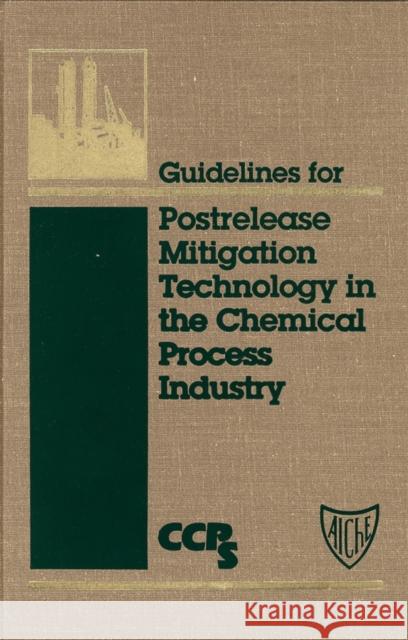
Guidelines for Postrelease Mitigation Technology in the Chemical Process Industry

ISBN-13: 9780816905881 / Angielski / Twarda / 1996 / 192 str.
Center for Chemical Process Safety (CCPS);American Institute of Chemical Engineers
Guidelines for Postrelease Mitigation Technology in the Chemical Process Industry Center for Chemical Process Safety (Ccps American Institute of Chemical Engineers 9780816905881 John Wiley & Sons - książkaWidoczna okładka, to zdjęcie poglądowe, a rzeczywista szata graficzna może różnić się od prezentowanej.

Guidelines for Postrelease Mitigation Technology in the Chemical Process Industry

ISBN-13: 9780816905881 / Angielski / Twarda / 1996 / 192 str.

Center for Chemical Process Safety (CCPS);American Institute of Chemical Engineers
cena 599,26
(netto: 570,72 VAT:  5%)

Najniższa cena z 30 dni: 594,34
Termin realizacji zamówienia:
ok. 30 dni roboczych
Bez gwarancji dostawy przed świętami

Darmowa dostawa!

This book puts together a body of very recent information never before presented in one volume on the design of post-release mitigation systems. The development of a fundamental knowledge base on post-release mitigation systems, through testing and data correlation, is very new. While further research and development is needed, this practical work offers guidance on putting post-release countermeasures to work now. The book presents current engineering methods for minimizing the consequences of the release of toxic vapors, or ignition of flammable vapors, including passive and active systems intended to reduce or eliminate significant acute effects of a dispersing vapor cloud in the plant facility, or into the surrounding community. As in all CCPS works, the book emphasizes planning and a systems approach, shows limitations of any methods discussed, and provides numerous references so that the reader may continue to learn.


Kategorie:
Technologie
Kategorie BISAC:
Technology & Engineering > Chemical & Biochemical
Technology & Engineering > Industrial Health & Safety
Wydawca:
John Wiley & Sons
Język:
Angielski
ISBN-13:
9780816905881
Rok wydania:
1996
Numer serii:
000325569
Ilość stron:
192
Waga:
0.47 kg
Wymiary:
23.04 x 16.1 x 1.85
Oprawa:
Twarda
Wolumenów:
01
Dodatkowe informacje:
Bibliografia
Wydanie ilustrowane

Chapter 1. Introduction to Postrelease Mitigation.

1.1. Introduction.

1.2. Scope of This Book.

1.3. Benefits of Postrelease mitigation Techniques.

1.4. How to Use This Guideline.

1.5. Guideline Organization and Content.

1.6. References.

Chapter 2. Overview of release Scenarios and Post release. Mitigation.

2.1. Introduction.

2.2. Mitigation Categories.

2.3. Prerelease Mitigation Techniques.

2.3.1. Inherently Safer Design.

2.3.2. Physical Integrity of a Plant.

2.3.3. Process Integrity.

2.3.4. Emergency Relief Treatment Systems.

2.3.5. Emergency Process Abort Systems.

2.3.6. Emergency Isolation of Releases.

2.4. Release Scenarios and Consequences.

2.4.1. Types of Releases.

2.4.2. Liquid Releases.

2.4.3. Liquid Pool Formation.

2.4.4. Flashing, Mixed Liquid–Vapor Releases.

2.4.5. Behavior of Flashing, Mixed Liquid–Vapor Releases.

2.4.6. Gases/Vapors.

2.5. Consequences of a release.

2.5.1. Nature of Hazards.

2.5.2. Toxic and Flammable Dispersion.

2.5.3. Thermal Radiation.

2.5.4. Explosions.

2.5.5. Explosion Hazards.

2.6. Postrelease Mitigation Techniques.

2.6.1. Containment or Suppression to Limit Releases to the Air.

2.6.2. Countermeasures.

2.7. References.

3. Vaporization Reduction.

3.1. Introduction.

3.1.1. Why Reduce Vaporization Rates?

3.1.2. Methodology.

3.2. Refrigeration.

3.2.1. Effect of Refrigeration on Vaporization Rates.

3.2.2. System Issues.

3.2.3. Reactive Materials.

3.3. Covers.

3.3.1. Vapor Suppression Foams.

3.3.2. Dry Chemical Covers.

3.3.3. Other Covering Techniques.

3.4. Deliberate Ignition.

3.5. References.

Chapter 4. Fluid Curtains.

4.1. Introduction.

4.2. Previous Work.

4.3. Absorption/Mass Transfer.

4.4. Air Dilution.

4.5. Defining Spray Requirements for Mitigation.

4.5.1. Water Curtain Design Example.

4.5.2. Spray Nozzles.

4.5.3. Water Supply Capacity, Pressurization, and Reliability.

4.5.4. Fixed Water–Spray Systems.

4.5.5. Monitor Nozzle and Hydrant Protection.

4.5.6. Environmental Considerations.

4.6. Vapor–Phase Dilution Systems.

4.6.1. Overview.

4.6.2. Steam Curtains.

4.6.3. Air Curtains.

4.6.4. Foam Scrubbing.

4.6.5. Dry Powder Curtains.

4.7. References.

5. Secondary Containment.

5.1. Introduction.

5.2. Diking.

5.2.1. Optimal Dike Geometry.

5.2.2. Materials for Dike Construction.

5.2.3. Provisions for Removal of Materials From a Dike.

5.2.4. Regulatory Requirements Regarding Diking.

5.2.5. Emergency Response Dikes.

5.3. Double–Wall Containment.

5.4. Enclosures.

5.5. Transfer Vessels.

5.6. Leak Plugging.

5.6.1. Patching.

5.6.2. Freezing.

5.7. Physical Vapor Barriers.

5.7.1. Overview.

5.7.2. Vapor Fences.

5.7.3. Vapor Boxes.

5.7.4. Applicability of Vapor Barrier Devices.

5.7.5. Effects of Process Equipment and Structures.

5.8. References.

Chapter 6. Detection and Response.

6.1. Introduction.

6.2. Leak Detection.

6.2.1. Fixed–Point Detectors.

6.2.2. Sampling Systems.

6.2.3. Portable Detectors.

6.2.4. Detector System Response Times.

6.2.5. Detector Placement.

6.2.6. System Reliability.

6.3. Emergency Response.

6.3.1. Introduction.

6.3.2. Fundamentals of a Comprehensive Emergency Response Plan.

6.3.3. Emergency Response Training.

6.4. Community Relationships and Interactions.

6.5. Drills and Simulations.

6.5.1. Table–Top Exercises.

6.5.2. Plant–Wide Emergency Drills.

6.5.3. Full–Scale Emergency Simulations.

6.6. Temporary Havens.

6.6.1. Criteria for Use.

6.6.2. Design Criteria.

6.6.3. Capacity.

6.6.4. Communications and Other Equipment.

6.7. References.

Chapter 7. Examples of Mitigation Effectiveness.

7.1. Introduction.

7.2. Consequence Modeling.

7.3. Basis for Examples.

7.4. Modeling Conditions.

7.5. Effect of Diking.

7.6. Use of Foam.

7.7. Mitigation by Refrigeration.

7.7.1. Pressure Storage of Ammonia.

7.7.2. Refrigerated/Ammonia Storage.

7.7.3. Refrigeration Combined with Diking.

7.8. Use of Water Sprays.

7.9. Mitigation System Selection.

7.10. References.

The CENTER FOR CHEMICAL PROCESS SAFETY (CCPS), an industry technology alliance of the American Institute of Chemical Engineers (AIChE), has been a world leader in developing and disseminatinginformation on process safety management and technology since 1985. CCPS has published over 80 books in its process safety guidelines and process safety concepts series. For more information, visit www.ccpsonline.org.

Center for Chemical Process Safety (CCPS) The CENTER FOR CHEMICAL PROCESS SAFETY (CCPS), an ... więcej >


Udostępnij

Facebook - konto krainaksiazek.pl


Opinie o Krainaksiazek.pl na Opineo.pl

Partner Mybenefit

Krainaksiazek.pl w programie rzetelna firma Krainaksiaze.pl - płatności przez paypal

Czytaj nas na:

Facebook - krainaksiazek.pl
  • książki na zamówienie
  • granty
  • książka na prezent
  • kontakt
  • pomoc
  • opinie
  • regulamin
  • polityka prywatności

Zobacz:

  • Księgarnia czeska

  • Wydawnictwo Książkowe Klimaty

1997-2025 DolnySlask.com Agencja Internetowa

© 1997-2022 krainaksiazek.pl
     
KONTAKT | REGULAMIN | POLITYKA PRYWATNOŚCI | USTAWIENIA PRYWATNOŚCI
Zobacz: Księgarnia Czeska | Wydawnictwo Książkowe Klimaty | Mapa strony | Lista autorów
KrainaKsiazek.PL - Księgarnia Internetowa

Polityka prywatnosci - link
Krainaksiazek.pl - płatnośc Przelewy24
Przechowalnia Przechowalnia





